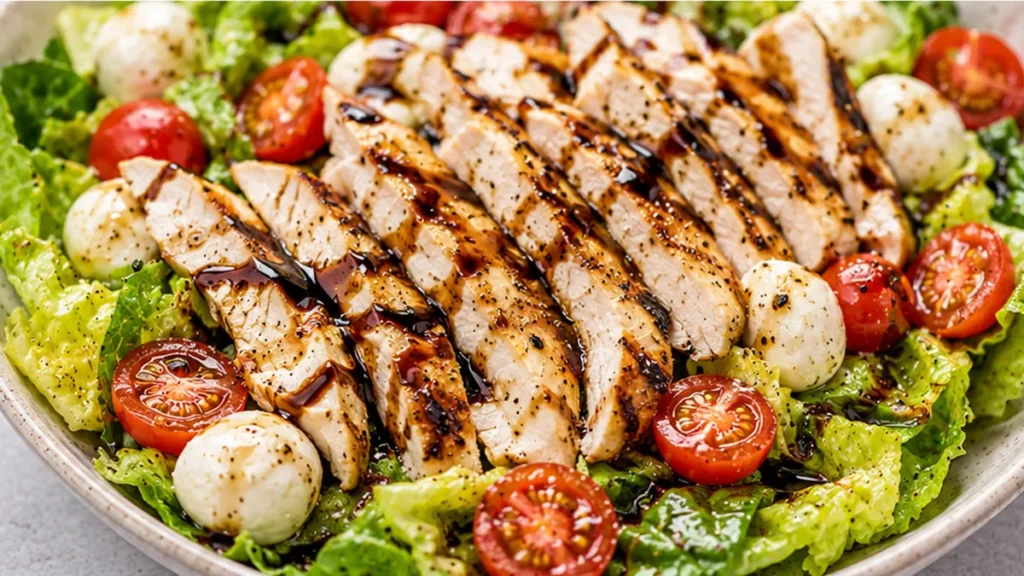
This chicken caprese salad is the ultimate recipe for anyone seeking a fresh and flavorful meal. It combines tender, marinated chicken with classic caprese ingredients for a satisfying dish ready in under 30 minutes. Ideal for a light lunch or a bright side dish, this chicken caprese salad offers a perfect balance of savory, tangy, and creamy notes. It’s a healthier alternative to heavier meals without sacrificing taste.
Key takeaways
- Proper chicken preparation is key to a moist and flavorful salad.
- Marinate chicken for at least 15-30 minutes.
- Cook chicken to an internal temperature of 165°F and let it rest.
- Ensure lettuce is dry for a crisp salad.
Chicken Caprese Salad Recipe
Ingredients
- 2 tbsp Balsamic vinegar
- 1 tbsp Olive oil
- 1/2 tsp Garlic powder
- 1 tsp Dried basil
- 1/2 tsp Dried oregano
- 1 tsp Sea salt
- 1/4 tsp Black pepper
- 4 8-oz Boneless skinless chicken breasts
- 5 cups Romaine lettuce (chopped)
- 1 cup Cherry tomatoes (halved)
Instructions
- In a large bowl, whisk together balsamic vinegar, olive oil, garlic powder, dried basil, dried oregano, sea salt, and black pepper. Add the chicken breasts and turn to coat in the marinade. Set aside to marinate for at least 10 minutes, or marinate in the fridge for up to 8 hours.
- Cook chicken breasts in the air fryer at 375°F (190°C) for 15-20 minutes, or in the oven at 400°F (200°C) for 20-25 minutes, or until internal temperature reaches 165°F (74°C).
- Let the chicken rest for 5 minutes, then slice against the grain. Cover to keep warm.
- Meanwhile, make the balsamic glaze by simmering 1/2 cup of balsamic vinegar in a small saucepan over medium-low heat until reduced by half and syrupy, about 10-15 minutes.
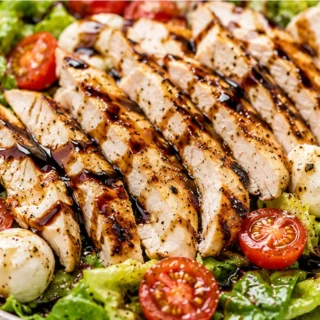
- In a large salad bowl, combine lettuce, tomatoes, mozzarella balls, and chicken.
- Sprinkle the salad with basil leaves and drizzle with balsamic glaze.
Notes
The technique that makes it
The success of this Chicken Caprese Salad hinges on properly preparing the chicken. The marinade, a simple blend of balsamic vinegar, olive oil, garlic powder, basil, oregano, salt, and pepper, serves a dual purpose. Firstly, it tenderizes the chicken, especially the chicken breasts which can easily become dry. The acidity from the balsamic vinegar begins to break down the muscle fibers, making the chicken more succulent. Secondly, it infuses the chicken with flavor. Ensure the chicken breasts are evenly coated and allowed to marinate for at least 15-30 minutes at room temperature, or longer in the refrigerator for a deeper flavor penetration. When cooking, aim for an internal temperature of 165°F (74°C). Overcooking is the primary enemy of tender chicken breast. Using a meat thermometer is highly recommended. Searing the chicken breasts in a hot pan before finishing them in the oven (if they are thick) or cooking them through on the stovetop can create a desirable crust while keeping the interior moist. Allowing the chicken to rest for 5-10 minutes after cooking is crucial; this permits the juices to redistribute throughout the meat, preventing them from running out when sliced, thus ensuring a moist and flavorful chicken component for your salad.
Troubleshooting
- Chicken is dry and tough: This is usually due to overcooking. Ensure you use a meat thermometer and remove the chicken once it reaches an internal temperature of 165°F (74°C). Let the chicken rest before slicing.
- Marinade isn’t flavorful enough: Allow the chicken to marinate for the recommended time, or extend it if time permits. Ensure all marinade ingredients are fresh and properly measured.
- Salad is watery: Ensure tomatoes are fresh and not overly ripe. Pat the Romaine lettuce thoroughly dry after washing to remove excess moisture that can dilute the dressing.
- Chicken is unevenly cooked: Use chicken breasts of similar thickness. If they vary significantly, pound thicker parts to an even thickness or cook thicker pieces separately.
Substitutions
- Chicken: Grilled shrimp, firm tofu (pressed and pan-fried), or canned chickpeas (rinsed and drained) can be used as protein alternatives.
- Romaine lettuce: Mixed greens, spinach, or arugula offer different flavor profiles and textures.
- Cherry tomatoes: Grape tomatoes or diced larger tomatoes can be substituted. For a Caprese twist, consider adding fresh mozzarella balls (bocconcini) if not already present.
- Balsamic vinegar: Red wine vinegar or apple cider vinegar can be used in the marinade, though the flavor profile will change. A touch of honey or maple syrup can be added to compensate for the sweetness of balsamic.
Pro tips
- Marinate the chicken for at least 10 minutes for maximum flavor.
- Ensure chicken is cooked through but still moist.
- Use fresh mozzarella balls for the best creamy texture.
Enjoy this versatile chicken caprese salad as a light meal or a stunning side. Experiment with adding avocado or other fresh herbs for a personal touch.
More from Air Fryer Chicken →
Frequently asked questions
Can I make chicken caprese salad ahead of time?
Yes, you can prepare components ahead. Cook the chicken and let it cool completely. Chop vegetables and store them separately in airtight containers in the refrigerator. Assemble the salad just before serving to maintain the freshness of the ingredients, especially the tomatoes and mozzarella.
What are good side dishes for chicken caprese salad?
This salad pairs wonderfully with crusty bread for dipping, garlic knots, or a simple pasta salad. For a lighter option, consider serving it alongside grilled asparagus or roasted zucchini. A small side of quinoa or couscous also complements the flavors well.
How do I store leftover chicken caprese salad?
Store any leftovers in an airtight container in the refrigerator for up to 2 days. It’s best to store the dressing separately if possible, or ensure the chicken and vegetables are well-coated to prevent drying out. The mozzarella may become slightly firmer upon refrigeration.
Can I use different cheese for chicken caprese salad?
Absolutely! While fresh mozzarella is traditional, feta cheese offers a saltier, tangier alternative. Goat cheese can also be a delicious substitute, providing a creamy texture and distinct flavor. For a milder taste, try provolone or fontina.