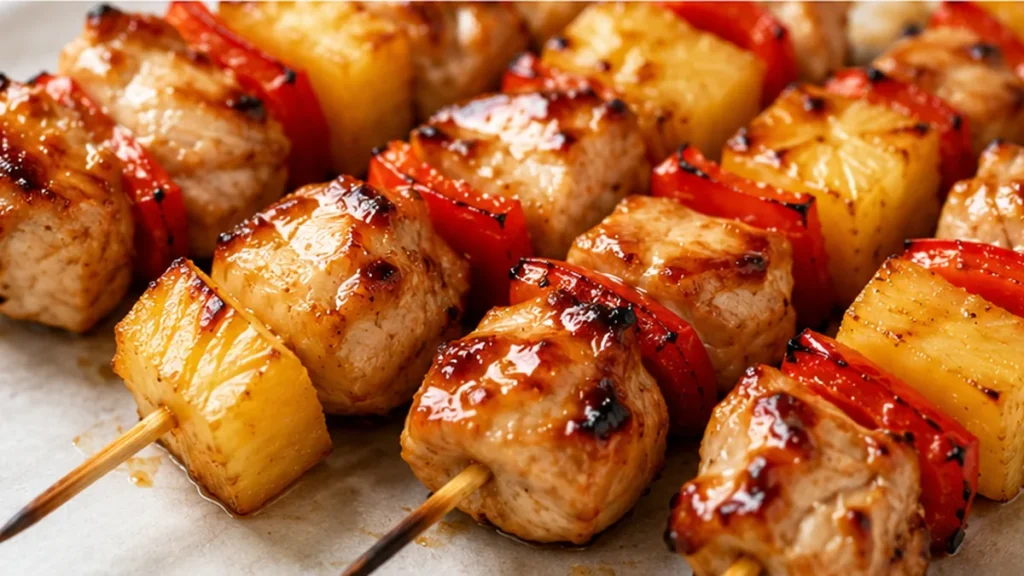
Learning to master the perfect chicken kabob takes a little practice, especially when aiming for that ideal balance of juicy meat and tender vegetables. These Pineapple Chicken Kabobs offer a fantastic blend of sweet and savory, making them a family favorite. Pineapple on chicken skewers can burn, but with the right marinade and cooking technique, it caramelizes well. This recipe is designed for ease, allowing you to prepare flavorful chicken kabobs whether you’re using an oven, air fryer, or even a grill. The marinade’s secret lies in its ability to tenderize the chicken while infusing it with tropical notes that complement the chicken kabobs perfectly.
Key takeaways
- Marinate chicken for 30 minutes to 2 hours to tenderize without mushiness.
- Control heat to medium-high for quick cooking and good caramelization.
- Ensure even-sized pieces for consistent cooking.
- Use cornstarch or tapioca flour to thicken marinade for better adhesion.
Juicy Pineapple Chicken Kabobs!
Ingredients
- 1/4 cup aminos (or soy sauce if you aren’t gluten free)
- 1/4 cup 100% pineapple juice (use the juice from the canned pineapple below)
- 1 tablespoon honey
- 1 teaspoon ground ginger
- 2 cloves garlic minced
- 2 teaspoons sesame oil
- 1/2 teaspoon kosher salt
- 1 1/2 lbs boneless skinless chicken breast (cut into 1 inch chunks)
- 2 teaspoons cornstarch (or tapioca flour)
- 2 red bell peppers (cut into 1 inch chunks)
Instructions
- Marinate the chicken (30 min): Whisk together the coconut aminos, pineapple juice, honey, ginger, garlic, sesame oil and salt in a medium bowl. Place the diced chicken in another medium bowl and pour half of the marinade over the chicken. Cover and marinate for 30 minutes or overnight. Cover the remaining marinade and store it in the fridge to use later as a sauce.
- Soak skewers (30 min): Place the skewers in warm water and soak for 30 minutes. You can chop all of the veggies while they’re soaking to make the best use of time.
- Make the skewers (5 min): Preheat the oven to 425°F. Remove the chicken from the fridge then alternate adding the diced chicken, onion, pineapple and red pepper to the skewers, leaving an inch on either end. Discard remaining marinade.
- Bake the skewers (15-18 min): Place them on a baking sheet. Bake for 12-15 minutes, flipping halfway through, until the internal temperature reaches 165°F. Optionally, broil the last 2-3 minutes to caramelize the edges.
- Make the glaze (3 min): While they’re cooking, bring the reserved marinade to a gentle simmer in a sauce pan over medium-high heat. Whisk the cornstarch with 1 Tbsp of water and stir into the sauce. Stir frequently until it thickens and coats the back of a spoon, about 1 minute.
- Finish and serve: Brush the kabobs with the thickened sauce. We love to eat them with coconut rice.
Notes
The Science Behind Juicy Pineapple Chicken Kabobs
The success of these chicken kabobs hinges on two key culinary principles: proper marination and controlled cooking. The marinade, a blend of aminos (or soy sauce), pineapple juice, honey, ginger, garlic, sesame oil, and salt, serves multiple purposes. Firstly, the acidity from the pineapple juice begins to break down the chicken’s proteins, a process called proteolysis. This tenderizes the meat, making it more succulent. However, over-marinating in highly acidic liquids can turn the chicken mushy, so a 30-minute to 2-hour window is optimal. The aminos and honey contribute to the Maillard reaction, the browning process that develops complex flavors and a desirable crust on the chicken and vegetables during grilling or broiling. The cornstarch or tapioca flour acts as a thickening agent for the marinade, ensuring it adheres better to the chicken and vegetables, creating a glaze rather than running off. Secondly, controlled cooking is crucial. Whether grilling or broiling, maintaining a medium-high heat ensures the chicken cooks through quickly without drying out, while simultaneously achieving good caramelization and charring from the marinade’s sugars. Turning the kabobs frequently prevents uneven cooking and burning.
Troubleshooting
- Problem: Chicken is tough and dry. Fix: Avoid overcooking. Use a meat thermometer to ensure chicken reaches an internal temperature of 165°F (74°C). Also, ensure the chicken pieces are uniformly cut to promote even cooking.
- Problem: Vegetables are burnt while chicken is undercooked. Fix: Ensure vegetables and chicken are cut into similar-sized pieces. If using wooden skewers, soak them for at least 30 minutes to prevent burning. Grill or broil over medium-high heat and turn frequently. Consider placing vegetables on separate skewers if they cook at a different rate than the chicken.
- Problem: Marinade isn’t coating the kabobs well. Fix: Ensure the marinade is slightly thickened with cornstarch or tapioca flour. Whisk the cornstarch into the cold liquids before heating to prevent lumps. Allow the marinade to cool slightly before adding the chicken and vegetables.
- Problem: Kabobs are sticking to the grill. Fix: Ensure the grill grates are clean and well-oiled before cooking. Don’t try to move the kabobs too early; let them develop a crust before attempting to turn them.
Substitutions
- Aminos/Soy Sauce: Coconut aminos or tamari can be used for a gluten-free option. The flavor profile will be slightly different, potentially less salty.
- Pineapple Juice: Orange juice or apple juice can be substituted. This will alter the sweetness and acidity, potentially resulting in less tenderization and a different flavor profile.
- Honey: Maple syrup or agave nectar can replace honey. This will maintain sweetness but may slightly change the caramelization characteristics.
- Red Bell Peppers: Other firm vegetables like zucchini, red onion, or chunks of pineapple can be used. Cooking times may vary, so adjust accordingly.
Pro tips
- Ensure chicken reaches 165°F (74°C) internal temperature for food safety. Use a meat thermometer inserted into the thickest part of the chicken.
- For best results, marinate the chicken overnight. This allows the flavors to deeply penetrate the meat and ensures a tender outcome.
- If using wooden skewers, soak them in water for at least 30 minutes before threading to prevent burning during cooking. Skipping this step leads to charred skewers.
- freezer-friendly: Cooked kabobs can be stored in an airtight container in the refrigerator for up to 3 days or frozen for up to 2 months. Reheat gently in the oven at 350°F (175°C) for 10-15 minutes.
These Pineapple Chicken Kabobs are a versatile and delicious meal that’s sure to impress. Experiment with different vegetables or spices to make them your own. Enjoy this sweet and savory delight!
Frequently asked questions
Can I marinate the chicken overnight?
It is not recommended to marinate the chicken overnight in this recipe. The pineapple juice contains enzymes that can break down the chicken proteins too much, leading to a mushy texture if left for extended periods. A marination time of 30 minutes to 2 hours is ideal for tenderization without compromising the texture.
What is the best way to cook these kabobs?
These kabobs are best cooked over medium-high heat, either on a grill or under a broiler. This method allows for quick cooking of the chicken while developing a delicious char and caramelization from the marinade. Ensure the heat is consistent and turn the kabobs regularly for even cooking.
Can I use wooden skewers?
Yes, you can use wooden skewers, but it’s crucial to soak them in water for at least 30 minutes before assembling and cooking. This prevents the wooden skewers from burning or catching fire on the grill or under the broiler, ensuring your kabobs cook safely and evenly.
How do I know when the chicken is cooked through?
The safest way to ensure the chicken is cooked through is by using a meat thermometer. Insert it into the thickest part of a chicken piece; it should register 165°F (74°C). Visually, the chicken should be opaque and no longer pink inside.
More from Air Fryer Chicken →