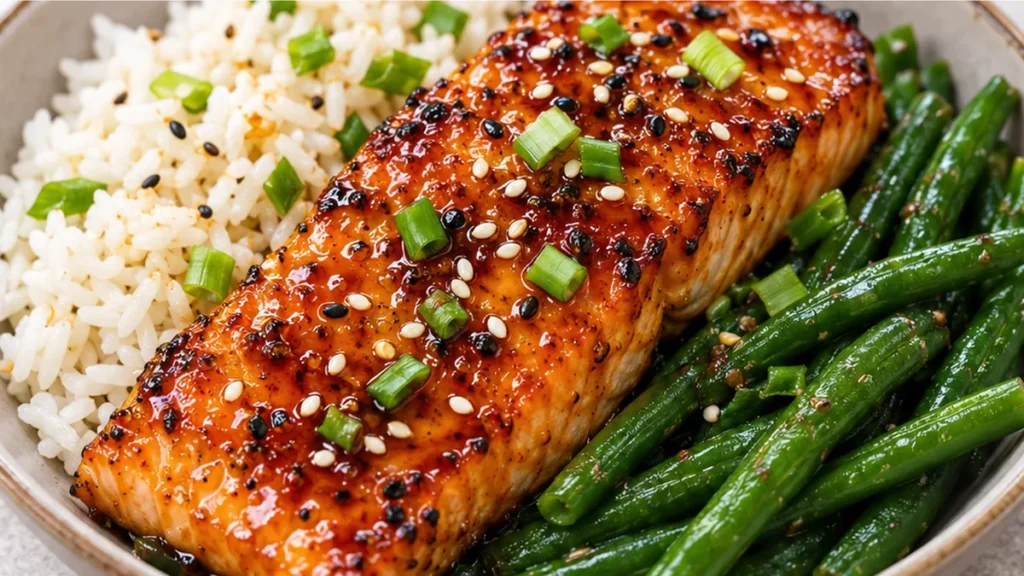
Prepare crispy air fryer teriyaki salmon in just 15 minutes. This recipe features a sweet glaze that enhances the salmon’s natural flavor.
Key takeaways
- Pat the salmon dry to ensure crispiness.
- Cook at 200°C (400°F) for best results.
- Avoid overcrowding the air fryer for even cooking.
- Consider ingredient swaps for dietary preferences.
CRISPY Air Fryer Teriyaki Salmon in 15 Mins!
Ingredients
Instructions
- In a medium-sized saucepan, whisk together ½ cup low-sodium soy sauce, ¼ cup brown sugar, 1 tablespoon rice vinegar, 2 cloves minced garlic, 1 teaspoon sesame oil, and 1 teaspoon ginger paste. Heat over medium-high heat and bring it to a simmer.
- In a small bowl, whisk together 2 tablespoons water and 1 tablespoon cornstarch, then add it to the saucepan. Whisk the sauce constantly until it starts to thicken. Remove it from the heat and reserve half of the sauce for serving.
- Lightly spray the inside of the air fryer basket with olive oil spray. Pat 4 (4-ounce) salmon filets dry with a paper towel, then place them skin-side down in the basket.
- Brush the teriyaki sauce on each filet. Cook at 390 degrees Fahrenheit for 7-10 minutes. The internal temperature should reach 145 degrees Fahrenheit, and the salmon should flake easily with a fork.
Understanding the Maillard Reaction in Teriyaki Salmon
The Maillard reaction is essential for achieving the crispy texture in air fryer teriyaki salmon. This complex chemical reaction occurs between amino acids and reducing sugars when food is heated, creating a rich, savory flavor and appealing brown color. For optimal results, aim for a cooking temperature of 200°C (400°F) and ensure the salmon is patted dry before seasoning. This helps achieve a crispier exterior by reducing moisture content.
Common Issues and How to Fix Them
- Issue: Salmon is not crispy.
- Cause: Excess moisture on the surface. Ensure the salmon fillets are thoroughly dried with paper towels before applying the teriyaki sauce.
- Issue: Teriyaki sauce burns.
- Cause: High sugar content in the sauce combined with high heat. To prevent burning, you can apply the sauce halfway through the cooking process instead of at the beginning.
- Issue: Uneven cooking.
- Cause: Overcrowding in the air fryer. Cook the salmon in batches to allow proper air circulation for even cooking.
Ingredient Swaps for Teriyaki Salmon
- Swap: Soy sauce for tamari.
- Result: A gluten-free option with a similar flavor profile.
- Swap: Honey for maple syrup.
- Result: A vegan alternative that adds a different sweetness but may alter the overall flavor slightly.
- Swap: Fresh ginger for ground ginger.
- Result: Ground ginger provides a more concentrated flavor but lacks the brightness of fresh ginger.
Unique Aspects of Air Fryer Teriyaki Salmon
This dish stands out due to the air frying method, which allows for a healthier cooking option while still achieving a crispy texture without deep frying. The air fryer circulates hot air around the salmon, cooking it evenly and quickly, making it an efficient alternative to traditional baking or pan-frying methods. Additionally, the quick cooking time of just 15 minutes ensures the salmon remains moist and tender, while the teriyaki glaze adds a delightful umami flavor.
How to Properly Store Leftover Crispy Air Fryer Teriyaki Salmon
Storing leftover teriyaki salmon requires careful handling to maintain its flavor and texture. Allow the salmon to cool to room temperature before transferring it to an airtight container. It can be refrigerated for up to three days. To reheat, consider using the air fryer again at a lower temperature (around 160°C or 320°F) for about 5-7 minutes to regain its crispiness. Avoid reheating in the microwave as it can make the salmon rubbery.
Scaling the Recipe for Larger Gatherings
If you’re looking to serve more people, scaling the crispy air fryer teriyaki salmon recipe is simple but requires attention to cooking times and air circulation. For every additional fillet, ensure there’s enough space in the air fryer basket for hot air to circulate. You may need to cook in batches, especially if you’re doubling or tripling the recipe. Cooking time may slightly increase, so check for doneness with a thermometer, ensuring the internal temperature reaches 63°C (145°F).
Choosing the Right Equipment for Optimal Results
The type of air fryer can significantly affect the outcome of your teriyaki salmon. Some air fryers have a smaller capacity and may not circulate air as effectively, leading to uneven cooking. A model with a larger basket or a convection function may provide better results. Additionally, using a non-stick spray or parchment paper can help prevent sticking and enhance crispiness. Always refer to your air fryer’s manual for specific cooking times and temperatures.
Seasonal Variations and Ingredient Quality Impact
Using fresh, high-quality ingredients can elevate your crispy air fryer teriyaki salmon. Seasonal fish, such as wild-caught salmon in the spring and summer, offers better flavor and texture than farmed varieties. Additionally, consider incorporating seasonal vegetables as sides, such as asparagus in the spring or root vegetables in the fall. Adjusting the teriyaki sauce with seasonal fruits, like adding fresh pineapple or citrus zest, can also enhance the dish.
Understanding the Impact of Ingredient Quality on Flavor
The quality of the ingredients used in crispy air fryer teriyaki salmon can significantly influence the final flavor profile. Fresh, high-quality salmon will have a firmer texture and richer flavor, while older or frozen salmon may result in a mushier consistency. When selecting salmon, look for vibrant color and a fresh ocean scent. Additionally, using high-quality soy sauce and freshly grated ginger can enhance the teriyaki sauce. The ratio of ingredients in the marinade also plays a crucial role; for instance, using more honey can lead to a sweeter glaze, while adjusting the soy sauce can affect saltiness and umami depth. A good balance is essential for a well-rounded dish.
Batch Scaling: How to Adjust Cooking Times and Temperatures
When scaling the recipe for crispy air fryer teriyaki salmon, it’s important to adjust cooking times and temperatures accordingly. For larger batches, you may need to cook the salmon in multiple batches to avoid overcrowding the air fryer, which can lead to uneven cooking. Generally, for every additional salmon fillet, you can expect to increase the cooking time by about 2-3 minutes, but keep an eye on the internal temperature. The salmon should reach an internal temperature of 63°C (145°F) for safe consumption. Always use a meat thermometer to ensure doneness, especially when scaling up.
Optimal Serving Suggestions for Crispy Air Fryer Teriyaki Salmon
Pairing crispy air fryer teriyaki salmon with the right side dishes can elevate the meal. Consider serving it with steamed jasmine rice or quinoa to soak up the teriyaki sauce. Adding a side of sautéed vegetables, such as bok choy or broccoli, complements the dish’s flavors and adds nutritional value. For a refreshing contrast, a simple cucumber salad dressed with rice vinegar can balance the richness of the salmon. Additionally, garnishing with sesame seeds and sliced green onions can enhance the visual appeal and texture of the dish.
Make-Ahead Strategies for Meal Prep with Teriyaki Salmon
Preparing crispy air fryer teriyaki salmon in advance can be a time-saver for busy weeknights. You can marinate the salmon fillets up to 24 hours ahead of time, allowing the flavors to penetrate the fish more deeply. Store the marinated salmon in an airtight container in the refrigerator. When ready to cook, simply preheat the air fryer and cook as directed. If you have leftover salmon, it can be refrigerated for up to three days and reheated in the air fryer for a quick meal. However, be cautious as reheating may affect the crispiness of the fish.
Understanding the Impact of Cooking Time on Texture and Flavor
The cooking time for crispy air fryer teriyaki salmon is crucial for achieving the desired texture and flavor. Salmon fillets typically require about 8 to 12 minutes in an air fryer at 200°C (400°F). A shorter cooking time can result in a tender, flaky texture, while extending it can lead to a firmer, drier result. For optimal results, monitor the salmon closely during the last few minutes of cooking. A food thermometer can be beneficial here; the internal temperature should reach 63°C (145°F) for safe consumption. Additionally, allowing the salmon to rest for a few minutes after cooking helps redistribute the juices, enhancing the overall flavor profile.
How to Achieve the Perfect Glaze on Your Salmon
The teriyaki glaze is a defining feature of this dish, and achieving the right consistency is essential. The glaze should be thick enough to adhere to the salmon without sliding off but not so thick that it becomes sticky or burnt. To achieve this, consider reducing the teriyaki sauce over medium heat before applying it to the salmon. A reduction typically takes about 5 to 10 minutes, depending on the initial volume of sauce. For those looking for a deeper flavor, adding a splash of rice vinegar or a pinch of ginger can elevate the glaze. Remember to brush the glaze onto the salmon during the last few minutes of cooking to allow it to caramelize without burning.
Understanding the Role of Marinade Timing in Flavor Development
The timing of marinating your salmon can significantly influence the flavor profile of your crispy air fryer teriyaki salmon. Ideally, marinating for at least 30 minutes allows the flavors to penetrate the fish, enhancing its taste. However, marinating for longer, up to 24 hours, can lead to a more pronounced teriyaki flavor. Be cautious, though; marinating for too long can result in an overly salty or mushy texture due to the high sodium content in soy sauce. For best results, aim for a balance: 1 hour for a good flavor infusion, and up to 12 hours for a deeper taste without compromising texture.
How to Adjust Cooking Times Based on Salmon Thickness
When preparing crispy air fryer teriyaki salmon, the thickness of the fish fillet plays a crucial role in determining the cooking time. Generally, salmon fillets that are about 2.5 cm thick will require approximately 8 to 10 minutes at 200°C (400°F) for optimal doneness. Thicker fillets, around 4 cm, might need an additional 2 to 3 minutes. Conversely, thinner fillets may cook faster, so checking for doneness at the 6-minute mark is advisable. Using a food thermometer can help ensure your salmon reaches an internal temperature of 63°C (145°F), ensuring it is safe to eat while still juicy and flavorful.
Pro tips
Pro tip: Best served immediately while hot!
Frequently asked questions
Can I use frozen salmon for this recipe?
Yes, you can use frozen salmon, but it’s recommended to thaw it first for even cooking. Pat it dry before seasoning to achieve the best crispy texture.
How do I know when the salmon is done cooking?
The salmon is done when it flakes easily with a fork and reaches an internal temperature of 63°C (145°F). Using a food thermometer can help ensure perfect doneness.
What type of teriyaki sauce should I use?
You can use store-bought teriyaki sauce for convenience or make your own with soy sauce, sugar, ginger, and garlic for a fresher taste. Adjust the sweetness to your preference.
Can I add vegetables to the air fryer with the salmon?
Yes, adding vegetables like broccoli or bell peppers can enhance the meal. Just be mindful of cooking times, as they may require different cooking durations compared to the salmon.
More from Air Fryer Breakfast →