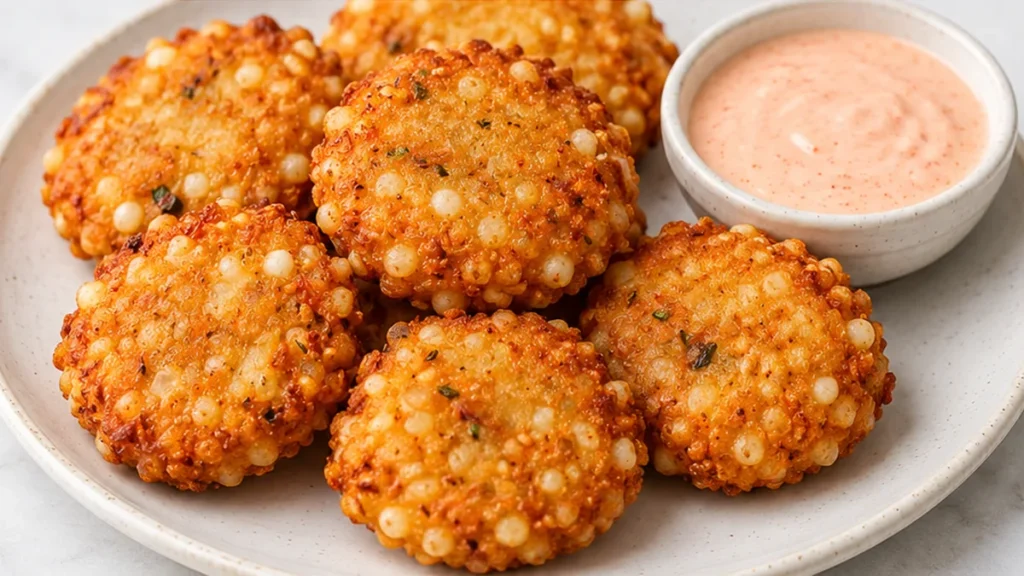
Crispy sabudana vada is a popular snack made from tapioca pearls. This recipe offers three healthy methods to prepare them without frying.
Key takeaways
- Proper hydration of sabudana is key for texture.
- Maintain oil temperature between 180°C to 190°C for crispy results.
- Use binding agents like potatoes to prevent vada from falling apart.
- Experiment with ingredient swaps for healthier versions without losing flavor.
Crispy Sabudana Vada: 3 Guilt-Free Ways
Ingredients
Instructions
- Rinse sabudana, drain, and soak in 1 cup fresh water for 4-6 hours or overnight until soft.
- Steam, peel, and mash 2 medium potatoes until smooth; cool completely.
- Combine soaked sabudana, mashed potatoes, ground peanuts, cumin, green chilies, red chili powder (if using), lemon juice, 1 tablespoon oil, salt, and sugar. Knead gently and form into 22 balls.
- Shape vadas: keep ball-shaped for appe pan, or flatten into 2-inch discs for deep frying/air frying.
- Choose cooking method: Deep fry at 350°F (175°C) until golden; Air fry at 375°F (190°C) for 15-20 minutes, flipping halfway; or cook in an appe pan over medium heat for 3-5 minutes per side until golden.
- Serve hot and enjoy your crispy Sabudana Vada!
The Science Behind Perfectly Crispy Sabudana Vada
Achieving the ideal texture in crispy sabudana vada hinges on a few critical factors, primarily hydration and frying temperature. Sabudana, or tapioca pearls, must be soaked adequately—typically for 4-6 hours—to ensure they absorb enough moisture. This hydration is crucial as it allows the pearls to swell, creating a fluffy interior. The frying temperature should be maintained between 180°C to 190°C (350°F to 375°F). At this range, the outer layer crisps up quickly while the inside cooks thoroughly, ensuring a delightful contrast in textures.
Common Issues and Solutions When Making Sabudana Vada
Even experienced cooks can face challenges when preparing crispy sabudana vada. Here are some common issues and their solutions:
- Issue: Vada absorbs too much oil during frying.
Solution: Ensure the oil is hot enough before adding the vada. An ideal frying temperature of 180°C (350°F) will help create a barrier that minimizes oil absorption. - Issue: Vada falls apart in the oil.
Solution: Ensure the sabudana is well-drained and mixed with adequate binding agents like mashed potatoes or ground peanuts. A ratio of about 1:1 of sabudana to potato can enhance binding. - Issue: Vada is not crispy.
Solution: Avoid overcrowding the frying pan, as this lowers the oil temperature. Fry in small batches to ensure each piece is evenly cooked and crisped.
Ingredient Swaps for Healthier Sabudana Vada
While traditional sabudana vada is delicious, there are several ingredient swaps you can make to enhance its nutritional profile:
- Swap: Use sweet potatoes instead of regular potatoes.
Result: This adds more fiber and vitamins while providing a slightly sweeter flavor. - Swap: Substitute some of the sabudana with quinoa.
Result: This increases protein content and adds a nutty flavor, but may alter the texture slightly. - Swap: Use olive oil instead of ghee or vegetable oil for frying.
Result: This swap introduces healthier fats but may require careful temperature management to avoid burning.
Unique Characteristics of Sabudana Vada
What sets crispy sabudana vada apart from other fritters is its unique ingredient base. The use of tapioca pearls gives it a distinctive chewy texture that is not found in traditional potato-based vadas. Additionally, the combination of spices such as cumin and green chilies adds a layer of flavor that complements the mildness of the sabudana, making it a popular snack during fasting periods in Indian cuisine.
Understanding the Ideal Texture for Crispy Sabudana Vada
The perfect crispy sabudana vada requires a balance of moisture and fat content. The soaking time for sabudana (tapioca pearls) is crucial; typically, they should be soaked for 4-6 hours. This allows them to absorb enough water without becoming overly mushy. For optimal crispness, the batter should have a ratio of 1:1 between soaked sabudana and mashed potatoes. The addition of ground peanuts not only enhances flavor but also contributes to a crunchier texture. Frying at a consistent temperature of around 180°C (350°F) ensures that the vadas cook evenly, achieving a golden-brown exterior while maintaining a fluffy interior. If the temperature is too low, the vadas will absorb excess oil, resulting in a greasy texture.
Batch Scaling for Large Gatherings
When preparing crispy sabudana vada for larger groups, scaling the recipe can be straightforward, but attention must be paid to the soaking and frying processes. For every additional cup of sabudana, increase the mashed potato and peanut quantities proportionally. However, avoid doubling the frying oil at once; fry in smaller batches to maintain oil temperature. This prevents overcrowding, which can lead to uneven cooking. If you’re preparing a very large batch, consider using multiple frying pans or a deep fryer to manage the cooking process effectively. Additionally, keep the cooked vadas warm in an oven set to low heat (around 90°C or 200°F) while frying subsequent batches to maintain their crispness.
Choosing the Right Equipment for Frying
The choice of frying equipment can significantly affect the outcome of crispy sabudana vada. A heavy-bottomed pan or a cast-iron skillet is ideal as it retains heat well, providing consistent frying temperatures. If using a non-stick pan, ensure it’s well-heated before adding the vadas to prevent sticking. For those with access to a deep fryer, it allows for precise temperature control and even cooking. When frying, use a thermometer to monitor oil temperature, aiming for 180°C (350°F). This attention to equipment and temperature will yield vadas that are perfectly crispy and not oily.
Perfect Pairings for Serving Crispy Sabudana Vada
Crispy sabudana vada can be enjoyed in various ways, enhancing the overall dining experience. Traditionally, they are served with sweetened yogurt or chutneys, such as mint or tamarind, which complement the savory flavors. For a modern twist, consider pairing them with a tangy salsa or a spicy avocado dip. Additionally, serving vadas on a bed of fresh salad greens adds a refreshing contrast to their crispy texture. Consider seasonal ingredients: in summer, pair with refreshing cucumber salsa, while in winter, a warm apple chutney can provide a delightful contrast. Experimenting with these pairings can elevate the dish and cater to diverse palates.
How to Prepare Sabudana Vada in Advance Without Compromising Crispiness
Preparing crispy sabudana vada in advance requires careful handling to maintain texture. After frying, allow the vada to cool completely on a wire rack to prevent moisture buildup. Store them in an airtight container at room temperature if consuming within a day. For longer storage, freeze them in a single layer on a baking sheet before transferring to a container. When ready to eat, reheat in an oven at 180°C (350°F) for about 10-15 minutes to restore crispiness. This method ensures that your vada remains delicious even after a day or two.
Understanding the Role of Soaking Time on Texture and Flavor
The soaking time of sabudana is crucial in determining the final texture and flavor of your vada. Ideally, soak the sabudana for 4-6 hours, allowing it to absorb enough water to become fluffy. If soaked for too long, the sabudana can become mushy, leading to a dense vada. Conversely, insufficient soaking results in hard, undercooked grains. A good practice is to check the grains after soaking; they should be soft yet firm, easily crushable between fingers. Adjusting soaking times based on the quality of sabudana can lead to a perfect balance in your vada.
Choosing the Right Oil for Frying and Its Impact on Flavor
The choice of oil can significantly influence the flavor and health profile of crispy sabudana vada. Traditional frying oils like peanut or sunflower oil are preferred for their high smoke points and neutral flavors. Peanut oil, in particular, imparts a subtle nuttiness that complements the vada. However, if you’re looking for a healthier alternative, using avocado oil can also work well due to its high smoke point and rich flavor. Always ensure the oil is hot enough before frying; ideally, it should reach around 180°C (350°F). This temperature ensures a crispy exterior while cooking the vada through without absorbing excess oil.
Understanding the Best Techniques for Frying Crispy Sabudana Vada
The frying technique you choose can significantly impact the texture and flavor of crispy sabudana vada. The ideal frying temperature is around 180°C (350°F). This temperature allows for the perfect Maillard reaction, resulting in a golden-brown exterior while keeping the inside moist. If the oil is too hot, the vadas can burn quickly; if it’s too cool, they can absorb excess oil and become greasy. Using a deep-frying thermometer can help maintain this temperature consistently, ensuring each batch is cooked evenly. Additionally, frying in smaller batches allows the oil temperature to remain stable, further contributing to the crispiness of the vadas.
How to Enhance Flavor and Texture with Seasoning Adjustments
Seasoning plays a crucial role in elevating the taste of crispy sabudana vada. While traditional recipes often include cumin, green chilies, and coriander, experimenting with additional spices can yield delightful results. For instance, adding a pinch of garam masala can provide warmth, while a touch of asafoetida (hing) enhances the overall aroma. Additionally, consider the quality of your ingredients; fresh herbs and spices will offer more robust flavors. Adjusting the salt content can also impact the overall taste; too little can result in bland vadas, while too much can overpower the dish. Balancing these elements will not only enhance the flavor but also contribute to a more satisfying texture.
Pro tips
Pro tip: Best served immediately while hot!
Frequently asked questions
Why do my sabudana vadas fall apart while frying?
This often happens if the sabudana is not drained properly or lacks adequate binding agents. Ensure you mix in enough mashed potatoes or ground peanuts to help hold the mixture together.
How can I make my sabudana vada healthier?
Consider using sweet potatoes instead of regular potatoes for added fiber and nutrients. You can also substitute some sabudana with quinoa to boost protein content.
What is the best oil for frying sabudana vada?
Traditionally, ghee or vegetable oil is used, but for a healthier option, olive oil can be used. Just ensure it is heated properly to avoid burning.
Can I prepare the mixture in advance?
Yes, you can prepare the sabudana mixture ahead of time and store it in the refrigerator for a few hours. However, it’s best to fry them fresh for optimal crispiness.
More from Air Fryer Snacks →