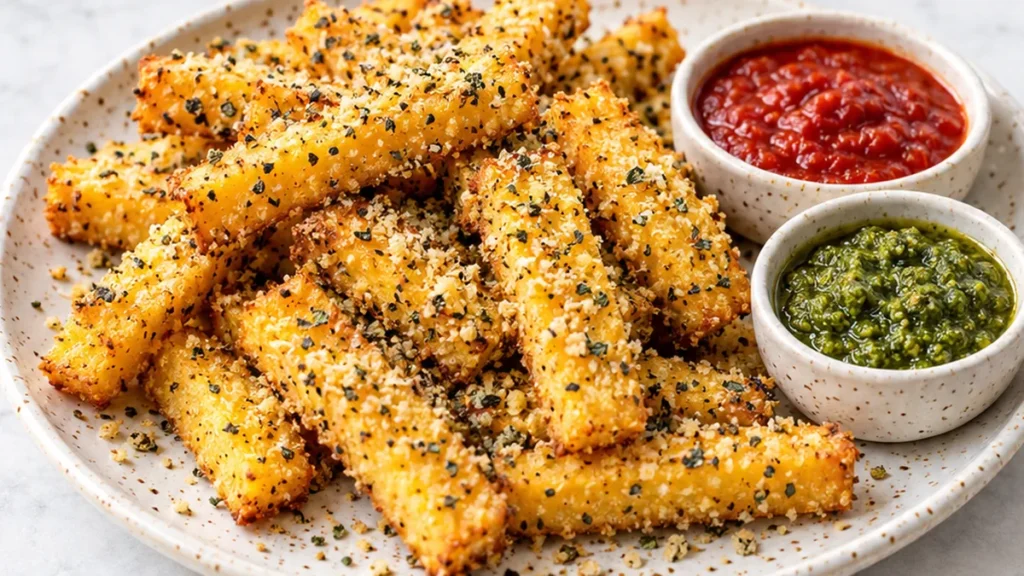
This crispy vegan polenta fries recipe is a simple way to enjoy a healthier snack. Made with polenta and seasoned to perfection, they are easy to prepare.
Key takeaways
- Properly cook and cool polenta for firm fries.
- Maintain oil temperature between 175°C to 190°C for crispiness.
- Consider using vegetable broth or nutritional yeast for enhanced flavor.
- Double-frying can improve texture and crunchiness.
Crispy Vegan Polenta Fries Recipe
Ingredients
Instructions
- Line a baking sheet with parchment paper and preheat the oven to 425°F (218°C).
- Cut the pre-cooked polenta into 1/2-inch thick, 3-4 inch long fry shapes and place in a large mixing bowl.
- Add 2 tablespoons of olive oil to the bowl and gently toss to coat the polenta fries evenly.
- Add 1/4 cup of vegan parmesan and 1 tablespoon of dried Italian herbs to the bowl and toss until well coated.
- Space the coated fries evenly on the parchment-lined baking sheet in a single layer.
- Bake for 30 minutes, flipping the polenta fries halfway through (at 15 minutes) for even browning.
- Let the fries cool for a few minutes on the baking sheet before serving warm.
Understanding the Texture of Polenta Fries
The texture of crispy vegan polenta fries is crucial for achieving that perfect crunch. Polenta, made from cornmeal, should be cooked to a creamy consistency before being cooled and cut into fries. The cooling process allows the polenta to firm up, which is essential for maintaining structure during frying. Aim for a cooking temperature of around 85°C (185°F) to achieve the right consistency, and allow it to cool for at least an hour to set properly.
Common Mistakes When Preparing Polenta Fries
One frequent issue is undercooking the polenta, which can lead to mushy fries. Ensure the polenta is cooked until it pulls away from the sides of the pot. Another common mistake is not allowing the polenta to cool enough before cutting; if it’s too warm, the fries will fall apart. Additionally, frying at too low of a temperature can result in greasy fries instead of crispy ones. Maintain oil temperatures between 175°C to 190°C (350°F to 375°F) for optimal frying.
Ingredient Substitutions for Enhanced Flavor
While the basic recipe for polenta fries is straightforward, substitutions can enhance flavor and texture. For instance, using vegetable broth instead of water when cooking polenta can add depth. Additionally, incorporating nutritional yeast into the polenta can impart a cheesy flavor without dairy. If you’re looking to avoid gluten, ensure that the cornmeal is certified gluten-free, as some brands may be processed in facilities that handle gluten-containing grains.
Why Frying Technique Matters
The method used for frying polenta fries can significantly impact their crispiness. A double-frying technique can be beneficial: first fry at a lower temperature to cook through, then increase the heat for a final fry to achieve crispiness. This method helps in creating a golden-brown exterior while ensuring the inside remains fluffy. Always use a thermometer to monitor oil temperature, as fluctuations can lead to uneven cooking.
Understanding the Importance of Cooling Time for Polenta
One crucial aspect of making crispy vegan polenta fries is allowing the polenta to cool adequately before cutting it into fries. Cooling time helps the polenta to firm up, making it easier to cut into desired shapes without falling apart. Ideally, after cooking the polenta, transfer it to a greased baking dish and spread it out evenly. Let it cool at room temperature for at least 30 minutes, or refrigerate for 1-2 hours. This cooling process allows starches to gelatinize, which improves the texture and helps the fries maintain their shape during frying or baking.
Choosing the Right Equipment for Perfect Fries
The equipment you use to prepare crispy vegan polenta fries can significantly impact the final product. A heavy-bottomed pan or a deep fryer is ideal for frying, as they provide even heat distribution, which is essential for achieving that golden-brown color. If you prefer baking, using a convection oven can help circulate hot air around the fries, resulting in a crispier texture. Additionally, using parchment paper on your baking sheet can prevent sticking and promote even browning. Finally, consider using a high-quality non-stick spray or oil to ensure the fries do not stick to the pan.
Scaling the Recipe for Different Occasions
When preparing crispy vegan polenta fries, you may want to scale the recipe up or down depending on the number of servings needed. The basic ratio of polenta to water is typically 1:4, which can be adjusted based on how many fries you want to make. For example, using 1 cup of polenta requires 4 cups of water. If you want to make a larger batch for a party, simply multiply the ingredients accordingly. Keep in mind that cooking times may vary slightly with larger quantities, so monitor the polenta closely to ensure it cooks evenly. Also, ensure you have a sufficiently large dish for cooling and cutting the polenta.
Seasonal Variations and Ingredient Quality Impact
The quality of ingredients and seasonal variations can greatly influence the flavor and texture of your crispy vegan polenta fries. When selecting polenta, opt for high-quality, stone-ground varieties for the best taste and texture. Seasonal ingredients, such as fresh herbs or spices, can be incorporated into the polenta mixture for added flavor. For example, adding fresh rosemary or thyme during cooking can enhance the overall taste. Additionally, consider pairing your fries with seasonal dips or sauces, such as a homemade vegan aioli or a spicy salsa, to elevate the dish further.
How to Properly Store and Reheat Polenta Fries
Storing crispy vegan polenta fries can be tricky, as they tend to lose their crunch. To store them, let the fries cool completely on a wire rack to prevent steam buildup, which can lead to sogginess. Once cooled, place them in an airtight container lined with parchment paper to absorb any moisture. They can be refrigerated for up to 3 days. When reheating, avoid the microwave, which can make them rubbery. Instead, preheat your oven to 200°C (400°F) and spread the fries on a baking sheet. Heat for about 10-15 minutes until they regain their crispness. This method ensures that the fries are hot and crispy, similar to when they were first made.
Scaling the Recipe for Larger Gatherings
If you’re planning to serve a crowd, scaling your crispy vegan polenta fries recipe is straightforward. The basic ratio for polenta is typically 1 part polenta to 4 parts liquid. For a larger batch, you can easily multiply the ingredients while maintaining this ratio. Ensure you have a large enough pot for cooking the polenta to prevent overflow. Additionally, when frying, avoid overcrowding the pan, as this can lower the oil temperature and result in soggy fries. Fry in batches if necessary, and keep cooked fries warm in a low oven while you finish frying the rest. This method ensures that every fry is perfectly crispy.
Pairing Suggestions for Serving Polenta Fries
Crispy vegan polenta fries are versatile and can be paired with various dips and sides. For a classic touch, serve them with a homemade marinara sauce or a vegan aioli for dipping. If you want to elevate the dish, consider serving them alongside a fresh salad or roasted vegetables. The contrast of textures and flavors enhances the overall dining experience. Additionally, try garnishing the fries with fresh herbs or nutritional yeast for added flavor. Seasonal ingredients can also be incorporated; for example, during summer, serve with a fresh tomato salsa, while in autumn, pair with a pumpkin dip for a comforting twist.
Understanding the Impact of Cooling Time on Texture
The cooling time after cooking polenta is crucial for achieving the ideal texture in your fries. When polenta is cooked, it is hot and soft, making it difficult to cut into fries. Allowing the polenta to cool completely in the refrigerator for at least two hours helps it to firm up. This cooling process allows the starches to gelatinize, creating a firmer structure that holds its shape better when cut. If you skip this step, the fries may fall apart during frying or baking. For optimal results, consider letting the polenta cool overnight, as this further enhances its firmness. The ideal thickness for polenta fries is about 1 to 1.5 centimeters, which balances cooking time and texture. Thicker fries may require longer cooking times to ensure they are cooked through without burning the exterior.
Choosing the Right Cooking Method for Crispy Results
The method you choose to cook your polenta fries significantly affects their crispiness. While frying is the traditional method that yields the crispiest results, baking is a healthier alternative that can also produce satisfying results. When frying, ensure the oil is heated to around 180°C (350°F) for optimal frying; this temperature allows the exterior to crisp up while keeping the inside tender. If you opt for baking, preheat your oven to 220°C (425°F) and use a generous amount of oil to coat the fries. This not only helps achieve a crispy texture but also aids in browning through the Maillard reaction. Additionally, flipping the fries halfway through baking ensures even cooking. Experimenting with air frying can also provide a lower-fat option while still achieving a satisfying crisp. Regardless of the method chosen, ensure the fries are not overcrowded in the cooking vessel, as this can lead to steaming rather than crisping.
Pro tips
Pro tip: Best served immediately while hot!
Frequently asked questions
Can I bake polenta fries instead of frying them?
Yes, baking is an alternative to frying. Preheat the oven to 220°C (425°F), place the fries on a baking sheet, and drizzle with oil. Bake for about 25-30 minutes, flipping halfway through for even crispiness.
How do I store leftover polenta fries?
Store leftover polenta fries in an airtight container in the refrigerator for up to 3 days. To reheat, place them in a hot oven or an air fryer to regain their crispiness.
What is the best type of cornmeal to use for polenta fries?
For the best texture, use medium or coarse ground cornmeal. This will provide a better bite and texture compared to fine cornmeal, which can become too mushy.
Can I add spices to the polenta mixture?
Absolutely! Adding spices such as garlic powder, paprika, or herbs can enhance the flavor of the polenta. Mix them in while cooking the polenta for an extra flavor boost.
More from Air Fryer Snacks →