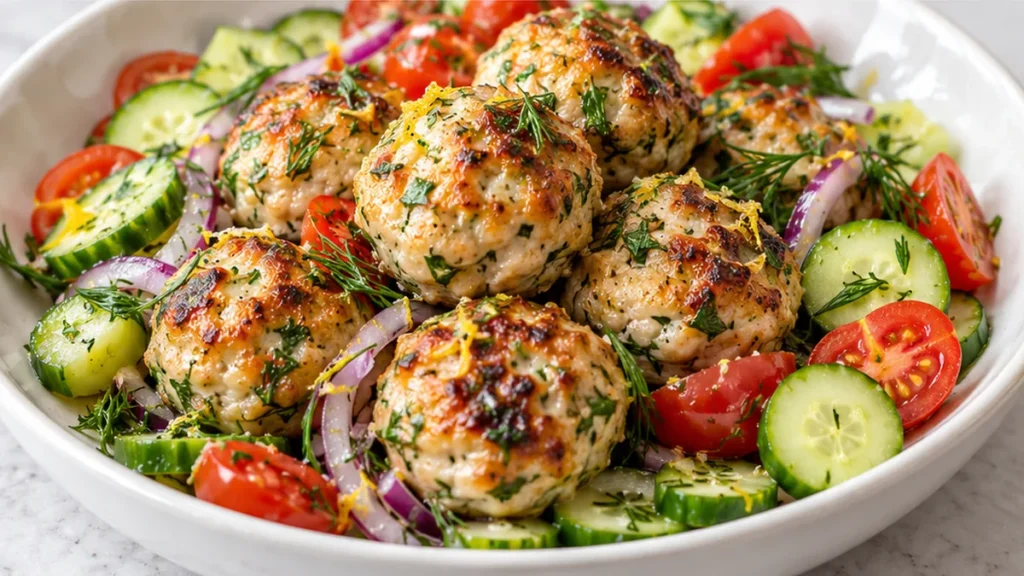
This juicy greek chicken meatballs recipe combines ground chicken with fresh herbs and spices. It’s a simple, healthy dish that’s easy to prepare.
Key takeaways
- Use a mix of dark and light ground chicken for moisture.
- Cook meatballs to an internal temperature of 74°C (165°F) for safety and juiciness.
- Adding soaked breadcrumbs helps retain moisture and prevent dryness.
- Incorporating Greek spices gives the meatballs a unique flavor profile.
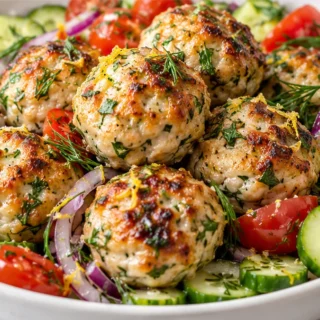
Juicy Greek Chicken Meatballs Recipe
Ingredients
Instructions
- In a medium bowl, combine the ground chicken, red onion, garlic, lemon zest, dill, oregano, salt, and pepper. Stir well to combine.
- Divide the mixture into 16 equal portions. Roll each portion into a ball with damp hands. Cook using your preferred method.
- Preheat the air fryer to 400°F. Place meatballs in the basket, spacing them out. Air fry for 7-8 minutes, turning halfway, until 165°F.
- Alternatively, heat 2 teaspoons of oil in a large skillet over medium heat. Cook meatballs for 5-7 minutes per side until 165°F.
Understanding the Ingredients for Juicy Greek Chicken Meatballs
To achieve the perfect juicy Greek chicken meatballs, the choice of ingredients is crucial. Ground chicken is the base, and using a blend of dark and light meat can enhance moisture and flavor. Adding fresh herbs like dill, parsley, and mint not only provides authentic Greek flavor but also contributes to the meatballs’ juiciness. Additionally, incorporating soaked breadcrumbs instead of dry ones helps retain moisture, creating a tender texture.
The Science Behind Cooking Temperature and Time
Cooking chicken meatballs to the right internal temperature is vital for both safety and texture. The USDA recommends cooking poultry to an internal temperature of 74°C (165°F). Cooking them at a moderate temperature (around 190°C or 375°F) allows for even cooking without drying out the meat. It’s advisable to use a meat thermometer to ensure accuracy. Cooking for about 20-25 minutes generally yields a perfectly cooked meatball.
Common Issues and How to Fix Them
One common issue when making chicken meatballs is them being dry. This can often be attributed to overcooking or using lean meat without enough fat content. To remedy this, consider adding a bit of olive oil or using a mix of chicken thighs and breasts. Another issue is meatballs falling apart; this can occur if the mixture is too wet or lacks binding agents. Ensure to balance the breadcrumbs and egg ratio for optimal binding.
Swaps and Their Effects on Flavor and Texture
Substituting certain ingredients can alter the flavor profile and texture of the meatballs. For instance, using Greek yogurt instead of eggs can enhance moisture while adding a tangy flavor. If you’re looking for a gluten-free option, substituting breadcrumbs with ground oats can work well, though it may yield a denser texture. Additionally, swapping out fresh herbs for dried ones can provide flavor but may lack the vibrancy and freshness of the original recipe.
Unique Characteristics of Greek Chicken Meatballs
What sets Greek chicken meatballs apart from others is the use of spices such as cumin and coriander, which are not commonly found in other meatball recipes. This unique blend of spices, combined with the fresh herbs, creates a distinct flavor profile that embodies the essence of Greek cuisine. Moreover, the practice of serving them with tzatziki sauce adds a refreshing contrast that enhances the overall dish.
How to Prepare for Meal Prep with Greek Chicken Meatballs
Preparing Greek chicken meatballs in advance can save time and enhance convenience. To make a batch ahead of time, prepare the meatballs as per the recipe, then freeze them uncooked. Arrange them on a baking sheet in a single layer and freeze until solid. Once frozen, transfer them to a resealable plastic bag, ensuring to remove as much air as possible to prevent freezer burn. When ready to cook, you can bake them directly from the freezer; just add a few extra minutes to the cooking time. This method maintains their juiciness and flavor while making weeknight dinners a breeze.
Adjusting the Recipe for Different Serving Sizes
Scaling the recipe for Greek chicken meatballs is straightforward. If you need to double or halve the recipe, maintain the same ratios of ingredients to ensure the flavor profile remains intact. For instance, if increasing the batch size, consider mixing the ingredients in a large bowl to ensure even distribution. Remember that cooking times may vary slightly with larger batches; use a meat thermometer to ensure the internal temperature reaches 75°C (165°F) for safe consumption. This ensures that no matter the size of your gathering, everyone gets to enjoy these juicy meatballs.
Choosing the Right Equipment for Cooking Greek Chicken Meatballs
The equipment you use can significantly affect the outcome of your Greek chicken meatballs. A non-stick baking sheet is ideal for oven-baking, as it prevents sticking and allows for even cooking. If using a skillet, opt for a heavy-bottomed pan that distributes heat evenly. For frying, a cast-iron skillet retains heat well and gives a nice sear. When using an air fryer, reduce the cooking time slightly to achieve a crisp exterior while keeping the interior juicy. Each cooking method offers unique benefits, so choose the one that best fits your kitchen setup.
Seasonal Ingredients and Their Impact on Flavor
The quality of your ingredients can greatly influence the flavor of your Greek chicken meatballs. Seasonal produce, such as fresh herbs like parsley and mint, can elevate the flavor profile. In spring and summer, opt for vibrant, fresh herbs that can be finely chopped and mixed into the meat mixture. Conversely, in winter, dried herbs may be more readily available, which can still provide great flavor but may require adjustments in quantity. Additionally, using high-quality chicken and fresh garlic will enhance the overall taste, ensuring that your meatballs are as juicy and flavorful as possible.
Understanding the Impact of Ingredient Quality on Flavor
The quality of ingredients used in your juicy Greek chicken meatballs recipe can significantly influence the final flavor profile. Fresh herbs like parsley and oregano should be vibrant and aromatic, as dried herbs lose potency over time. Freshly ground black pepper offers a more robust flavor compared to pre-ground varieties. Additionally, using high-quality olive oil not only enhances taste but also contributes to the meatballs’ moisture content. When possible, opt for free-range or organic chicken, as these tend to have a richer flavor and better texture. The freshness of your garlic and onion also matters; older bulbs can be less pungent, affecting the overall taste. Lastly, consider the quality of your breadcrumbs—homemade or artisanal varieties can add a distinct flavor that store-bought options may lack.
Batch Scaling for Large Gatherings
Scaling your juicy Greek chicken meatballs recipe for larger gatherings requires some considerations to maintain flavor and texture. When doubling or tripling the recipe, ensure that you adjust the seasoning proportionally, but be cautious with salt; it’s best to add a little less initially and adjust to taste. Cooking time may also vary; larger batches can require longer cooking times, especially if you are using a single baking sheet. To ensure even cooking, consider spreading the meatballs out on multiple sheets or batches. If you’re making a significant quantity, mixing the ingredients in a large bowl or using a stand mixer can save time and ensure even distribution of flavors. Remember that meatballs can be made ahead and frozen, allowing you to prepare them in advance without compromising quality.
Serving Suggestions and Pairings for a Complete Meal
To elevate your juicy Greek chicken meatballs into a full meal, consider various serving suggestions and pairings. Traditionally, these meatballs can be served with a side of tzatziki sauce, which complements their flavors beautifully. Accompanying dishes like a Greek salad, featuring fresh cucumbers, tomatoes, and feta cheese, can add a refreshing contrast. For a heartier option, serve the meatballs over a bed of orzo or rice pilaf, both of which can absorb the flavors of any sauce used. Additionally, consider offering warm pita bread or flatbreads as a side, allowing guests to create their own wraps. Seasonal vegetables, whether grilled or roasted, can also be a delightful addition, enhancing the meal’s nutrition and visual appeal. These pairings not only enhance the dining experience but also provide a balanced and satisfying meal.
Understanding the Impact of Ingredient Quality on Flavor
The quality of ingredients plays a crucial role in the flavor profile of Greek chicken meatballs. Fresh, high-quality chicken will yield a more succulent texture and rich flavor compared to lower-grade options. Additionally, using authentic Greek spices such as oregano, dill, and mint can significantly enhance the dish’s Mediterranean essence. Opt for extra virgin olive oil for cooking and mixing, as its robust flavor can elevate the meatballs. When using fresh herbs, consider that their flavor is more potent than dried herbs; thus, adjust quantities accordingly. For instance, if a recipe calls for one tablespoon of dried oregano, you might use three tablespoons of fresh oregano instead. Furthermore, the freshness of other ingredients like garlic and onion also contributes to the overall taste. If possible, use organic produce to avoid pesticides, which can alter the flavor. Ultimately, investing in quality ingredients leads to a more enjoyable and authentic culinary experience.
Serving and Pairing for a Complete Meal
When it comes to serving Greek chicken meatballs, the right accompaniments can elevate the meal. Traditional pairings include tzatziki sauce, which complements the meatballs’ flavor while adding a cooling element. Serve the meatballs on a bed of fragrant rice or alongside warm pita bread. A fresh Greek salad with tomatoes, cucumbers, red onion, and feta cheese provides a refreshing contrast to the savory meatballs. For a heartier meal, consider pairing with roasted vegetables or a side of lemon potatoes, which align with Greek culinary traditions. Additionally, a glass of Greek wine, such as Assyrtiko or Xinomavro, can enhance the dining experience, as the acidity and fruitiness of these wines complement the flavors of the dish. For a lighter option, you might serve the meatballs in a lettuce wrap with a drizzle of lemon juice and a sprinkle of fresh herbs, making it a delightful and healthy choice.
Pro tips
Pro tip: Best served immediately while hot!
Frequently asked questions
Can I use ground turkey instead of chicken for this recipe?
Yes, ground turkey can be used as a substitute for chicken. However, it may result in slightly drier meatballs, so consider adding a bit more fat or moisture to the mixture.
What should I serve with Greek chicken meatballs?
Greek chicken meatballs pair wonderfully with tzatziki sauce, pita bread, or a fresh Greek salad. You can also serve them over rice or with roasted vegetables for a complete meal.
How can I store leftover meatballs?
Leftover meatballs can be stored in an airtight container in the refrigerator for up to three days. They can also be frozen for up to three months. Reheat them in the oven or microwave until warmed through.
What can I do if my meatballs are too dry?
If your meatballs turn out dry, you can add a sauce or broth when reheating to add moisture. Additionally, consider adjusting your mixture next time by adding more breadcrumbs or incorporating olive oil.
More from Air Fryer Chicken →