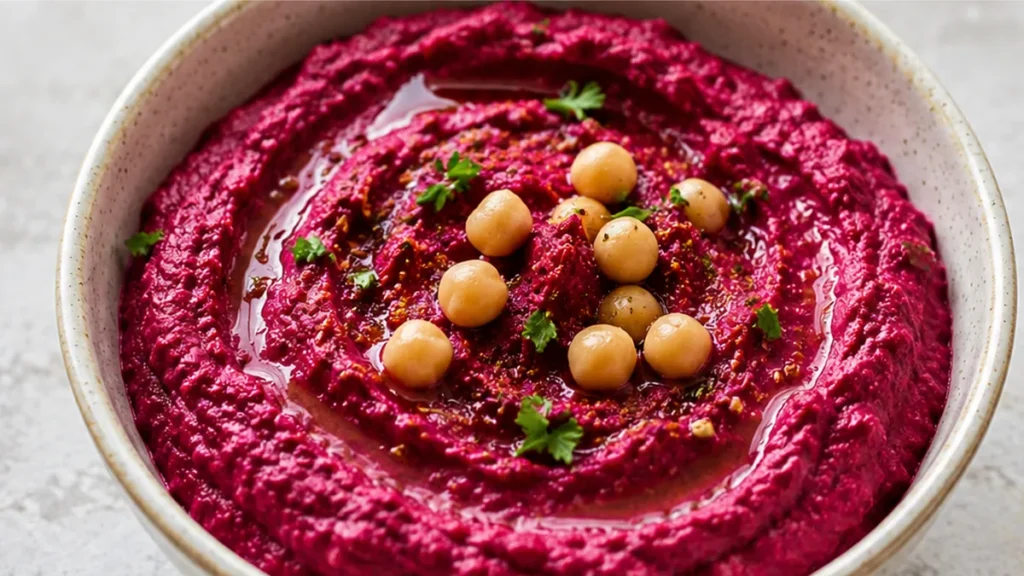
This beet hummus recipe uses roasted beets for a unique flavor. It’s a simple way to prepare a healthy and colorful dip. The earthy sweetness of the beets complements the creamy texture.
Key takeaways
- Blend cooked beet until very smooth before adding other ingredients.
- Achieve a creamy texture by thoroughly emulsifying tahini and aquafaba.
- Adjust liquid (aquafaba or chickpea water) for desired thickness.
- Taste and adjust seasoning (salt, lemon juice) for optimal flavor.
Vibrant Beet Hummus: Easy & Delicious Dip
Ingredients
- 1 small beet (about 3 ounces, red is best for color)
- 1/2 teaspoon extra virgin olive oil (or oil spray, plus more for garnish (optional))
- 1 (15-ounce) can chickpeas (drained & liquid reserved)
- 3 tablespoons aquafaba (liquid from chickpea can, plus more if needed)
- 3 tablespoons tahini (plus more if needed)
- 1 to 2 Tablespoons lemon juice (or more to taste)
- 1/4 teaspoon salt (or to taste)
- 1 to 2 cloves garlic (minced)
- 1/8 to 1/2 teaspoon cumin (optional)
- pinch chopped fresh herbs (like parsley, chives, cilantro, or dill (optional garnish) and/or toasted pine nuts)
Instructions
- Peel a small beet and remove top. Cut the beet in half, and then cut those halves into quarters (roughly 1-inch pieces).
- Rub the beet pieces with extra virgin olive oil or spray with oil. Air fry at 390 degrees for 11 minutes or until fork tender.
- While the beet is cooking, drain the canned chickpeas, reserving the liquid (aquafaba) in a fine mesh sieve.
- Add drained chickpeas, 3 Tablespoons of aquafaba, tahini, 1 Tablespoon lemon juice, 1 minced garlic clove, 1/8 teaspoon cumin, and salt into a food processor.
- Blend on high until fully combined, stopping to scrape down the sides as needed.
- Taste and adjust to your preferences: add up to a Tablespoon more of lemon juice for tang, another minced clove of garlic for bite, or more cumin by 1/8 teaspoon increments for flavor. Blend until incorporated.
- Transfer the hummus to a serving bowl and garnish with a drizzle of extra virgin olive oil, toasted pine nuts, and/or fresh herbs.
- Serve immediately or chill for later enjoyment.
Notes
The Technique That Makes It
The vibrant color and smooth texture of this beet hummus are primarily achieved through proper blending and emulsification. The beet, when cooked and pureed, provides both the striking hue and a subtle earthy sweetness. The key to a creamy, stable hummus lies in creating a stable emulsion between the tahini (which contains oil and protein) and the liquid components (aquafaba and lemon juice). Blending these ingredients thoroughly, especially after adding the tahini and aquafaba, allows the fat molecules from the tahini to disperse evenly within the water-based liquids, creating a smooth, homogenous mixture. Using a high-powered blender or food processor is crucial for breaking down the beet fibers and achieving a silky consistency. The addition of aquafaba, a protein-rich liquid, further aids in emulsification and adds a lightness that distinguishes it from traditional hummus made solely with chickpea liquid. Ensure the beet is cooked until tender to facilitate smooth blending.
Troubleshooting
- Hummus is too thick: Add more aquafaba or reserved chickpea liquid, one tablespoon at a time, while blending until the desired consistency is reached.
- Hummus is not smooth enough: Ensure the beet is fully cooked and tender before blending. If using a less powerful blender, process for a longer duration, scraping down the sides as needed.
- Color is not vibrant enough: Use a smaller, intensely colored beet. Overcooking the beet can sometimes dull the color; ensure it’s cooked just until tender.
- Hummus tastes bland: Adjust salt and lemon juice to taste. Cumin can also enhance the overall flavor profile. Ensure the garlic is fresh for optimal pungency.
Substitutions
- Beet: Roasted red bell pepper can be used for a red hue and a sweeter, less earthy flavor, though the color will be less intense.
- Aquafaba: Reserved liquid from the canned chickpeas can be used, though the hummus may be slightly less light and airy.
- Tahini: A neutral-flavored nut butter like cashew butter can be substituted, but it will alter the classic hummus flavor and texture.
- Lemon Juice: Lime juice can be used for a tangier, brighter flavor profile.
Pro tips
- For the most vibrant beet hummus, always choose a deep red beet; golden beets will yield a paler, less striking color. A lighter beet makes a less striking hummus.
- If you don’t have an air fryer, you can roast the beet in the oven at 400°F (200°C) for 25-35 minutes, or until fork-tender. Make sure to wrap it in foil for even cooking and easier peeling.
- This beet hummus can be stored in an airtight container in the refrigerator for up to 5 days. For longer storage, freeze in individual portions for up to 3 months. Thaw in the fridge and stir well before serving.
This beet hummus is a delicious and visually appealing dip that’s sure to impress. Don’t hesitate to experiment with the seasoning to make it truly your own. Enjoy this vibrant creation!
Frequently asked questions
Why is my beet hummus not a vibrant color?
The intensity of the beet’s color is key. Ensure you are using a fresh, deep red beet. Overcooking can sometimes mute the color. Using a high-powered blender also helps break down the beet’s pigments for maximum vibrancy.
My beet hummus is gritty, how can I fix it?
This usually means the beet was not cooked long enough or your blender isn’t powerful enough to fully break down the beet fibers. Cook the beet until fork-tender and blend for an extended period, scraping down the sides, until completely smooth.
Can I use raw beets for beet hummus?
It is not recommended to use raw beets. Raw beets are very fibrous and difficult to blend into a smooth consistency. Cooking the beet until tender is essential for achieving a creamy texture and a palatable flavor.
How can I make my beet hummus thinner?
If your beet hummus is too thick, gradually add more aquafaba or the reserved liquid from the canned chickpeas, one tablespoon at a time, while blending. Continue blending until you reach your desired smooth and dippable consistency.
More from Air Fryer Vegetables →