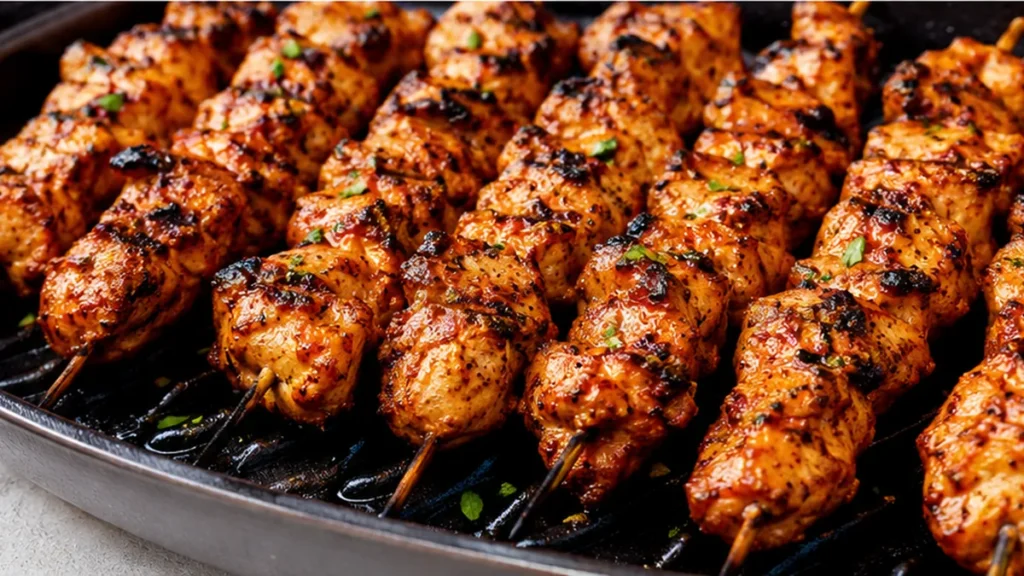
Butter chicken skewers offer a delightful way to enjoy the beloved flavors of butter chicken in a convenient, grill-friendly format. This recipe transforms tender chicken pieces into a succulent, spice-infused meal, perfect for a weeknight dinner or a special gathering. The secret to these butter chicken skewers lies in the rich, creamy marinade and an optional smoky finish that elevates the flavor profile. An authentic smoky flavor is hard to achieve without a tandoor, but the Dhungar method truly makes a difference. These butter chicken skewers are designed to deliver maximum taste with approachable steps.
Key takeaways
- Marinate chicken for at least 30 minutes for deep flavor and tenderness.
- Use medium-high heat for searing to develop a flavorful crust without overcooking.
- Cook chicken to an internal temperature of 165°F (74°C) and ensure juices run clear.
- Uniformly cut chicken pieces ensure even cooking and prevent dryness.
Sizzling Butter Chicken Skewers! So Juicy & Flavorful!
Ingredients
- 1 lb chicken tenders (or thighs cut into 1.5-inch pieces)
- 2 tbsp Greek yogurt
- 2 tbsp heavy cream
- 2 tbsp tomato paste
- 1 tbsp honey
- 1 tbsp lemon juice
- 2 tsp garlic paste
- 1 tsp ginger paste
- ½ tsp minced green chili
- 1 ½ tsp Kosher salt
Instructions
- In a large bowl, whisk together all marinade ingredients. Add chicken pieces and toss until well-coated. Let it sit for at least 20 minutes or refrigerate overnight if meal prepping.
- Make a small “well” in the center of the marinated chicken bowl and place a small heat-proof bowl or a piece of aluminum foil (shaped like a cup) on top of the chicken.
- Using tongs, hold a piece of charcoal over a gas flame until it is red-hot and glowing.
- Place the hot coal into the foil cup.
- Pour 1 teaspoon of ghee or oil directly onto the coal. It will start smoking immediately.
- Quickly cover the bowl with a tight-fitting lid or heavy foil to trap the smoke. Let it sit for 5 minutes.
- Thread the chicken onto four 8-inch metal or soaked wooden skewers. Leave a tiny bit of space between pieces to ensure the air circulates for even browning.
Notes
The Technique for Perfectly Tender and Flavorful Skewers
The success of these butter chicken skewers hinges on two key techniques: effective marination and proper searing. The marinade, a blend of yogurt, cream, tomato paste, honey, lemon juice, and aromatics, serves multiple purposes. The yogurt and cream provide fat and acidity, which tenderize the chicken by breaking down muscle proteins. This enzymatic action, combined with the salt, allows the flavors to penetrate deeply, ensuring each bite is succulent and well-seasoned. The honey contributes to caramelization, aiding in the Maillard reaction during cooking. The ginger and garlic pastes, along with green chili, infuse the chicken with classic butter chicken aromatics. For optimal results, allow the chicken to marinate for at least 30 minutes, or ideally 2-4 hours in the refrigerator, to fully absorb these flavors and tenderize effectively.
The second critical technique is achieving a proper sear without overcooking the chicken. When cooking on skewers, heat control is paramount. Whether grilling, pan-searing, or broiling, medium-high heat is ideal. This temperature is hot enough to create a flavorful Maillard crust on the exterior of the chicken pieces through rapid browning, but not so high that the outside burns before the inside is cooked through. Avoid overcrowding the cooking surface; this lowers the temperature and leads to steaming rather than searing, resulting in pale, less flavorful chicken. Turning the skewers frequently ensures even cooking and browning on all sides. The chicken is cooked when it reaches an internal temperature of 165°F (74°C) and the juices run clear.
Troubleshooting
- Problem: Chicken is dry and tough.
Fix: Ensure chicken pieces are uniform in size (around 1.5 inches) to cook evenly. Do not overcook; check for an internal temperature of 165°F (74°C). Marinating for longer (up to 4 hours) also helps tenderize. - Problem: Marinade is too thin and doesn’t coat chicken well.
Fix: The yogurt and cream should create a thick enough marinade. If it seems unusually thin, you can add a teaspoon more tomato paste or a touch more Greek yogurt to thicken it slightly before adding the chicken. - Problem: Chicken is burnt on the outside, raw inside.
Fix: Reduce the cooking heat to medium instead of medium-high. Ensure skewers are not too close together on the grill or pan, allowing for better air circulation and even heat distribution. Turn skewers more frequently. - Problem: Skewers are falling apart during cooking.
Fix: Ensure chicken pieces are cut into manageable, uniform sizes and threaded securely onto the skewers. If using wooden skewers, soak them in water for at least 30 minutes prior to prevent burning and splintering.
Substitutions
- Chicken: Boneless, skinless chicken thighs can be used instead of tenders for a richer, more forgiving texture. The cooking time may need slight adjustment.
- Greek Yogurt: Plain regular yogurt or sour cream can be substituted. The acidity and fat content are similar, providing comparable tenderizing effects.
- Honey: Maple syrup or agave nectar can replace honey. These will also contribute sweetness and aid in caramelization, though the flavor profile will be subtly different.
- Lemon Juice: Lime juice offers a similar tang and acidity, making it a suitable substitute for tenderizing and balancing the richness of the marinade.
Pro tips
- To ensure evenly cooked butter chicken skewers, cut chicken pieces uniformly. This helps them cook at the same rate.
- If using wooden skewers, soak them in water for at least 30 minutes before threading the chicken. This prevents them from burning on the grill.
- Don’t overcrowd the skewers; leave a little space between the chicken pieces to allow hot air to circulate, promoting even browning and cooking.
- For food safety, ensure chicken reaches an internal temperature of 165°F (74°C). Use a meat thermometer for accuracy.
- For storage, cooked butter chicken skewers can be refrigerated in an airtight container for up to 3-4 days. Reheat gently in the oven or microwave.
These Butter Chicken Skewers bring a delicious, smoky twist to a classic favorite. Experiment with different grilling techniques and enjoy this flavorful dish!
Frequently asked questions
Can I prepare the chicken ahead of time?
Yes, you can marinate the chicken for these skewers up to 4 hours in advance. Refrigerate the marinating chicken. This allows the flavors to meld and the chicken to become more tender, making it convenient for meal prep or serving guests.
What kind of skewers should I use?
Metal skewers are excellent as they conduct heat well and don’t require pre-soaking. If using wooden skewers, it is crucial to soak them in water for at least 30 minutes before use to prevent them from burning or splintering on the grill or in the oven.
How do I know when the chicken is cooked through?
The chicken is safely cooked when it reaches an internal temperature of 165°F (74°C) on an instant-read thermometer. Alternatively, check that the juices run clear when pierced with a fork or knife, and that the chicken is opaque throughout.
Can I make this recipe without skewers?
Absolutely. You can cook the marinated chicken pieces directly in a hot skillet or grill pan, ensuring not to overcrowd the pan. Alternatively, you can roast the pieces on a baking sheet in a preheated oven, similar to how you would cook traditional butter chicken pieces.
More from Air Fryer Chicken →