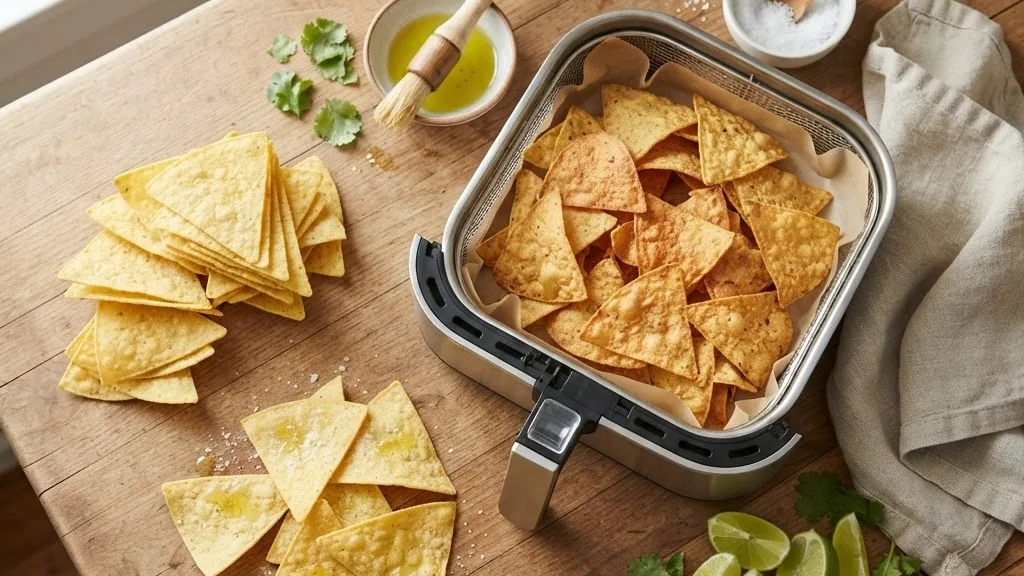
How to make tortilla chips in air fryer terms comes down to one routine: cut, oil lightly, salt, and run 350F for about six minutes. That is the whole trick. The rest of this guide is the detail that separates a pale, bendy chip from one that snaps.
The nutrition and browning notes below are cross-checked against USDA FoodData Central and the U.S. FDA.
Quick answer: To make tortilla chips in an air fryer, cut 6-inch corn tortillas into 6 wedges each, brush or spray both sides with a thin coat of oil, and salt them. Arrange the wedges in a single layer and air fry at 350F for 5 to 7 minutes, shaking or flipping at the 3-minute mark. Pull them when the edges are golden, not brown. White corn runs a minute or two longer than yellow. They keep crisping as they cool on a rack, so do not overcook. One tortilla yields 6 chips, so a stack of 8 gives you 48.
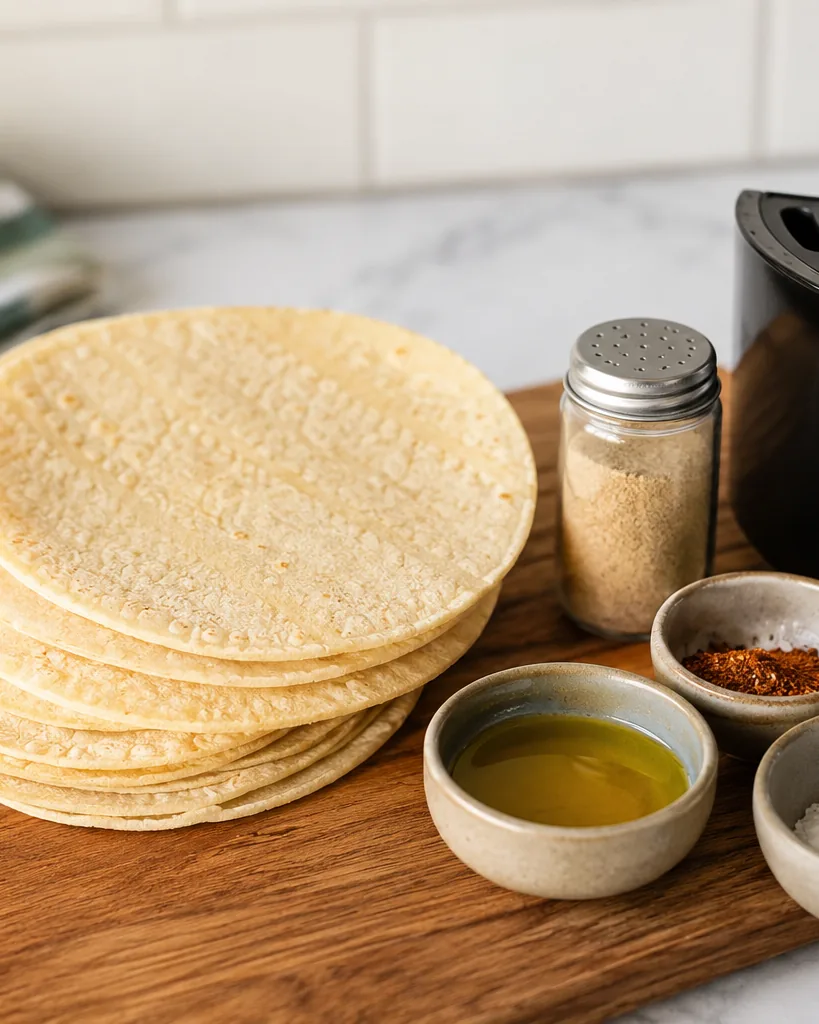
What you need before you start
This is a short list, which is part of why homemade chips work as a weeknight project instead of a store purchase. You need corn tortillas (yellow or white, the standard 6-inch size), a little oil, and salt. That is the core. Everything else is optional seasoning.
- Tortillas: plain 6-inch corn tortillas. Flour works too, but it behaves differently, as covered below.
- Oil: a neutral high-heat oil. Avocado oil holds up to roughly 480 to 520F and canola to about 400F, both far above any air fryer setting, so smoke is not a concern. A pump sprayer or a pastry brush beats aerosol cans, which sometimes carry additives that gum up a basket.
- Salt: fine sea salt sticks better than coarse. Use about a quarter teaspoon per 8 tortillas.
- A wire rack: optional, but cooling chips on a rack instead of a plate stops the residual steam that turns the bottoms soft.
One step to skip: do not soak or steam the tortillas first. Dry corn tortillas straight from the bag crisp better. If yours have been open a few days and feel leathery, a fresh pack is worth it more than any technique.
On oil choice, avocado oil, refined canola, and extra virgin olive oil give the same crunch on the same tortillas. Smoke point is not the deciding factor, because even olive oil at roughly 350 to 410F clears the 350F setting, canola sits near 400F, and avocado runs 480 to 520F. What mattered was flavor and application. Avocado is a good neutral default; olive oil adds a faint fruity note that suits cumin-paprika batches. The amount is the real variable: 1 to 2 teaspoons total for a stack of 8 tortillas, brushed on. A pump mister works, but aerosol sprays are best avoided, since the lecithin and propellants in some leave a sticky film that builds up on a basket.
The step-by-step method
Here is the exact sequence. One batch takes under ten minutes, and two batches can run back to back while a dip comes together.
- Stack and cut. Stack 3 or 4 tortillas, then cut the stack like a pizza into 6 wedges. Six is the right number: eighths get too small and curl, quarters stay chewy in the middle.
- Oil both sides, lightly. Lay the wedges out and brush or mist a thin coat on each side. The common mistake is drenching them; soaked chips fry unevenly and taste greasy. You want a sheen, not a puddle. One to two teaspoons of oil covers 8 tortillas.
- Salt immediately. Salt while the oil is still wet so it grabs. If you wait, it slides off the finished chip.
- Load a single layer. Arrange the wedges in one layer with minimal overlap. In a 6-quart basket that is about one tortilla worth, 8 to 10 wedges, per batch. Crowding is the number one reason chips come out pale and floppy.
- Air fry at 350F for 5 to 7 minutes. Set the timer for 5 to start.
- Shake or flip at the halfway mark. At about 3 minutes, pull the basket and toss or flip the wedges so the tops and bottoms swap. Air fryers cook from the top down, and this one move fixes uneven color.
- Pull at golden, cool on a rack. Take them out when the edges are golden and the centers look dry. They firm up as they cool over the next couple of minutes.
If your first batch comes out with a few soft chips, do not re-run the whole load. Just return the soft ones for another 60 to 90 seconds. They cook faster the second time because they have already dried out.
Corn vs flour: they are not the same chip
Most tortilla chips you buy are corn, and corn is the better choice because it crisps into that classic snap. Flour tortillas make a lighter, blistered chip that leans closer to a fried flatbread. Both work in the air fryer, but they need different handling, and treating flour like corn is how you burn a batch.
Corn tortillas are sturdier and forgiving. They hold at 350F and give you a window of a minute or two before they go too dark. Flour tortillas are thinner and full of a little fat and sugar already, so they brown fast and can scorch in seconds. For flour, drop to 325 to 350F, watch for 4 to 6 minutes, and check early. White corn versus yellow corn is a smaller gap: white simply runs about a minute or two longer to reach the same color, closer to 7 or 8 minutes.
Texture is where the two really split. A finished corn chip is rigid and breaks with a clean crack, standing up to a heavy scoop of salsa without folding. A flour chip stays a little flexible even when crisp, with air pockets that blister like a fried tortilla, so it shatters into shards rather than snapping. That makes corn the better dipper and flour the better base for cinnamon-sugar dessert chips. Thickness also matters more than color name: a thick handmade-style corn tortilla can need an extra minute over a thin mass-market one, so read the chip, not the clock.
Temperature and timing table
These are the settings worth keeping taped inside a cabinet. Times assume a single layer with a shake at the halfway point; add time for a crowded basket, and start checking early if your machine runs hot.
| Tortilla type | Temperature | Time | Texture and notes |
|---|---|---|---|
| Yellow corn, 6-inch | 350F | 5 to 6 min | Classic hard snap; the reliable default. |
| White corn, 6-inch | 350F | 7 to 8 min | A touch more delicate; needs the extra minute or two. |
| Flour, 6 to 8-inch | 325 to 350F | 4 to 6 min | Light and blistered; browns fast, check early. |
| Low-and-slow corn | 300F | 3 min + flip + 3 min | Very even color, less risk of burning, a good choice for guests. |
| Re-crisping stale chips | 300 to 325F | 1 to 2 min | Revives softened chips without darkening them. |
The low-and-slow line at 300F is worth trying if you have ever pulled a batch that was half burnt and half raw. Splitting the cook and flipping in the middle gives the fan time to dry the chips evenly before any edge browns. It costs an extra minute and buys a lot of consistency.
Getting the crisp right: the small stuff that matters
Once the basic method works, the difference between a decent chip and one that shatters cleanly comes down to a handful of habits. These are the ones that change results the most.
- Do not crowd. It bears repeating because it is the single biggest lever. Overlapping wedges steam each other. Fewer chips per batch, more batches, better chips.
- Keep light chips down. A strong fan can lift a dry wedge into the heating element, where it scorches or, in a bad case, smokes. A small metal rack set over the chips, or just a shake every couple of minutes, keeps them put. This is also why loose parchment should not go under bare chips at the start; the fan can blow it up into the element.
- Pull at golden, not brown. Beyond taste, there is a real reason. According to the U.S. FDA guidance on acrylamide, acrylamide forms in starchy plant foods during high-heat cooking, and browned areas carry more of it than golden ones, so cooking to a lighter color lowers it. Golden chips taste better and are the safer target.
- Let them cool. Chips out of the basket feel slightly bendy for 30 to 60 seconds, then set hard. If you judge doneness while they are hot, you will overcook every time.
Two failure modes come up the most. Soggy chips almost always trace back to a crowded basket or too much oil; the wedges cannot shed moisture, so they steam soft instead of crisping. The fix is fewer chips per batch, a lighter oil hand, and a 60 to 90 second return trip for stragglers. Burnt chips are the opposite: too high a temperature for a thin tortilla, no shake, or walking away. Corn goes from golden to scorched in under a minute at the end, so watch the final two minutes of every batch. If one batch burns, drop the temperature 15 to 25 degrees for the next rather than just shortening the time, because a cooler, slightly longer cook browns more evenly.
Batch sizing is worth planning if you are feeding a crowd. Each tortilla gives 6 chips, and a single layer in a 6-quart basket is one tortilla worth, so a party bowl of 40-plus chips is 7 or 8 back-to-back batches. Start early and hold finished chips on a sheet pan in a 200F oven so they stay crisp and warm while the rest cook. A larger oven-style air fryer with rack shelves cuts that down, but the single-layer rule still governs how many you crisp at once.
If you are new to the machine and your color comes out patchy, a short warm-up helps. The notes on how to preheat an air fryer explain when it is worth it; for chips a 2 to 3 minute preheat gives more even browning, though you can skip it and just add a minute.
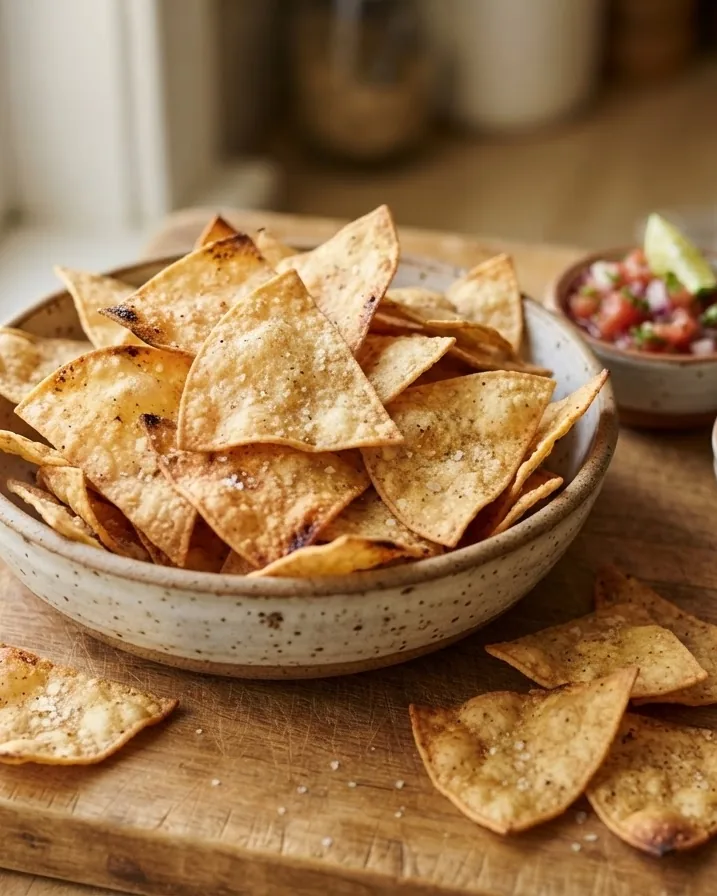
Seasoning: past plain salt
Plain salted corn chips are the workhorse, but the air fryer makes flavored batches easy because the oil coat is your glue for any dry spice. Toss the seasoning on right after the oil, before cooking, so it bakes onto the chip instead of falling off later.
- Chili-lime: a Tajin-style blend of chili, lime, and salt. My most-requested version.
- Cumin and smoked paprika: a quarter teaspoon each with the salt gives a taco-adjacent, smoky chip.
- Garlic and onion: equal parts garlic powder and onion powder for a savory, nacho-leaning base.
- Lime and salt: a squeeze of lime into the oil, then salt. Bright and simple.
- Cinnamon-sugar: the dessert move, and the one case where flour tortillas are the better pick. Oil, then cinnamon-sugar, then air fry gently. These go great with fruit or a chocolate dip.
A word on wet toppings: keep cheese, salsa, and anything liquid off the chip until after it cooks. If you want fully loaded chips, crisp them first, then build. My approach to that lands in air fryer nachos, where the chips go in bare and the cheese gets its own short blast at the end.
Nutrition and why air frying wins here
This is the strongest case for making your own. A single 6-inch corn tortilla runs about 52 to 57 calories with roughly 11 grams of carbohydrate, around 1.4 grams of protein, and about 1.4 to 1.6 grams of fiber, according to USDA FoodData Central. Because the air fryer needs only a thin oil coat instead of a fry bath, the finished chips stay close to that baseline.
Compare that to deep frying, which soaks each ounce of chips with roughly 6 to 10 grams of added fat from the oil. That is the entire calorie gap in a bag of store chips. A batch from 8 tortillas uses a teaspoon or two of oil across all 48 chips, not a pot of it. The chip still tastes fried because the dry, fast heat crisps the surface the same way, without carrying the oil into the center.
None of this makes a chip a health food. It is a snack. But if you are going to eat chips, controlling the oil and the salt yourself is a genuine improvement over the bag, and you skip the preservatives too.
Storing and reviving your chips
Fresh chips are best the day you make them, but they keep well. Let them cool completely first; sealing warm chips traps steam and softens them by morning. Once cool, store them in an airtight container or a zip bag at room temperature, where they hold their crunch for about 3 to 5 days.
When they do soften, do not toss them. A quick 1 to 2 minutes at 300 to 325F drives the moisture back out and they snap again, no new oil needed. A jar of odds and ends kept for this purpose ends up crushed over soups or turned into a fast batch of chilaquiles. If you like thin strips for topping salads or soups instead of dipping wedges, the same method scales down to the air fryer tortilla strips, cut narrow and pulled a touch earlier.
On pairings, the chip and the dip should match in weight. Rigid corn chips go next to anything chunky and heavy: a thick guacamole, a pico de gallo, or a bean dip that would fold a lesser chip. The lighter, blistered flour chips do better with thinner dips like queso or crema. Salt is the other half: if a dip is already salty, pull back to a bare pinch on the chips, and when the chips are the whole snack, chili-lime seasoning with a squeeze of fresh lime needs no dip at all.
Frequently asked questions
Can you make tortilla chips in an air fryer without oil?
Yes, and they still crisp. Oil mainly helps salt stick and adds a little browning and richness. Skip it and the chips come out drier and a shade paler, so add a minute and salt them the moment they finish while any surface moisture can still grab the salt.
Why are my air fryer tortilla chips not crispy?
Almost always crowding or pulling them too soon. Chips steam each other when they overlap, so cook a single layer in smaller batches. And remember they finish crisping as they cool, so a chip that feels bendy in the basket often sets hard a minute later.
What temperature is best for tortilla chips in an air fryer?
350F is the default for corn tortillas, giving a snap in 5 to 7 minutes. Drop to 300F and split the cook if you want very even color with less burn risk, and use 325 to 350F for thinner flour tortillas since they brown faster.
Do I need to flip the chips halfway through?
Yes. Air fryers heat mostly from the top, so shaking or flipping at about the 3-minute mark evens out the color. Skip it and you get one dark side and one pale side on the same chip.
Can I use flour tortillas instead of corn?
You can. Flour makes a lighter, blistered chip closer to fried flatbread, and it browns fast, so run 325 to 350F for 4 to 6 minutes and check early. Corn gives the classic hard snap most people expect from a tortilla chip.
How do I keep the chips from flying around in the basket?
Set a small metal rack over them or give the basket a shake every couple of minutes. Light, dry wedges can lift into the heating element on a strong fan, which scorches them and can cause smoke.nnSources: USDA FoodData Central (corn tortilla nutrition) and the U.S. Food and Drug Administration (acrylamide and cooking to a golden color).