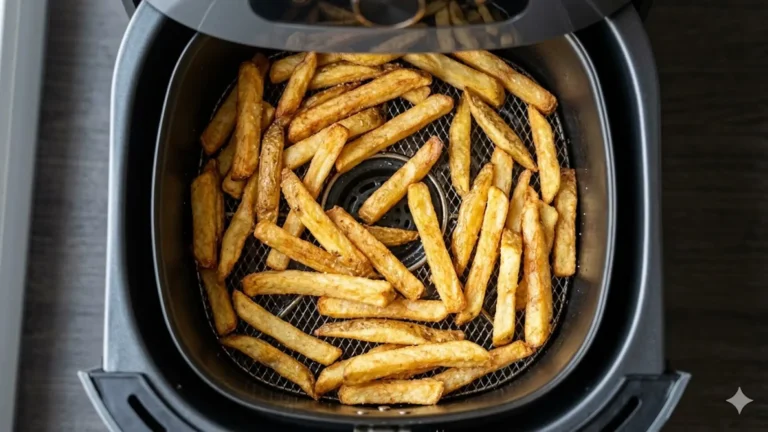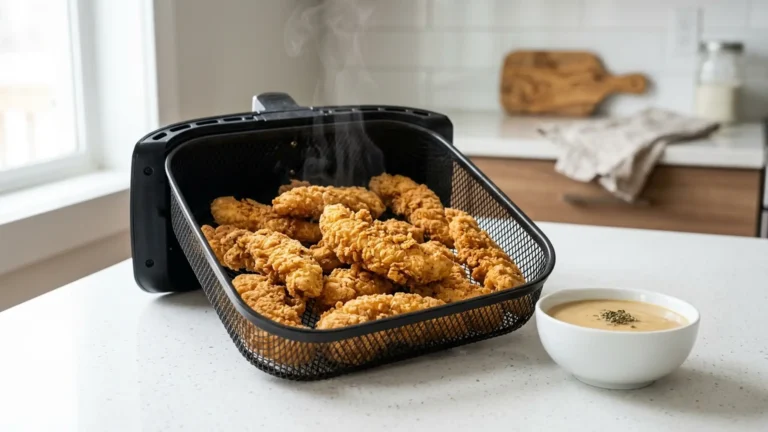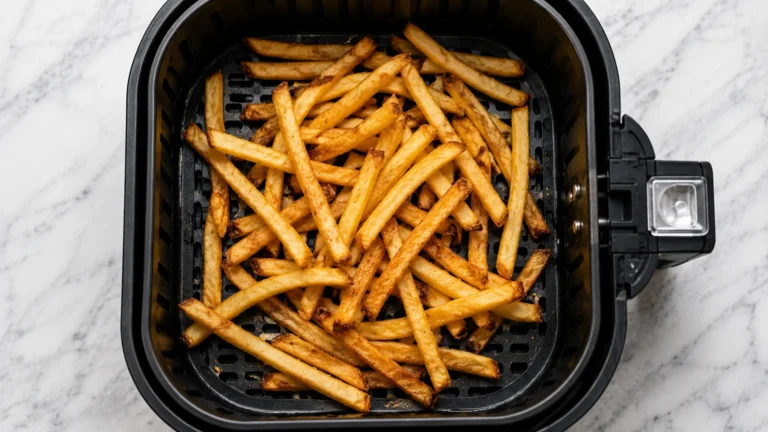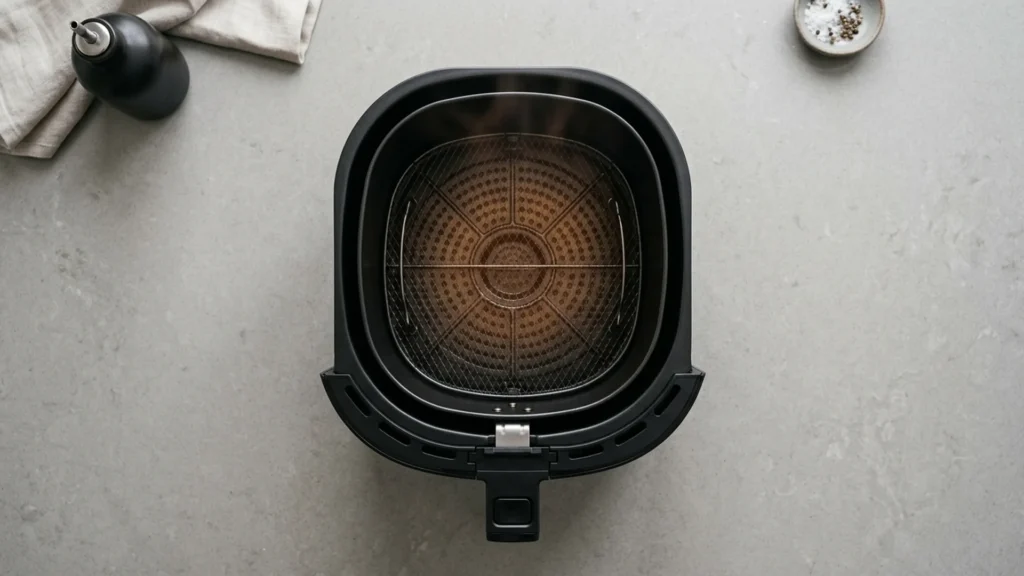
How to preheat air fryer is simpler than most people think: set it to your cooking temperature, run it empty for 3 to 5 minutes, then add your food. That short, hot head start makes food crisp better and cook more evenly, because it starts searing the instant it touches the basket instead of warming up slowly with the appliance. Smaller air fryers need only 2 to 3 minutes; larger oven-style models want the full 5.
That said, preheating is not always worth it, and knowing when to skip it is half the skill. For quick-crisping foods and frozen items you want a hot basket. For low-and-slow cooking, delicate fish, or anything you are babysitting closely, preheating buys you nothing and can even work against you. This guide covers exactly how to preheat any style of air fryer, how long for each temperature, and the short list of foods where you should not bother.
If you came here because your recipe said preheat and you were not sure how, the short version is above and you are ready to cook. But preheating is one of those small habits that quietly separates people who get crisp, golden results from people who wonder why their air fryer food comes out a little pale and soft. It costs almost nothing, takes a few minutes, and on the right foods it is the difference between good and great. The rest of this guide explains the why behind it, the exact timing for your machine, and the cases where skipping it is actually the smarter move, so you can make the call confidently every time instead of guessing.
What preheating actually does
An air fryer crisps food by blasting it with hot, fast-moving air. When you put food into a cold air fryer and then turn it on, the appliance and the food heat up together, slowly. During those first few minutes the air is not hot enough to sear, so the food’s surface releases moisture and starts to steam before it ever crisps. That early steaming is why food cooked in a cold-start air fryer can come out paler and softer than you wanted.
Preheating fixes that. By running the air fryer empty until it reaches temperature, you make sure the food meets fully hot air the moment it lands in the basket. The surface sears immediately, moisture flashes off instead of pooling, and you get a crisper exterior and more even browning. It is the same reason you preheat an oven before roasting or a skillet before searing a steak: you want the cooking surface hot before the food arrives.
The effect is biggest for foods where crispness is the goal and where the cook time is short enough that a slow start eats a meaningful chunk of it. A two-minute cold-start lag matters a lot on a six-minute fry and barely registers on a thirty-minute roast. That is the core of when preheating pays off, which I will lay out concretely below. Our broader guide on how to use an air fryer covers preheating as one of several habits that separate crisp results from soggy ones.
It is worth being honest that preheating is one of the more debated habits in the air fryer world, and the disagreement comes from people generalizing from different foods. Someone who mostly cooks frozen snacks swears by preheating, because for their foods it makes a real difference. Someone who mostly bakes or cooks delicate proteins finds it pointless or even harmful, because for their foods it is. Both are right about their own cooking and wrong to generalize. The truth is that preheating is food-specific, not a blanket rule, and the goal of this guide is to give you the dividing line so you never have to wonder which camp is correct for the dish in front of you. Once you can sort a food into crisp-and-fast versus gentle-and-slow, the preheat decision makes itself.
How to preheat, step by step
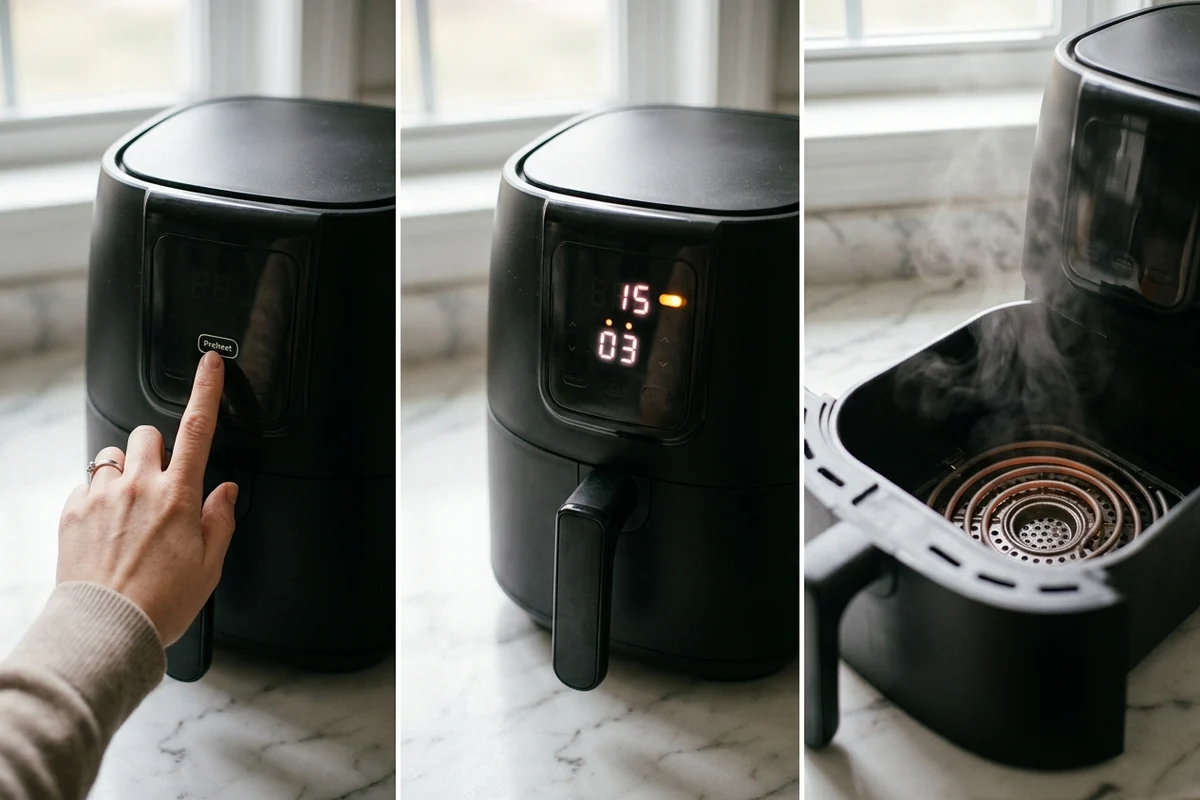
The process is the same on almost every machine, with one variation for models that have a dedicated preheat button. Here is the universal method first.
Leave the basket in place unless your manual specifically says to preheat empty without it; the basket needs to be hot too, so most machines preheat with the basket installed. Set the temperature dial or display to the temperature your recipe calls for, the same number you will cook at, not higher. Start the machine with nothing inside and let it run for 3 to 5 minutes. When the time is up, the basket and the air inside are at temperature, so open it, add your food in a single layer, reset the timer to your cook time, and go.
If your air fryer has a preheat button or setting, use it: press preheat, and the machine runs to temperature and usually beeps or signals when it is ready, taking the guesswork out. Some models preheat to a fixed temperature regardless of your cook setting, so check the manual, but functionally it does the same job. Either way, the moment it signals ready, add your food promptly so the basket does not cool down while you fuss with the food.
Preheat time by temperature and air fryer style
How long to preheat depends on two things: the temperature you are aiming for, and the style and size of your air fryer. Basket-style air fryers have a small chamber and heat up fast. Oven-style and larger models have more space to heat and take longer. Here is a practical chart to start from.
| Target temperature | Basket-style (small) | Oven-style or large |
|---|---|---|
| 300 to 325 F | 2 min | 3 to 4 min |
| 350 to 375 F | 3 min | 4 to 5 min |
| 400 F and above | 3 to 4 min | 5 min |
A couple of notes. First, these are starting points, not laws; air fryers vary by brand and wattage, so a high-powered compact model may reach 400 in 2 minutes while a big oven-style unit needs a full 5. After a few uses you will learn your machine’s pace. Second, there is no benefit to over-preheating. Running the machine empty far longer than it needs to reach temperature just wastes energy and, in some models, can trip a thermal cutoff. Once it is at temperature, it is ready; more time does nothing.
If your air fryer has no window and no preheat signal, you can tell it is ready by time alone using this chart, or by the simple fact that most machines hold steady at their set temperature after the listed minutes. There is no need to open the basket repeatedly to check, since opening it lets the hot air out and resets your progress.
When to preheat, and when to skip it
Preheating is a tool, not a rule, and using it on the wrong foods wastes time or even hurts results. Here is the clear divide. Preheat when crispness is the goal and the cook is short and hot. Skip it when the cook is long and gentle, or when the food is delicate.
| Food or situation | Preheat? | Why |
|---|---|---|
| Frozen fries, nuggets, frozen foods | Yes | Hot basket crisps the surface immediately |
| Raw meats you want seared | Yes | Instant sear locks in juices and browns |
| Reheating leftovers for crisp | Yes | Re-crisps the exterior fast |
| Low-and-slow cooking | No | Gentle even heat matters more than a sear |
| Delicate fish or baked goods | No | A blast of heat can overcook the outside |
| Toast and quick dry items | No | Cook time is short; preheat adds no benefit |
The pattern is consistent. High-heat, crisp-focused, short cooks love a preheat, which is why frozen items are the textbook case; a screaming-hot basket is exactly what crisps a frozen fry. Long, gentle bakes and delicate proteins do better with a cold or warm start, because they need even, patient heat rather than an aggressive sear that can dry or scorch the outside before the inside cooks. When in doubt, ask whether you are chasing a crisp exterior in a hurry. If yes, preheat; if no, skip it.
This is also why we tell people not to preheat for cooking salmon in the air fryer the same way you would for fries: fish is delicate, and a gentler start gives you moist, flaky results instead of a tough, overdone exterior.
Basket-style vs oven-style vs preheat-button models
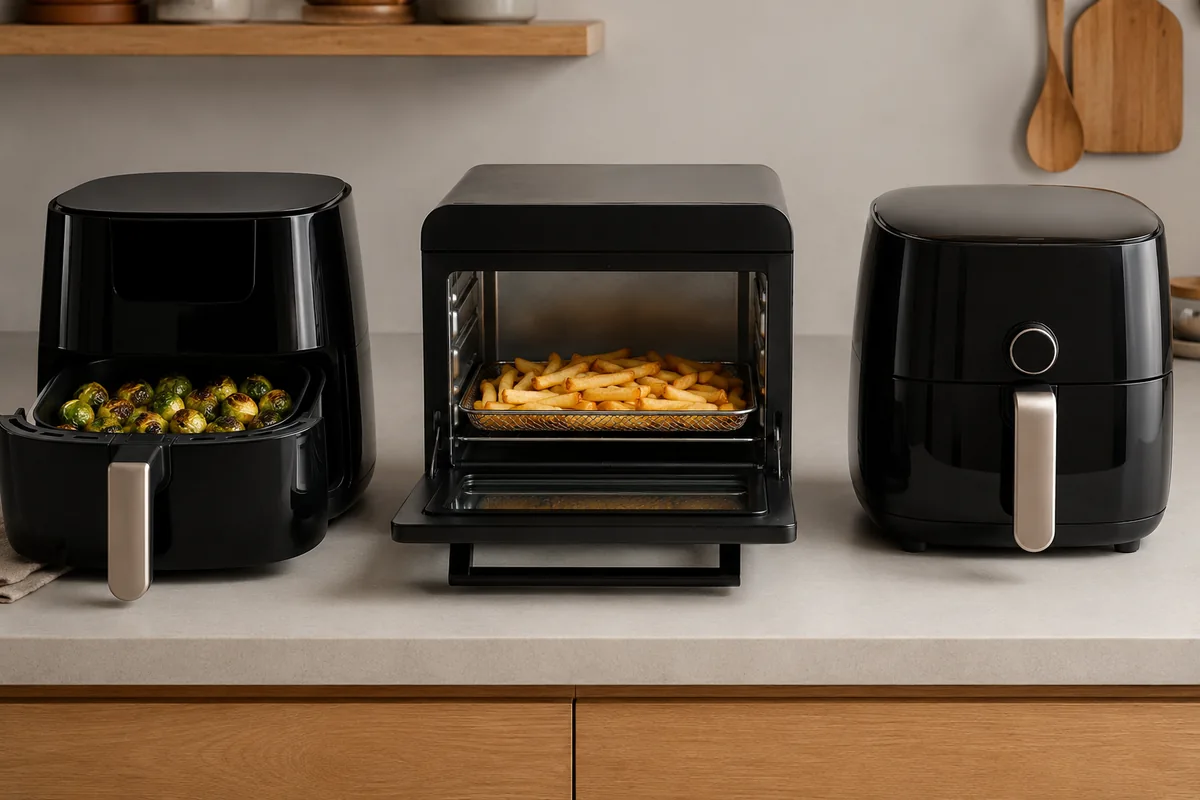
Air fryers come in three broad designs, and each preheats a little differently, so knowing which you own helps. Basket-style air fryers, the classic pod or drawer shape, have a small chamber and a powerful fan close to the food, so they heat up fastest and crisp aggressively. For these, 2 to 3 minutes is usually plenty, and preheating makes a noticeable difference because the small space gets hot quickly and holds it.
Oven-style air fryers, the larger countertop boxes with racks, have more interior volume to heat and the heating element is farther from the food. They take longer to preheat, a full 5 minutes is common, and because they behave more like a small convection oven, the preheat matters for getting that whole chamber up to temperature. If you cook on multiple racks, preheating helps the upper and lower racks start even.
Models with a preheat button, common on Ninja, Cosori, and Instant brands, do the work for you and signal when ready. The only thing to watch is that some preheat to a default temperature rather than your cook setting, so glance at the manual. Across all three styles, the underlying goal is identical: a hot basket before the food goes in. The experts at Serious Eats have noted that a preheated cooking surface is what gives you immediate browning, and that holds whether your air fryer is a tiny basket or a full countertop oven.
Common preheating mistakes
A few small errors undercut the benefit of preheating, and they are easy to avoid once you know them. The first and biggest is preheating with the food already inside. If you put food in and then start the preheat, you have not preheated at all, you have just cold-started a longer cook, and the food steams during the warm-up exactly as it would without any preheat. Always preheat empty, then add the food.
The second mistake is preheating too long, thinking more is better. Once the machine hits temperature, extra empty running does nothing useful and wastes energy. Follow the chart, and if your machine has a ready signal, trust it. The third is forgetting to add the food promptly. If you preheat and then take three minutes to bread your chicken, the basket cools and you have lost your head start. Have the food ready to go before the preheat finishes.
The last common error is preheating when you should not, on delicate or long-cook foods, and then wondering why the outside overcooked. Match the technique to the food using the table above. Preheating is powerful for the right jobs and counterproductive for the wrong ones, and the difference between a crisp fry and a dried-out fillet often comes down to whether you preheated when you should have, or skipped it when you should not have. The USDA reminds cooks that even heating to a safe internal temperature matters most, and a proper preheat helps food reach that temperature evenly on the foods that benefit from it.
Does preheating save time or use more energy?
A fair question, since preheating runs the machine for a few extra minutes before the food even goes in. The answer is that for crisp-focused foods, preheating usually saves total time rather than adding it, because the food cooks faster once it lands in a hot basket and you spend less time waiting for it to crisp at the end. A frozen fry that goes into a preheated basket can finish a couple of minutes sooner and come out crisper, so the 3-minute preheat largely pays for itself. The energy cost of those few preheat minutes is small, since an air fryer draws far less power than a full oven and the chamber is tiny.
Where preheating genuinely costs you time with no payoff is on long, gentle cooks. If something is going to roast for 25 minutes at a moderate temperature, the food will warm the chamber as it cooks and a separate preheat adds minutes for no crisping benefit. That is the real reason the skip-it list exists: it is not just that preheating fails to help those foods, it is that it wastes a few minutes and a little energy you did not need to spend. So the energy-smart rule lines up exactly with the quality rule. Preheat the short, hot, crisp-focused cooks where it improves the result and often shortens the cook, and cold-start the long, gentle ones where it would only add waiting. Used this way, preheating is a net time-saver across a week of cooking, not a tax.
FAQ
Do you really need to preheat an air fryer?
Not always. Preheat for crisp-focused, short, hot cooks like frozen fries, seared meats, and reheating leftovers, where a hot basket crisps the surface immediately. Skip it for low-and-slow cooking, delicate fish, baked goods, and quick items like toast, where a gentle start gives better results.
How long should I preheat my air fryer?
Usually 3 to 5 minutes. Small basket-style air fryers need only 2 to 3 minutes, while larger oven-style models want the full 5. Higher target temperatures take slightly longer than lower ones, but most machines reach cooking temperature within 5 minutes regardless.
What temperature do I preheat the air fryer to?
Set it to the same temperature you plan to cook at, not higher. The goal is for the basket and air to reach your cooking temperature before the food goes in. Some models with a preheat button use a fixed default temperature, which is fine; check your manual.
Should the basket be in during preheating?
Yes, in almost all cases. The basket needs to be hot too, so leave it installed while you preheat, unless your specific manual says otherwise. A hot basket helps food crisp on contact, which is the whole point of preheating.
Can I preheat with the food already inside?
No, that defeats the purpose. If the food is in during the warm-up, it steams as the machine slowly heats, exactly as it would with no preheat at all. Always preheat the air fryer empty, then add your food once it reaches temperature.
Does my Ninja or Cosori air fryer need preheating?
Many of these models have a dedicated preheat button that runs the machine to temperature and signals when ready, so use it for crisp-focused cooks. Some preheat to a default temperature rather than your cook setting, so check the manual. The same skip-it rules apply for delicate or long-cook foods.
Bottom line
Preheating an air fryer is as easy as running it empty at your cooking temperature for 3 to 5 minutes, then adding the food, and it pays off most for frozen items, seared meats, and crisp reheats where a hot basket makes the difference. Match the time to your machine: 2 to 3 minutes for small basket models, a full 5 for large oven-style units. Skip the preheat for delicate fish, baked goods, and low-and-slow cooking, where a gentle start works better. Avoid the big mistakes of preheating with food inside or for too long, learn your specific machine’s pace, and preheating becomes a quick habit that quietly improves your crispest dishes.