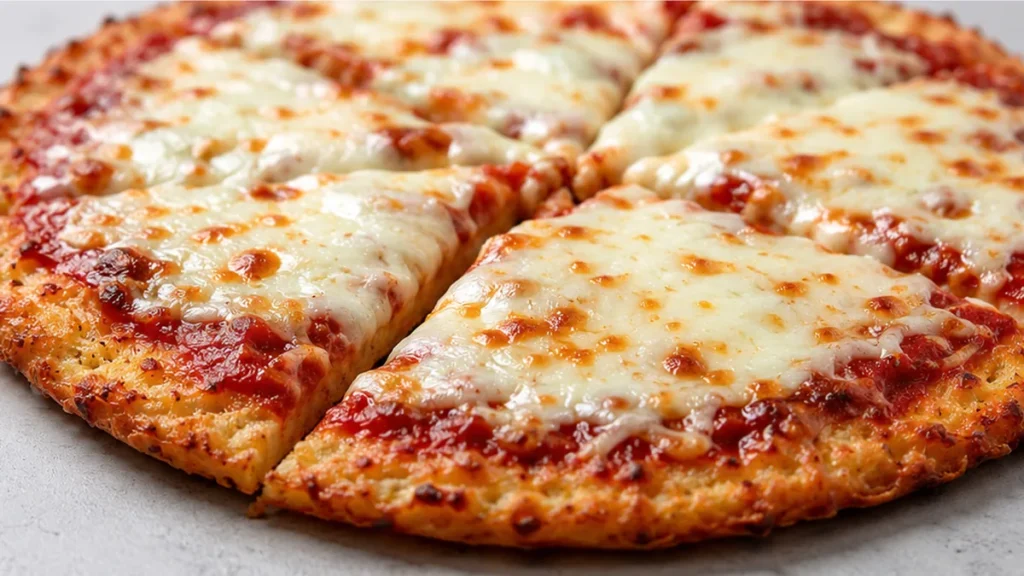
Keto pizza offers a satisfying way to enjoy classic flavors while keeping carbs in check. This recipe uses a clever combination of almond flour, eggs, and cheese to create a crust that achieves the perfect balance of crispiness without dryness, making it sturdy enough for all your favorite toppings.
Key takeaways
- Using almond flour keeps the pizza low-carb while adding healthy fats.
- Pre-baking the crust helps prevent sogginess from toppings.
- Combining cheddar and mozzarella creates a perfect texture and flavor balance.
- Proper mixing techniques ensure a stable dough consistency for the crust.

Keto Pizza: Crispy Crust, Zero Guilt!
Ingredients
- 2 large eggs
- 2 tablespoons cottage cheese
- 2 tablespoons butter, melted
- 1 cup almond flour
- 1/2 teaspoon garlic powder
- 1/4 teaspoon pink Himalayan or sea salt
- 1 cup shredded cheddar cheese
- low-carb pizza sauce (like Rao’s)
- shredded mozzarella cheese
- pepperoni, sausage, veggies
Instructions
- Preheat oven or air fryer to 400 degrees Fahrenheit and line a cookie sheet or pizza stone with parchment paper.
- In a medium bowl, whisk together the eggs, cottage cheese, and melted butter. Set aside.
- In a separate bowl, whisk together the almond flour, garlic powder, and pink Himalayan or sea salt. Add the dry mixture to the wet ingredients and stir to combine. Stir in the shredded cheddar cheese.
- Roll the dough between two parchment paper sheets to desired size, thickness, and shape. Chill the dough in the fridge for about 10 minutes if needed. Peel off the top parchment sheet.
- Bake the crust on the bottom parchment sheet on a baking sheet for 12-14 minutes or until desired crispiness.
- Remove from oven and load with low-carb pizza sauce, shredded mozzarella cheese, and your favorite toppings.
- Bake pizza for another 5-8 minutes or until the cheese is melted. Top with grated Parmesan cheese if desired.
Notes
Understanding the Role of Almond Flour in Keto Pizza
Almond flour is a crucial ingredient in keto pizza, providing a gluten-free alternative to traditional wheat flour. It contains about 14 grams of fat and 6 grams of protein per 28-gram serving, making it low in carbohydrates while high in healthy fats. The key to a successful crust lies in the moisture content; too much moisture can lead to a soggy base, while too little can make it crumbly. Aim for a dough consistency that holds together but isn’t overly wet.
Achieving the Perfect Cheese Blend for Texture
The combination of cheddar and mozzarella cheese in this recipe enhances both flavor and texture. Cheddar adds a sharp taste, while mozzarella contributes to the stretchy, gooey quality that many expect from pizza. Using a total of 1 cup of cheese ensures that the crust binds well together. When melted, these cheeses create a pleasant chewiness, essential for a satisfying pizza experience.
Preventing a Soggy Crust
A common issue with keto pizza is a soggy crust. This can happen if the dough is too wet or if toppings release excess moisture. To mitigate this, consider pre-baking the crust for 10-15 minutes at 400°F (200°C) before adding sauce and toppings. This step helps form a barrier that prevents moisture from seeping into the crust.
Choosing the Right Toppings for Keto Pizza
When selecting toppings for keto pizza, opt for low-carb options like pepperoni, sausage, or non-starchy vegetables. Each topping should be checked for carbohydrate content; for instance, traditional pepperoni has about 0.1 grams of carbs per slice. Limit high-carb ingredients like sweet sauces or starchy vegetables to keep the pizza keto-friendly. Aim for a total of 1/2 to 1 cup of toppings to maintain the integrity of the crust.
Why Proper Mixing Techniques Matter
Mixing the ingredients correctly is essential for achieving the right texture in your keto pizza crust. Start by whisking the eggs and cottage cheese until smooth before adding melted butter. This creates a stable emulsion that helps bind the dry ingredients. Overmixing can introduce too much air, leading to a less dense crust. Aim for a mix time of about 1-2 minutes until just combined.
How to Prepare Keto Pizza Ahead of Time
Making keto pizza in advance can save you time during a busy week. To do this, prepare the crust and toppings separately. After baking the crust for about 10-12 minutes at 400°F (200°C), allow it to cool completely before storing. Wrap the crust in plastic wrap and place it in an airtight container in the refrigerator for up to 3 days. For longer storage, freeze the crust for up to 2 months. When ready to use, simply thaw in the refrigerator overnight and add your toppings before baking.
Adapting the Recipe for Different Serving Sizes
This keto pizza recipe can be easily scaled to accommodate different serving sizes. If you wish to make a larger pizza, simply double the ingredients and use a larger baking sheet or pizza stone. For smaller portions, halve the ingredient amounts. Keep in mind that cooking times may vary slightly; a larger pizza may take an additional 2-4 minutes to cook through, while smaller pizzas may cook faster. Always check for a golden-brown crust and melted cheese as indicators of doneness.
Choosing the Right Equipment for the Best Results
The equipment you use can significantly affect the outcome of your keto pizza. A pizza stone or steel is ideal for achieving a crispy crust, as it retains heat well and distributes it evenly. If using a baking sheet, preheat it in the oven for 10 minutes before placing the pizza on it. Additionally, a parchment paper liner can prevent sticking and make cleanup easier. Consider using a stand mixer with a paddle attachment for thorough mixing, which ensures the ingredients are well combined without overworking the dough.
Understanding the Impact of Ingredient Quality on Flavor
The quality of your ingredients can dramatically influence the flavor profile of your keto pizza. Freshly grated cheese, for example, melts better and has a richer flavor compared to pre-shredded varieties, which often contain anti-caking agents. Similarly, using high-quality almond flour can enhance the texture and taste of the crust. When selecting toppings, opt for fresh vegetables and high-quality meats to elevate the overall dish. Seasonal ingredients can also provide unique flavors; for instance, using fresh basil in summer or roasted root vegetables in fall can add a delightful twist to your pizza.
Understanding the Role of Egg in Keto Pizza Crust
The eggs in your keto pizza crust are crucial for binding the ingredients together and providing structure. When mixed with the almond flour and cottage cheese, the proteins in the eggs create a stable emulsion that helps the dough hold its shape during baking. For optimal results, use large eggs, weighing approximately 50 grams each. This ensures the right moisture content and binding properties. If you find your crust is too crumbly, it may be due to insufficient egg content or overmixing, which can denature the proteins. Aim for a dough consistency that is slightly tacky but holds together well.
How to Scale Your Keto Pizza Recipe for Different Cravings
Scaling your keto pizza recipe can be straightforward, but it requires careful attention to ingredient ratios. For larger batches, simply multiply the ingredient amounts while maintaining the same ratios. For instance, if you want to make two pizzas, double all ingredients, including the eggs and cheese. However, keep in mind that baking time may vary; larger pizzas may require an additional 5-10 minutes in the oven to ensure the crust cooks through. Conversely, for smaller portions, consider making mini pizzas, which can bake faster and allow for varied toppings without committing to a full pizza.
Choosing the Right Baking Surface for Perfectly Crisped Keto Pizza
The choice of baking surface significantly impacts the crispiness of your keto pizza crust. A pizza stone, preheated in the oven, absorbs moisture and distributes heat evenly, resulting in a better crust texture. Alternatively, a metal baking sheet can also work, though it may not yield the same level of crispiness. If using a baking sheet, consider lining it with parchment paper for easier cleanup and to help prevent sticking. Ensure your oven is preheated to at least 425°F (220°C) for the best results, as this high temperature helps create that desirable crust without overcooking the toppings.
Understanding the Importance of Resting the Dough for Keto Pizza
Resting the dough is crucial for achieving the right texture in keto pizza. After mixing the ingredients, allow the dough to rest for at least 10-15 minutes. This resting period helps the almond flour absorb moisture and allows the proteins in the eggs to relax, resulting in a more pliable crust. If you skip this step, the dough may not hold together well and can become crumbly, leading to a less satisfying texture. Additionally, resting allows flavors to meld, enhancing the overall taste of your pizza.
Scaling Your Keto Pizza Recipe for Different Cravings
Scaling your keto pizza recipe is straightforward, but it requires careful adjustments to maintain the right texture and flavor balance. For a larger pizza, simply multiply the ingredient quantities by the desired size ratio. For instance, doubling the recipe for a 12-inch pizza would mean using 4 large eggs, 4 tablespoons of cottage cheese, and so forth. However, keep in mind that baking time may vary. A larger pizza could require an additional 5-10 minutes in the oven to ensure the crust cooks through without burning. Conversely, if you’re making mini pizzas, reduce the baking time by a few minutes to avoid overcooking. Always check for a golden brown color and a firm crust as indicators of doneness.
Understanding the Importance of Ingredient Freshness for Keto Pizza
The quality and freshness of your ingredients can significantly influence the flavor and texture of your keto pizza. For instance, using fresh almond flour, rather than older stock, ensures better moisture retention and a more pronounced nutty flavor. Fresh cheeses, especially mozzarella and cheddar, will melt better and create a creamier texture. Aim to use eggs that are as fresh as possible; they contribute to the crust’s structure and flavor. Additionally, the low-carb pizza sauce should be checked for its expiration date, as older sauces may lose their vibrant flavor and could introduce unwanted off-tastes. When using vegetables as toppings, opt for crisp, vibrant selections that are in season, as they will enhance the overall taste profile of the pizza. Consider that the moisture content in fresh vegetables can vary; for instance, summer tomatoes are juicier than winter varieties, which may require adjustments in cooking time or technique to avoid a soggy crust.
How to Scale Your Keto Pizza Recipe for Different Cravings
Scaling your keto pizza recipe can be straightforward once you understand the ratios of the main ingredients. The foundational crust recipe can be easily doubled or halved based on your needs. For instance, if you want to make a larger pizza, simply double the amount of almond flour, eggs, and cheese proportionately. However, keep in mind that the baking time may vary: a larger pizza could require an additional 5-10 minutes in the oven, while a smaller one might cook faster. If you’re making mini pizzas, consider using a muffin tin to help maintain an even thickness, which aids in uniform cooking. Adjust the toppings accordingly; for instance, if you’re making smaller pizzas, you might want to reduce the amount of sauce and cheese to prevent overwhelming the crust. Always monitor the crust closely during baking; thinner pizzas will brown faster, while thicker ones may need more time to ensure the center is fully cooked.
Pro tips
- For an extra crispy crust, bake the base a few minutes longer before adding toppings. The drier the crust, the crispier the final result will be.
- If your dough is too sticky, chilling it for 10-15 minutes can make it easier to handle and roll between parchment paper sheets.
- Ensure your oven is fully preheated to achieve an even bake and prevent a soggy crust. A hot oven helps the crust set quickly.
- Store leftover keto pizza slices in an airtight container in the refrigerator for up to 3 days. Reheat in a preheated oven at 350°F (175°C) for 5-7 minutes for best results, or until heated through and crisp.
This keto pizza recipe proves that you don’t have to sacrifice flavor or texture to enjoy your favorite foods on a low-carb diet. Experiment with different low-carb toppings to discover your perfect combination. Enjoy your guilt-free pizza night!
Frequently asked questions
Can I use a different flour instead of almond flour?
While almond flour is ideal for keto pizza due to its low-carb content, you could use coconut flour. However, coconut flour is more absorbent, so you would need to adjust the liquid ingredients, typically using about 1/4 of the amount of coconut flour compared to almond flour.
How do I store leftover keto pizza?
Leftover keto pizza can be stored in an airtight container in the refrigerator for up to 3 days. For longer storage, consider freezing individual slices, which can be wrapped in plastic wrap and then placed in a freezer-safe bag for up to 2 months.
Can I make the dough ahead of time?
Yes, you can prepare the keto pizza dough ahead of time. After mixing, shape it into a disc, wrap it tightly in plastic wrap, and refrigerate for up to 24 hours. Allow it to come to room temperature before rolling it out and baking.
What can I use as a low-carb pizza sauce?
Low-carb pizza sauces like Rao’s or homemade versions made with crushed tomatoes, olive oil, and herbs are excellent choices. Always check the label for added sugars, aiming for sauces with less than 5 grams of carbs per serving to keep your pizza keto-friendly.
More from Air Fryer Snacks →