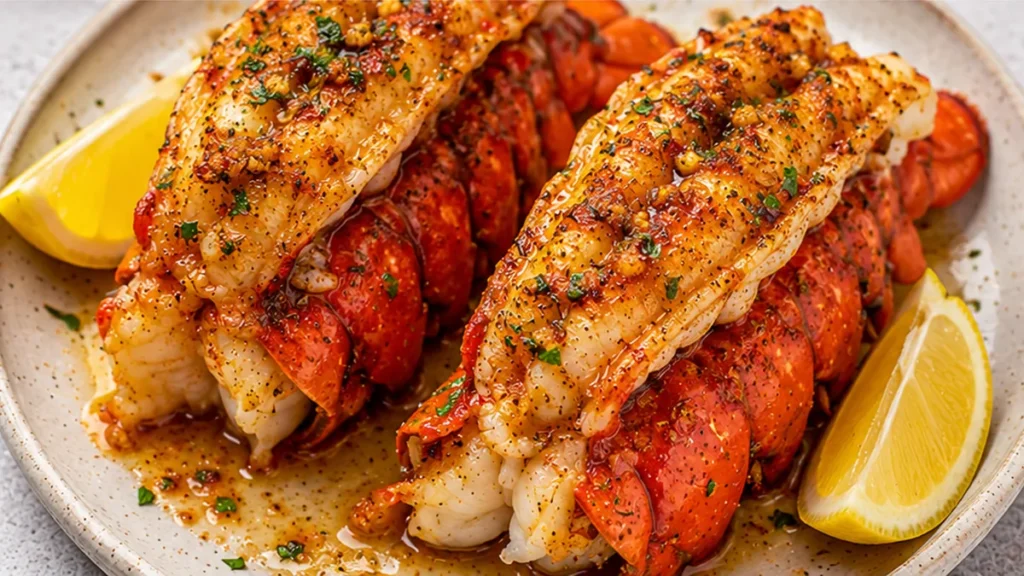
Unlock the secret to perfectly cooked lobster tails with this incredibly simple yet elegant recipe. Designed for ease and maximum flavor, this guide ensures your lobster is tender, succulent, and bursting with deliciousness every time. these lobster tails will impress. We’ll cover the essential thawing techniques and a delectable garlic-butter sauce infused with lemon and a hint of spice, perfect for broiling, grilling, air frying, or poaching.
Key takeaways
- Thaw lobster tails completely for even cooking.
- Baste frequently with the seasoned butter to keep meat moist and flavorful.
- Cook for a short duration to prevent rubbery texture.
- Use the butter mixture to infuse flavor and enhance tenderness.
Lobster Tails: Melt-in-Your-Mouth Perfection!
Ingredients
- 4 5-oz Frozen lobster tails
- 1/4 cup Salted butter
- 2 cloves Garlic
- 2 tsp Lemon juice
- 1/2 tsp Smoked paprika
- 1 pinch Cayenne pepper
Instructions
- Thaw the lobster tails overnight in the refrigerator or in cold water, changing water every 30 minutes.
- Melt butter and stir in crushed garlic, lemon juice, smoked paprika, and cayenne pepper.
- Cut down the top center of the lobster tail shell with shears, stopping before the fin, and spread open.
- Gently score the top of the lobster meat lengthwise a few times to help butter penetration.
- Generously brush the butter mixture over the exposed lobster meat.
- Cook lobster tails by broiling (3-5 mins per side), grilling (4-5 mins per side), air frying (400°F/200°C for 5-7 mins), or poaching.
Notes
The technique that makes it
The key to achieving melt-in-your-mouth lobster tails lies in a combination of proper thawing, precise cooking time, and the butter basting technique. Frozen lobster tails must be fully thawed to ensure even cooking. Partially frozen tails will result in rubbery meat. The butter mixture, infused with garlic, lemon juice, smoked paprika, and a hint of cayenne, acts as both a flavor enhancer and a basting agent. Basting the lobster meat with this seasoned butter multiple times during cooking is crucial. This process keeps the delicate lobster meat moist and tender, preventing it from drying out, while also allowing the flavors to penetrate deeply. The butter also helps to create a slightly caramelized surface on the lobster meat, adding another layer of deliciousness. Overcooking is the most common pitfall, leading to tough, chewy lobster. The relatively short cooking time, typically 5-8 minutes depending on size, is essential to preserve the lobster’s natural succulence.
Troubleshooting
- Problem: Rubbery lobster meat. Fix: Ensure lobster tails were fully thawed before cooking. Overcooking is also a primary cause; reduce cooking time and monitor closely.
- Problem: Bland flavor. Fix: Make sure the butter mixture is well-seasoned and that you are basting frequently throughout the cooking process. Ensure the garlic is fresh and potent.
- Problem: Meat is dry. Fix: This is a sign of overcooking. Reduce the cooking time significantly. Basting with the butter mixture more frequently can also help rehydrate the meat.
- Problem: Butter sauce is oily. Fix: Ensure the butter is fully melted and emulsified with the other ingredients. Avoid cooking at excessively high heat, which can cause the butter to separate.
Substitutions
- Butter: Ghee or clarified butter can be used. They have a higher smoke point and a richer flavor, offering a similar richness to the dish.
- Garlic: Garlic powder can be substituted for fresh garlic cloves. Use about 1/2 teaspoon of garlic powder, adjusting to taste. The flavor will be less pungent.
- Lemon Juice: Lime juice can be used as a substitute. It will provide a similar citrusy brightness, though with a slightly different flavor profile.
- Smoked Paprika: Regular paprika can be used, but you will lose the smoky depth. For a similar smoky flavor without paprika, a tiny pinch of liquid smoke could be added, used with extreme caution.
Pro tips
- Always thaw lobster tails completely before cooking for the best texture.
- Use fresh garlic for the most intense flavor.
- Adjust cayenne pepper to your spice preference.
- For broiling, keep a close eye to prevent overcooking.
Enjoy these restaurant-quality lobster tails at home! They are a perfect centerpiece for special occasions or a luxurious weeknight treat.
More from Air Fryer Frozen Foods →
Frequently asked questions
How do I know when lobster tails are done in the air fryer?
Lobster tails are done when the shells turn bright red and the meat is opaque and white throughout. For air fryer lobster tails, this typically takes 6-10 minutes at 400°F (200°C), depending on the size. Avoid overcooking to prevent tough meat. Use a meat thermometer for precision; it should read 140-145°F (60-63°C).
Can I cook frozen lobster tails in the air fryer?
Yes, you can cook frozen lobster tails in the air fryer, but it’s best to thaw them first for even cooking. If cooking from frozen, add a few extra minutes to the cooking time and ensure the meat is cooked through. Thawed tails will yield more tender and succulent results. Pat them dry before seasoning.
What temperature should I cook lobster tails in the air fryer?
The ideal temperature for air frying lobster tails is 400°F (200°C). This high heat ensures the tails cook quickly, resulting in tender meat and slightly crispy edges. Cooking at this temperature for approximately 6-10 minutes, depending on size, provides the best texture and flavor. Always check for doneness.
How do I make air fryer lobster tails crispy?
To achieve crispy air fryer lobster tails, ensure the tails are patted completely dry before seasoning and air frying. Brush them with melted butter or oil. Cooking them at 400°F (200°C) for the recommended time will help crisp the edges of the meat slightly. Avoid overcrowding the air fryer basket.