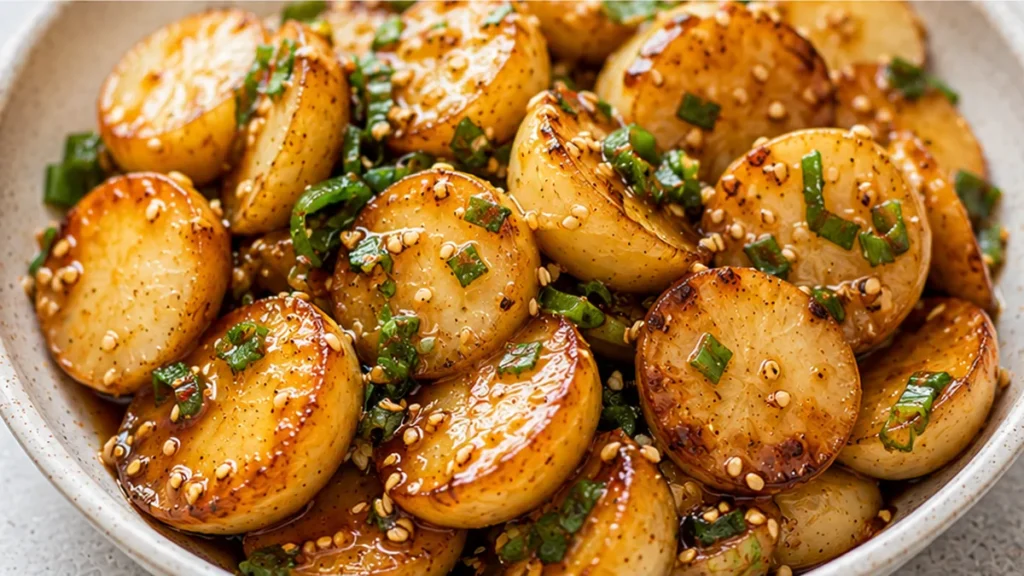
Hakurei turnips are a hidden gem in the culinary world, offering a subtle sweetness and crisp texture that sets them apart from their more common counterparts. This recipe transforms these delicate root vegetables into an irresistible side dish, perfect for any occasion. Prepare to be amazed by how simple ingredients can create such a delightful flavor profile. Our hakurei turnips recipe focuses on enhancing their natural sweetness through roasting, complemented by a fresh and savory dressing. It’s an accessible dish for beginners and a quick win for seasoned cooks looking for a fast, healthy, and flavorful vegetable option.
Key takeaways
- Roasting hakurei turnips caramelizes their natural sugars for a sweet, tender-crisp texture.
- The dressing balances miso umami with rice vinegar tang and maple syrup sweetness.
- Avoid overcrowding the pan and overcooking to prevent mushy turnips.
- Taste and adjust the dressing before tossing for perfect flavor balance.
Mind-Blowing Hakurei Turnips Recipe
Ingredients
- 5 cups Japanese turnips (halved for small ones, quartered for large ones)
- 3 tbsp Olive oil
- 1/2 tsp Sea salt
- 1/4 tsp Black pepper
- 1 tbsp Miso paste
- 2 tbsp Rice vinegar
- 1 tbsp Maple syrup
- 2 tbsp Lime juice
- 1 tsp Sesame seeds
Instructions
- Preheat your air fryer to 350°F (176°C).
- Toss the Hakurei turnips with 3 tbsp olive oil, sea salt, and black pepper until evenly coated.
- Air Fryer: Place turnips in a single layer in the basket. Cook for 10 mins, tossing halfway.
- While turnips cook, whisk together miso paste, rice vinegar, maple syrup, lime juice, and 1/4 cup olive oil in a small bowl.
- Serve the perfectly roasted Hakurei turnips immediately, drizzled generously with the tangy miso dressing and sprinkled with sesame seeds.
Notes
The technique that makes it
The trick to this hakurei turnips recipe lies in a two-pronged approach: achieving tender-crisp turnips and a perfectly balanced sweet-savory-tangy dressing. The turnips are first roasted, not boiled or steamed. Roasting at a moderate to high heat (around 400°F or 200°C) allows the natural sugars in the turnips to caramelize, developing a subtle sweetness and a pleasant roasted flavor. Crucially, this method also concentrates their moisture, preventing them from becoming waterlogged and mushy, which is a common pitfall with root vegetables. Halving or quartering the turnips ensures even cooking and sufficient surface area for browning. The key to tender-crisp is not overcooking; they should yield to a fork but still have a slight bite. The dressing is a masterclass in flavor layering. The miso paste provides a deep, umami richness and saltiness. Rice vinegar and lime juice offer bright, acidic counterpoints that cut through the richness of the miso and the sweetness of the maple syrup. Maple syrup bridges the savory and tangy elements, adding a natural sweetness that complements the caramelized turnips. Whisking these components together thoroughly ensures the miso is fully dissolved and the dressing emulsifies slightly, coating the turnips evenly. The final addition of sesame seeds offers a textural contrast and a nutty aroma.
Troubleshooting
- Problem: Turnips are too soft and mushy.
- Fix: This usually indicates overcooking or a steaming effect from overcrowding the pan. Ensure your oven is at the correct temperature and don’t overcrowd the baking sheet, allowing hot air to circulate. Cook until fork-tender but with a slight resistance.
- Problem: Turnips are not tender enough.
- Fix: Increase the roasting time slightly, or if they are browning too quickly, reduce the oven temperature by 25°F (15°C) and continue roasting. Ensure they are cut into uniform sizes for even cooking.
- Problem: Dressing is too salty or too sour.
- Fix: Taste the dressing before tossing with the turnips. If too salty, add a touch more maple syrup or lime juice to balance. If too sour, add a little more maple syrup.
- Problem: Miso paste is clumpy in the dressing.
- Fix: Ensure the miso paste is fully dissolved into the liquid components (rice vinegar, maple syrup, lime juice) before combining everything. Whisk vigorously or even warm the liquids slightly to help it incorporate smoothly.
Substitutions
- Japanese turnips: If unavailable, Daikon radish (smaller, younger ones) can be used, though they may have a slightly stronger flavor and firmer texture. Baby radishes can also work, but their peppery notes will be more pronounced.
- Olive oil: Avocado oil or another neutral high-heat oil like grapeseed oil can be substituted for roasting.
- Miso paste: A small amount of soy sauce or tamari (for gluten-free) can provide umami, but the flavor profile will be less complex. Add a pinch of garlic powder to compensate for some lost depth.
- Rice vinegar: Apple cider vinegar or white wine vinegar can be used, offering a similar tang, though the flavor nuances will differ slightly.
- Maple syrup: Honey or agave nectar are suitable alternatives for sweetness, adjusting the quantity slightly to taste as their sweetness levels vary.
Pro tips
- Ensure turnips are cut into uniform sizes for even cooking.
- Don’t overcrowd the air fryer or oven basket; cook in batches if necessary.
- Adjust the sweetness and tanginess of the dressing to your preference.
Experience the delightful taste of Hakurei turnips with this straightforward recipe. Enjoy this unique vegetable prepared in a way that highlights its subtle sweetness and satisfying texture.
More from Air Fryer Vegetables →
Frequently asked questions
What do Hakurei turnips taste like?
Hakurei turnips are known for their mild, sweet, and slightly peppery flavor. They are much less pungent than traditional turnips and can often be eaten raw. Their texture is crisp and juicy when fresh, becoming tender and buttery when cooked. They are a delightful alternative for those who find other turnips too strong.
Can I use other turnips if I can’t find Hakurei?
Yes, you can substitute other young, small turnips. However, be aware that their flavor will be more pronounced and potentially more bitter. You may need to adjust cooking times and seasonings to suit the specific variety. For raw preparations, Hakurei turnips are strongly preferred due to their sweetness.
How do I know when air fryer turnips are done?
Cooked Hakurei turnips should be tender when pierced with a fork but still hold their shape. They will develop a slightly caramelized exterior. For roasting, aim for about 15-20 minutes at 400°F (200°C), flipping halfway through. Adjust time based on the size of your turnip pieces.
What to serve with air fryer Hakurei turnips?
Air fryer Hakurei turnips are versatile. Serve them as a simple side dish alongside grilled chicken, pork chops, or steak. They also pair well with roasted vegetables or as a component in a grain bowl. Their sweetness makes them a great accompaniment to richer main courses.