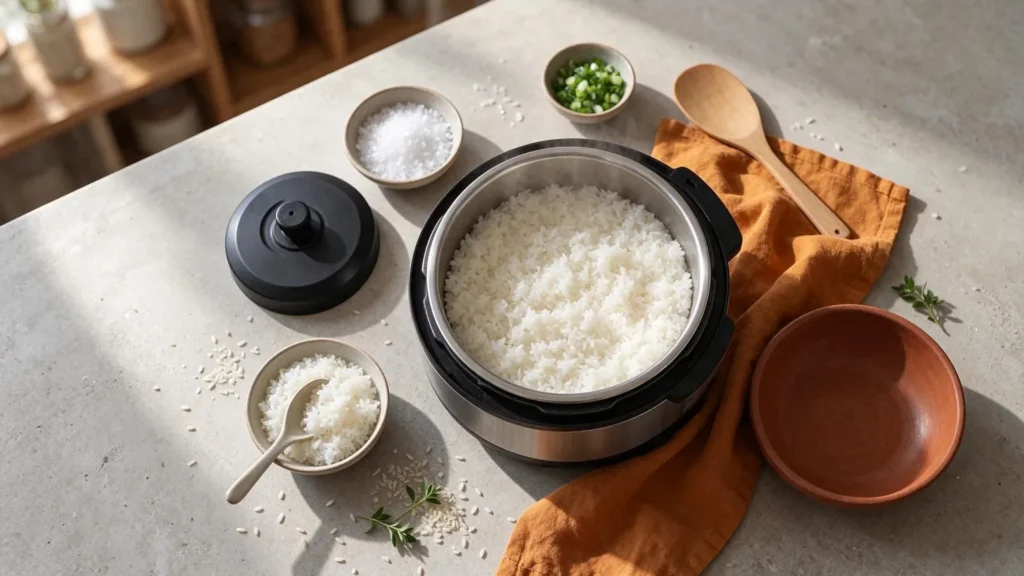
For white jasmine or basmati, the instant pot rice recipe that holds across every source is 1 cup water to 1 cup rice, high pressure, then a full natural release. Pressure Cook Recipes sets it at 3 minutes with 10 minutes natural release; Green Healthy Cooking confirms 3 minutes for both jasmine and basmati. The one mistake that wastes a batch: adding more water when the grains come out hard. Hard rice needs more time, not more water. And skip the Rice button if you ever cook brown rice.
How to Make Instant Pot Rice Without Scorching or Mush
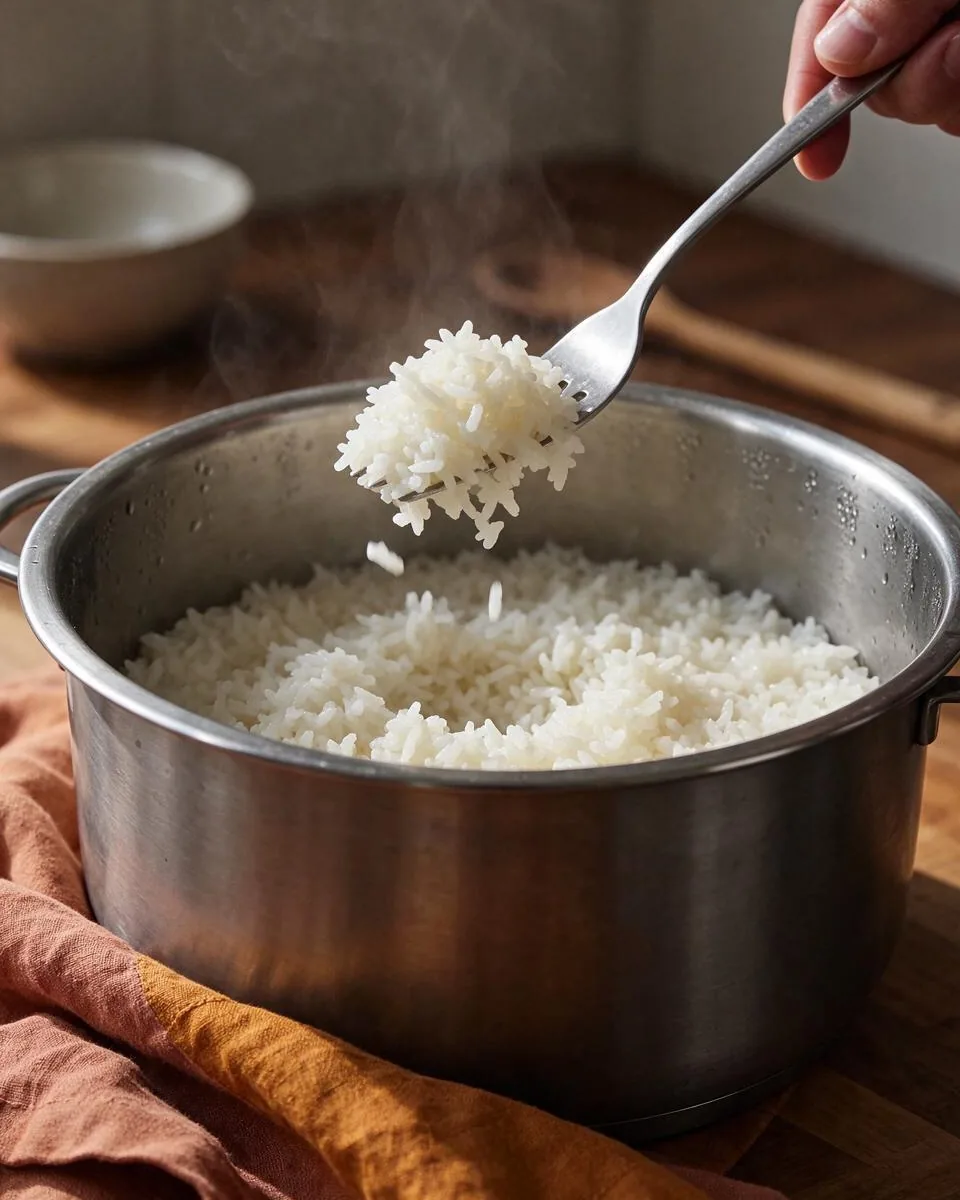
The sealed pot changes the math you learned on the stove. Because no steam escapes, the water-to-rice ratio stays 1:1 whether you cook 1 cup or 4 cups, per Green Healthy Cooking. Only the come-to-pressure time grows with a bigger batch. That single fact removes the guesswork that ruins stovetop-trained cooks.
Answer block: A reliable instant pot rice recipe for white jasmine or basmati is 1 cup rice to 1 cup cold water, high pressure for 3 minutes, then 10 minutes of natural release. Fluff with a fork and serve. The ratio does not change when you scale up. In a 6-quart pot, cook at least 2 cups; a single cup tends to scorch on the bottom. For brown rice, keep 1:1 but raise the time to 15 minutes with a short natural release. Natural release yields fluffy grains; a quick release turns them sticky.
Love and Lemons publishes a near-identical white-rice method: combine rice and water in a 6-quart pot and pressure cook on High for 3 minutes. See also: our rice cooker recipes guide.
The Instant Pot Rice Recipe: Ingredients and Steps
These two blocks are everything you need to cook from this page alone. The quantities follow the tested jasmine recipe published by Pressure Cook Recipes.
Ingredients:
- 1 cup jasmine rice (230g)
- 1 cup cold water (250ml)
- ¼ to ½ teaspoon fine sea salt (optional)
Steps:
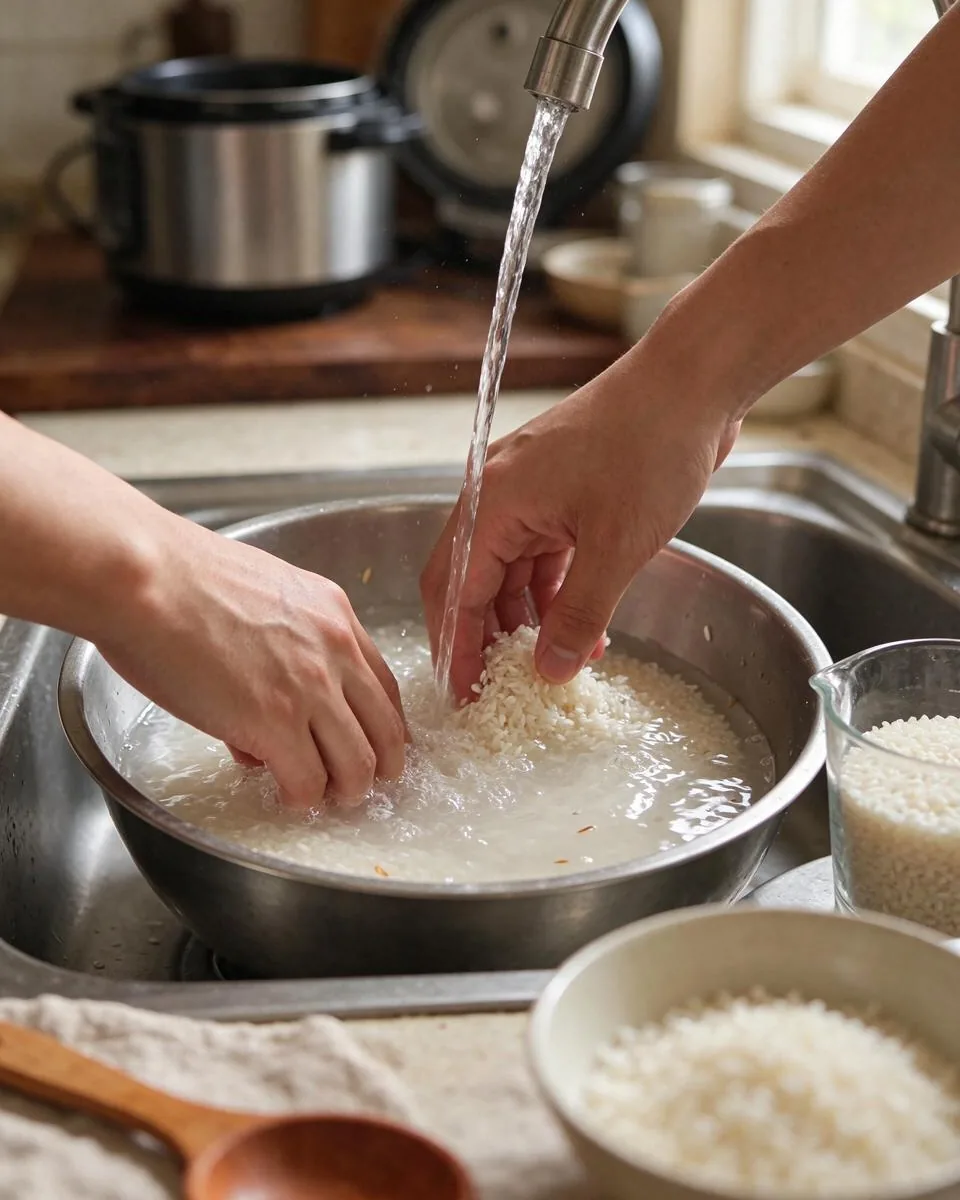
- Rinse the rice under cold water, scrubbing gently with your fingertips until the milky water runs clear, then drain well.
- Add the rinsed rice and 1 cup cold water to the Instant Pot inner pot.
- Close the lid and turn the venting knob to the Sealing position.
- Pressure Cook on High for 3 minutes.
- Let the pressure release naturally for 10 minutes before touching the valve.
- Stir in the salt if using, fluff with a fork, and serve warm.
How Much Water for Rice in a Pressure Cooker
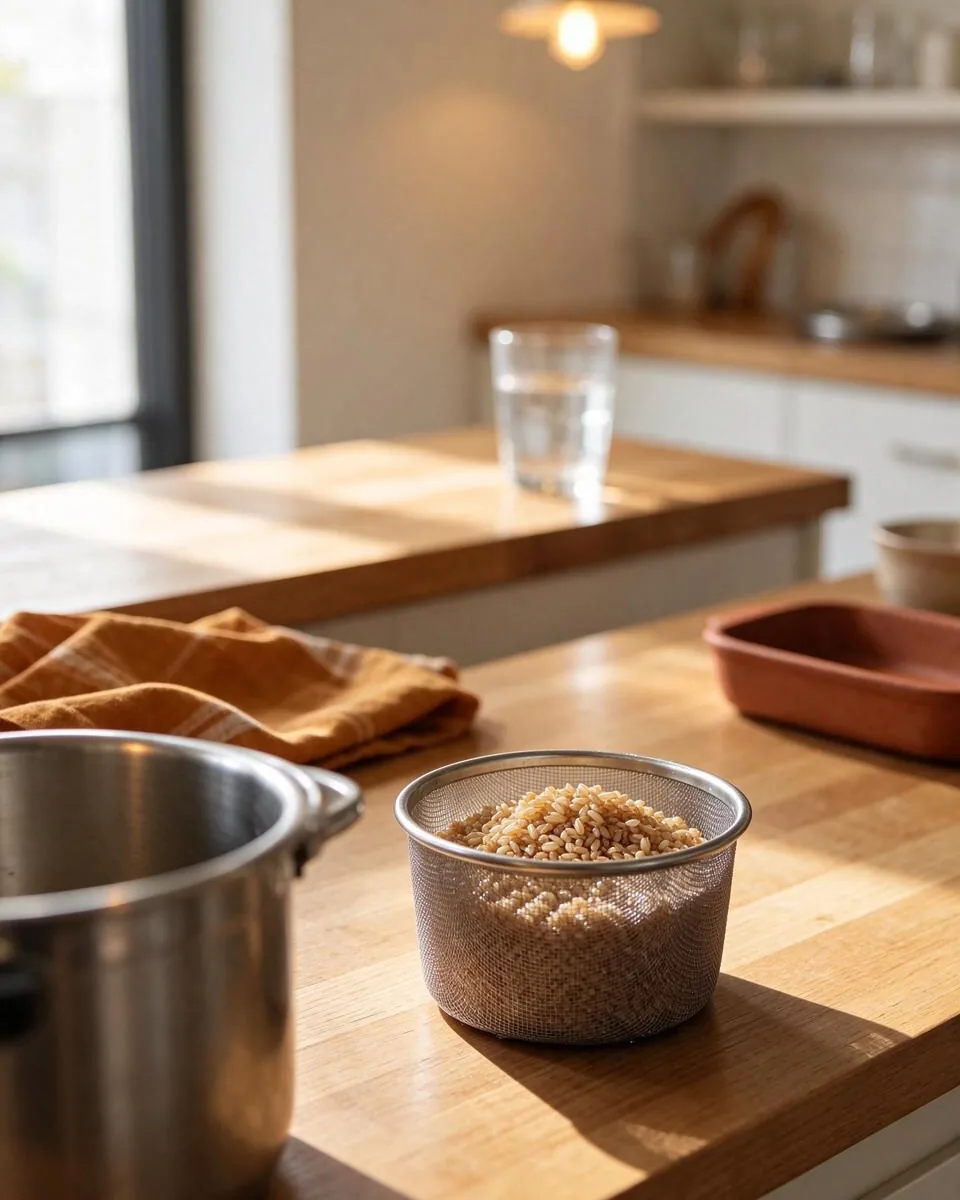
One cup of cold water for every cup of rice. Pressure Cook Recipes states it plainly: in their words, the rule is “1 cup (250 ml) of cold water for 1 cup (250 ml) of white rice,” a line you can read in full on their tested rice recipe. Green Healthy Cooking carries the same 1:1 ratio and extends it to batch size, so 4 cups of rice takes 4 cups of water.
The exception is drainage. If you rinse brown rice and it stays wet, that clinging water throws off the ratio. Pressure Cook Recipes advises reducing roughly 3 tablespoons from the 1 cup of water to keep the balance. So the headline “always 1:1” holds only once the rice is well drained.
Why 1 Cup Scorches and Natural Release Matters
Two small decisions decide whether a batch comes out fluffy or stuck to the pot. First, batch size relative to pot size. Love and Lemons notes that a single cup tends to scorch on the bottom of a 6-quart pot, so they cook 2 cups; a smaller 3-quart pot handles 1 cup fine at the same ratio. Too little grain in too big a pot means a thin layer sitting directly on the hot base.
Second, the release. A natural release lets the pressure fall slowly while the grains finish absorbing steam, which keeps them separate and fluffy. Quick-releasing the moment the timer ends agitates the grains and leaves them sticky or gummy. Rachel Cooks builds the 10-minute wait into the method for exactly this reason.
Salt is optional and does not affect cooking; the official Instant Pot recipe adds 1 teaspoon, while the tested jasmine versions leave it to taste.
Fluffy Rice in a Pressure Cooker: The Short Rules
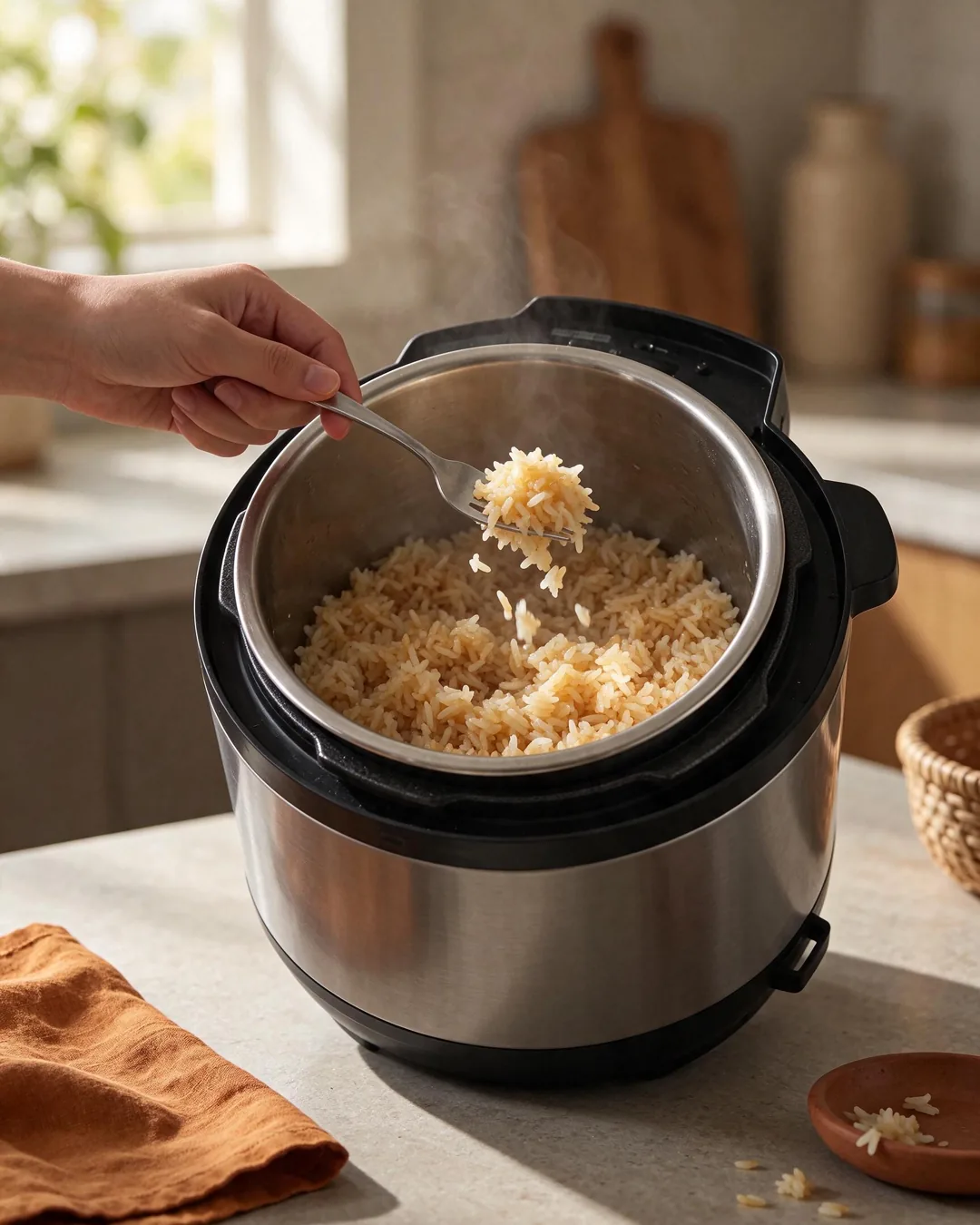
- Rinse until the water runs clear, then drain hard so no extra water rides in.
- Use the full natural release of 10 minutes; do not quick-release.
- Fluff with a fork, not a spoon, to lift the grains apart.
What Kind of Rice to Use and the Times Each One Needs
The white-rice method does not transfer to brown. Thin long-grain whites finish in minutes; brown and wild grains need far longer because the intact bran layer resists water. Green Healthy Cooking maps the times by type, and the table below lines up what each named source sets for its grain so you can match your rice to a real number rather than a guess.
| Rice type | High pressure time | Source |
|---|---|---|
| Jasmine / basmati (white) | 3 min | Pressure Cook Recipes |
| Jasmine | 5 min | Rachel Cooks |
| Long-grain white (regular) | 4 min | Green Healthy Cooking |
| Long-grain brown | 15 min | Pressure Cook Recipes |
| Brown | 20 min | Love and Lemons |
The jasmine time is a genuine range, not an error: Pressure Cook Recipes and Green Healthy Cooking both land on 3 minutes, while Rachel Cooks runs 5 minutes and finishes with a quick release after the natural release. Both use 1:1 and both work; the shorter time gives firmer grains. Brown rice splits too, from 15 minutes long-grain up to 20 minutes, because grain thickness and bran differ by sub-type. For brown, keep 1 cup rice to 1 cup water (200g to 250ml) and let it natural-release 5 minutes before venting.
Rinse Rice Until the Water Runs Clear
Rinsing removes surface starch so the finished grains separate instead of clumping. Scrub the grains gently with your fingertips under cold running water, pour off the cloudy water, and repeat until it runs clear. Then drain thoroughly.
Drainage is where rinsing backfires. Water trapped in the wet grains counts toward your ratio. For brown rice, Pressure Cook Recipes handles this by cutting roughly 3 tablespoons from the 1 cup of water when the grains are rinsed and not fully drained. For white rice at a 3-minute cook, drain well and leave the water at 1 cup; a few clinging drops will not derail it.
Pressure Cook Rice at High, Then Leave It Alone
Add the rinsed rice and cold water, seal the lid, and set the valve to Sealing. Set High Pressure for your grain: 3 minutes for jasmine or basmati, 4 minutes for regular long-grain white, or 15 minutes for long-grain brown.
When the cook ends, do nothing for the release window. Jasmine takes a 10-minute natural release; brown rice needs only 5 minutes natural before you quick-release the rest. The official Instant Pot white-rice recipe runs a different path: a 2-minute sauté in oil first, then 7 minutes high pressure, total 9 minutes. Because of the sauté step it is not a minute-for-minute comparison with the no-sauté methods.
Should You Use the Instant Pot Rice Button
A manual high-pressure setting with a timed natural release gives you more control than the preset. The Rice button is tuned for white rice and will not cook brown or wild rice properly, so a brown batch run on it comes out hard. Setting your own time, by rice type, is why the table above works across every grain. For jasmine, “Pressure Cook for 5 minutes (or on Manual, high pressure)” is how Rachel Cooks frames it on their jasmine rice recipe.
Fluff and Serve, and What to Do With Leftovers
Once the release is done, open the lid away from your face, drop in salt if using, and fluff with a fork to separate the grains and release trapped steam from the cooked pot. Serve warm.
Love and Lemons stores cooked rice in an airtight container in the fridge for up to 3 days and freezes it for up to 3 months. One serving of cooked jasmine runs about 209 kcal with 45g carbohydrates, 4g protein, and 6mg sodium, before any added salt.
How Much Rice Your Instant Pot Size Can Hold
Capacity runs from the 2/3-fill safety rule plus the raw-to-cooked expansion, where 1 cup of raw white rice yields about 3 cups cooked. Green Healthy Cooking puts the raw-rice ceilings at 2.5 cups in a 3-quart, 5 cups in a 6-quart, and 6.5 cups in an 8-quart pot. Those are upper bounds, not targets.
There is a lower bound too. A batch too small for the pot scorches, which is why a 6-quart owner should cook at least 2 cups rather than 1. For example, if you have an 8-quart pot and want a big batch, 5 cups of raw rice comfortably clears both limits and feeds a crowd once it expands to roughly 15 cups cooked. For example, a 3-quart pot owner wanting a single serving can safely run 1 cup, where a 6-quart owner cannot.
See also: our country fried steak recipe guide.
Is It the Measuring Cup in the Box or Your Kitchen Cup
Use the same cup for rice and water and the 1:1 ratio survives any confusion. The plastic cup that ships with the Instant Pot is smaller than a kitchen cup: Pressure Cook Recipes measures it at 180 ml, while Green Healthy Cooking lists the included cup at 160 ml against a standard American cup of 236 ml and a metric cup of 250 ml. Both agree it is neither American nor metric. The practical rule, from their rice guide: pick one cup and use it for both rice and water.
Frequently Asked Questions
How long to cook 4 cups of rice in an Instant Pot?
The high-pressure time does not change with batch size. Four cups of white jasmine still cooks at 3 minutes on high with a 10-minute natural release, held at a 1:1 ratio, meaning 4 cups of water for 4 cups of rice. Only the come-to-pressure time lengthens because there is more mass to heat.
How do I make 2 cups of Instant Pot rice?
Combine 2 cups rinsed white rice with 2 cups water, seal, and pressure cook on High for 3 minutes, then natural-release. In a 6-quart pot this is the recommended minimum, since 1 cup alone risks scorching the base. Two cups of raw rice yields roughly 6 cups cooked at the 1-cup-to-3-cups expansion.
Is it good to cook rice in an Instant Pot?
Yes, and the sealed pot removes the main stovetop variable. Because no steam escapes, the ratio stays a fixed 1:1 for any quantity, so results repeat batch to batch. A tested jasmine cup runs about 209 kcal per serving, and total time for a small white batch can be as short as 9 minutes on the official method.