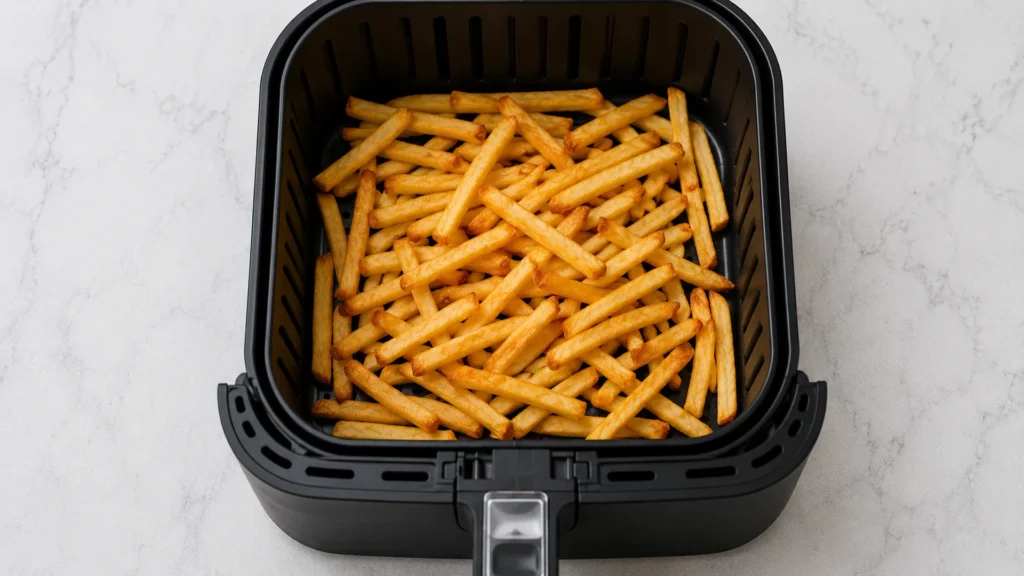
How to cook frozen fries in an air fryer is the easiest win the appliance offers: set it to 400 F, pour the fries straight from the freezer into the basket in a single layer, and cook for 12 to 18 minutes depending on the cut, shaking once or twice. No oil, no thawing, no preheat required for most units. You get the crisp exterior and fluffy inside of deep-fried fries with none of the oil bath. This guide gives the exact time for every fry shape, the small habits that separate limp fries from shattering ones, the seasoning timing that keeps salt from flying off, and the fixes for the two problems people hit most.
Frozen fries are engineered for high, dry heat. The factory already coats most of them in a thin layer of oil and a starch dusting designed to crisp, which is why they work so well in an air fryer with zero added fat. Your only job is to give the hot air room to move and to pull them at the right moment. Get those two things right and frozen fries become a five-minute-of-effort side you reach for constantly.
The Basic Method, Step by Step
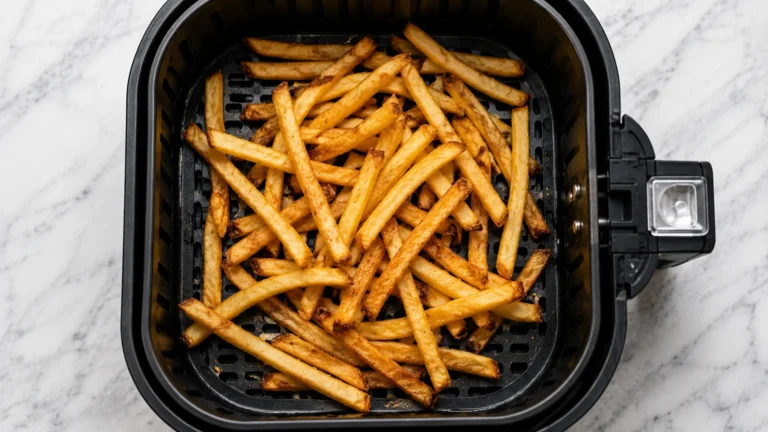
Set the air fryer to 400 F. Pour the frozen fries straight from the bag into the basket, no thawing, and spread them in as close to a single layer as you can. Do not fill the basket more than half to three-quarters full; crowding is the number one reason frozen fries come out pale and soft. Cook for 12 to 18 minutes total depending on the cut, and shake the basket once at the halfway point, or twice for thicker fries, to rotate the bottom fries to the top so every fry browns evenly.
Check them a couple of minutes before the low end of the time range, since every air fryer runs a little hot or cold. Pull them when the edges are deep golden and the surface looks dry and crisp rather than glossy. If you like them darker, give them another two minutes; the window between perfectly crisp and too dark is wide with fries, so you have room to dial it in. Salt immediately while they are hot, when the surface is still slightly tacky and grabs the salt.
Time and Temperature by Fry Cut
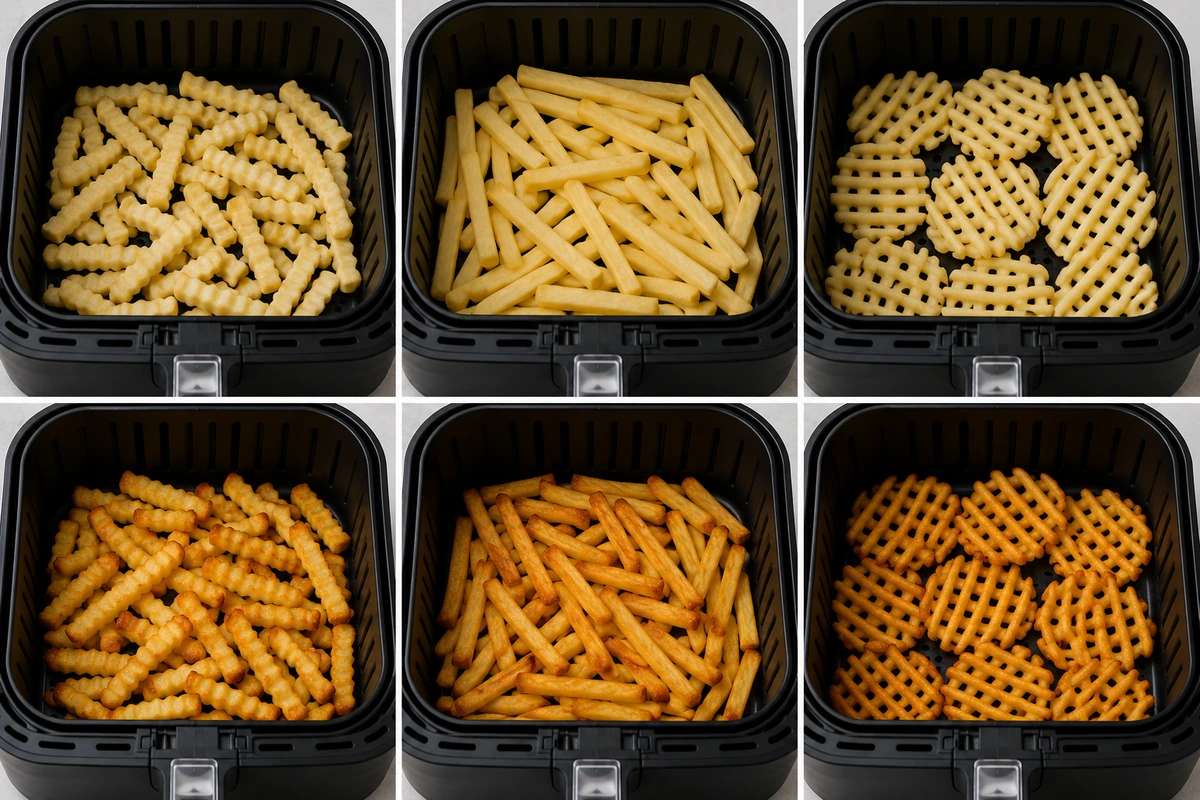
The cut is what changes the time. Thin fries crisp fast and burn fast; thick fries need more time to heat through. These are starting points at 400 F for a single, uncrowded layer straight from frozen.
| Fry type | Temperature | Time |
|---|---|---|
| Shoestring / thin-cut | 400 F | 10-13 min, shake once |
| Regular / classic cut | 400 F | 14-17 min, shake twice |
| Crinkle cut | 400 F | 14-17 min, shake twice |
| Steak fries / wedges | 400 F | 16-20 min, shake twice |
| Waffle fries | 400 F | 12-15 min, shake once |
| Sweet potato fries | 380 F | 12-16 min, shake twice |
| Tater tots | 400 F | 14-18 min, shake twice |
Sweet potato fries get their own line because their sugar browns faster, so 380 F keeps them from scorching before the inside softens. For the exact method and timing on tots, the dedicated guide to air fryer tater tots breaks down the same single-layer logic with tot-specific timing. If your bag gives oven instructions, a good rule is to use the oven temperature, drop the time by about 20 percent, and check early, since the air fryer cooks faster than the oven the bag was written for.
Why You Should Never Thaw Frozen Fries
Cook frozen fries straight from the freezer, every time. Thawing is the fastest way to ruin them. When fries thaw, the surface starch absorbs the melting ice crystals and turns gummy, so instead of crisping, the surface steams and goes limp. The factory froze them at the ideal moment for crisping, and dropping them into hot moving air while still frozen lets the surface dehydrate and brown before the inside has a chance to turn to mush. If your fries came out soggy and you thawed them first, that is almost certainly the cause.
This is also why you should keep the bag sealed and the fries solidly frozen until the second they go in. A bag that has partially thawed and refrozen in the freezer door develops ice clumps that cook unevenly and steam. Buy fresh bags, store them deep in the freezer, and pour straight from frozen.
The Five Habits for Maximum Crisp
1. Single layer, half-full basket
Frozen fries crisp by airflow, and a heaped basket blocks it so the middle fries steam. Keep the basket no more than half to three-quarters full and spread the fries out. For a big batch, cook in two rounds; the first batch holds its heat while the second cooks, and both come out crisp instead of one soggy pile.
2. Shake, do not stir
Pull the basket out and shake it so the bottom fries rotate to the top. Shaking is faster and more even than poking them with a spoon, and it keeps the coating intact. Shake once for thin fries, twice for thick ones.
3. Skip the oil (mostly)
Most frozen fries are pre-oiled at the factory, so they need no added fat. A light spritz of oil can boost browning on plain or lower-fat fries, but it is optional and never necessary. If you do add oil, use the barest mist, since too much makes them greasy rather than crisp.
4. Finish hot if needed
If the fries are cooked through but not as crisp as you want, give them two to three more minutes at 400 F. The last few minutes do most of the crisping. You can also bump to 400 F for the final stretch if you cooked at a lower temperature.
5. Salt and season at the right time
Salt the instant they come out, while the surface is hot and slightly tacky so the salt sticks. Dry seasonings like garlic powder, paprika, or parmesan also go on right after cooking. The exception is detailed below.
Seasoning Frozen Fries Without Losing It to the Fan
The air fryer’s fan blows light powders right off the fries and onto the heating element, where they burn and smoke. So do not dump dry seasoning on raw fries before cooking. Instead, cook the fries plain, then toss them with seasoning in a bowl the moment they come out, while they are hot enough to make the spices cling. For sticky finishes like a buffalo or cheese sauce, toss after cooking as well. If you want a baked-on seasoning, a very light oil mist before cooking helps a small amount of spice adhere, but the toss-after method gives more flavor with less mess and no burnt-spice smoke. America’s Test Kitchen, which has tested air fryers and frozen foods extensively, lands on the same single-layer, season-after approach for the crispest result; their testing is at America’s Test Kitchen.
Fixing the Two Big Problems
My fries are soggy or limp
Three usual causes. The basket was crowded, so reduce the load to a single layer and cook in batches. The fries were thawed, so always cook from frozen. Or they needed more time, so add two to three minutes at 400 F and check. A short blast at the end at 400 F rescues most underwhelming batches.
My fries are burning on the outside, cold inside
This hits thick cuts like steak fries and wedges. The temperature is fine but they need more total time at a slightly lower setting, so drop to 380 F and extend the time so the heat reaches the center before the surface scorches. Thinner fries rarely have this problem, since they heat through fast.
What to Serve With Air Fryer Fries
Frozen fries are a side built for fast meals. They pair naturally with anything else you can pull from the freezer and crisp in the same machine, like a batch of frozen burritos in the air fryer for a no-cook weeknight dinner. Cook the main first, hold it warm, then run the fries last so they hit the table at peak crisp, since fries soften fastest as they sit. A quick homemade dip (garlic aioli, chipotle mayo, or seasoned ketchup) turns a bag of frozen fries into something that tastes far more deliberate than the effort suggests.
Why the Air Fryer Beats the Oven for Frozen Fries
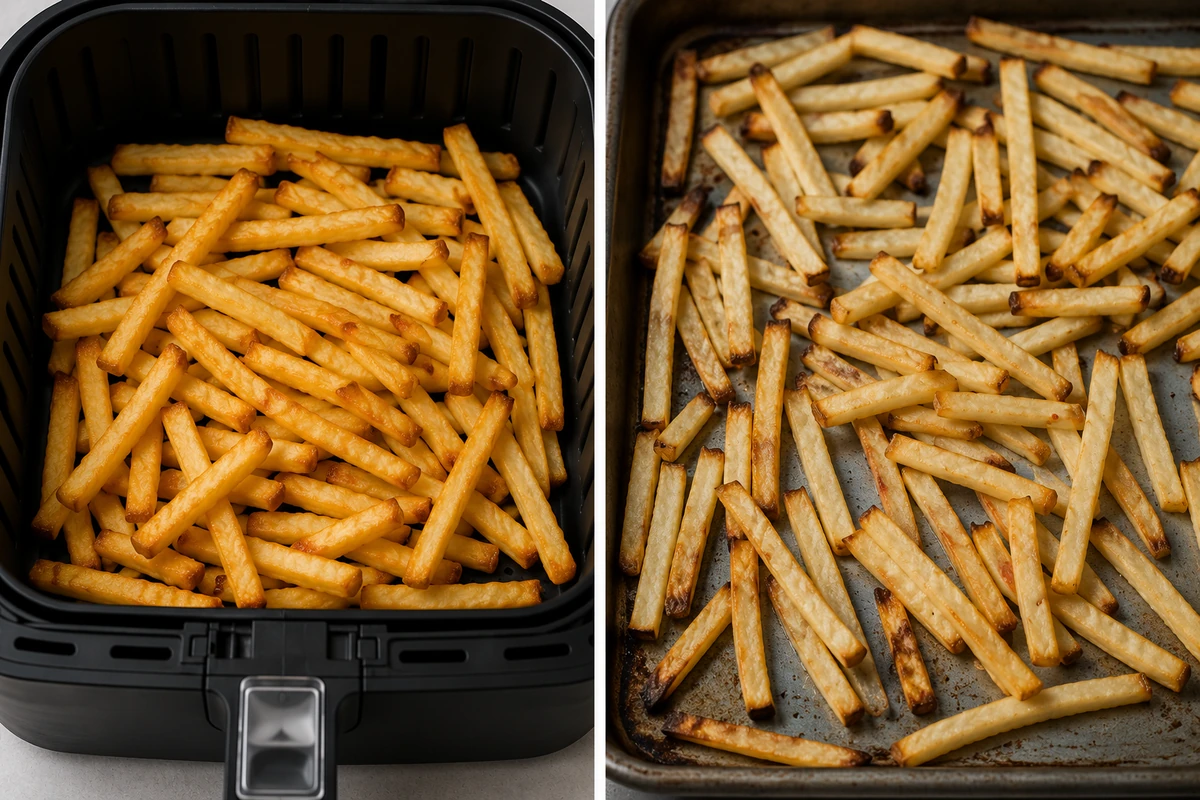
A conventional oven heats a large cavity and relies mostly on radiant heat from the elements, so frozen fries on a flat tray sit in their own steam and brown slowly, often unevenly, with the bottoms going pale where they touch the pan. The air fryer is a small chamber with a fan driving hot air across every surface of every fry at once. That moving air strips moisture off the fries fast and browns all sides, including the bottoms, since the perforated basket lets air circulate underneath. The result is a deeper crisp in less time and with no flipping a whole tray.
The numbers tell the story. A tray of frozen fries that needs 25 to 30 minutes in the oven is usually crisp in 14 to 17 in the air fryer, and they come out crisper. The trade-off is batch size: the oven can do a full sheet pan at once, while the air fryer wants a single layer. For a family-size batch the oven still has a place, but for one to three servings the air fryer wins on speed, crisp, and no preheat wait.
Choosing the Right Frozen Fries
Not all frozen fries are equal in the air fryer. Fries labeled as already fried, crispy, or extra-crispy crisp up best, because the factory par-fry gives them a head start. Plain, lower-fat, or oven-style fries can come out a little drier and benefit from a light oil mist. Coated fries (battered, seasoned, or crispy-coated) crisp aggressively and may need a minute or two less so the coating does not over-darken. Thicker cuts like steak fries and wedges give you a fluffier interior but need the most time, while shoestring fries are the fastest and the easiest to overcook.
Store the bag deep in the freezer, not in the door, so the fries stay solidly frozen and do not develop the ice clumps that come from partial thaw-refreeze cycles. A well-frozen bag of quality fries plus a single uncrowded layer is most of the battle; the air fryer handles the rest.
Frozen Fries vs Homemade Fries
Frozen fries are the easy path, but the air fryer also makes excellent fries from a raw potato if you want them. The key difference is that raw potatoes need a soak and a thin oil coat to crisp, since they have no factory par-fry or oil coating. For raw fries, cut them evenly, soak in cold water for 20 to 30 minutes to pull out surface starch, dry thoroughly, toss with a teaspoon of oil, then air fry at 380 F for the first stretch and finish at 400 F. Frozen fries skip all of that prep, which is why they are the go-to for speed. If you have the time and a couple of potatoes, the homemade route gives you control over cut and seasoning, but for a fast side, frozen is genuinely hard to beat.
Reheating Leftover Fries
The air fryer is also the best way to revive leftover fries, frozen-cooked or restaurant. Spread cold fries in a single layer and heat at 350 to 375 F for 3 to 5 minutes, shaking once. The moving air drives off the moisture that made them soggy in the fridge and re-crisps the surface, which a microwave can never do, a point food writers at Serious Eats have made about reviving fried foods. Do not add oil; the fries already have enough. This trick works on any leftover fries, not just frozen ones, and it is the single best reason to keep the air fryer on the counter.
Frequently Asked Questions
What temperature do you cook frozen fries in an air fryer?
400 F for most cuts. Thin and regular fries, crinkle, waffle fries, and tots all do well at 400 F. Drop to 380 F for sweet potato fries, since their sugar browns faster and can scorch before the inside softens. Always cook straight from frozen.
How long do frozen fries take in an air fryer?
Between 10 and 20 minutes depending on the cut. Thin shoestring fries finish in 10 to 13 minutes, regular and crinkle cuts in 14 to 17, and thick steak fries or wedges in 16 to 20. Shake once or twice and check a couple of minutes before the low end of the range.
Do I need to thaw frozen fries before air frying?
No, never thaw them. Cook straight from the freezer. Thawed fries absorb moisture and steam instead of crisping. Pouring them in still frozen lets the surface dehydrate and brown before the inside turns soft, which is the whole secret to crisp air fryer fries.
Do you need oil for frozen fries in an air fryer?
Usually no. Most frozen fries are coated in oil at the factory, so they crisp with no added fat. A light spritz can help browning on plain or lower-fat fries, but use the barest mist, since too much oil makes them greasy rather than crisp.
Why are my air fryer frozen fries not crispy?
The most common reasons are a crowded basket, thawing before cooking, or not enough time. Cook in a single layer at no more than three-quarters full, always cook from frozen, and add two to three minutes at 400 F if they need it. A hot finish rescues most soft batches.
Can I cook a full bag of fries at once in the air fryer?
Only if it fits in a single layer at half to three-quarters full. Most bags are too much for one batch, so cook in two rounds. The first batch stays warm while the second cooks, and both come out crisp, which beats one overcrowded soggy load.
Do I need to preheat the air fryer for frozen fries?
It is optional but helps. A 3 to 4 minute preheat at 400 F means the fries start crisping the moment they land instead of warming up slowly in a cold basket. If your model heats fast or you are short on time, you can skip it and just add a minute or two to the cook time.
Bottom Line
Cooking frozen fries in an air fryer comes down to a few simple rules: 400 F, a single uncrowded layer poured straight from frozen, a shake or two partway through, and salt the moment they come out. Match the time to the cut, drop to 380 F for sweet potato fries, and finish with a hot blast if you want them darker. Skip the oil, season after cooking to avoid burnt-spice smoke, and lean on the same machine to reheat leftovers. It is the fastest crisp side you can make, and once you learn your unit’s timing you will never go back to the oven for fries.