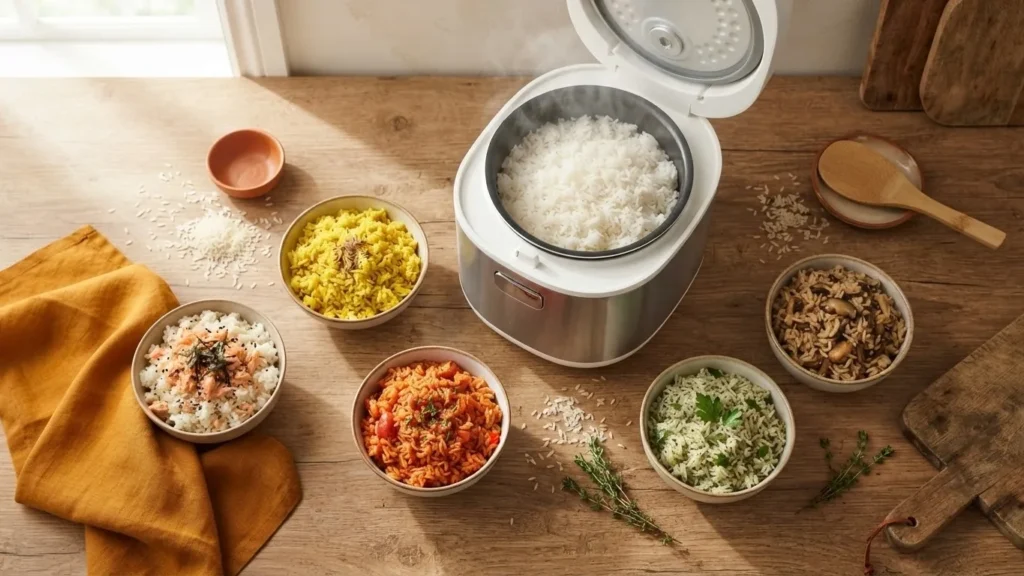
Before you copy any rice cooker recipe, check three things on your own machine: its capacity (3-cup, 5.5-cup, or 10-cup), whether it has a Slow Cook or synchronized-cooking function, and whether the recipe’s quantities were written for your size. A recipe written for a 5.5-cup cooker tells you to double the ingredients for a 10-cup model, which means it is not interchangeable by default. And finishing a cooking cycle is not proof the food is safe: poultry must reach an internal temperature of at least 165°F regardless of what the appliance display says. These rice cooker recipes stay inside those limits.
Quick answer: Yes, a rice cooker makes far more than plain rice. With a Slow Cook function you can build curries, chili, and crumbles; with a synchronized plate you can steam chicken above rice in one cycle. Three rules govern the result. Scale the recipe to your capacity, because simultaneous cooking is capped by model size. Stage delicate ingredients late rather than at the start. And verify poultry hits 165°F with a thermometer, then hold or chill cooked food on the clock. Those steps turn a rice box into a one-pot kitchen.
Check Model, Function, and Capacity Before You Pick a Recipe
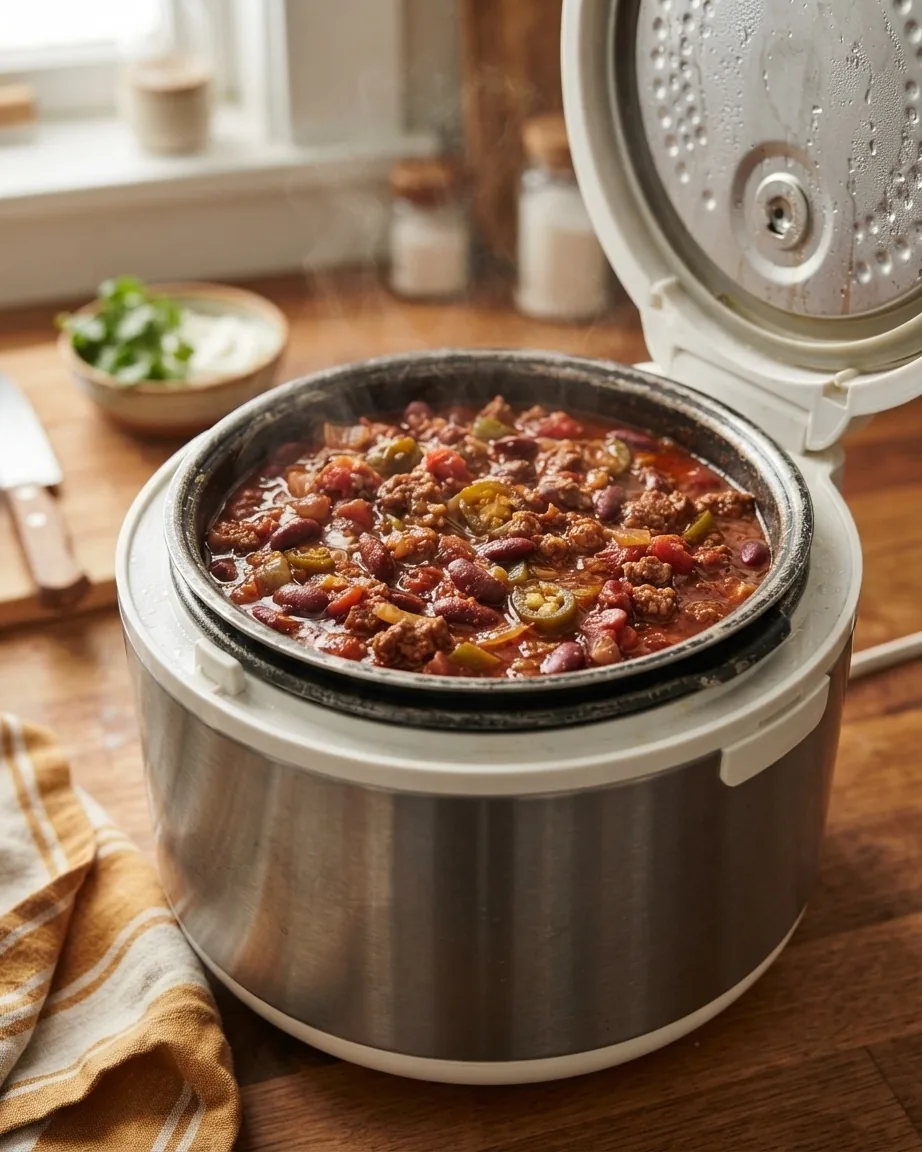
Rice cooker recipes are not appliance-agnostic. The menu names, the water ratios, and the hardware differ by manufacturer, so the recipe has to match the machine in front of you. Two features decide what you can make: a Slow Cook menu for simmered dishes, and a synchronized cooking plate for cooking a second dish above the rice.
Tiger Corporation calls its synchronized plate system tacook, and it carries a hard limit most recipes skip: simultaneous cooking runs only on the White Rice menu, with 0.5-1 cup for 3-cup cookers, 1-2 cups for 5.5-cup cookers, and 2-4 cups for 10-cup cookers. Exceed that rice volume and the paired dish will not cook as written.
Capacity also governs ingredient amounts, not just batch size. Tiger’s steel-cut oats recipe states, “Ingredients below are for a 5.5-cup cooker. Double the ingredients for a 10-cup cooker,” per Tiger Corporation. Treat capacity as the first filter when you choose any recipe.
Slow Cook times vary by dish, not by rule
One reason a single rice cooker recipe cannot be copied onto another is that the Slow Cook duration is set per dish. The table below is a published-duration comparison drawn only from Tiger’s own recipe pages. These are not interchangeable cooking times; each belongs to its specific dish.
| Dish | Function | Set time |
|---|---|---|
| Vegetable Thai curry | Slow Cook | 40 minutes |
| White chili | Slow Cook | 70 minutes |
| Apple crumble | Slow Cook | 120 minutes |
The spread runs from 40 minutes to 120 minutes across three dishes on the same function. Read the time off the recipe for the dish you are making, not off another dish that happens to use Slow Cook.
Synchronized Chicken-and-Rice Recipe: Ingredients and Steps
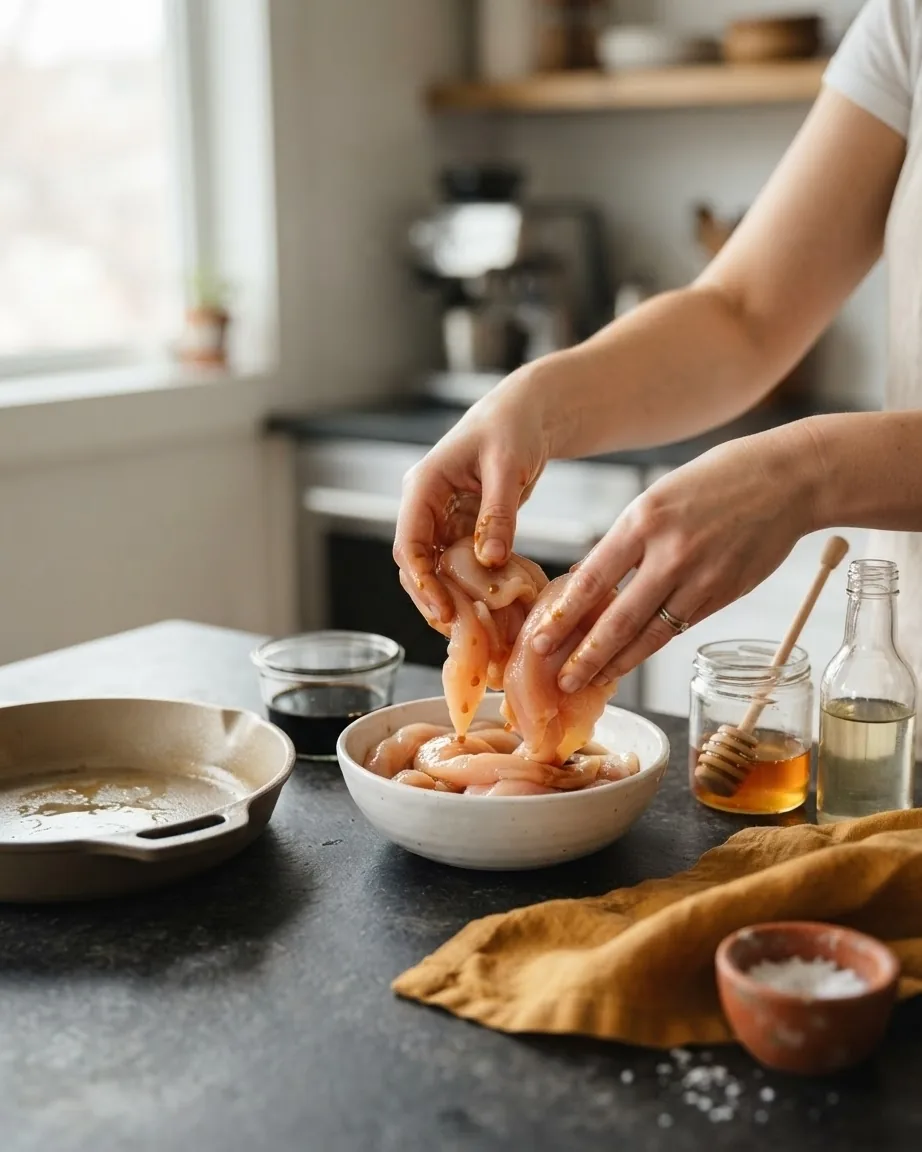
This is the recipe to cook from. It uses a synchronized cooking plate so the chicken steams above the rice in one cycle. Everything you need to make it sits in the two blocks below.
Ingredients
- 2 boneless, skinless chicken breasts, sliced
- 2 tablespoons soy sauce
- 2 tablespoons honey
- 1 tablespoon rice vinegar
- 2 cloves garlic, minced
- 1 to 2 cups white rice (within your cooker’s synchronized limit)
- Water to the matching White Rice line
Steps
- Marinate the sliced chicken breast in the soy sauce, honey, and rice vinegar for 15 minutes so the surface sugars brown and the acid tenderizes the meat.
- Rinse the rice, add it to the inner pot, and fill water to the matching White Rice line; keep rice within 1-2 cups for a 5.5-cup cooker.
- Spread the marinated chicken and garlic in the synchronized cooking plate and set it above the rice.
- Select the synchronized cooking menu and press Start.
- When the cycle ends, check the thickest piece with a thermometer; the chicken must read at least 165°F before serving.
- If any piece is under 165°F, return it and run a short extra cook rather than trusting the finished cycle.
The marinade line is quoted by Tiger Corporation: “just marinate your sliced chicken breast in soy sauce, honey and rice vinegar for a quick 15 minutes.” If you like this flavor profile, see also our Air Fryer Chicken Tikka.
Why Pressing Start Does Not Mean the Chicken Is Safe
A completed cooking cycle and verified doneness are two different events. Tiger’s honey garlic recipe tells you to “Select the [Synchro-Cooking] menu and press the [Start] key,” but that instruction settles timing, not safety. FoodSafety.gov, the U.S. federal food-safety source, sets the doneness bar separately: poultry must “reach an internal temperature of at least 165°F,” per FoodSafety.gov. These are different authorities answering different questions, and the recipe does not override the temperature.
Use an instant-read thermometer in the thickest part of each piece. For example, a thick chicken breast and a thin tail piece in the same plate can finish several degrees apart, so one 165°F reading does not clear the whole batch. Our Air Fryer Stuffed Chicken Breasts uses the same minimum.
Staged Additions: Why Not Everything Goes In at the Start
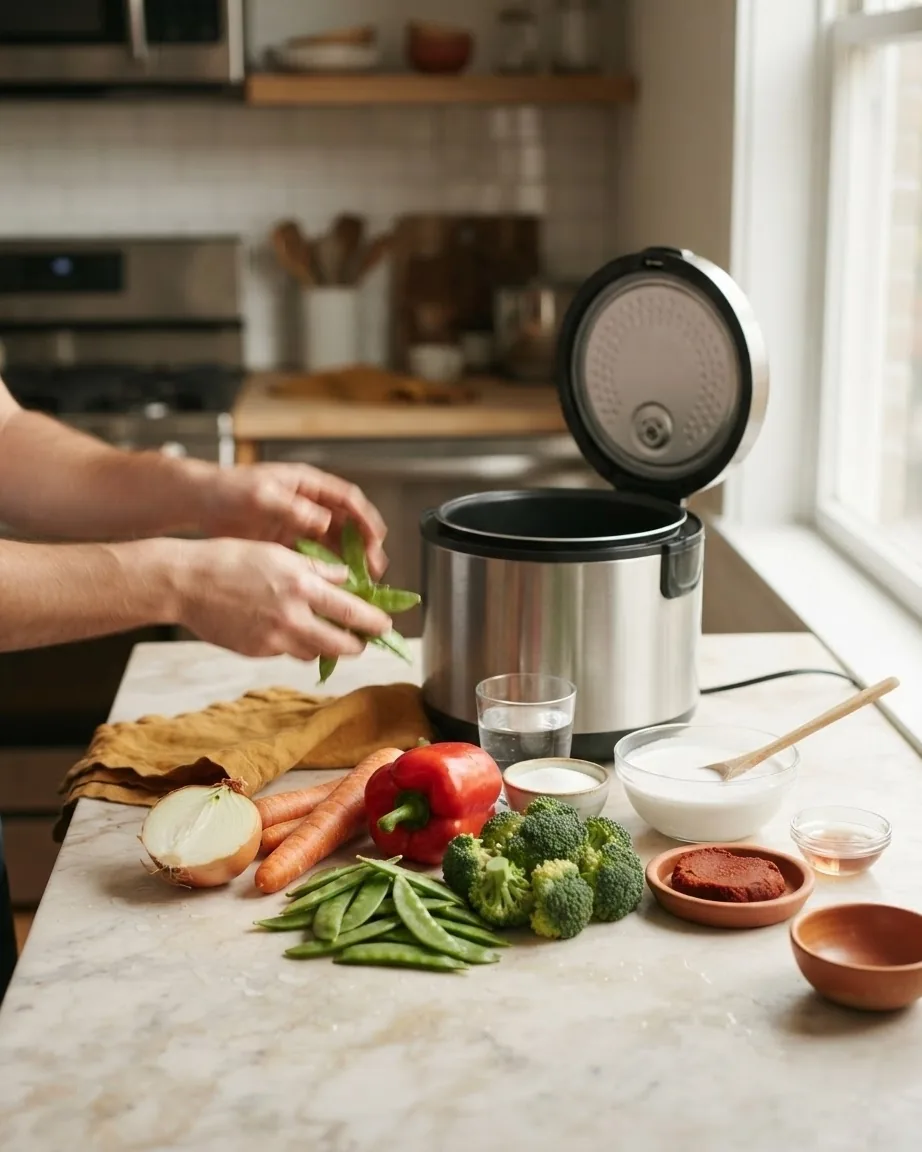
Dumping every ingredient in at once overcooks the delicate ones. Tiger’s vegetable Thai curry shows the fix. You start the aromatics and base, then add the fragile items late. The recipe directs you to “Add broccoli, coconut milk, and fish sauce when there’s 10 minutes left to the cooking process,” per Tiger Corporation.
That late window matters on a 40-minute Slow Cook: broccoli added at minute zero turns to mush, and coconut milk simmered the full run can split. Staging keeps the broccoli bright and the sauce intact. The same logic answers frozen vegetables and peas: add quick-cooking or frozen items near the end of the cycle, not at the beginning, so they warm through without collapsing.
Season as you stage
Flavor goes in with the base, not after. Tiger’s curry puts “onion, carrot, bell pepper, snow peas, curry paste, water, and sugar in the rice cooker’s inner pot” before setting Slow Cook for 40 minutes. That is where seasoning blends such as sazon, curry paste, or spice mixes belong, dissolved into the liquid at the start so the grains and vegetables absorb them. Delicate finishers like fresh herbs and coconut milk wait for the final 10 minutes.
Where Manufacturers Disagree: Leavening and Beans
This is the synthesis the recipe pages do not give you in one place: a side-by-side of two points where Zojirushi and Tiger publish different guidance, with the likely reason the advice splits. Neither is wrong; each answers for a different appliance and mode.
| Question | Zojirushi (Cake function) | Tiger (Slow Cook) | Likely reason for the gap |
|---|---|---|---|
| Leavening agents in a cooker-baked dessert | “Avoid using leavening agents such as baking powder and baking soda” | Apple-crumble recipe includes baking soda and baking powder | Different function and heat profile: a dedicated Cake bake vs. a Slow Cook crumble |
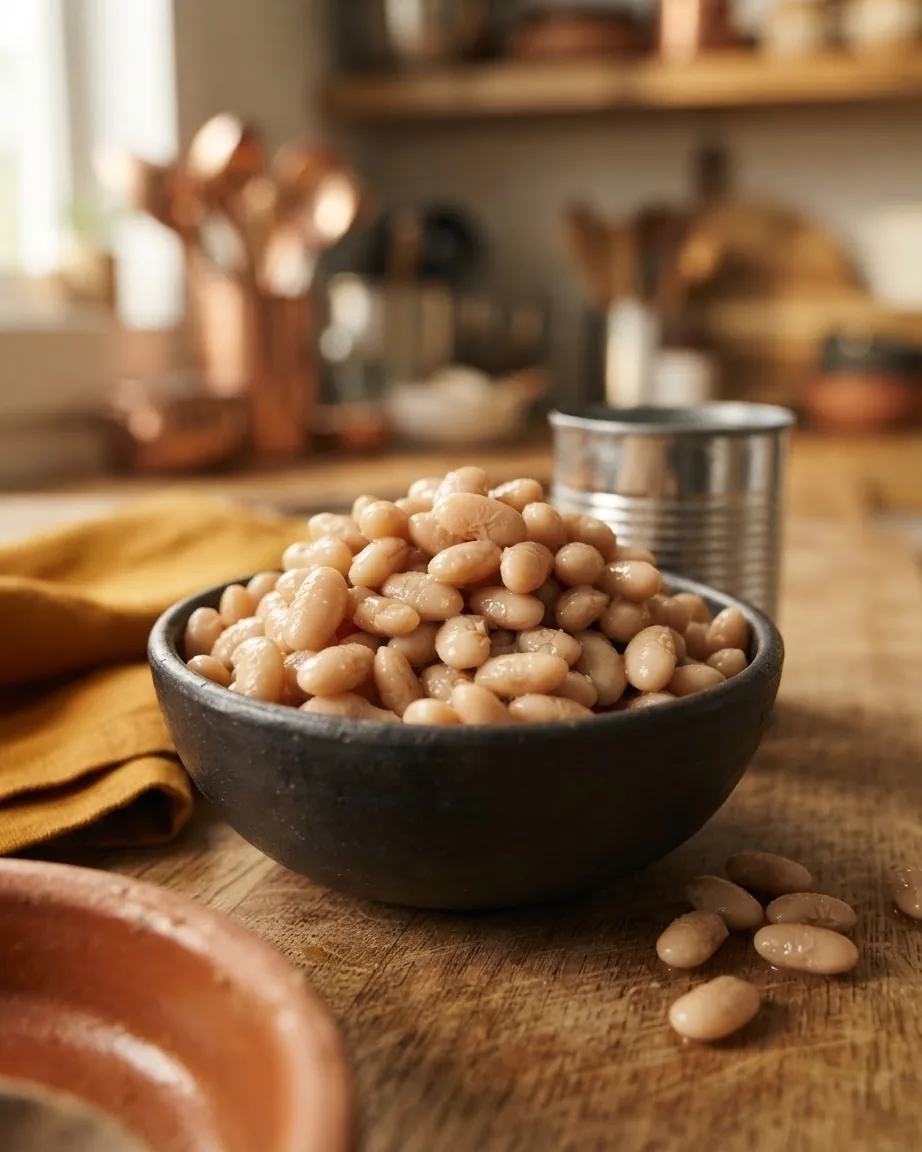
| Beans in a rice-cooker program | Rice-cooker settings called “unsuitable for beans” because soaking and times differ | White chili recipe uses canned beans on Slow Cook | Canned (already cooked) vs. cooking dried beans from raw |
The resolution is conditional, not a winner. For leavening, follow the rule for the exact mode you are using: on a Zojirushi Cake function, skip baking powder and baking soda per Zojirushi America Corporation; on a Tiger Slow Cook crumble, the recipe’s leaveners are part of the method. For beans, canned working in one Slow Cook chili does not prove dried beans suit a rice program; Zojirushi flags that dried beans need soaking and times its settings do not provide. Use canned when the recipe calls for canned.
Two Slow Cook desserts, timed
Tiger’s apple crumble sets Slow Cook for 120 minutes after you top the apple mixture with the crumble mixture. That 120-minute run against the 40-minute curry is why dessert and dinner are not swappable on the same timer. For a baked sweet in a different appliance, our Bang Bang Shrimp sits elsewhere on the site.
After the Cycle: Holding and Storing Rice-Cooker Meals Safely
Cooked rice and leftovers are among the foods associated with Bacillus cereus when left at room temperature, which is why the clock matters once the cycle ends. The warning signs below separate what you can manage at home from what needs a clinician.
- Food held at room temperature: Throw out perishable food, including cooked rice and leftovers, left out more than 2 hours, or more than 1 hour if the room is above 90°F. Action: discard it; do not taste to check.
- Keeping a meal warm to serve: Keep hot food at 140°F (60°C) or above and serve meat dishes within 2 hours of cooking. Action: use the Keep Warm setting only within that window.
- Cooling leftovers: Refrigerate or freeze within 2 hours, or 1 hour if exposed to temperatures above 90°F. Action: cold storage at 40°F (4°C) or under.
- Vomiting or diarrhea after eating: In severe cases symptoms may last 1 to 2 weeks. Action: see a clinician, especially if symptoms are severe, prolonged, or involve signs of dehydration. A shop or appliance seller is not a substitute for a medical professional.
- Honey in dishes for infants: Do not feed honey to children younger than 12 months. Action: for the honey-garlic recipe, serve it only to older children and adults.
Treat the time and temperature numbers above, published by FoodSafety.gov, as fixed. The appliance does not track them for you.
How Much Rice You Can Actually Use in Synchronized Mode
Tiger Corporation caps simultaneous cooking on the White Rice menu at 0.5-1 cup for a 3-cup cooker, 1-2 cups for a 5.5-cup cooker, and 2-4 cups for a 10-cup cooker. Taking the top of each range against the cooker’s rated size turns those raw limits into a single readable figure: 33% on the 3-cup, 36% on the 5.5-cup, and 40% on the 10-cup. The synchronized ceiling sits well under half the machine’s nameplate on every model, so a cooker’s size is not the amount of rice you can run under a paired dish.
Frequently Asked Questions
Can you make rice cooker recipes in instant pot?
Not by copying times directly. Rice cooker menus and durations are model-specific; a Tiger Slow Cook dish ranges from 40 minutes to 120 minutes depending on the recipe, and those values were set for that hardware. Match the dish to your appliance’s equivalent mode and still confirm poultry reaches 165°F independently.