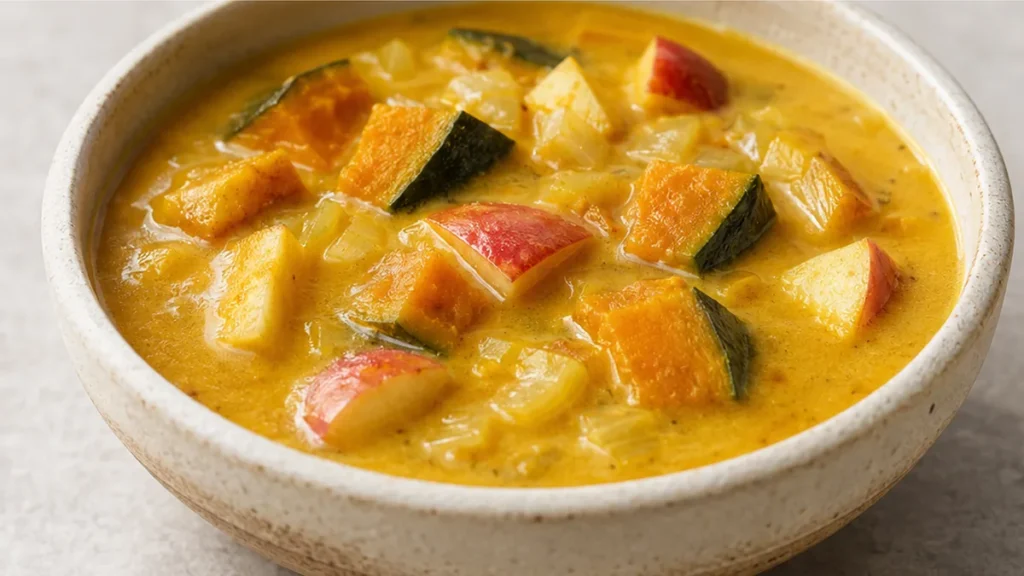
This kabocha soup recipe features creamy kabocha squash simmered in a coconut curry broth. It’s a warming and satisfying dish, perfect for a cool autumn evening.
Key takeaways
- Roast kabocha squash for enhanced sweetness and smoother texture.
- Blend soup thoroughly until completely smooth for optimal creaminess.
- Adjust seasoning and liquid content at the end to achieve desired flavor and consistency.
- Sauté onions and garlic well to build a foundational flavor base.
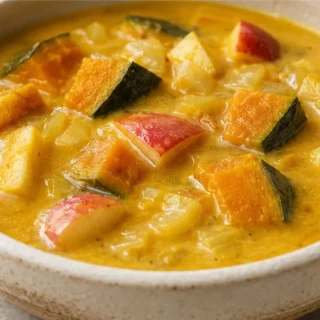
Creamy Kabocha Curry Soup!
Ingredients
- 1 medium kabocha squash (roughly 2 pounds)
- 1 teaspoon avocado oil (plus more for oiling squash)
- 1 yellow onion (chopped)
- 1/2 teaspoon salt (plus a pinch more for seasoning onions)
- 3 cloves garlic (minced)
- 1 tablespoon hot curry powder
- 1 teaspoon cumin
- 1 medium apple (cored, peeled, and chopped (Pink Lady is my favorite))
- 1/2 cup water
- 1 teaspoon Better Than Bouillon no chicken base
Instructions
- Preheat oven to 400 degrees or prepare air fryer. Carefully cut squash in half and remove seeds. Lightly coat with oil.
- Air fry cut side up at 390 degrees for 20 minutes, or roast in oven at 400 degrees for 45 minutes, until tender.
- While squash cooks, add oil to a soup pot over medium heat. Saute chopped onions with a pinch of salt until translucent and fragrant. Add minced garlic and saute for 1 minute more.
- Stir in curry powder, cumin, and chopped apples. Deglaze with water and bouillon. Cover and cook on low for 7 to 10 minutes.
- Once squash is cooked, remove from oven/air fryer. Cut off stem and any hard bits. Chop squash into medium-sized pieces.
- Add the chopped squash to the soup pot and combine.
Notes
The Technique That Makes It Creamy
The creamy texture of this kabocha soup relies on two key elements: the inherent starch content of the kabocha squash and proper blending. Kabocha squash, unlike some other winter squashes, has a dense, starchy flesh that breaks down beautifully when cooked, releasing starches that naturally thicken the soup. Roasting the kabocha first, as implied by oiling it, caramelizes its natural sugars, adding depth of flavor and a smoother consistency. When blending, it’s crucial to achieve a fine purée. This is best done in batches using an immersion blender or a countertop blender. If using a countertop blender, ensure the soup is not too hot to avoid pressure buildup. The starch molecules in the squash, when agitated and heated, hydrate and swell, creating a stable emulsion with the liquid base and the fat from the oil, resulting in a velvety, cohesive soup.
Troubleshooting
- Problem: Soup is too thin. Fix: Simmer the soup uncovered for an additional 5-10 minutes to allow excess liquid to evaporate. Alternatively, blend in a small amount of cooked rice or a tablespoon of cornstarch slurry (1 tbsp cornstarch mixed with 2 tbsp cold water) and simmer until thickened.
- Problem: Soup is not creamy enough. Fix: Ensure the kabocha squash is thoroughly cooked until very tender before blending. Over-blending can sometimes break down starches too much, but under-blending leaves chunks. Ensure you are blending until completely smooth. A higher-fat liquid like coconut milk (see substitutions) can also enhance creaminess.
- Problem: Gritty or fibrous texture. Fix: This can happen if the kabocha is undercooked or if fibrous parts of the squash were not removed. Ensure the squash is cooked until fork-tender. If using a countertop blender, blend for longer until the texture is completely uniform. Some kabocha varieties are naturally more fibrous.
- Problem: Flavor is bland. Fix: Taste and adjust seasoning at the end. Add more salt, curry powder, or cumin as needed. A squeeze of lemon or lime juice can brighten the flavors. Ensure the onion and garlic were sautéed properly to develop their sweetness.
Substitutions
- Kabocha Squash: Butternut squash or acorn squash can be used. The texture might be slightly less dense, potentially requiring a bit more simmering to thicken, and the flavor profile will be subtly different.
- Yellow Onion: Shallots can be substituted for a milder, sweeter onion flavor. Leeks (white and light green parts only, well-washed) can also be used, offering a delicate onion taste.
- Avocado Oil: Coconut oil or a neutral vegetable oil like canola or grapeseed oil will work. Coconut oil will impart a slight coconut flavor, which can complement the curry nicely.
- Water and No Chicken Base: Vegetable broth or a light chicken broth can replace the water and bouillon combination. Use about 1.5 to 2 cups of broth, adjusting for desired consistency. This will add more depth of flavor.
Pro tips
- For the creamiest kabocha soup, don’t rush the squash roasting process; tenderness is crucial. If the squash cracks or seems dry, tent it with foil during roasting.
- If you don’t have an air fryer, roasting the kabocha squash in the oven at 400°F (200°C) for about 45 minutes will yield similar tender results.
- Store leftover kabocha soup in an airtight container in the refrigerator for up to 3-4 days. It also freezes well for up to 2 months; thaw overnight and reheat gently on the stovetop.
This simple yet incredibly flavorful kabocha soup is a must-try for anyone looking for a comforting and nutritious meal. Experiment with different curry powders to customize the spice level!
Frequently asked questions
Can I make this soup ahead of time?
Yes, this kabocha soup can be made a day or two in advance. The flavors often meld and deepen overnight. Reheat gently on the stovetop, adding a splash of water or broth if it has become too thick. Stir well during reheating.
What can I use if I don’t have kabocha squash?
Butternut squash or acorn squash are good substitutes. They have similar textures and sweetness profiles. You may need to adjust the cooking time slightly and potentially simmer longer to achieve the desired soup thickness.
How can I make this soup spicier?
To increase the heat, add a pinch of cayenne pepper along with the curry powder and cumin. You could also add a finely minced jalapeño or serrano pepper when sautéing the onions and garlic, or stir in a teaspoon of sriracha or your favorite hot sauce before serving.
Is this soup vegan?
The recipe as written is not strictly vegan due to the optional use of ‘no chicken base’. To make it vegan, substitute the ‘no chicken base’ with a vegetable bouillon or use a flavorful vegetable broth instead of water and bouillon. Ensure your curry powder is also vegan.
More from Air Fryer Vegetables →