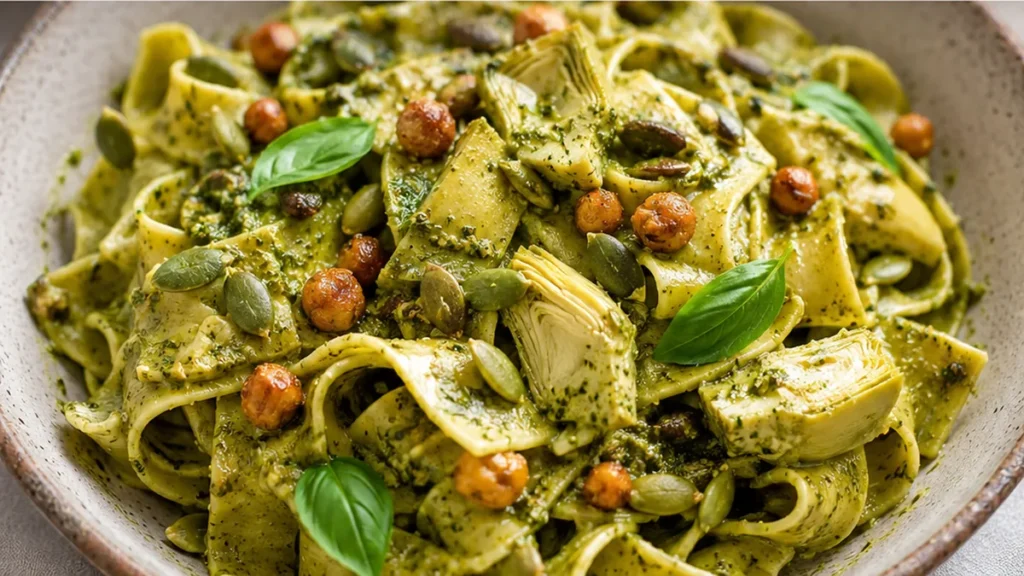
This creamy vegan pesto pasta recipe is perfect for a quick weeknight dinner. It’s a satisfying and flavorful meal that comes together fast.
Key takeaways
- Achieve a creamy vegan pesto by thoroughly blending basil, artichoke hearts, and pumpkin seeds.
- White miso paste is key for umami flavor and sauce emulsification.
- Use reserved starchy pasta water to thin the sauce and improve its texture.
- Fresh basil and a touch of lemon juice are essential for bright, vibrant flavor.
Creamy Vegan Pesto Pasta: Your Weeknight Dinner Hero!
Ingredients
- 8 ounces vegan pappardelle (or other pasta)
- 1 packed cup fresh basil leaves (1 ounce)
- 6 artichoke hearts (jarred or canned, drained and squeezed slightly to remove excess liquid)
- 2 tablespoons shelled pumpkin seeds (pepitas)
- 1 tablespoon lemon juice (About half a lemon)
- 1 clove garlic
- 1/2 teaspoon white miso paste
- 1 teaspoon extra virgin olive oil (optional)
- 1 batch roasted chickpeas
Instructions
- Cook pasta according to package directions.
- While pasta is cooking, combine basil leaves, artichoke hearts, shelled pumpkin seeds, lemon juice, garlic, and white miso paste in a food processor until it is fully combined. Scrape down the sides, as needed, and continue processing until the pesto is mostly smooth.
- After the pasta is finished cooking, drain in a colander.
- Move the noodles to a large mixing bowl, and toss with extra virgin olive oil to prevent sticking (optional). Spoon the artichoke pesto over the pasta, and toss until evenly combined.
- Serve pasta topped with air fried or roasted chickpeas.
Notes
The Technique That Makes It: Emulsifying the Creamy Pesto
The magic of this vegan pesto pasta lies in creating a smooth, emulsified sauce that clings beautifully to the pappardelle. Unlike traditional pesto which relies on Parmesan cheese for richness and emulsification, this vegan version uses a combination of ingredients to achieve a similar creamy texture. The key is the careful blending of fresh basil, artichoke hearts, pumpkin seeds, lemon juice, garlic, and white miso paste. The artichoke hearts provide a subtle creaminess and body, while the pumpkin seeds act as a binder and add healthy fats. White miso paste is crucial here; it not only adds a savory umami depth that mimics cheese but also helps to emulsify the sauce. Miso contains proteins and carbohydrates that can bind with the water and fats from the other ingredients, creating a stable, cohesive sauce when blended thoroughly. Ensure your blender or food processor is powerful enough to break down the basil and pumpkin seeds into a fine paste. A splash of the pasta cooking water, rich in starch, can be added during blending to further enhance the emulsion and create a silkier sauce that coats the pasta perfectly. Avoid over-processing, which can heat the basil too much and dull its vibrant flavor and color.
Troubleshooting
- Pesto is too thick: Gradually add reserved pasta cooking water, one tablespoon at a time, while blending until the desired consistency is reached. The starch in the water helps to thin the sauce and improve its emulsification.
- Pesto flavor is bland: Ensure you are using fresh, vibrant basil. Add a pinch more salt, a squeeze of lemon juice, or a tiny bit more miso paste to boost the savory notes and brightness.
- Sauce is oily or separated: This can happen if the ingredients weren’t blended long enough or if too much oil was added. Blend for another 30 seconds, or add a tablespoon of the starchy pasta water to help re-emulsify the sauce.
- Basil has turned brown: Over-processing or exposure to too much air during blending can cause oxidation. Blend quickly, and if possible, add the basil last to minimize processing time and air exposure.
Substitutions
- Pasta: While pappardelle offers a luxurious texture, any pasta shape like spaghetti, fettuccine, or penne will work. The sauce will coat any shape effectively.
- Pumpkin Seeds: Sunflower seeds or even blanched almonds can be used instead of pumpkin seeds. They will provide a similar creamy texture and healthy fats, though the flavor profile might shift slightly.
- Artichoke Hearts: For a similar creamy texture, you could try using soaked and blended cashews (about 1/4 cup) or even a small amount of silken tofu. The flavor will be different, but the creaminess will be maintained.
- White Miso Paste: A small amount of nutritional yeast (1-2 Tablespoons) can provide a cheesy, umami flavor, though it won’t contribute to emulsification as effectively as miso. A pinch of salt will be essential to compensate for the lost savoriness.
Pro tips
- To prevent your basil pesto from oxidizing and turning brown, add a thin layer of olive oil on top before storing.
- If your pesto seems too thick, thin it with a tablespoon or two of the pasta cooking water until it reaches your desired consistency.
- This pesto can be made up to 5 days ahead and stored in an airtight container in the refrigerator.
This vegan pesto pasta offers a fresh, flavorful, and incredibly easy meal solution. Experiment with different pasta shapes or add extra vegetables like sun-dried tomatoes or spinach. Enjoy!
Frequently asked questions
Can I make this pesto ahead of time?
Yes, you can make the pesto sauce up to 2-3 days in advance. Store it in an airtight container in the refrigerator. You may need to add a tablespoon or two of water or olive oil and re-blend briefly before tossing with freshly cooked pasta to achieve the right consistency.
What if I don’t have a high-speed blender?
If you don’t have a high-speed blender, a food processor will also work. You might need to process for a bit longer to break down the ingredients, especially the pumpkin seeds. Scrape down the sides of the bowl as needed to ensure everything is well combined.
How do I make the roasted chickpeas?
To roast chickpeas, drain and rinse a can of chickpeas, pat them very dry, toss with a little olive oil and your favorite seasonings (like salt, pepper, paprika, or garlic powder), and roast on a baking sheet at 400°F (200°C) for 20-30 minutes until crispy.
Can I add vegetables to this pasta?
Absolutely. This pasta is a great base for added vegetables. Consider sautéed mushrooms, steamed broccoli florets, wilted spinach, or sun-dried tomatoes. Add them directly to the pasta and sauce before serving.
More from Air Fryer Vegetables →