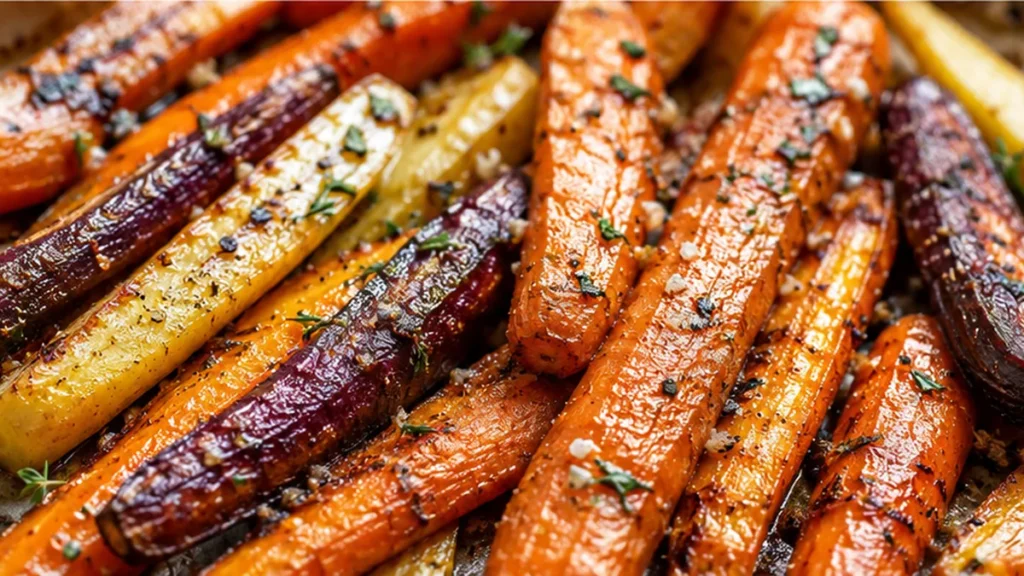
The secret to truly delicious roasted carrots lies in achieving that perfect balance of tenderness and caramelization. With just a few simple ingredients and a hot oven, you can transform humble carrots into a side dish that steals the show. This roasted carrots recipe is designed for maximum flavor with minimal effort, making it an ideal choice for busy weeknights or a simple addition to a holiday spread. I’ve found that proper spacing on the baking sheet is key to preventing steaming and encouraging that desired golden-brown exterior.
Key takeaways
- Select firm, fresh carrots for the best flavor and texture.
- Cut carrots uniformly to ensure even cooking.
- Use high heat for roasting to achieve crispiness and caramelization.
- Season well to enhance the natural sweetness of the carrots.
Crispy Roasted Carrots: Your New Favorite Side Dish!
Ingredients
- 1 pound whole carrots (orange or rainbow), trimmed and cut into 2-inch pieces (typically about 6 to 8 carrots)
- 2 tablespoons extra-virgin olive oil
- 1 teaspoon sea salt or kosher salt
- ½ teaspoon freshly ground black pepper
- Parchment paper or a silicone baking mat
Instructions
- Preheat the oven to 425°F (218°C). Line a large baking sheet with parchment paper or a silicone baking mat. If using an air fryer or convection oven, preheat to 400°F (200°C).
- If your carrots are large, halve them lengthwise. Toss the carrots in a bowl with olive oil, salt, and pepper until evenly coated.
- Spread the carrots in a single layer on the prepared baking sheet. Roast, turning halfway through, until golden and tender, 30 to 45 minutes, depending on their size. If using an air fryer or convection oven, cook at 400°F (200°C) for 15-20 minutes, shaking or stirring halfway through for even browning.
- Transfer to a serving dish and enjoy warm.
Notes
– If your carrots are very thin, check them for doneness around the 25-minute mark to prevent overcooking. They should be tender when pierced with a fork.
– For a touch of sweetness, drizzle with a teaspoon of maple syrup or honey during the last 10 minutes of roasting. This enhances their natural sugars. Nutrition information is an estimate, calculated automatically. Values vary with brands, substitutions and portion sizes.
Choosing the Right Carrots for Roasting
When selecting carrots, opt for firm, fresh whole carrots—either orange or rainbow varieties. Rainbow carrots not only add visual appeal but also offer a range of flavors. Aim for carrots that are approximately 1 inch in diameter for even cooking. Fresh carrots should be vibrant in color and free from soft spots or blemishes.
The Importance of Proper Cutting Technique
Cutting carrots into uniform 2-inch pieces ensures even roasting. Uneven pieces can lead to inconsistent cooking, where some are overdone while others remain crunchy. Use a sharp knife to make clean cuts, which helps maintain the integrity of the carrot’s cellular structure, resulting in a better texture.
Understanding the Role of Oil and Seasoning
Using extra-virgin olive oil not only adds flavor but also aids in the Maillard reaction, which is crucial for achieving that crispy exterior. The recommended ratio is 1 tablespoon of oil per pound of carrots. Seasoning with sea salt and freshly ground black pepper enhances the natural sweetness of the carrots. The salt draws moisture out, promoting caramelization and crispiness during roasting.
Roasting Temperature and Time for Optimal Crispiness
Preheat your oven to 425°F (220°C) for the best results. This high temperature allows the carrots to roast quickly, promoting browning without drying out. Roast the carrots for about 25-30 minutes, flipping halfway through to ensure even cooking. The ideal internal temperature for cooked carrots is around 190°F (88°C), which ensures they are tender yet still hold their shape.
Common Issues and Their Solutions
- Issue: Carrots are soggy.
- Cause: Insufficient roasting temperature or overcrowding on the baking sheet.
- Fix: Ensure the oven is preheated and arrange carrots in a single layer with space between them.
- Issue: Carrots are burnt on the outside but raw inside.
- Cause: Too high heat or too thick carrot pieces.
- Fix: Lower the oven temperature to 400°F (200°C) and ensure pieces are cut uniformly.
- Issue: Lack of flavor.
- Cause: Insufficient seasoning.
- Fix: Increase the amount of olive oil and seasoning to enhance flavor.
- Issue: Carrots are dry.
- Cause: Over-roasting.
- Fix: Check for doneness a few minutes earlier to avoid overcooking.
How to Make Roasted Carrots Ahead of Time
Preparing roasted carrots in advance can save time during busy meal prep. To make them ahead, wash, trim, and cut the carrots, then store them in an airtight container in the refrigerator for up to 24 hours. When ready to roast, toss the carrots with olive oil, salt, and pepper before spreading them on a baking sheet lined with parchment paper. This method ensures that the carrots maintain their flavor and texture, providing a convenient side dish option.
Adjusting the Recipe for Larger Gatherings
Scaling up your roasted carrots recipe is straightforward but requires attention to detail. For every additional pound of carrots, increase the olive oil, salt, and pepper proportionally. Ensure that the carrots are spread out evenly on the baking sheet to avoid steaming. If using multiple baking sheets, rotate them halfway through roasting to ensure even cooking. This approach allows you to serve a larger group without compromising the quality of the dish.
Understanding the Impact of Equipment on Roasting Carrots
The type of baking sheet used can significantly affect the outcome of your roasted carrots. A dark, non-stick baking sheet absorbs more heat and may cause the carrots to caramelize faster, potentially leading to uneven cooking. Conversely, a light-colored baking sheet reflects heat and may require longer cooking times. For optimal results, use a heavy-duty baking sheet and avoid overcrowding the pan to ensure even roasting and crispiness.
Seasonal Variations and Ingredient Quality
The quality and seasonal availability of carrots can greatly influence the flavor and texture of your roasted dish. In spring, young, tender carrots are sweeter and require less cooking time, while fall carrots are denser and may need a longer roasting period to achieve tenderness. Additionally, consider enhancing the flavor with seasonal herbs or spices, such as thyme or rosemary in the fall, or fresh dill in the spring. This adaptability allows you to make the most of fresh produce throughout the year.
How to Scale the Recipe Without Sacrificing Quality
When scaling your roasted carrots recipe, it’s essential to maintain the same ratios of oil, salt, and pepper to ensure consistent flavor. For every additional pound of carrots, add 1 tablespoon of olive oil, ½ teaspoon of salt, and ¼ teaspoon of pepper. Spread the carrots in a single layer on the baking sheet to avoid steaming. If using multiple sheets, rotate them halfway through cooking to promote even roasting. The cooking time may increase slightly for larger batches, so check for doneness by piercing a carrot with a fork; they should be tender and caramelized.
Understanding the Impact of Seasonal Carrots on Flavor and Texture
Carrots vary significantly in flavor and texture depending on the season. Spring carrots are often sweeter and more tender, while winter carrots tend to be denser and earthier. When using seasonal carrots, adjust cooking times; for spring carrots, reduce roasting time by about 5-10 minutes. Additionally, consider enhancing the natural sweetness of spring carrots with a touch of honey or maple syrup during the last few minutes of roasting. Conversely, winter carrots may benefit from a sprinkle of brown sugar to balance their earthiness.
The Role of Equipment in Achieving Perfectly Roasted Carrots
The type of baking sheet you use can significantly affect the outcome of your roasted carrots. A dark, non-stick baking sheet will yield more caramelization due to higher heat retention, while a lighter sheet may produce a softer texture. For optimal results, use a heavy-duty aluminum baking sheet and line it with parchment paper or a silicone mat to prevent sticking. Avoid overcrowding the pan, as this can trap steam and lead to soggy carrots. If using a convection oven, reduce the temperature by 25°F (about 14°C) for even roasting.
Best Practices for Serving and Pairing Roasted Carrots
Roasted carrots make a versatile side dish that pairs well with a variety of main courses. For a balanced meal, serve them alongside proteins like roasted chicken, grilled fish, or even plant-based options like quinoa or lentil dishes. To elevate the dish, consider garnishing with fresh herbs like parsley or dill, a squeeze of lemon juice, or a sprinkle of feta cheese for a creamy contrast. Additionally, roasted carrots can be served warm or at room temperature, making them an excellent choice for potlucks or meal prep.
How to Store Roasted Carrots for Maximum Freshness
Roasted carrots can be stored in an airtight container in the refrigerator for up to 4 days. To maintain their crispiness, allow them to cool completely before sealing them. If you plan to reheat them, consider using an oven or air fryer instead of a microwave, as the latter can make them soggy. For longer storage, roasted carrots can be frozen for up to 3 months. To freeze, spread them out on a baking sheet to prevent clumping, freeze until solid, then transfer to a freezer bag. When ready to eat, roast from frozen at 425°F (220°C) for about 20-25 minutes, adjusting time as needed until heated through and crispy again.
Scaling the Recipe Without Compromising Quality
When scaling the roasted carrots recipe, maintain the same proportions of ingredients for optimal flavor and texture. For every additional pound of carrots, increase the olive oil to 2 tablespoons and the salt and pepper proportionally. Ensure that the carrots are spread evenly on the baking sheet without overcrowding, as this allows for even roasting and crispiness. If doubling the recipe, consider using two baking sheets. Adjust the roasting time as necessary, checking for doneness and browning at the 20-minute mark for larger batches, as they may require additional time to achieve the same level of caramelization and crispiness.
Why the roasting time and temperature can impact crispiness
The ideal temperature for roasting carrots is between 400°F (204°C) and 425°F (218°C). At these temperatures, the Maillard reaction occurs, creating a crispy exterior while maintaining a tender interior. If the temperature is too low, the carrots may steam instead of roast, resulting in a soggy texture. Conversely, if the temperature is too high, the outside may burn before the inside cooks through. A roasting time of 20 to 30 minutes is generally sufficient, but this can vary based on the thickness of the carrot pieces. For uniform cooking, it’s essential to cut the carrots to a consistent size, ideally 2 inches in length.
Understanding how to scale the recipe without losing quality
Scaling a recipe for roasted carrots is straightforward, but attention to detail is crucial to maintain quality. The ratio of carrots to oil and seasoning should remain consistent; for each additional pound of carrots, add 1 tablespoon of olive oil, 1/2 teaspoon of salt, and 1/4 teaspoon of pepper. When increasing the batch size, ensure there is enough space on the baking sheet to allow for even roasting. Overcrowding can lead to steaming rather than roasting, which impacts texture. If you are preparing a larger batch, consider using multiple trays and rotating them halfway through cooking to ensure all carrots roast evenly.
Pro tips
- For extra flavor, add a pinch of dried thyme or rosemary to the carrots before roasting. These herbs complement the natural sweetness beautifully.
- If your carrots are very thin, check them for doneness around the 25-minute mark to prevent overcooking. They should be tender when pierced with a fork.
- For a touch of sweetness, drizzle with a teaspoon of maple syrup or honey during the last 10 minutes of roasting. This enhances their natural sugars.
This roasted carrots recipe is a testament to how simple techniques can yield incredible results. Experiment with different seasonings or a sweet glaze to make it your own. Enjoy this versatile and delicious side dish!
Frequently asked questions
Can I use baby carrots for this recipe?
Yes, baby carrots can be used, but they may require a shorter roasting time due to their smaller size. Keep an eye on them to prevent overcooking.
What can I serve with roasted carrots?
Roasted carrots pair well with a variety of dishes, including roasted meats, grain bowls, or as part of a vegetable medley. Their natural sweetness complements savory flavors beautifully.
Can I prepare the carrots ahead of time?
You can trim and cut the carrots ahead of time and store them in water in the refrigerator for up to 24 hours. Just dry them thoroughly before roasting for the best results.
What if I want to add more flavor to the roasted carrots?
Consider adding herbs like thyme or rosemary, or spices such as cumin or paprika, before roasting. This will infuse additional flavors during the cooking process.
More from Air Fryer Vegetables →