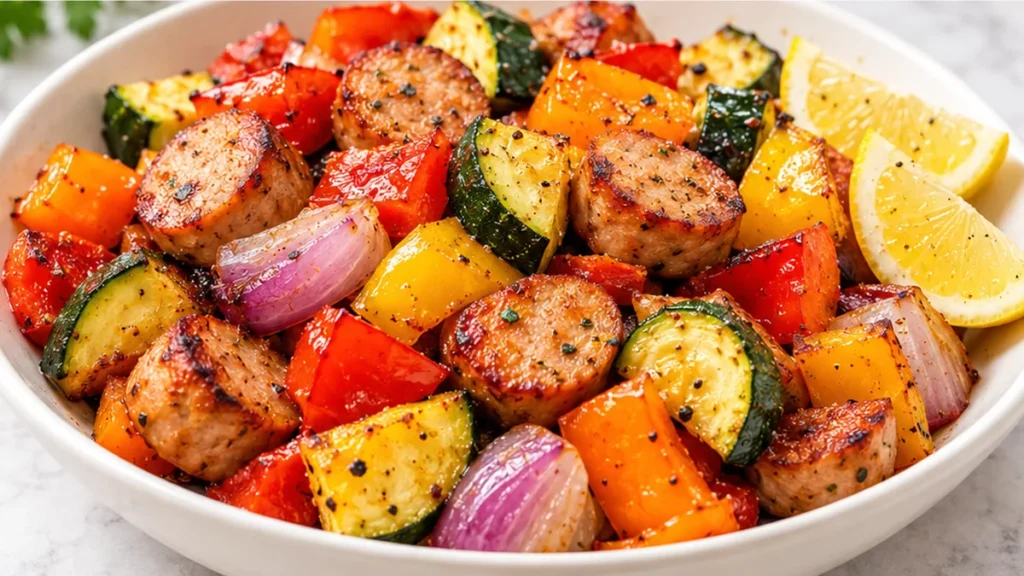
This air fryer sausage veggies recipe combines sausage, bell peppers, and onions for a quick, nutritious meal. It’s perfect for busy weeknights.
Key takeaways
- Ensure uniform vegetable sizes for even cooking.
- Pre-cook denser vegetables to match cooking times.
- Use parchment paper to absorb excess grease.
- Adjust cooking times for ingredient substitutions.
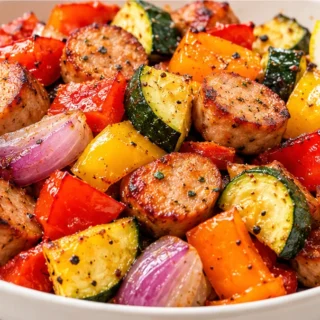
Quick Air Fryer Sausage & Veggies
Ingredients
Instructions
- Season the vegetables. Add the bell peppers, onion and zucchini to a large mixing bowl. Drizzle with the avocado oil, then sprinkle the Old Bay seasoning and garlic powder evenly over the top. Toss until the vegetables are well coated. (Tip: Cutting the zucchini slightly larger than the peppers helps prevent it from overcooking in the air fryer.)
- Add the sausage. Slice the chicken sausage into thin rounds and add them to the bowl with the vegetables. Toss gently until everything is evenly combined.
- Air fry. Preheat the air fryer to 390°F if your model requires it. Add the sausage and vegetables to the air fryer basket in an even layer (work in batches if needed so the basket isn’t overcrowded). Cook for 9–11 minutes, shaking the basket halfway through, until the vegetables are tender and lightly browned and the sausage is heated through.
- Finish and serve. Transfer the sausage and vegetables to a serving dish and squeeze fresh lemon juice over the top. Serve warm with extra lemon wedges if desired.
Understanding the Role of Heat in Air Frying Sausage and Vegetables
The air fryer utilizes rapid air circulation to cook food evenly, which is crucial for achieving a perfect texture in both sausage and vegetables. The ideal temperature for cooking sausage in an air fryer is around 200°C (400°F). This temperature allows the sausage to brown nicely while ensuring the inside is fully cooked, typically requiring about 10-15 minutes. Vegetables, depending on their type, may require slightly less time, around 8-12 minutes. The key is to cut vegetables uniformly to ensure they cook at the same rate as the sausage.
Common Issues with Cooking Sausage and Vegetables Together
One common issue when cooking sausage and vegetables together in an air fryer is uneven cooking. This often occurs because different ingredients have varying cooking times. For instance, denser vegetables like carrots may take longer to cook than softer ones like bell peppers. To combat this, consider pre-cooking denser vegetables for a few minutes before adding them to the air fryer with the sausage. Another issue can be excess grease from the sausage, which can lead to soggy vegetables. To avoid this, you can place a piece of parchment paper in the air fryer basket to absorb some of the grease.
Ingredient Substitutions and Their Effects on the Dish
When it comes to air fryer sausage and veggies, ingredient substitutions can significantly impact the final dish. For example, swapping pork sausage for chicken or turkey sausage can reduce fat content but may result in a drier texture. If you prefer a vegetarian option, using plant-based sausage can provide a similar flavor profile, although the cooking time may vary. Additionally, substituting fresh vegetables with frozen ones can save time, but be aware that frozen vegetables may release more moisture, potentially affecting the crispiness of the dish. Adjusting cooking times accordingly can help maintain the desired texture.
The Unique Flavor Profile of Air-Fried Sausage and Vegetables
One aspect that sets air-fried sausage and vegetables apart from other cooking methods is the Maillard reaction, which enhances flavor through browning. The air fryer’s high heat promotes this reaction, leading to a richer taste and appealing color in both the sausage and vegetables. This results in a dish that is not only flavorful but also visually appealing, making it an excellent choice for dinner. Additionally, the use of spices and herbs can further elevate the dish, allowing for customization based on personal preferences.
Make-Ahead Strategies for Air Fryer Sausage and Veggies
Preparing meals in advance can save time and ensure you have healthy options available. For air fryer sausage and veggies, you can pre-cut your vegetables and store them in an airtight container in the refrigerator for up to three days. Additionally, sausages can be pre-cooked slightly and refrigerated; just ensure they are reheated thoroughly before serving. When ready to cook, combine the prepped ingredients in the air fryer, adjusting cooking time as necessary. This not only streamlines your cooking process but also helps in maintaining the freshness of the ingredients.
Scaling the Recipe for Larger Gatherings
When scaling the air fryer sausage and veggies recipe for larger gatherings, consider the capacity of your air fryer. Most standard air fryers can handle about 1 kg of food at a time, so if you are cooking for a crowd, you may need to cook in batches. Keep in mind that cooking in larger quantities may require slight adjustments in cooking time; monitor the food closely to ensure even cooking. Additionally, consider using a variety of sausages and vegetables to cater to different tastes while maintaining the same cooking method.
Understanding Equipment Differences in Air Frying
Different air fryer models can significantly impact the cooking results of your sausage and veggies. For instance, basket-style air fryers circulate hot air differently than oven-style models. If using a basket-style air fryer, ensure to shake the basket halfway through cooking for even browning. Conversely, with an oven-style air fryer, you may want to rotate the trays. Always refer to your specific air fryer’s manual for optimal cooking times and temperatures, as these can vary greatly between brands and models.
Seasonal Variations and Ingredient Quality Impact
Seasonal changes can greatly influence the flavor and quality of the vegetables used in your air fryer dish. Fresh, in-season vegetables like zucchini, bell peppers, and asparagus can enhance the overall taste and texture. Conversely, out-of-season vegetables may not provide the same flavor profile and can be less nutritious. When selecting ingredients, prioritize local and seasonal produce for the best results. Additionally, consider adjusting the seasoning based on the freshness of your ingredients; fresh vegetables might need less seasoning than those that are stored for longer periods.
Understanding the Impact of Ingredient Freshness on Air Fryer Sausage and Veggies
The quality of your ingredients plays a crucial role in the final outcome of air fryer sausage and veggies. Fresh sausages typically contain more moisture and fat, which can enhance flavor and prevent dryness during cooking. In contrast, older sausages may lose moisture, resulting in a less juicy bite. When it comes to vegetables, seasonal produce not only tastes better but also has a different texture and moisture content. For instance, summer zucchini has a higher water content than winter squash, which can affect cooking times and results. Aim for vegetables that are firm and vibrant in color, as these are indicators of freshness. Additionally, consider the ripeness of your vegetables; overripe ingredients may become mushy and fail to maintain the desired crispness when air fried. Therefore, using fresh, seasonal ingredients is essential for achieving the best flavor and texture in your dish.
Optimal Serving Suggestions for Air Fryer Sausage and Veggies
Once your air fryer sausage and veggies are cooked to perfection, serving them correctly can elevate the dining experience. This dish pairs beautifully with a variety of sides, such as a light salad, crusty bread, or even a grain like quinoa or couscous. For a more substantial meal, consider serving it over a bed of rice or mixed with pasta. Additionally, drizzling a tangy vinaigrette or a spicy sauce over the dish can enhance the flavors further. Garnishing with fresh herbs like parsley or basil adds a pop of color and freshness. If you want to add a creamy element, a dollop of yogurt or a sprinkle of feta cheese can complement the savory notes of the sausage and the sweetness of the vegetables. Experimenting with different pairings can help you discover your favorite combinations and keep the dish exciting.
How to Properly Store and Reheat Leftover Air Fryer Sausage and Veggies
Storing leftovers from your air fryer sausage and veggies can be done effectively to maintain their quality. Allow the dish to cool to room temperature before transferring it to an airtight container. Properly stored, it can last in the refrigerator for up to three days. When reheating, the air fryer is your best bet for restoring the original texture. Preheat the air fryer to 180°C (350°F) and reheat the dish for about 5-7 minutes, checking to ensure it is heated through. Alternatively, you can use a microwave, but this may result in a softer texture. If you plan to store the dish for longer than three days, consider freezing it. Freeze in portions to make reheating easier later on. When ready to eat, thaw in the refrigerator overnight before reheating. Proper storage and reheating techniques will ensure that your leftovers remain delicious and enjoyable.
Understanding the Impact of Ingredient Quality on Flavor and Texture
The quality of ingredients used in air fryer sausage and veggies significantly affects the final dish. Fresh, high-quality sausages will have a better flavor and texture compared to processed options. For vegetables, seasonal produce not only enhances taste but also ensures optimal texture. For instance, using fresh bell peppers in summer will yield a sweeter, crunchier result than those picked out of season. Additionally, the fat content in sausages can influence cooking time and moisture retention. Higher-fat sausages may require slightly reduced cooking time to prevent them from becoming greasy, while leaner options may need a little extra time to ensure they are fully cooked through. Understanding these nuances can help you select the best ingredients for your dish.
Scaling the Recipe for Larger Gatherings Without Compromising Quality
When scaling the air fryer sausage and veggies recipe for larger gatherings, it’s crucial to maintain the right ratios and cooking times to ensure even cooking. The air fryer has a limited capacity, so overcrowding can lead to unevenly cooked food. If preparing for a larger group, consider cooking in batches rather than doubling the ingredients in one go. This allows for better air circulation and consistent results. Additionally, keep an eye on the cooking time; larger batches may require slight adjustments in cooking duration. A good rule of thumb is to check the internal temperature of the sausages to ensure they reach at least 75°C (165°F) for safe consumption. This way, you can serve a delicious dish that retains the intended flavor and texture, even when made in larger quantities.
Pro tips
Pro tip: Best served immediately while hot!
Frequently asked questions
How do I ensure my sausage is fully cooked in the air fryer?
To ensure your sausage is fully cooked, use a meat thermometer to check that the internal temperature reaches at least 75°C (165°F). This guarantees that harmful bacteria are eliminated, making it safe to eat.
Can I use frozen vegetables in this recipe?
Yes, you can use frozen vegetables, but be mindful that they may release moisture during cooking. Adjust the cooking time slightly to ensure they become crispy and don’t steam instead.
What types of sausage work best in the air fryer?
Any type of sausage can work well in the air fryer, but chicken, turkey, and pork sausages are popular choices. Each type will have different fat content, affecting cooking time and moisture level.
How can I make my dish more flavorful?
To enhance flavor, consider marinating the sausage before cooking or adding herbs and spices to the vegetables. A sprinkle of garlic powder, paprika, or fresh herbs can elevate the overall taste significantly.
More from Air Fryer Chicken →