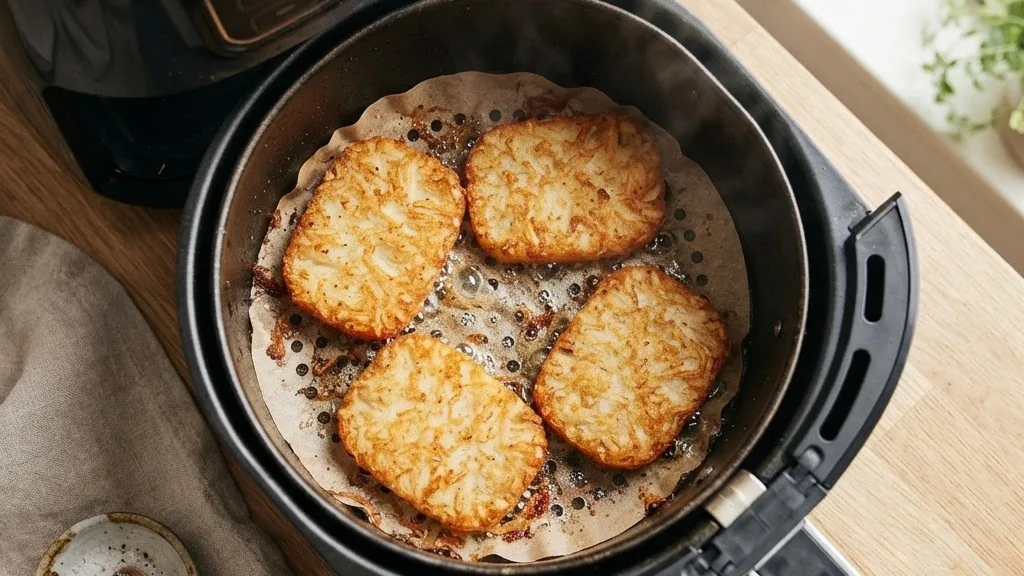
Frozen hash brown patties in air fryer reach crisp, golden edges in roughly 8 to 10 minutes at 400F, straight from the freezer with no thawing. That single line answers most of the query, yet the freezer bag hides the variables that decide shatter-crisp versus limp and pale. Cooking frozen hash brown patties in air fryer baskets works because the potato was already par-fried at the factory, so the appliance only reheats the center and browns the surface.
That reframing prevents the most common mistakes. If you have already dialed in fries, the airflow logic carries over; our guide on frozen fries crispier than the oven leans on the same convection rules used here. The rest of this page tunes the method by brand thickness, basket versus oven-style geometry, and USDA-backed safety numbers.
Quick answer: cook frozen hash brown patties in air fryer at 400F for 8 to 10 minutes, arranged in a single layer with space around each disc, flipping once at the midpoint. Basket-style units crisp faster; oven-style cavities usually need one to three extra minutes at the same 400F. Most brands are pre-oiled, so a light spray only stops sticking. Pull the patties when the surface is deep golden and the center is hot, and reheat any leftovers to 165F (74C) as the USDA advises. For most machines, that single setting is the whole recipe.
What Frozen Hash Brown Patties Actually Are
Frozen hash brown patties are shredded or diced potatoes bound with starch and a small amount of oil, formed into a disc, par-fried, and flash-frozen. Because that par-fry step already cooks the potato through, the appliance is reheating and crisping, so timing behaves differently from raw food. You are driving surface moisture off and browning the outside while the packed center warms back up. Ore-Ida, a Kraft Heinz brand, and McCain Foods both print conventional-oven baseline instructions on the bag for exactly this reason: the product is finished food that needs thorough reheating. The oil already in the patty comes from that factory par-fry, which is why many discs crisp with no added fat at all.
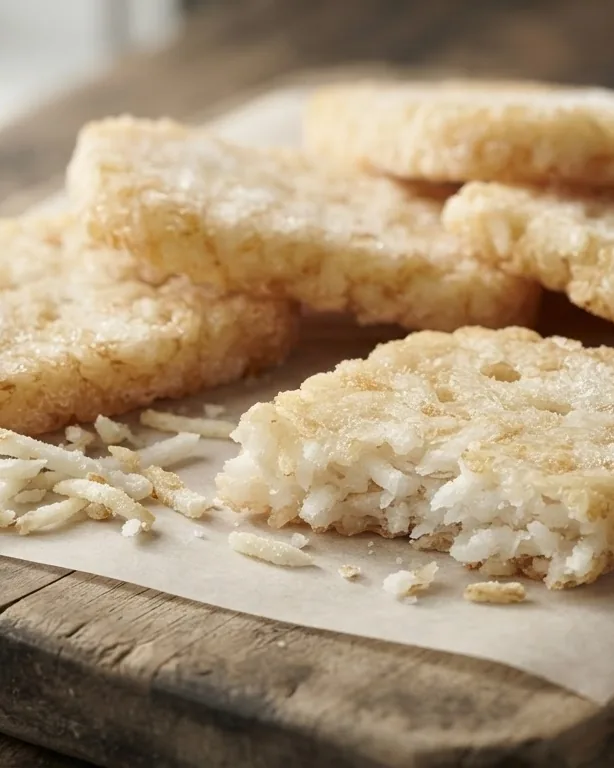
Two practical points follow. A patty that looks done can still be lukewarm inside, so color alone is a weak signal. And because moisture kills crunch, anything that traps steam around the patty, whether crowding, stacking, or a solid liner with no airflow, will fight the crisping you want. Keep that idea in mind and most of the method becomes obvious.
Basket vs Oven-Style Air Fryers, and Why Timing Shifts
Basket-style and oven-style air fryers cook the same patties on different clocks. A basket unit is small, with a tight cavity and a fan close to the food, so heat concentrates and crisping arrives quickly. An oven-style cavity is larger, air spreads out, and the same 400F setting usually needs about one to three extra minutes to match. Wattage moves the needle too: popular consumer models span roughly 1,200 to 1,800 W, and a higher-wattage machine browns faster than a lower one at the same dial. Most consumer units, basket and oven-style alike, top out near 400F, which is about 200C, so you are already close to the ceiling at the standard setting. Brands like Philips, Ninja, and Cosori publish their machines’ rated ranges, and reading yours beats guessing every batch.
Airflow geometry is the mechanism underneath those numbers. Fast, dry air strips the thin moisture film off the surface and carries it away, which is what lets the exterior brown and set. Crowd the basket and that airflow stalls, steam pools, and you braise instead of crisp.
Practical calibration by machine:
- Basket-style near 1,200 W: same 400F, but expect the top of the 8 to 10 minute window.
- Oven-style cavity: keep 400F, budget one to three extra minutes, and rotate the tray once.
- Very full load in any machine: cook in two batches instead of stacking, or accept softer centers.
The single-layer rule earns its keep here. One patty deep, with a finger of space around each, gives the fan a clear path over every surface. When space is tight, fewer patties per batch beats packing them in, because a second batch costs a few minutes while a crowded first batch costs the whole texture. If your machine runs cool, the fix is more time, since you are already near the 400F ceiling most units allow.
How to Cook Frozen Hash Brown Patties in Air Fryer
Cooking these patties from frozen follows one short sequence, and every step earns its place. Work straight from the freezer, since thawing turns the surface soft and slows crisping. Lay the patties in a single layer with space between them, because contact points and crowding trap the steam that keeps them pale. Skip preheating on most basket units, or give an oven-style cavity two to three minutes to come up if it runs cool. Set 400F and cook 8 to 10 minutes, flipping once near the 4-minute mark so both faces brown evenly. Add a light spray only to stop sticking, since the factory par-fry already supplies the oil that crisps the surface. Salt right away, while the hot surface still holds it.
The oil question trips people up. Aerosol cooking sprays carry propellants that can pit and peel a non-stick basket coating over time, so many cooks brush a thin film of avocado oil instead when they want extra color. Most brands need neither, because the disc arrives pre-oiled.
Doneness cues to trust over the timer:
- Color: deep, even gold across the face, with darker lace at the edges.
- Sound: a dry, light rattle when you shake the basket, rather than a damp thud.
- Feel: firm and rigid, with no cold or bendy center when pressed.
- Leftovers: reheated pieces should reach 165F (74C), the USDA benchmark for previously cooked food.
The flip is worth doing on a basket unit, where the bottom face sits against the tray and browns harder than the top. One turn near the midpoint evens that out. In an oven-style machine on a mesh tray, air reaches both faces more equally, so a rotation of the tray can matter more than a flip. Either way, one interruption is plenty; opening the door repeatedly bleeds heat and stretches the cook.
If sticking keeps happening, a perforated liner helps without smothering airflow, and our guide on whether you can put parchment paper in an air fryer covers the weight-it-down and never-preheat-empty rules that keep a liner from flying into the element.
Brand and Thickness, from Ore-Ida to Store Labels
Brand and thickness change the clock more than any recipe card admits. Thin, fast-food-style patties heat through quickly and can scorch if you leave them for the full window, while thick, classic discs need the top of the 8 to 10 minute range to warm the dense center. Potato cut matters too, since shredded styles crisp differently from diced ones. Across the shelf, Ore-Ida from Kraft Heinz, McCain Foods, Trader Joe’s, and store labels such as Great Value, Good and Gather, and Aldi’s Season’s Choice vary in thickness, potato density, and how much oil the par-fry left behind. That variation is why one fixed time never travels cleanly from brand to brand. Read the bag’s own conventional-oven baseline as a density hint: a longer printed oven time usually signals a thicker patty that will also want more minutes in the basket.
The gluten-averse should still read labels, since binders differ; a roundup of gluten-free snacks and sides is a useful cross-check before you assume a given patty qualifies.
Time and Temperature Reference
A quick reference keeps the guesswork out once you know your machine. The defaults below use the 400F, 8 to 10 minute baseline, then adjust for appliance class and patty thickness. Basket-style units sit at the fast end, oven-style cavities take the one-to-three-minute penalty, and thicker discs push toward the top of every range. Treat these as starting points for your first batch. Every value assumes a single layer with space between patties, since a crowded tray invalidates the whole table by trapping steam. Flip or rotate once near the midpoint in all cases, and confirm reheated leftovers reach the safe internal mark before serving.
| Appliance and patty | Temp | Time | Note |
|---|
Food Safety, Storage, and Reheating
Food safety on frozen potato products comes down to four numbers, and the U.S. Department of Agriculture (USDA) sets all of them. Keep the freezer at 0F, which is minus 18C or below, to hold quality and halt bacterial growth. Once cooked, do not let patties linger in the danger zone between 40F (4C) and 140F (60C), where bacteria multiply fast. The hard limit there is 2 hours at room temperature, dropping to 1 hour when the surrounding air is above 90F (32C). When you reheat leftovers, bring them to an internal 165F (74C), the benchmark the agency uses to confirm previously cooked food is safe again. Because factory patties are already par-fried, that 165F reheating target is the number that actually matters for a plate warmed the next morning.
These are not house rules; they trace to published federal guidance. The USDA Food Safety and Inspection Service (FSIS) documents the storage, danger-zone, and reheating figures in its consumer materials, and you can read the same standards straight from the USDA Food Safety and Inspection Service that inspectors work from. For storage windows on cooked leftovers, check current USDA guidance at the time you cook, since the safe refrigerator window is the kind of number worth confirming from the source rather than memory.
A few habits keep those numbers real in a home kitchen:
- Refrigerate leftovers within the 2-hour window, or 1 hour on a hot day above 90F (32C).
- Reheat to 165F (74C) with an instant-read probe in the center rather than eyeballing warmth.
- Hold the freezer at 0F (-18C) so the bags you have not opened stay at full quality.
- When unsure on storage length, verify against current USDA guidance instead of guessing.
Agencies overlap here in a helpful way. The USDA Agricultural Research Service maintains the FoodData Central nutrient database behind many of these products, and food-safety messaging from the Centers for Disease Control and Prevention (CDC) and FoodSafety.gov echoes the same danger-zone logic, so the guidance is consistent wherever you check it.
Oil, Fat, and the Healthier Question
Air frying earns its healthier reputation mostly by what it leaves out. A skillet needs added oil to fry a patty, roughly one tablespoon per batch as a working comparison, while a well-run air fryer adds close to none because the potato is pre-oiled from the factory. Pre-oiled means the fat is already in the food, so air frying trims added fat while the disc stays a fried potato. Sodium is the other lever worth watching: the American Heart Association (AHA) advises no more than 2,300 mg of sodium a day for most adults, with an ideal target closer to 1,500 mg, and seasoned frozen potatoes can carry a meaningful share of that. The honest framing is that air frying reduces added oil and lets you control salt.
High heat on starchy potato raises a second consideration: acrylamide. The U.S. Food and Drug Administration (FDA) explains in its consumer materials that acrylamide forms in starchy foods browned at high temperature, and the European Food Safety Authority (EFSA), in its Scientific Opinion published as EFSA Journal 2015;13(6):4104, named fried potato products among the largest dietary contributors. The practical takeaway is plain: aim for golden, not charred. You can read the agency’s overview on the FDA food section if you want the mechanism in full. Golden-brown is both the better flavor target and the more prudent one.
Texture Science and Troubleshooting
Crisping is chemistry, and the Maillard reaction is the engine. First described by Louis-Camille Maillard in 1912 and studied for decades in journals like the Journal of Agricultural and Food Chemistry, it is the browning that happens when heat drives sugars and amino acids to react on a food’s surface. That browning generally begins around 140C to 165C, which is 285F to 330F, measured at the food’s surface, not on the appliance dial. This is the trap worth naming: setting the fryer to 165C does not mean the surface has reached Maillard range, because the surface temperature and the set air temperature are different measurements. Fast, dry, hot air is what pushes the surface into that browning band quickly, which is why airflow and single-layer spacing decide crunch more than an extra ten degrees on the dial.
If you want the airflow mechanism in depth, our breakdown of air fryer convection cooking shows why moving air browns faster than the still air of a conventional oven. With the mechanism clear, most failures map to one root cause.
- Soggy or pale: overcrowding or a blocked basket trapped steam; cook fewer patties with space, and skip solid liners.
- Burnt outside, cold inside: heat was too aggressive or the patty was partly thawed; work from fully frozen and let time finish the center.
- Uneven browning: hot-spot geometry in the cavity; rotate or flip patties at the midpoint to even the exposure.
- Sticking: too little release; a light spray or a perforated liner solves it without killing airflow.
One calibration note ties it together. If a brand consistently browns before the center warms, hold 400F but pull a little earlier and add a short rest, or split the load into a second batch so airflow is not choked. The dial is already near the ceiling most units allow, so time and spacing, rather than more heat, are the real controls.
Air Fryer vs Oven vs Skillet
On the same patties, the three common methods trade off differently on oil, texture, and effort. Air frying uses close to no added oil and delivers even, all-over crisp fast, because moving hot air hits every face. A conventional oven adds little oil too but browns more slowly and less evenly, often needing a flip and a hotter shelf. A stovetop skillet gives strong bottom-crust contrast but adds the most fat, roughly a tablespoon of oil per batch as a rough comparison, and only crisps the side touching the pan. For a breakfast plate, lean on the air fryer for the patties while the skillet handles eggs, which keeps both at their best without crowding either.
| Method | Added oil | Texture | Note |
|---|---|---|---|
| Air fryer | near zero, pre-oiled | even all-over crisp | fastest, single layer |
| Conventional oven | little | slower, less even | flip once, hotter shelf |
| Stovetop skillet | ~1 tbsp per batch, rough | strong bottom crust | one side only, most fat |
To round out the plate, patties slot into a breakfast sandwich or sit beside eggs and greens; a broader vegan air fryer recipe collection is a good source of plant-forward sides when you are building a spread.
The Short Version That Actually Works
Run 400F for 8 to 10 minutes from frozen, in a single spaced layer, flipping once at the midpoint. Give oven-style cavities one to three extra minutes, and reheat any leftovers to 165F (74C). Aim for golden rather than charred. Nail spacing and airflow and the crunch takes care of itself.
Frequently Asked Questions
Do I need to thaw frozen hash brown patties first?
No. Cook them straight from the freezer at 400F. Thawing softens the surface and makes crisping harder, because the extra surface moisture has to boil off before browning can start. Going in fully frozen also prevents the burnt-outside, cold-inside result that partial thawing tends to cause when the heat hits unevenly.
Can I stack patties in the air fryer?
No. Stacking blocks the airflow that makes air frying work, so the trapped steam leaves you with soggy centers. Keep one patty deep in a single layer with a finger of space around each disc. If your batch is too big for that, cook it in two rounds instead of overlapping, since a second batch only costs a few minutes.
What temperature and time should I use?
Start at 400F for 8 to 10 minutes, flipping once at the 4-minute mark. Basket-style units land near the fast end, while oven-style cavities usually want one to three extra minutes at the same 400F. Thicker classic patties push toward 10 minutes, and thin fast-food-style discs can be done closer to 8, so check early.
Why are my hash brown patties soggy?
Trapped steam is almost always the cause. Overcrowding, stacking, or a solid liner with no perforations stops the fast, dry air from stripping surface moisture, so the patties braise instead of crisp. Fix it by cooking fewer patties with space between them, keeping a single layer, and flipping once so both faces get direct airflow.
Are air fryer hash browns healthier than pan-fried?
Air frying adds close to no oil because the patty is already pre-oiled from the factory par-fry, while a skillet adds roughly a tablespoon per batch as a rough comparison. So air frying trims added fat and lets you control salt. Watch sodium, though: the American Heart Association caps most adults at 2,300 mg a day, ideally near 1,500 mg.
Can I use the same method for other frozen potatoes?
Broadly, yes. Frozen fries and patties both want 400F, a single layer, and space for airflow, since both are par-fried before freezing. Whole potatoes are a different job because you are cooking raw starch through; for that, see our breakdown of air fryer baked potato timing, which depends on size rather than a fixed clock.