Can you put parchment paper in an air fryer? Yes, you can, and it is a useful trick for messy or sticky foods, as long as you follow a few simple rules. The paper itself is heat-resistant and handles air fryer temperatures with ease. The real danger is not heat at all. It is the powerful fan, which can lift a loose sheet straight into the heating element and start a fire. Use it the right way and parchment makes cleanup a breeze.
Parchment liners come in handy for many air fryer meals. This guide walks through exactly when it is safe, the one rule that prevents fires, how to cut and place it, and when you should skip it for crispier results. Get these basics down and you will use liners with total confidence.
The short answer
Here is the situation in plain terms.
- Yes, parchment is safe in an air fryer when used correctly.
- The heat is not the problem. Parchment is rated higher than most air fryers ever reach.
- The fan is the risk. Loose paper can blow into the heating element, so it must always be weighed down by food.
Master that one idea, keep the paper pinned under your food, and the rest is easy.
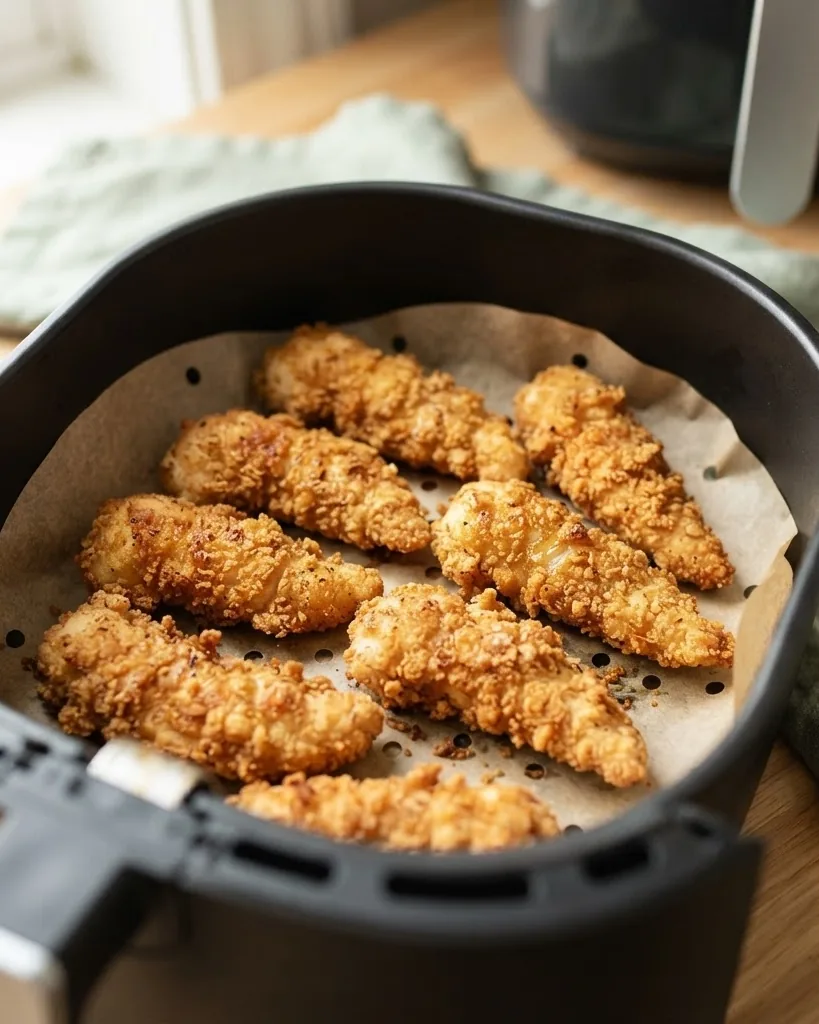
Is parchment paper safe in an air fryer?
On temperature alone, parchment is well within its limits. Most parchment is heat-resistant to around 420 to 450 F, which is about 216 to 232 C. The vast majority of air fryers cook at 400 F, roughly 204 C, or below. That margin means the paper is not going to scorch or burn from the heat in normal cooking.
So why all the warnings? Because an air fryer is essentially a small, powerful convection oven, and that rushing hot air is exactly what makes a loose sheet of paper dangerous. A bare liner with nothing on top can be picked up by the fan and pressed against the glowing element above, where it can catch fire in seconds. The paper is safe. A poorly placed, unweighted sheet is not. Everything else in this guide flows from that single fact. The makers of parchment liners, such as Reynolds, give the same guidance, and the food-safety basics from the USDA are a good reminder to cook to safe temperatures whether or not you use a liner.
The one rule that prevents fires
If you remember nothing else, remember this: never run the air fryer with parchment inside unless food is sitting on top of it. That includes preheating.
Preheating is where people get caught out. They line the basket, switch on the preheat, and walk away. With no food to weigh it down, the empty liner flutters up into the element. The fix is simple. Preheat the air fryer empty, and only add the lined food once it is hot. From that moment on, the food keeps the paper firmly in place. Treat the liner like a passenger that always needs a seatbelt, and that seatbelt is your food.
How to use parchment paper correctly
Putting a liner in the right way takes about ten seconds once you know the steps.
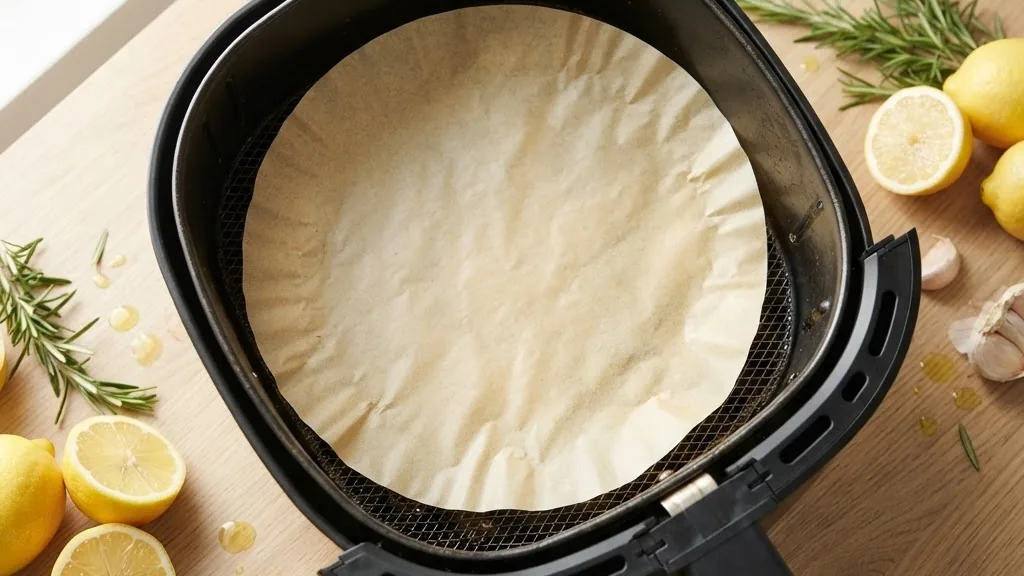
- Cut it to fit the bottom only. Size the paper to the base of the basket and leave about a 1/2 inch, roughly 1.3 cm, of margin around the edges so air can still move past it.
- Do not line the walls. Paper creeping up the sides blocks circulation and can flap loose. Keep it flat on the bottom.
- Add holes if it is plain paper. Poke 10 to 15 small holes so hot air passes through, unless you are using pre-perforated liners.
- Place your food on top. Arrange it so the paper is weighed down across its surface before you start.
- Then cook as normal. With the food holding everything in place, you are good to go.
That is the whole method. It is the bottom-only placement plus the weight of the food that keeps you safe and your air moving.
Perforated vs regular parchment
You will see both plain parchment and pre-cut perforated liners sold for air fryers. They both work, but they behave a little differently.
| Type | Airflow | Best for |
|---|---|---|
| Perforated liners | Holes let hot air pass through | Better crisping, even cooking, convenience |
| Plain parchment | Blocks more air unless you poke holes | On hand already, cut to any size |
Perforated liners are the default choice because the holes keep air moving, which is the whole point of an air fryer. Plain parchment is perfectly fine too, especially when you cut your own to an odd shape, just remember to add those holes so you do not choke off the circulation.
When to use it and when to skip it
A liner is a tool, not a requirement. It suits some jobs and not others.
| Use parchment for | Skip parchment for |
|---|---|
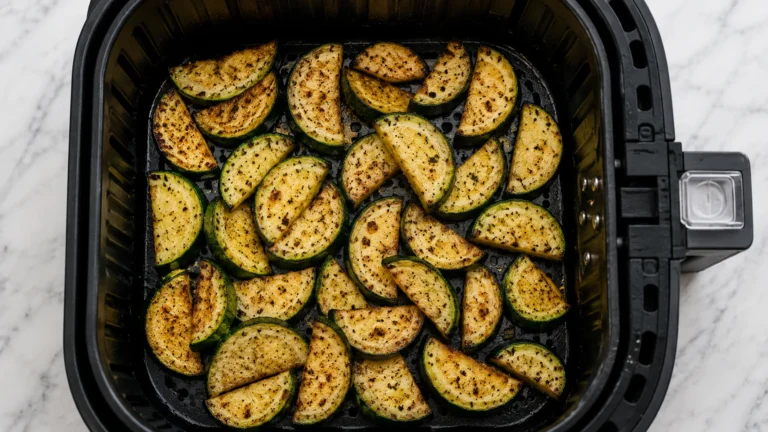
| Sticky, marinated, or saucy foods | Foods you want maximum crispy |
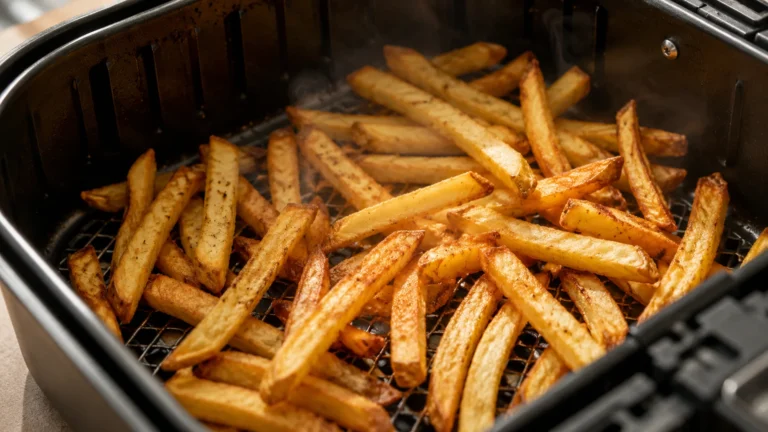
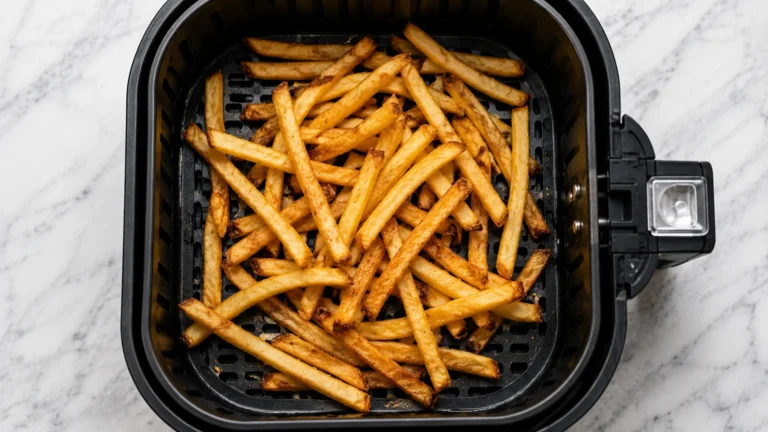
| Delicate items that might stick or fall apart | Fries, wings, and anything that needs all-around air |
| Easy cleanup after messy cooks | Quick, dry foods that release easily |
| Baking small items like cookies or biscuits | When the basket is already nonstick and clean |
The trade-off is simple. A liner saves you scrubbing and keeps delicate food intact, but it covers part of the perforated base, so it slightly reduces airflow underneath. For the crispiest possible results, bare basket wins. If you want to see how the appliance stacks up against a regular oven, our air fryer vs conventional oven comparison digs into the airflow difference, and you can put a clean liner to work on a batch of frozen diced potatoes.
What you should never use
Parchment is the right paper for this job. A couple of look-alikes are not, and using them can ruin dinner or worse.
- Wax paper. It looks similar but has a wax coating that melts and smokes at air fryer temperatures. Never use it for cooking.
- Paper towels. Far too light and flammable. They will lift into the element almost instantly.
- Regular printer or craft paper. Not food-safe and not heat-rated. Keep it out.
Aluminum foil is a different story. It is safe in many air fryers and will not blow around the way paper does, though it also blocks airflow and should be kept away from acidic foods and the heating element. When you specifically want a liner that crisps, though, perforated parchment is usually the better pick.
What size and shape to cut
Getting the size right is half the battle, and it is easy once you know the target. The goal is a liner that covers the bottom of the basket but never blocks the edges or climbs the walls.
Measure the base of your basket and cut the paper to sit inside it with about a half inch of bare space all the way around. That margin is where a lot of the airflow sneaks past, so it matters. For round baskets, a circle works best. For square or rectangular drawers, match the shape but trim the corners slightly so the paper lies flat. If you would rather not measure every time, pre-cut perforated liners come in standard round and square sizes that drop right in. Keeping a pack of both shapes in the drawer next to the air fryer makes lining the basket a one-second job.
If you go the pre-cut route, the common market sizes run about 5.5, 6.5, 7, 8, and 9 inches across, which covers most basket models sold today. Measure your basket floor once and buy the size that leaves that half-inch margin; sizing varies a little by manufacturer, so trust your tape measure over the box label.
Temperature is the other spec to check before you buy. Most branded parchment, Reynolds included, is labeled oven-safe to roughly 420 to 425 degrees Fahrenheit. A standard basket air fryer that tops out at 400 degrees stays comfortably under that ceiling, but the max-crisp modes on some newer models push 450 degrees, past what the paper is rated for. If you cook at those settings, skip the parchment for that batch or switch to a rated silicone liner.
Whatever you cut, resist the urge to make it bigger to catch more mess. An oversized sheet that hugs the walls or covers the whole base is the most common way people accidentally choke off the airflow that makes an air fryer work.
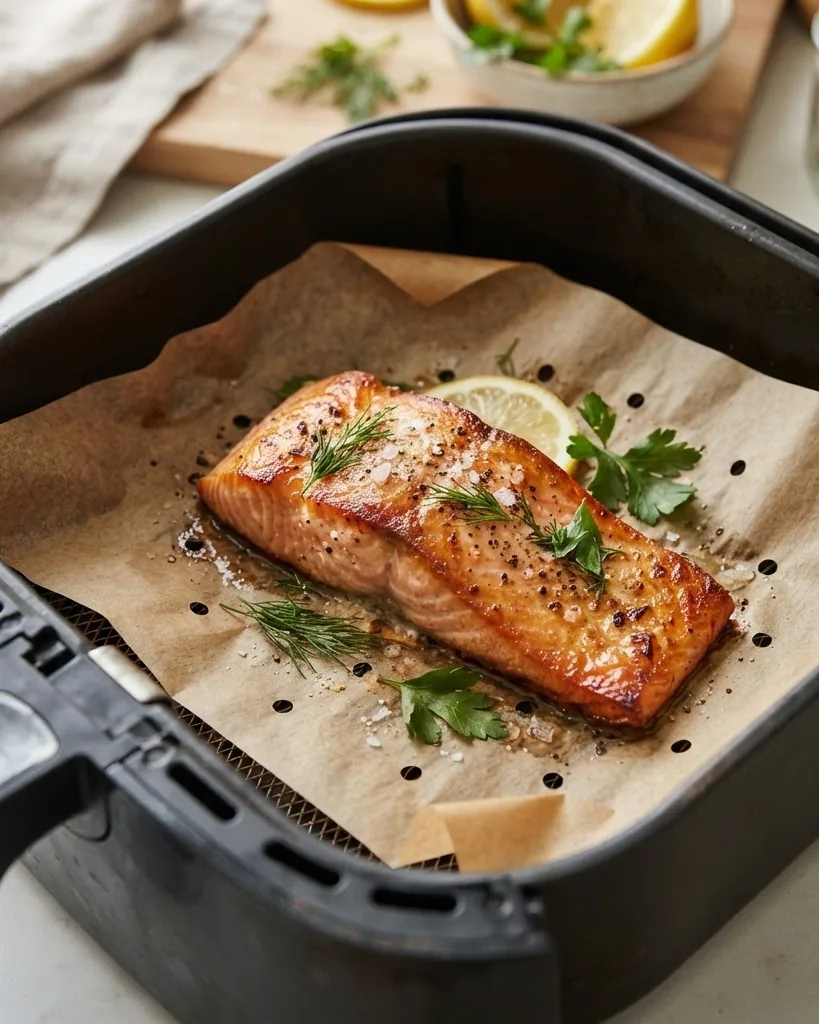
Using parchment for baking in the air fryer
Parchment really shines when you use the air fryer as a small convection oven for baking. Cookies, biscuits, small cakes, and rolls all benefit from a liner, because it stops delicate doughs from sticking and makes lifting them out clean and easy.
For baking, a solid sheet of parchment is often fine, since baked goods do not need the same all-around air blast that fries do. You still follow the same safety rules, though: weigh the paper down with the dough or batter before you start, and never preheat with the empty liner inside. Because baked items sit still rather than getting tossed, the paper stays put nicely. This is the one job where the small airflow trade-off matters little, since even, gentle heat is exactly what baking wants.
Does parchment affect crisping?
Yes, a little, and it is worth understanding so you can decide. An air fryer crisps food by blasting hot air all around it, including up through the holes in the basket. A solid sheet of parchment on the bottom partly blocks that under-airflow.
In practice, the difference is small for most foods, especially if you use a perforated liner or poke plenty of holes. For something like cookies or a saucy chicken thigh, you will not notice. For fries or wings, where you want every surface blasted and crackling, leave the paper out and let the bare, perforated basket do its job. Match the liner to the goal and you get the best of both.
Lessons worth knowing
Respect the fan. The classic mistake is to cut a liner, drop it in, and hit preheat while prepping the food on the counter. Within moments the paper can float up and press right against the element, already starting to brown. The rule is simple: no paper goes in until the food is going in with it.
Size matters too. The temptation is always to use a bigger sheet to catch more grease. The result is food that comes out paler and a little soggy, because the oversized paper smothers the airflow. A smaller liner that leaves the edges open brings the results right back to crispy. Less paper, placed flat on the bottom, almost always beats more.
One last habit: think about the gap between batches. If the food comes out but the basket keeps running for a second, take the paper out too. A bare liner spinning alone, even for a moment, is exactly the risk we are trying to avoid.
Common mistakes
These are the most frequent slip-ups. Avoid them and you are set.
- Preheating with an empty liner. The number one fire risk. Always preheat without paper.
- Covering the whole basket. Oversized paper that blocks all the holes turns your air fryer into a slow, soggy oven.
- Running the paper bare between batches. Even a quick spin with no food on top can lift it. Pull it out if the basket is empty.
- Using wax paper by mistake. Check the box. Parchment is heat-safe; wax paper is not.
- Lining the sides. Keep paper flat on the bottom so air can circulate around your food.
FAQ
Can you put parchment paper in an air fryer safely?
Yes. Parchment is heat-safe to around 420 to 450 F, well above most air fryers’ 400 F. The key safety rule is to always weigh it down with food and never preheat with an empty liner inside.
Will parchment paper catch fire in an air fryer?
Only if it is loose and unweighted. A bare sheet can be lifted by the fan into the heating element and ignite. With food on top holding it down, and no preheating while empty, it stays put and safe.
Do I need to poke holes in parchment paper for the air fryer?
If you use plain parchment, yes, poke 10 to 15 small holes so air can flow through. Pre-perforated air fryer liners already have holes, so you can skip that step with them.
Can I preheat my air fryer with parchment paper in it?
No. That is the most common cause of liner fires. Preheat the air fryer empty, then add the lined food once it is hot and can hold the paper down.
Is parchment paper or aluminum foil better for an air fryer?
Both can work. Foil will not blow around, but it blocks airflow and reacts with acidic foods. Perforated parchment lets air through for better crisping, so for most cooks it is the first choice.
Can I reuse air fryer parchment paper?
It is best to use a fresh piece each time, especially after greasy or saucy foods. A lightly used liner from a dry, quick cook can sometimes be reused once, but discard it if it is greasy, torn, or browned.
Does parchment paper make food less crispy in an air fryer?
Slightly, because a solid sheet blocks some of the air that flows up through the basket. The effect is small with a perforated liner or one you have poked holes in. For the very crispiest fries and wings, cook on the bare basket; for sticky or delicate foods, the small trade-off is well worth the easy cleanup.
The bottom line
So, can you put parchment paper in an air fryer? Absolutely, and it makes cleanup far easier for sticky and delicate foods. The paper easily handles the heat, since it is rated to around 420 to 450 F while your air fryer tops out near 400 F. The only real rule is to respect the fan: line the bottom of the basket with about a half inch of margin, weigh the paper down with food, never preheat with an empty liner, and poke holes in plain parchment so air keeps moving. Follow those steps, reach for perforated liners when you can, and leave the paper out when you want maximum crunch. Do that, and parchment becomes one of the handiest tools in your air fryer kit, saving you scrubbing time on the messy cooks and protecting your delicate ones, all without giving up the crispy results you love.