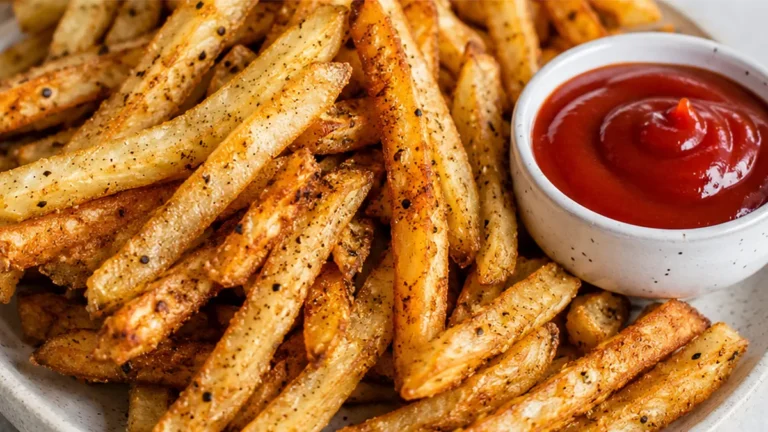
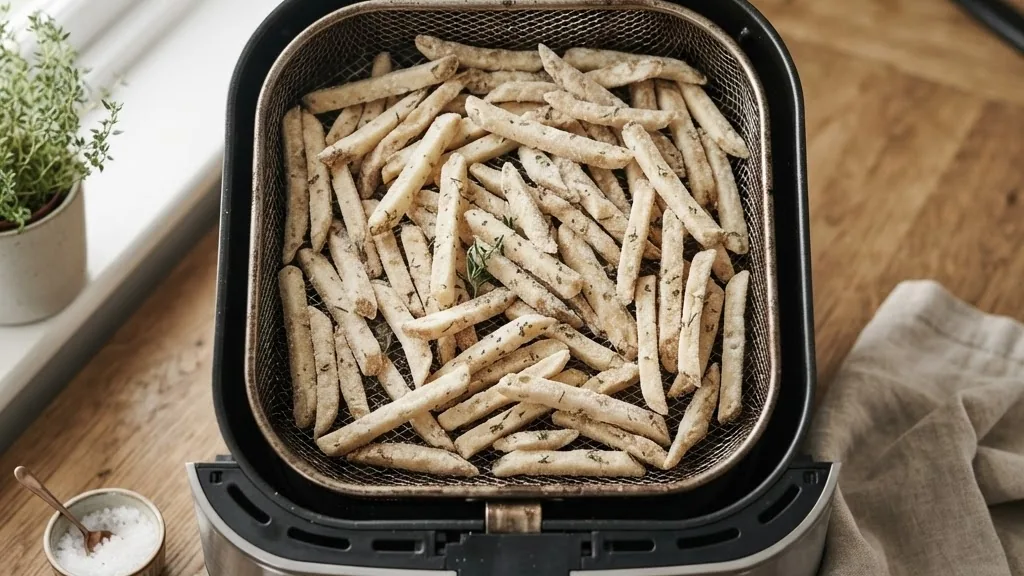
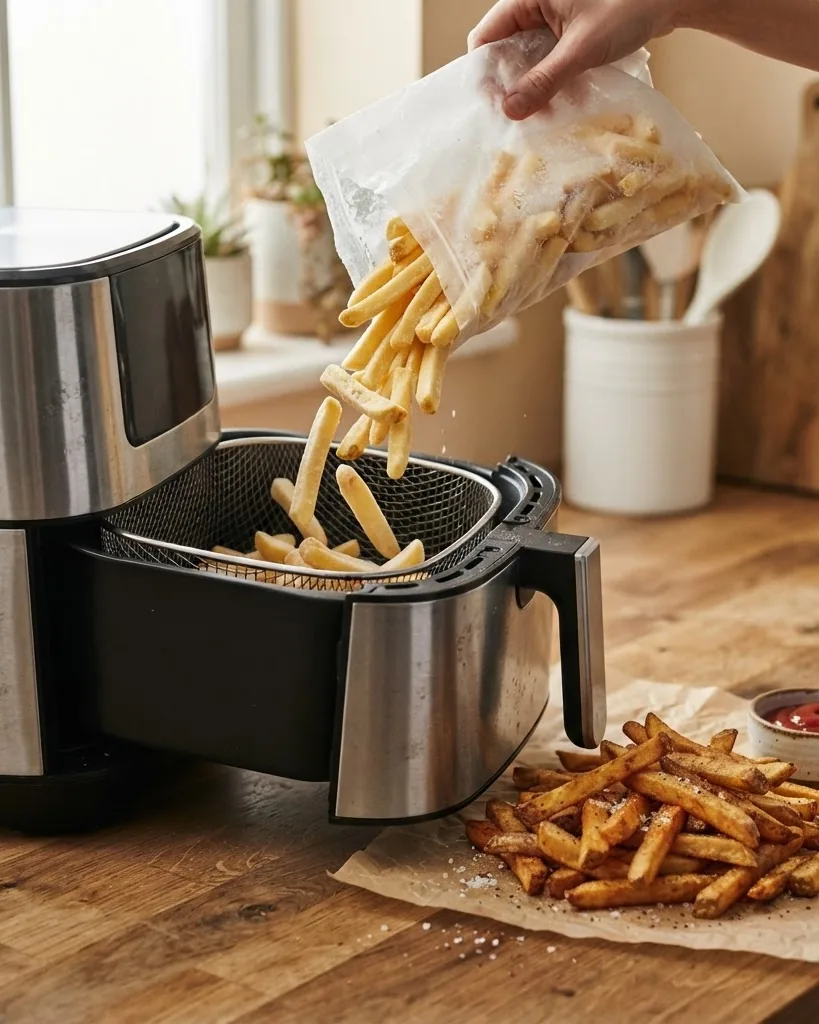
Frozen fries are one of the main reasons to own an air fryer, and one of its most common uses. A bag of frozen fries, a 400F basket, 15 minutes, and a shake in the middle give fries crispier than an oven tray, without preheating a giant oven or flooding the kitchen with the smell of hot oil. No thawing, barely any oil, almost no cleanup. If you own an air fryer and are not making fries in it, you are missing the whole point of the thing.
The times below are compiled from published references covering a range of fry cuts and brands, and the health notes are grounded in the FDA and reporting from Healthline.
Quick answer: To cook frozen fries in the air fryer, preheat to 400F, add the fries in a single layer without overlapping, and cook for 12 to 15 minutes, shaking the basket once at the halfway point. Do not thaw them and do not add oil; they are already par-fried. For extra crisp, add 1 to 2 minutes or bump the temperature to 420F. Salt them the second they come out while they are still hot. Pull them at golden, not deep brown.
The fastest crispy fries you will ever make
Frozen fries are practically built for the air fryer. The manufacturer has already par-fried them, so they come out of the bag pre-cooked and just need to be heated through and crisped up. The air fryer’s fast, dry, circulating heat is perfect for exactly that: it drives the surface moisture off and browns the outside, which is the whole definition of a crispy fry. It is essentially deep frying without the vat of oil, the mechanism covered in the guide on how an air fryer works.
Compared to the oven, it is not even close. An oven takes 10 to 15 minutes just to preheat, then another 20-plus to cook, and the fries on the tray still come out soft on the bottom where they sat in their own steam. The air fryer is up to temperature in a few minutes, cooks in 12 to 15, and crisps every side because the air moves under and around the fries instead of leaving them lying in a puddle. Same bag of fries, dramatically better result, in less than half the total time.
Time and temperature chart by fry cut
Temperature stays at 400F for basically every cut; what changes is the time, and it changes with thickness. A wispy shoestring and a fat steak-cut wedge are not the same job. Here is how they break down straight from frozen.
| Fry cut | Temperature | Time | Shake |
|---|---|---|---|
| Shoestring / thin | 400F | 10 to 12 minutes | Once, at 6 minutes |
| Regular / straight-cut | 400F | 12 to 15 minutes | Once, at 7 minutes |
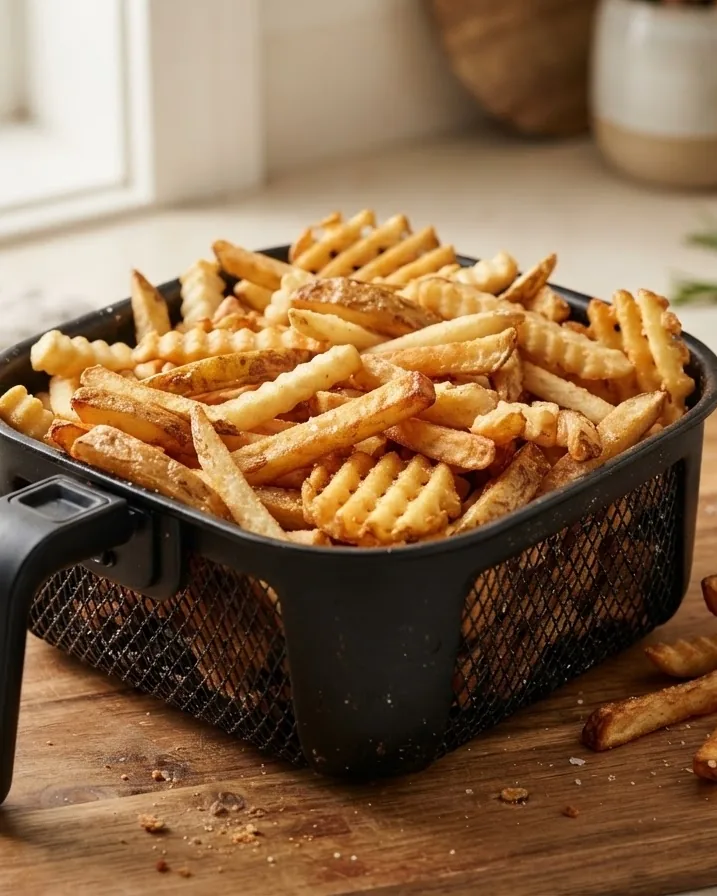
| Crinkle-cut | 400F | 12 to 15 minutes | Once, at 7 minutes |
| Steak-cut / wedges | 400F | 15 to 18 minutes | Twice, every 6 minutes |
| Tater tots | 400F | 12 to 15 minutes | Once or twice |
| Extra crispy (any cut) | 420F | Add 1 to 2 minutes | Same as base |
Your machine and how full the basket is will nudge these numbers, so treat the chart as a launch point. Some machines crisp regular fries at 14 minutes; a smaller basket filled more heavily can need 16. The right instinct is to check them at the shake, then again near the end, and pull them when they hit golden. Fry cuts are forgiving enough that a minute either way is easy to dial in. If you are new to your unit, the beginner walkthrough on how to use an air fryer covers the fundamentals.
Step by step: single layer and the shake
There are really only two rules that matter for fries, the single layer and the shake, and both exist for the same reason: every fry needs the moving air to reach it. Here is the full routine.
- Preheat to 400F for 3 to 5 minutes. A hot basket starts crisping the fries the instant they land instead of letting them thaw and steam first. My guide on how to preheat an air fryer explains why this is the difference between crisp and limp.
- Add fries in a single layer. Spread them out so they are not stacked or overlapping. This is the most important physical step. Piled fries shield each other from the air and steam instead of crisping. If you have a lot, cook in two batches.
- Skip the oil, or spray lightly. Frozen fries are already par-fried in oil, so they crisp fine dry. A light spray of oil can nudge them a touch crispier, but it is optional, not required.
- Cook 12 to 15 minutes at 400F. Set the timer for your cut from the chart above.
- Shake the basket at the halfway mark. Around the 6-to-8-minute point, pull the basket and give it a good shake to tumble the fries so different surfaces face the airflow. For thick cuts or a full basket, shake twice.
- Pull at golden, salt immediately. Take them out when they are golden and crisp, not dark brown. Salt them the second they hit the bowl while the surface is still hot enough to grab it.
Salting immediately is a small thing that people miss. Once fries cool even slightly, the salt just bounces off. Straight out of the basket, the residual surface oil and heat let the salt stick where it should.
Why overcrowding ruins fries every time
If your air fryer fries ever came out pale and soggy, the basket was almost certainly too full. This is the number one mistake, and it is worth understanding why, because once you get it you will never do it again. An air fryer crisps by moving hot air across the surface of the food. When you pile fries three deep, the ones buried in the middle never touch that moving air. Instead they release moisture that gets trapped in the pile, and that trapped moisture steams the whole batch. Steamed fries are soft fries.
A single layer fixes it completely because every fry gets direct airflow. The shake matters for the same reason: even in a single layer, the side touching the basket floor is not getting airflow, so tumbling them halfway through swaps which surfaces are exposed. Together, single layer plus a shake is the entire secret to crisp fries, and it is why two smaller batches always beat one crammed basket. Two batches of crispy fries beat one batch of sad ones. When feeding a few people, run back-to-back batches and keep the finished ones warm.
Getting them extra crispy
If your standard is really, seriously crispy, you have two levers. The first is time: add 1 to 2 minutes past the point they first look done and watch them closely, since the last couple minutes is where the crunch develops. The second is temperature: bump the machine to 420F for the final stretch to push the browning harder. Reach for the extra 90 seconds before the higher heat, because time is more forgiving than temperature.
A light spray of oil is the third lever, and it does help, but use a real oil sprayer rather than the aerosol cans, which can contain additives that gum up and damage some air fryer baskets over time. A quick spritz before cooking, and maybe another at the shake, gives you a noticeably crisper, more deep-fried result while still using a tiny fraction of the oil an actual fryer would. Just do not overdo it; puddled oil in the basket smokes and steams and works against you. The whole appeal of the air fryer is a great crisp with barely any oil, and the same logic applies to a frozen burrito in the air fryer, where dry heat beats a soggy microwave every time.
Health, oil, and the acrylamide angle
Part of why frozen fries in the air fryer feel like less of a guilty pleasure is the oil math. Because the fries are already par-fried and you add little or none yourself, air-fried fries carry far less added fat than deep-fried ones. As Healthline notes, air frying can cut the fat and calories of fried foods substantially compared with deep-fat frying, simply because you are not submerging the food in oil.
There is one real nuance worth knowing, and it is about browning, not the appliance. Starchy foods like potatoes form a compound called acrylamide when cooked at high temperatures, and the darker you cook them, the more forms. The FDA’s practical guidance is straightforward: cook potato products to a golden yellow rather than a deep brown, because the darkest areas hold the most acrylamide. That lines up perfectly with what makes a good fry anyway. You are aiming for golden and crisp, not mahogany and scorched. Past golden you are not adding flavor, you are just toasting the potato into bitterness. So pull them at gold, which is better for both taste and the acrylamide question. The primary sources are the FDA guidance on acrylamide and food preparation and Healthline on air fryers and health.
Air fryer vs oven vs deep fryer for frozen fries
Frozen fries can go in three appliances, and the air fryer comes out ahead for reasons that are easy to see once you line them up. Each one gets you edible fries; they differ hugely in speed, crispness, oil, and cleanup.
| Method | Time | Crispness | Added oil |
|---|---|---|---|
| Air fryer | 12 to 15 minutes | Very crisp, all sides | None to a light spray |
| Oven | 20 to 25 min plus preheat | Soft-bottomed, uneven | None to light |
| Deep fryer | 3 to 5 minutes | Crispest, classic | A full vat |
The deep fryer still makes the crispest fry, no argument, but it means heating and later storing or disposing of a large amount of oil, plus the smell and the cleanup, which for a home kitchen is a lot of hassle for a side dish. The oven is the low-effort standby, but the fries sit in their own steam on the tray, so the bottoms go soft and the results are uneven. The air fryer captures most of the deep fryer’s crispness because the fast air reaches every side, while using a tiny fraction of the oil and cleaning up in seconds. For frozen fries at home, it genuinely is the best balance of the three, and it comes down to how the appliance moves heat, explained in the guide on how an air fryer works.
Beyond fries: tots, wedges, hash browns, and rings
The same single-layer-and-shake method that nails fries handles the entire frozen potato and snack aisle, which is why the machine earns its keep. Tater tots crisp up beautifully at 400F in 12 to 15 minutes with a shake, coming out crunchy outside and fluffy inside in a way the oven struggles to match. Potato wedges and thick steak fries need the longer end, 15 to 18 minutes, because there is more potato to heat through.
Frozen hash browns, both the shredded patties and the diced kind, make an easy breakfast staple. Patties go about 400F for 8 to 12 minutes, flipped once, until golden and crisp at the edges. Onion rings and other breaded frozen sides follow the fry logic almost exactly: single layer, 400F, shake halfway, and pull at golden. The breading crisps in the dry heat without the greasy heaviness of deep frying.
Across all of them the rules never change: single layer so the air reaches everything, a shake to swap which surfaces face the fan, and pulling at golden rather than dark brown for both taste and the acrylamide reasons covered above. Master fries and you have effectively mastered the whole category. For a complete plate, pair any of these with a protein from the guide to frozen chicken breast in the air fryer.
Seasoning, dips, and batch cooking
Plain salted fries are perfect, but the air fryer makes it easy to do more. My favorite move is tossing the hot fries the second they come out with a seasoning blend: garlic powder and parmesan, or a smoky paprika and chili mix, or just cracked pepper and flaky salt. The residual heat and surface oil make everything cling. Add wet or delicate seasonings after cooking, not before, so they do not burn in the basket.
For dips, keep it simple and let the fries be the star: ketchup, of course, but also a quick garlic aioli, ranch, or chipotle mayo stirred together in the time it takes the fries to cook. And because the air fryer is so fast, fries are the natural sidekick to almost anything else you cook in it. Run a batch of fries right after cooking a protein like the ones in the guide to frozen chicken breast in the air fryer, and dinner comes together from two freezer bags and one machine. That combination of speed, crispness, and near-zero cleanup is why the fry function alone earns the counter space.
Troubleshooting: soggy, uneven, or burnt fries
When fries do not come out right, the cause is almost always one of a few things, and each has a direct fix.
- Soggy fries. The basket was too full, full stop. Piled fries steam each other instead of crisping. Cook in a single layer and split large amounts into two batches. Skipping the preheat causes this too, so always preheat.
- Pale, no color. Either the temperature was too low or you pulled them early. Frozen fries want a full 400F, and the crisp develops in the last few minutes, so give them the time and add 1 to 2 minutes if needed.
- Uneven, some crisp and some limp. You did not shake, or you shook too gently. Pull the basket at the halfway mark and actually tumble the fries so different surfaces face the airflow. Thick cuts want two shakes.
- Burnt or bitter. Too hot, too long, or both. Fries past golden turn dark and bitter and, per the FDA, that is also where more acrylamide forms. Pull them at golden, not brown, and drop to 400F if 420F is scorching them.
- Salt not sticking. You salted them after they cooled. Salt the instant they leave the basket while the surface is still hot and lightly oily.
Every one of these traces back to the same two principles: give each fry direct airflow, and cook to golden, not dark. Get those right and a bag of frozen fries becomes one of the most reliable, satisfying things the machine makes. If you are still learning your unit’s quirks, the beginner walkthrough on how to use an air fryer covers the rest of the fundamentals.
The bottom line on air fryer frozen fries
If the air fryer only did one thing well, frozen fries in air fryer form would justify the whole appliance. The recipe never really changes: preheat to 400F, spread the fries in a single layer, cook 12 to 15 minutes, shake once at the halfway mark, and pull them at golden. From a bag straight out of the freezer you get fries crispier than the oven and close to the deep fryer, using little or no oil and cleaning up in seconds.
Everything that goes wrong comes back to two rules, so keep them front of mind. Give every fry direct airflow, which means a single layer and a real shake rather than a crowded basket, and cook to golden rather than dark brown, which is better for taste and, per the FDA, for keeping acrylamide down. Salt them the second they leave the basket, add whatever seasoning you like while they are hot, and pair them with a protein for a full meal. Master this one thing and you have unlocked the machine’s best everyday trick.
Frequently asked questions
How long do frozen fries take in an air fryer?
Regular and crinkle-cut fries take 12 to 15 minutes at 400F. Thin shoestring fries finish around 10 to 12 minutes, and thick steak-cut fries or wedges need 15 to 18. Shake the basket at the halfway point in every case.
What temperature for frozen fries in the air fryer?
400F is the standard for crisp fries. For an extra-crispy finish, raise it to 420F for the last couple of minutes or simply add 1 to 2 minutes of cook time. Higher than that risks browning past golden.
Do I need to thaw frozen fries or add oil?
No to both. Cook them straight from frozen, since thawing makes them soggy, and they are already par-fried so they crisp without added oil. A light spray of oil is optional if you want them a bit crispier.
Why are my air fryer fries soggy?
Almost always overcrowding. A packed basket traps moisture and steams the fries instead of crisping them. Cook in a single layer with no overlap, shake halfway through, and split large amounts into two batches.
Should I shake the basket?
Yes, it is essential. Shaking at the halfway mark tumbles the fries so every side gets exposed to the moving hot air, which is what makes them crisp evenly. Thick cuts and full baskets benefit from a second shake.
Are air fryer frozen fries healthy?
They use far less oil than deep frying, which cuts fat and calories, per Healthline. To limit acrylamide, follow the FDA tip and cook potatoes to golden, not deep brown. Pulling them at golden also makes them taste better.
Sources: U.S. Food and Drug Administration, acrylamide and food preparation guidance (cook to golden, not brown); Healthline, air fryers and health; USDA Food Safety and Inspection Service for general safe-handling context. Cooking times are compiled from published air-fryer references covering multiple fry cuts and brands.
Authoritative references: FDA on acrylamide and food preparation and Healthline on air fryers.