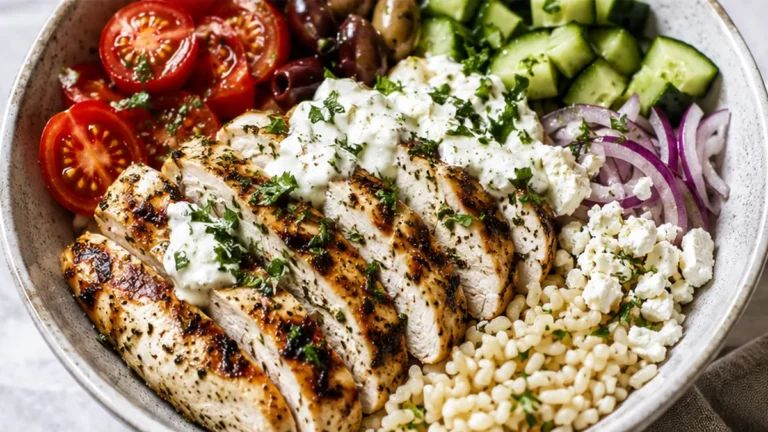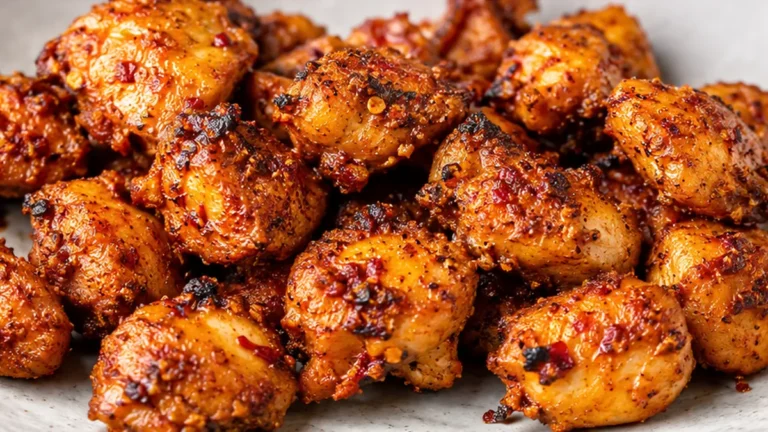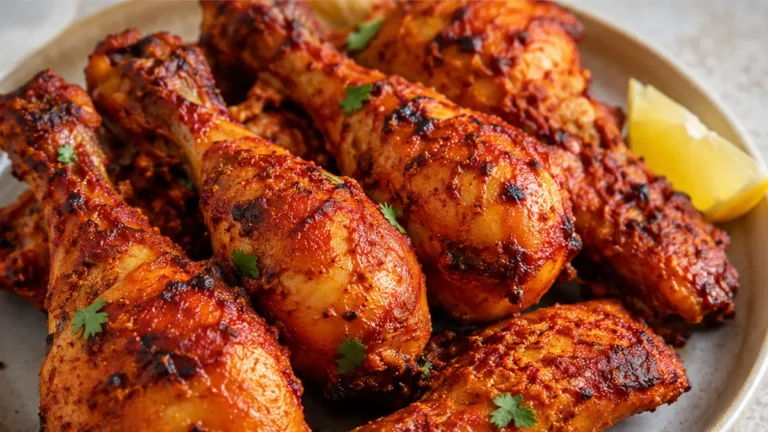
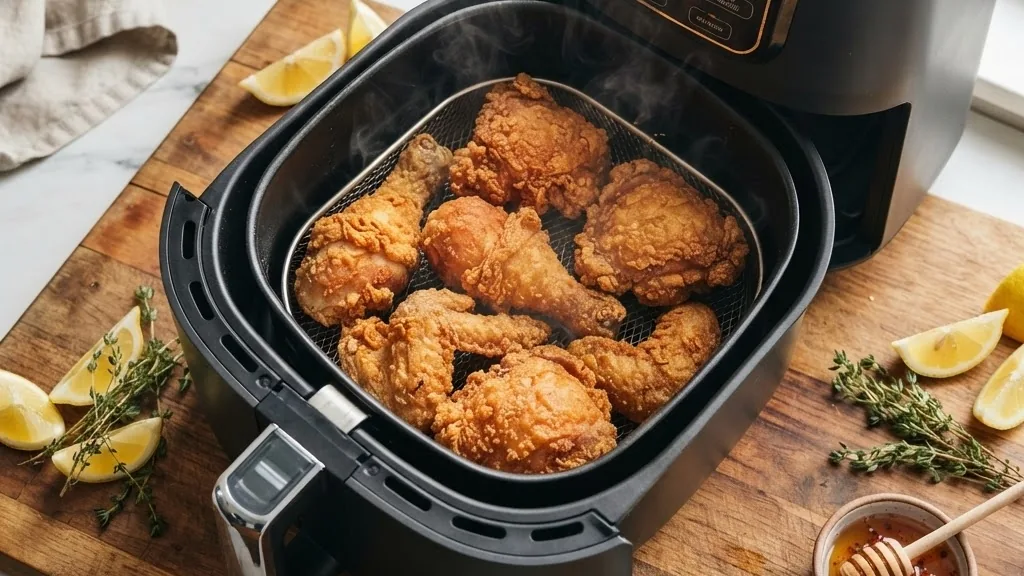
Reheating fried chicken in air fryer is the one method that rebuilds the crust instead of steaming it into rubber, and it does the job in under ten minutes for most cuts. The trick is not the machine alone. It is matching the temperature to the cut, verifying a safe internal endpoint, and storing the chicken so the crust can actually crisp again. Cold chicken from the fridge has already changed on the inside, and if you treat every piece the same way you get a burnt wing and a raw-centered thigh from the same basket. Chef instructor Kevin Mitchell of The Culinary Institute of Charleston at Trident Technical College names the air fryer his preferred reheat tool precisely because circulating hot air keeps the crunch a microwave destroys.
This guide fixes the two things every popular walkthrough leaves broken: the temperature numbers that never agree, and the food-safety layer that gets name-dropped and then ignored. You will get one recommended protocol, a matrix by cut and starting state, and the reasoning that makes it stick.
Quick answer: For reheating fried chicken in air fryer, set the basket to 375F (190C), arrange pieces in a single layer, and cook roughly 4 minutes, flip, then 4 minutes more for less than ten minutes total. Thick bone-in breasts or thighs need 8 to 10 minutes; tenders and wings run 5 to 7. Cook until a food thermometer reads 165F (74C) in the thickest part, away from bone. Let refrigerated chicken sit out 15 to 20 minutes first so the center heats before the crust scorches.
The 375F protocol that resolves the temperature fight
Set your air fryer to 375F (190C) and cook fried chicken in a single layer for about 4 minutes, flip each piece, then run another 4 minutes until a thermometer reads 165F (74C). That single number, 375F, threads the needle that four other numbers do not. Published protocols scatter across 350, 360, 375 and 400F, and none of the popular guides tells you what the difference costs. Higher heat drives surface moisture off fast, which is what crisps a thin wing, but it overshoots the crust on a thick bone-in piece long before the center climbs to a safe 165F. Lower heat protects a fat thigh and leaves a wing limp. At 375F you get enough surface drive for the coating without torching bone-in meat, which is why Real Simple and the Culinary Institute of Charleston both land there.
- Single layer, no stacking. Overlapping pieces block airflow, and blocked air means a coating that never crisps.
- Flip halfway. The basket floor sees less circulation than the top, so an unflipped piece cooks unevenly.
- Skip a long preheat. Basket-style units heat fast; a two-stage preheat mostly adds a step, though a range in air-fry mode benefits from one.
- Oil spray is optional. Deep-fried leftovers carry residual oil and need none; previously air-fried chicken benefits from a light spritz.
If you want to understand why the moving air matters at all, the physics of forced convection is covered in The Real Science Behind Air Fryer Convection Cooking, which explains the fan and element setup that makes this reheat possible.
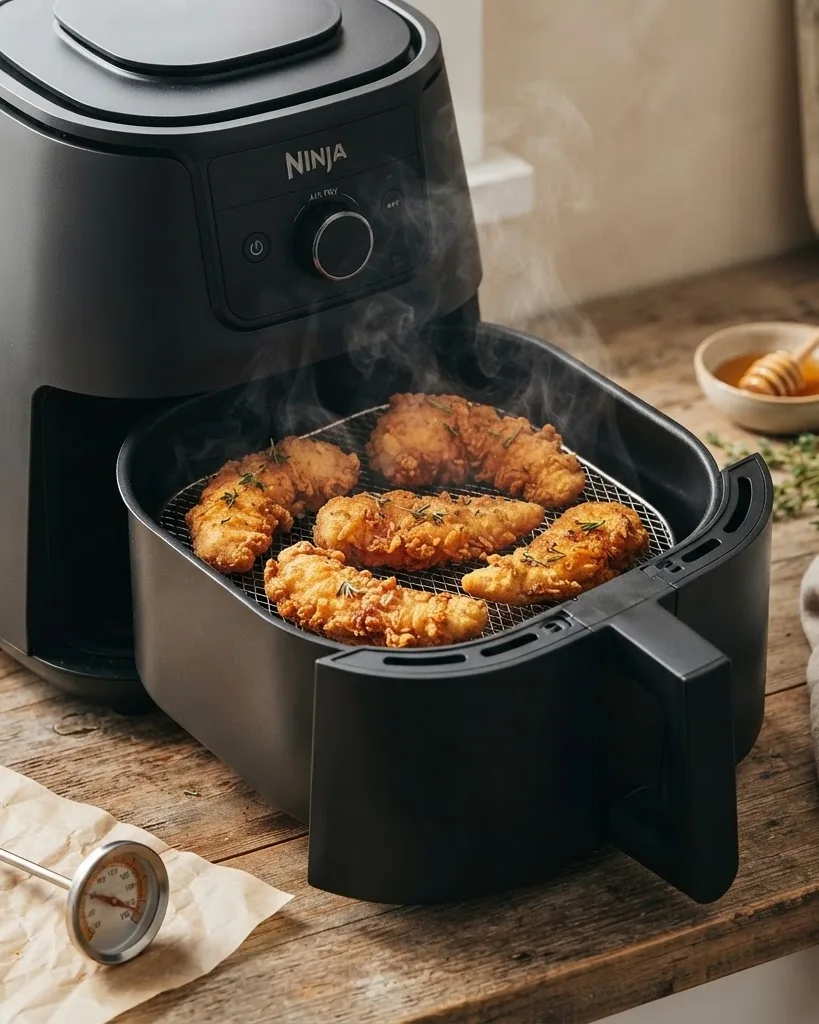
Time by cut, temperature and starting state
The single most-searched thing behind this query is a real table, so here it is. Reheat times shift with three variables at once: the cut, the air-fryer temperature, and whether the chicken starts cold from the fridge, tempered on the counter, or frozen. A boneless tender at 375F finishes in 5 to 7 minutes; a bone-in breast at the same temperature wants 8 to 10 because heat has to crawl around the bone before the center reaches 165F. Drop to 360F and small pieces like wings and legs run 3 to 7 minutes. Push to 400F only for frozen chicken, where roughly 10 minutes drives off surface ice and reheats through. Flip halfway in every case, and read the thermometer rather than the clock.
| Cut | Temp | Time (from fridge) | Endpoint |
|---|---|---|---|
| Bone-in breast / thigh | 375F | 8-10 min | 165F |
| Tenders / strips | 375F | 5-7 min | 165F |
| Wings (bone-in or boneless) | 375F | 5-7 min | 165F |
| Small pieces (wings / legs) | 360F | 3-7 min | 165F |
| Any cut, frozen | 400F | ~10 min | 165F |
Alphafoodie reports the 375F band for large pieces at 8 to 10 minutes, and airfryereats logs the 360F band for small pieces at 3 to 7. From frozen, Savor and Savvy documents roughly 10 minutes at 400F, or a one-hour thaw followed by a normal reheat. The from-frozen path is one almost nobody publishes, and it saves the batch you forgot to move to the fridge.
For dark-meat cuts that carry sauce or glaze, the timing logic overlaps with fresh cooking. If you like a sticky finish, the technique in Crispy Air Fryer Teriyaki Chicken shows how to keep a sugary coating from scorching, which matters just as much when you reheat sauced wings.
Food safety built into the method, not bolted on
The safe endpoint for all poultry and for any reheated leftover is 165F (74C), verified with a food thermometer rather than by color or feel, according to the USDA Food Safety and Inspection Service. Appearance lies; a crisp golden crust can hide a center that never crossed the line. Bone-in dark meat reads high near the bone, so slide the probe into the thickest muscle and keep it off the bone for an honest reading. The commercial standard goes one step further: the FDA Food Code, the model regulation states adopt for foodservice, calls for reheating to 165F and holding that temperature for 15 seconds. That hold is your safety margin at home too, even if nobody times it with a stopwatch.
Bacteria are the reason the number is not negotiable. The Danger Zone runs from 40F to 140F, and inside it bacteria can double in as little as 20 minutes, per FSIS. Perishable food should never sit unrefrigerated over 2 hours, and above 90F ambient that limit drops to 1 hour.
- Reheat once only. Each trip through the Danger Zone adds risk; do not re-store already-reheated chicken.
- Reheating does not undo abuse. The CDC tracks Salmonella Enteritidis, Campylobacter, Staphylococcus aureus and E. coli O157:H7 on mishandled poultry, and heat-stable toxins already produced are not destroyed by reheating. Chicken left out overnight is not rescued by hitting 165F.
- Oven floor. If you reheat in an oven instead, FSIS says set it no lower than 325F.
You can read the agency directly in the FSIS guide on Leftovers and Food Safety, and the specifics of the temperature bands live in the FSIS explainer on the Danger Zone at 40F to 140F. When a situation is genuinely unclear, the USDA Meat and Poultry Hotline puts an actual expert on the phone.
Does the counter-temper step break the 2-hour rule?
No, and this is where one popular guide creates a contradiction it never resolves. A 15 to 20 minute counter rest sits comfortably inside the FSIS 2-hour window, so it is defensible. It also earns its place: a smaller thermal gradient means the center reaches 165F before the crust overcooks. That is a heat-transfer argument, not a magic one. Keep the rest short, and never stack tempering time onto chicken that was already near the 2-hour edge.
Why the crust goes soggy and how hot air rebuilds it
Fried chicken turns soft in the fridge because moisture migrates out of the meat and into the breading over hours of cold storage. The coating that was dry and shattering when fresh slowly absorbs water from the muscle beside it, and that saturated crust is what you pull out cold. Reheating has to drive that water back off, and the method you choose decides whether it can. A microwave heats the water molecules throughout the piece, which means it generates steam inside the coating and softens it further, the opposite of what you want. Circulating dry air does the reverse. It evaporates surface moisture, re-dries the breading, and rebuilds the crunch that fridge storage stole.
This is why the tool matters more than the temperature. Kevin Mitchell of the Culinary Institute of Charleston points to that circulating hot air as the reason the air fryer beats every other reheat for texture.
Cold-from-fridge pieces dry out for a related reason. When the surface sits far below the target, the outer layer overcooks and dehydrates while the center is still climbing to 165F. Temper the piece for 15 to 20 minutes and you shrink that gradient, so the outside is not punished while the inside catches up. The mechanism explains every troubleshooting fix below, and it is the part the popular guides get wrong or skip. One even claims preheating stops moisture getting in, which reverses the actual physics.
Air fryer versus oven, microwave, skillet and broiler
The air fryer wins on texture and speed for a plate or two, but it is not the only right answer, and honest comparison is where trust gets built. For a large batch, the oven pulls ahead: single layer on a wire rack over a sheet pan, uncovered, about 15 minutes at 375 to 400F until the skin looks crisp, per Maytag and Whirlpool test-kitchen guidance. The rack lets air reach the underside, which is the whole reason a soggy sheet-pan reheat fails. The microwave is the worst for texture and belongs only in an emergency, worked in 30-second increments. A skillet re-fry restores serious crunch when you want it: a thin layer of high-smoke-point oil like canola or sunflower, 3 to 5 minutes per side, as Real Simple documents.
- Air fryer: best texture, under 10 minutes, limited capacity.
- Oven: best for big buckets, ~15 min, uses a wire rack.
- Microwave: fastest, worst crust, last resort only.
- Skillet: excellent crunch, 3-5 min per side, needs oil and attention.
- Broiler: fast color, ~5 min preheat, burns in seconds if unwatched.
If you run a full-size air fryer oven rather than a basket, Whirlpool suggests preheating to 375F and cooking a single layer 2 minutes per side. On a range with an air-fry mode, Maytag’s own conversion rule is to reduce the recipe’s bake temperature by 25F and cut the time by roughly 20 percent.
Pairing matters for a leftover plate, too. Reheated wings sit well next to a fresh side, and Crispy Carrot Fries: New Favorite Snack! cook in the same basket temperature range, so you can stage them back to back. For a heartier meal, a bowl of chicken soups turns three reheated drumsticks into dinner, and a cozy Cozy Slow Cooker Chicken Pot Pie Soup uses up the meat you pull off the bone.
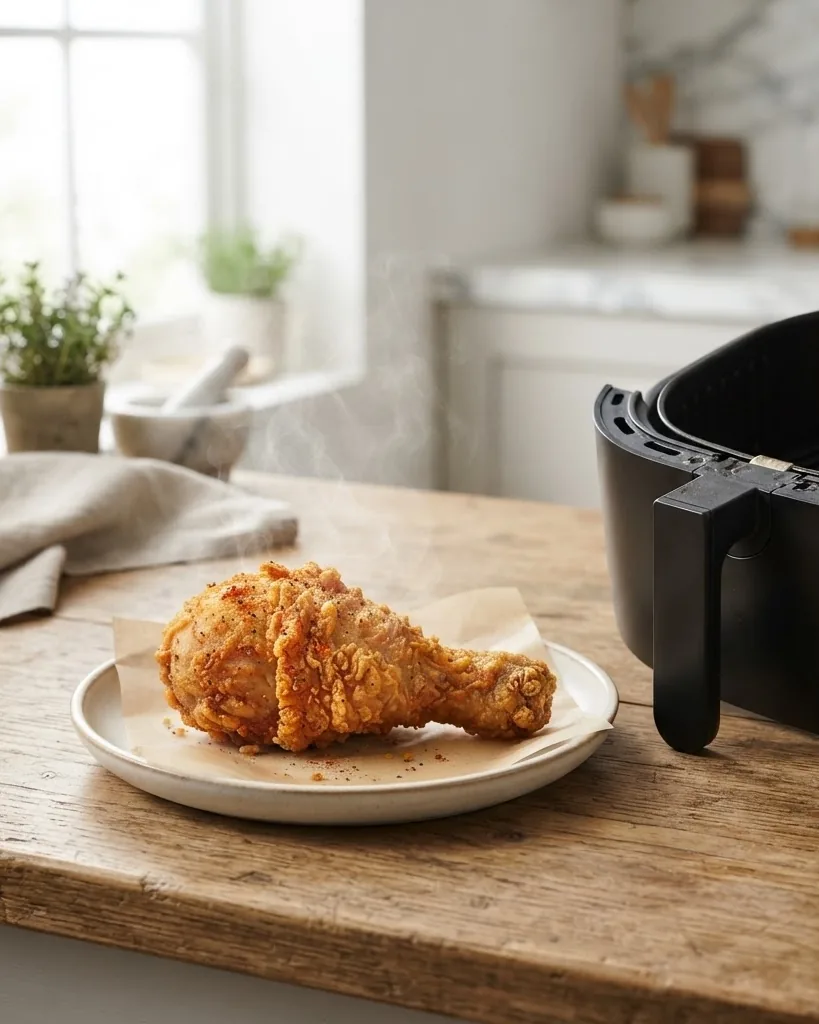
Storage before and after: the half nobody covers
How you store fried chicken decides whether reheating can work at all, and getting it wrong is why some batches never crisp no matter the temperature. Cool the chicken quickly, move it into shallow containers, and refrigerate within 2 hours of cooking, per FSIS guidance on how temperatures affect food. Refrigerated fried chicken stays safe 3 to 4 days, not the 2 days some recipe pages claim. Freeze it and it stays safe indefinitely, though best quality runs 2 to 6 months. Those FSIS windows override the conflicting numbers floating around other reheat guides, which cite 2 days fridge and 4 months freezer without a source.
Then there is the crust tradeoff nobody spells out. Airtight wrap protects against drying and off-flavors but traps steam, which softens the coating. Loose or breathable wrap keeps the crust drier but exposes more surface. For chicken you plan to re-crisp, lean toward looser wrapping and accept the safety-versus-texture tension consciously rather than by accident.
- Cool, then store. Shallow containers within 2 hours; never stack hot chicken in a deep sealed tub.
- Freeze on a tray first. Loose pieces freeze faster and re-crisp better than a frozen block.
- Do not re-store reheated chicken. Once it has been through the Danger Zone twice, it is done.
Liners help cleanup but follow one rule: parchment goes only under food, never in an empty preheating basket where it can lift into the element. The full case is in Can You Put Parchment Paper in an Air Fryer?
Troubleshooting a reheat that went wrong
Most failed reheats trace to one of four mistakes, and each has a fix rooted in the same heat-and-moisture logic. Still soggy after the timer? You overcrowded the basket, ran the temperature too low, or wrapped the chicken airtight so the crust arrived saturated. Dry, stringy meat means you cooked too long, ran too hot, or went straight from the fridge without tempering. A piece that is hot outside and cold inside was too thick, went in cold, or never got flipped, so raise your attention to temper time and turning. Burnt coating before the center hits 165F is the classic bone-in error: the temperature was too high for a thick piece, so drop to 360F and give it longer.
- Sticking to the basket? Spray the basket or use a liner under the food.
- Sauced wings burning? Sauce scorches; reheat lightly, then re-sauce, or add glaze in the last 2 minutes.
- Uneven batch? Group by size so thick and thin pieces are not on the same timer.
For plant-based cooks reheating a crispy alternative, the same airflow rules apply, and Crispy Air Fryer Tofu: Your New Favorite Plant-Based Bite! shows how single-layer spacing rebuilds a coating without oil.
Scenarios: buckets, wings and different machines
A KFC, Popeyes or Chick-fil-A bucket is the most common reason people search this, and the fix is discipline about batching. Do not dump the whole bucket in at once. Sort by size, run bone-in breasts and thighs at 375F for 8 to 10 minutes, then do wings and tenders separately at 5 to 7 minutes so nothing overcooks waiting on a thicker piece. Basket-style units crisp fastest but hold the least, while oven-style air fryers give you a middle rack that keeps pieces off the hottest surface and fit a bigger haul at once. Match the rack position to the machine and keep every layer single.
For a broader spread of ideas that pair with reheated poultry, sister-site recipe hubs are worth a scan.
- A folder of vegan air fryer recipes for meat-free sides that share your basket temperature.
- A run of chicken pasta recipes to turn pulled leftover meat into a second meal.
- The comforting Creamy Chicken Spaghetti: A Weeknight Dream!, which loves shredded reheated chicken folded in at the end.
Reheating from frozen deserves its own note: run 400F for about 10 minutes, or thaw roughly 1 hour and treat it like fridge-cold chicken. Either way the 165F endpoint is the only finish line that counts.
Frequently asked questions
What temperature is best for reheating fried chicken in an air fryer?
Set the air fryer to 375F (190C) for most cuts. It drives surface moisture off fast enough to re-crisp the coating without scorching bone-in pieces before the center reaches a safe 165F. Drop to 360F for small wings and legs, and use 400F only when reheating straight from frozen, flipping halfway in every case.
How long does reheating fried chicken in air fryer take?
Usually under ten minutes. Real Simple’s protocol is roughly 4 minutes, a flip, then 4 more at 375F. Thick bone-in breasts and thighs need 8 to 10 minutes, while tenders and wings run 5 to 7. Frozen chicken takes about 10 minutes at 400F. Always confirm 165F with a thermometer rather than trusting the clock.
Is it safe to reheat fried chicken more than once?
No. FSIS guidance supports reheating leftovers only once, because each pass through the 40F to 140F Danger Zone raises the risk of bacterial growth. Reheat only what you will eat, and never re-store chicken that has already been warmed. Reheating also cannot destroy heat-stable toxins from Staphylococcus aureus, so mishandled chicken is not made safe by a second round.
Should I let refrigerated chicken sit out before reheating?
A 15 to 20 minute counter rest helps and stays well inside the FSIS 2-hour limit. Tempering shrinks the temperature gap between the cold center and the surface, so the middle reaches 165F before the crust overcooks and dries. Keep the rest short, and skip it entirely for chicken that already spent time near the 2-hour edge.
Why does my reheated chicken come out soggy?
Three usual causes: an overcrowded basket that blocks airflow, a temperature set too low to drive off moisture, or airtight storage that let the coating absorb water in the fridge. Fix it by cooking a single layer at 375F, wrapping leftovers loosely rather than sealed tight, and flipping halfway so both sides meet the circulating hot air.
Can I reheat frozen fried chicken without thawing?
Yes. Savor and Savvy documents about 10 minutes at 400F straight from frozen, or a one-hour thaw followed by a normal 375F reheat. The higher temperature drives off surface ice while the center climbs to a safe 165F. Check the thickest part with a thermometer, since a frozen core can lag well behind a crisp exterior.
One last pairing note for meal planning: a garlic-herb Juicy Air Fryer Ham: Garlic Herb Butter! and reheated fried chicken share a holiday table without fighting for oven space, since the fryer handles the crunch while the oven does the roast. Store, temper, hit 375F, verify 165F, and the leftover eats like it was fried an hour ago.