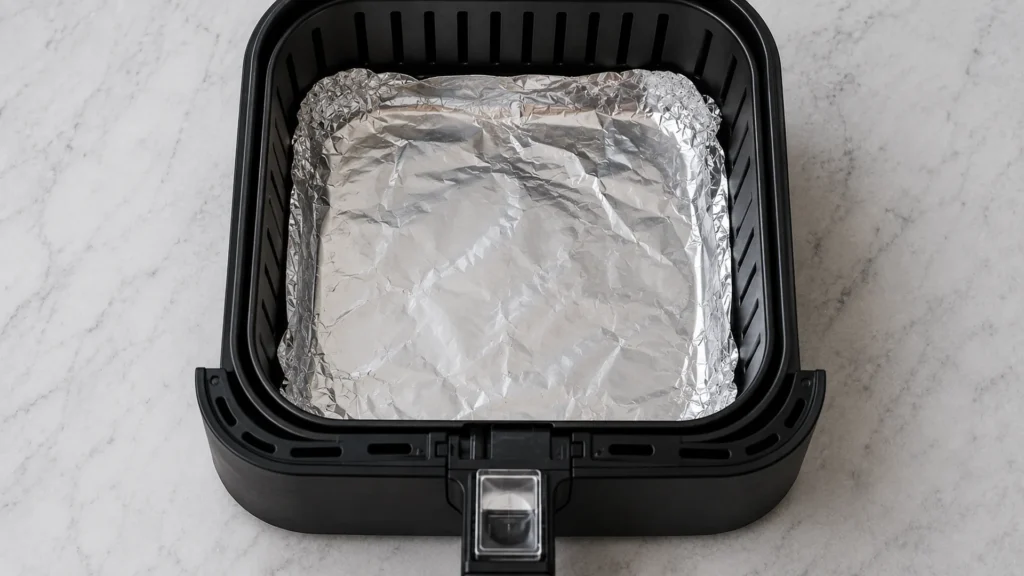
Can you put foil in an air fryer? Yes, you can, as long as you follow three rules: keep it away from the heating element, weigh it down with food so the fan cannot blow it around, and never let it touch acidic ingredients. Get those three things right and aluminum foil is a genuinely useful tool for catching drips, lifting messy foods, and saving yourself a scrubbing session. Get them wrong and you risk a fire hazard, a ruined dinner, or pitted, off-tasting food. This guide walks through exactly how to use foil safely, when it actually helps, when it quietly wrecks your results, and what to reach for instead.
The short version: foil is safe for most basket and oven-style air fryers when used correctly, but it is not a free pass. The whole reason an air fryer works is unobstructed airflow, and foil is the single easiest way to choke that airflow if you are careless. Knowing the difference between helpful foil and harmful foil is the entire game.
Why the Heating Element Rule Comes First
The top of an air fryer basket is inches from a glowing heating element, and a strong fan is moving air across the whole chamber at speed. Loose foil is light. If a corner lifts, the fan can peel the sheet up and slam it against that element, where it can scorch, spark, or in the worst case start a fire. This is not a rare fluke; it is the most common foil accident people report, and it happens in seconds.
The defense is simple. Always weigh the foil down with the food itself, so there is real mass holding it flat against the basket. Never run foil in an empty or near-empty basket, never leave loose flaps hanging over the edges, and never use foil during a preheat when there is no food to anchor it. If you can see a corner that the airflow could catch, fold it under or trim it off before you start the cook.
The Airflow Problem Most Guides Gloss Over
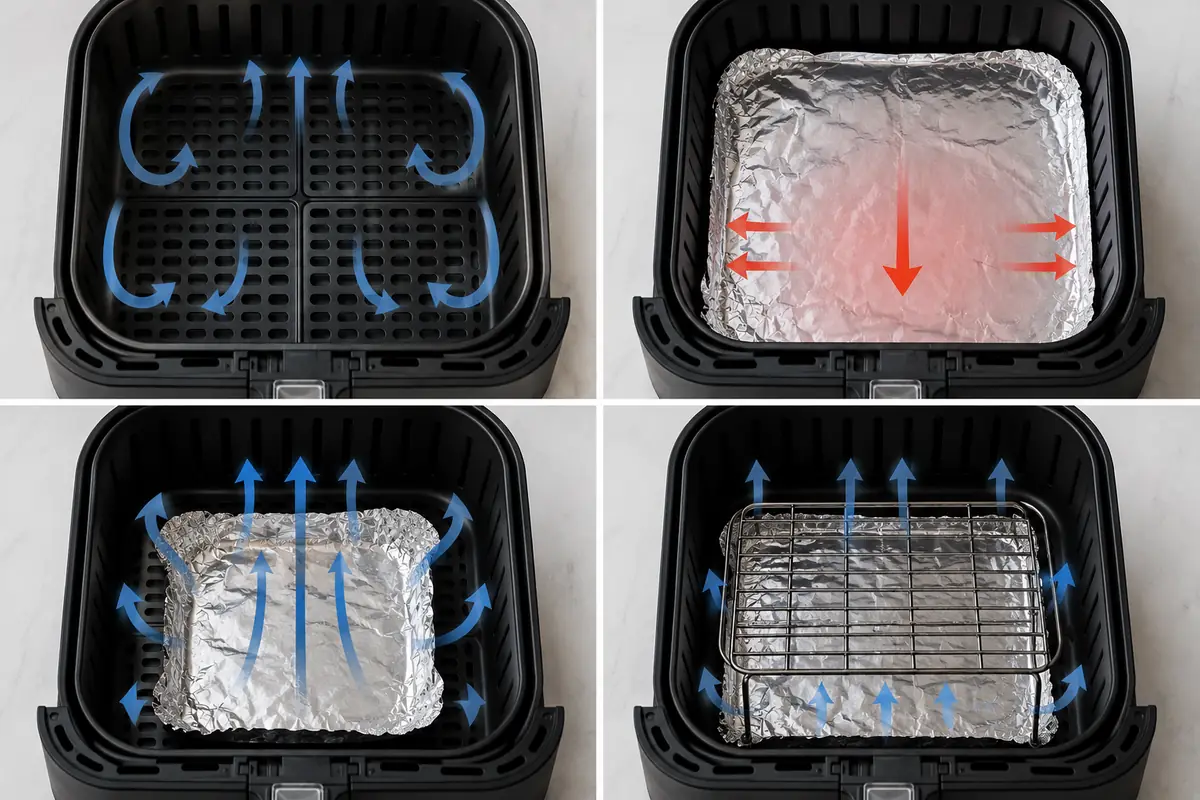
An air fryer crisps food by blowing hot air over every exposed surface, including the bottom, through the perforations in the basket. Line the entire basket floor with foil and you have just sealed those holes. The air can no longer circulate underneath, so the bottom of your food steams in trapped moisture instead of browning. You end up with a soggy underside and a longer cook time, which defeats the purpose of owning the appliance.
This is why a full foil liner is almost always a mistake. If you want the catch-all convenience of foil, use a small piece that covers only part of the floor, or shape it into a loose sling or boat that still leaves most of the perforations open. The goal is to catch drips or hold a specific food, not to wrap the basket like a baking sheet. The food that needs maximum crisp, like a batch of reheated fries, should sit directly on the open basket so air reaches the bottom and the surface shatters when you bite it.
The Acidic Food Reaction
Aluminum reacts with acid. Cook tomatoes, citrus, vinegar marinades, or anything heavily acidic directly on foil at air-fryer temperatures and the metal can leach into the food. You get a faint metallic taste, small dark pits and black flecks on the foil, and trace aluminum transfer you would rather not eat. It is a real chemical reaction, not a myth, and the same reason cooking experts at Serious Eats warn against wrapping acidic foods in foil.
So skip foil entirely for lemon-garlic shrimp, tomato-based dishes, vinegar-marinated vegetables, and citrusy fish. For those, cook on the bare basket or use parchment paper, which does not react with acid. Reserve foil for neutral and fatty foods like wings, sausages, potatoes, and roasts, where there is no acid to start the reaction.
When Foil Actually Earns Its Place
Used correctly, foil solves a few specific problems better than anything else.
Catching sticky, burnt-on sauces
Wet, sugary sauces like barbecue or teriyaki burn onto the basket and turn into a scrubbing nightmare. A small foil sling under saucy wings or ribs catches the worst of it, and cleanup becomes lifting out the foil and tossing it. Just keep the sauce off the basket sides and remember to add the sauce late so it does not scorch.
Lifting foods that roll or drip through
Small or awkward items (eggs, small roasts, a fish fillet that wants to fall apart) hold together better on a shaped piece of foil. It gives you a stable surface and a handle to lift the food out cleanly without it breaking or slipping through the perforations.
Making a quick packet for delicate items
A loosely closed foil packet steams delicate vegetables or fish gently in their own moisture while keeping juices contained. You sacrifice crispness, so this is a deliberate choice for tender results, not crisp ones. It is also handy for warming soft foods you do not want blasted dry.
Basket Air Fryer vs Oven-Style: The Foil Rules Differ
Where you put foil depends on your machine. In a basket-style air fryer, only use foil inside the basket, weighted by food, and never under the basket where it can block the air path or contact the element. In an oven-style or toaster-oven air fryer, you have more room: you can line the basket with a partial piece, or lay foil on the drip pan or tray below to catch grease, since that pan sits away from the airflow path and the food.
Some manufacturers, including a few basket-model makers, advise against foil entirely, while others approve it with precautions. This is not contradiction so much as different machine designs and liability caution. Check your own manual, and when in doubt, the bare basket plus a paper-towel wipe is always safe. America’s Test Kitchen has tested air fryers and accessories at length and lands on the same practical guidance, that foil is fine with care but unnecessary for most cooks; their hands-on coverage is at America’s Test Kitchen.
Foil vs Parchment Paper: Which to Reach For
Both line a basket, but they are good at different jobs. Foil is sturdier, moldable into slings and packets, and reflects heat, but it reacts with acid and can block airflow if overused. Parchment paper does not react with acid and the perforated, pre-cut air-fryer rounds keep airflow open by design, but parchment is flammable above about 420 to 450 F and can lift into the element just as easily if not weighted.
| Situation | Best choice |
|---|---|
| Saucy, sticky foods (wings, ribs) | Foil sling, sauce added late |
| Acidic foods (tomato, citrus, vinegar) | Parchment or bare basket |
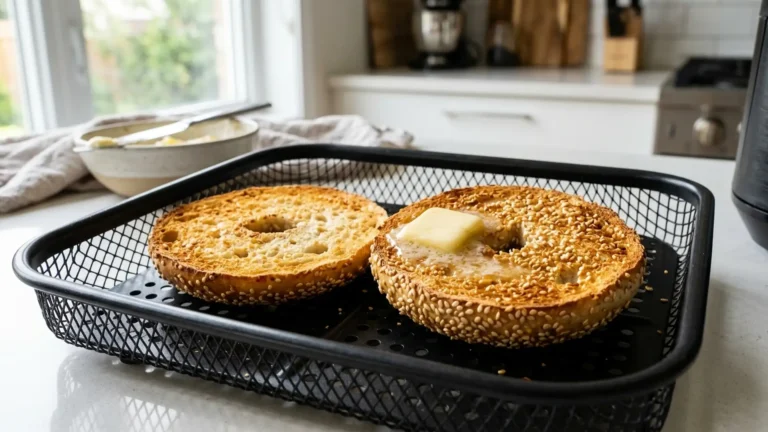
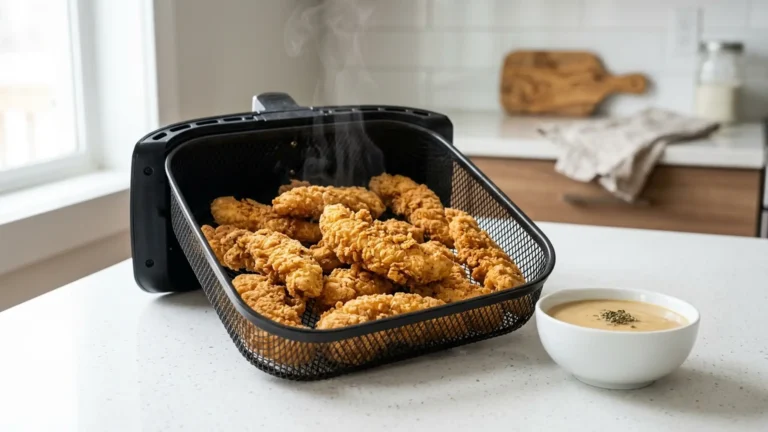
| Maximum crisp (fries, breaded foods) | Bare basket, no liner |
| Delicate or crumbly items (fish, eggs) | Foil boat or parchment round |
| Easy grease cleanup (oven-style) | Foil on drip pan below |
For a no-liner result that still comes out clean and crisp, a forgiving food like air fryer zucchini shows why the bare basket usually wins: the open perforations dry the surface and you skip the liner question entirely.
How to Make a Foil Sling the Right Way
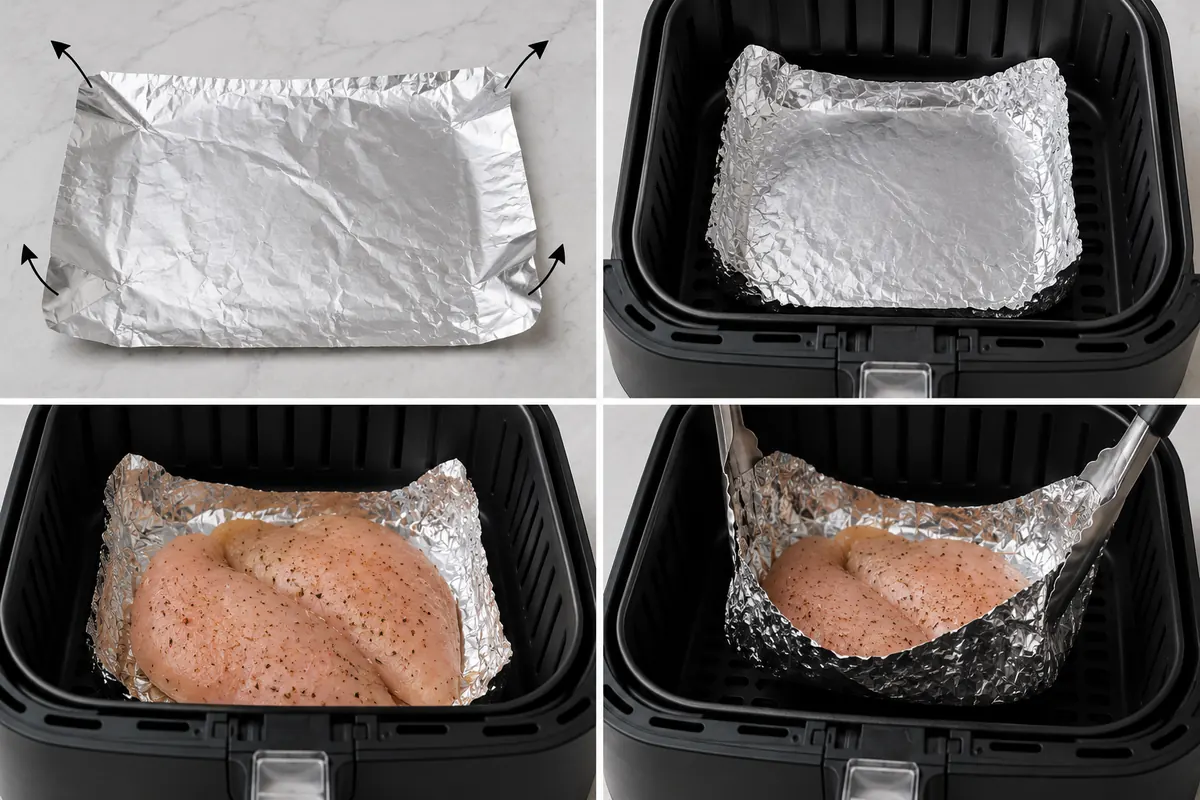
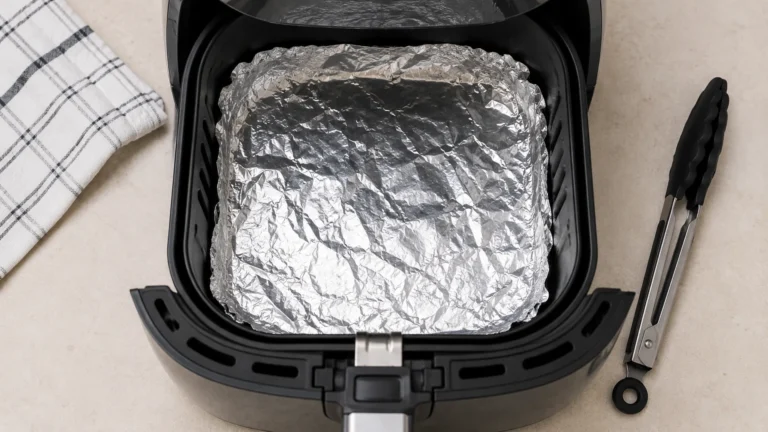
A foil sling is the most useful foil shape for an air fryer, and it takes ten seconds. Tear a piece of foil slightly larger than the food you are cooking, never as wide as the whole basket. Fold up the edges by about half an inch on all sides so it forms a shallow tray with low walls; these walls catch drips and sauce without blocking the side airflow. Set the food in the middle so its weight holds the sling flat. Leave at least a finger-width of open basket around the sling so air can still reach the chamber and circulate.
For wings or ribs, fold the corners up a little higher to corral the sauce, but keep the walls low enough that hot air still passes over the top of the food. When the cook is done, the food and the sling lift out together, and most of the burnt-on mess goes in the trash with the foil. The basket underneath stays clean enough for a quick wipe instead of a soak. This single trick is why people who cook a lot of saucy foods keep a roll of foil next to the machine, while people who mostly make fries and vegetables rarely touch it.
Foil thickness and type
Standard household foil is fine for slings and packets. Heavy-duty foil is sturdier and holds a shape better for slings that need to support a heavier roast, and it is less likely to tear when you lift greasy food out. Avoid the pre-cut nonstick foils with a coated side only when you are unsure which side faces up; for air-fryer use, plain foil is simpler and there is no coating to worry about scorching near the element. Never use foil candy wrappers, takeout containers with thin foil lids, or any foil-backed packaging, since the thickness and any plastic or paper backing are unpredictable at high heat.
A Real Example: Foil for Saucy Wings
Say you are making barbecue wings and you do not want sauce welded to your basket. Pat the wings dry, season them, and air fry them plain on a small foil sling at 380 F for about 22 to 26 minutes, flipping once. Make the sling smaller than the basket floor so air still reaches the sides and most of the perforations stay open. In the last three to four minutes, brush on the barbecue sauce; adding it late keeps the sugar from burning to char. The sauce that drips lands on the foil, not the basket. When the wings hit 165 F internal and the skin is set, lift the sling out, plate the wings, and bin the foil. The whole cleanup is a wipe.
Compare that to running the same wings sauced from the start on the bare basket: the sugar scorches, the basket needs a long soak, and you scrub the perforations one by one. The foil sling is not about crisp here, since the wings would crisp slightly better on the bare basket, it is about saving twenty minutes of cleanup on the messiest possible cook. That trade is the core of when foil is worth it: convenience on sticky jobs, never as a default.
What the Heating Element Damage Actually Looks Like
If loose foil does reach the element, you may see sparks, a flash, or scorch marks on the foil, and in a bad case the element can be damaged or the food can pick up a burnt-metal taste. Most modern air fryers will not catch fire from a brief contact, but you should never count on that. Foil against a live element is exactly the kind of event that voids a warranty and, in the worst cases, starts a small fire. The reason every manufacturer repeats the weigh-it-down rule is that this failure is entirely preventable: anchored foil under a real load of food simply does not lift. Treat the rule as non-negotiable rather than cautious boilerplate.
Common Foil Mistakes That Ruin a Cook
The biggest mistake is lining the whole basket floor, which blocks airflow and steams the food. The second is leaving foil loose or running it in an empty basket, which invites it into the element. The third is using foil with acidic food and getting that metallic, pitted result. A fourth, quieter mistake is using too much foil and trapping grease against the basket, which can cause smoking on fatty cooks. Use the smallest piece that does the job, weigh it down, keep it off acids, and you sidestep all four.
Frequently Asked Questions
Is it safe to put aluminum foil in an air fryer?
Yes, when used correctly. Keep foil away from the heating element, weigh it down with food so the fan cannot blow it around, and never use it with acidic ingredients. Never run foil in an empty basket. Used that way, foil is safe in most basket and oven-style air fryers.
Will foil block the airflow in my air fryer?
It will if you line the entire basket floor and cover the perforations. That traps moisture under the food and gives you a soggy bottom and a longer cook. Use only a small partial piece or a shaped sling so most of the holes stay open for air to circulate.
Can I put foil on the bottom of the air fryer under the basket?
In a basket-style unit, no. The space under the basket is part of the air path and may sit near the element, so foil there blocks airflow or becomes a fire risk. In an oven-style air fryer, you can lay foil on the separate drip pan below to catch grease, since that pan is out of the airflow path.
Why does my food taste metallic when I use foil?
You likely cooked an acidic food (tomato, citrus, vinegar) directly on the foil. Aluminum reacts with acid at high heat, leaching a metallic taste and leaving dark pits on the foil. Use parchment or the bare basket for acidic dishes and reserve foil for neutral or fatty foods.
Is foil or parchment paper better for an air fryer?
It depends on the food. Foil is better for sticky sauces, slings, and grease cleanup but reacts with acid and can block airflow. Parchment, especially perforated air-fryer rounds, is better for acidic foods and keeps airflow open, but it is flammable above roughly 420 to 450 F. Both must be weighted down by food.
Can I preheat my air fryer with foil inside?
No. During a preheat there is no food to weigh the foil down, so the fan can lift it into the heating element. Always preheat the empty basket first, then add the food on top of the foil before you start the cook.
Does foil make food less crispy in an air fryer?
It can, if it covers the perforations under the food. Foil blocks the airflow that dries and browns the bottom surface, so a fully lined basket gives you a soggier underside. A small partial sling that leaves most of the holes open has little effect on crispness, but for the crispest possible result, cook directly on the bare basket with no liner at all.
Can I cover food with foil in an air fryer?
Loosely, and only if the food itself anchors the foil. A loose foil tent can stop the top of a food from over-browning while the inside finishes, which is useful for thick items. Never seal a tight foil lid that flaps loose, and never tent food so lightly that the fan can lift the foil free and carry it into the element.
Bottom Line
You can put foil in an air fryer, and it is a handy tool for catching sticky sauces, lifting delicate foods, and protecting an oven-style drip pan. The rules that keep it safe are short: keep it off the heating element, weigh it down with food, never use it in an empty basket, and keep it away from acidic ingredients. For maximum crisp and zero risk, the bare perforated basket still wins most of the time, so treat foil as a targeted fix for specific messy jobs rather than a default liner.