Can you put foil in air fryer baskets safely? Yes, in almost every case, as long as you weigh it down with food, keep it clear of the heating element, and never let it block the airflow. Unlike a microwave, an air fryer cooks with circulating hot air rather than electromagnetic waves, so aluminum foil does not spark or arc the way it does in a microwave. The real risks are entirely mechanical: loose foil getting sucked into the fan or element, foil smothering the perforated basket so air cannot circulate, and acidic foods reacting with the aluminum. Follow a few rules and foil becomes a genuinely useful tool for catching drips and lifting delicate food. This guide explains exactly how, and when to skip it.
I am Cole, and I use foil in the air fryer often, but only for specific jobs and always the same careful way. What follows is the full breakdown: why foil is fine when a microwave would shower sparks, where to place it, how to secure it, which foods to keep off it, and the better alternatives for the times foil is the wrong call. Get these right and you protect both your dinner and your machine.
Can You Put Foil in Air Fryer: The Short Answer and the Science
Yes, you can put foil in most air fryers. The reason it is safe here but dangerous in a microwave comes down to how each appliance heats. A microwave bombards food with electromagnetic waves that induce currents in metal, and thin foil edges concentrate that current until they arc and spark. An air fryer is a small convection oven; it heats with a glowing element and a fan that pushes hot air around. Metal in a convection oven is normal, which is why you bake on metal pans, and foil behaves the same way in an air fryer.
That said, safe does not mean carefree. The hazards are physical, not electrical. The powerful fan can lift a loose sheet of foil into the heating element, where it can scorch or, in a worst case, catch. Foil laid across the perforated basket blocks the airflow the whole appliance depends on, leaving food pale and unevenly cooked. And the aluminum itself reacts chemically with acidic foods. None of these are dealbreakers, they are just rules to respect. The America’s Test Kitchen guidance on air fryers echoes the same point: foil is fine for the right jobs when it is secured and kept out of the airflow.
Where to Place the Foil and Where Not To
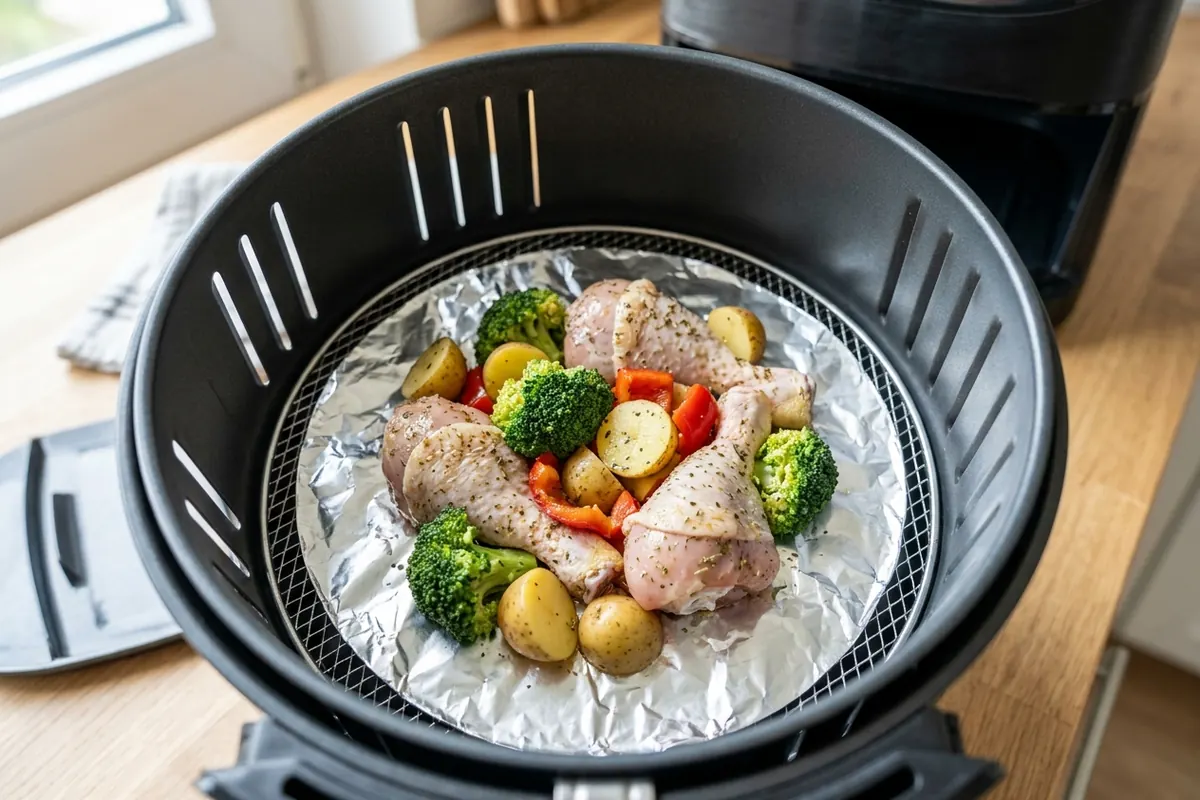
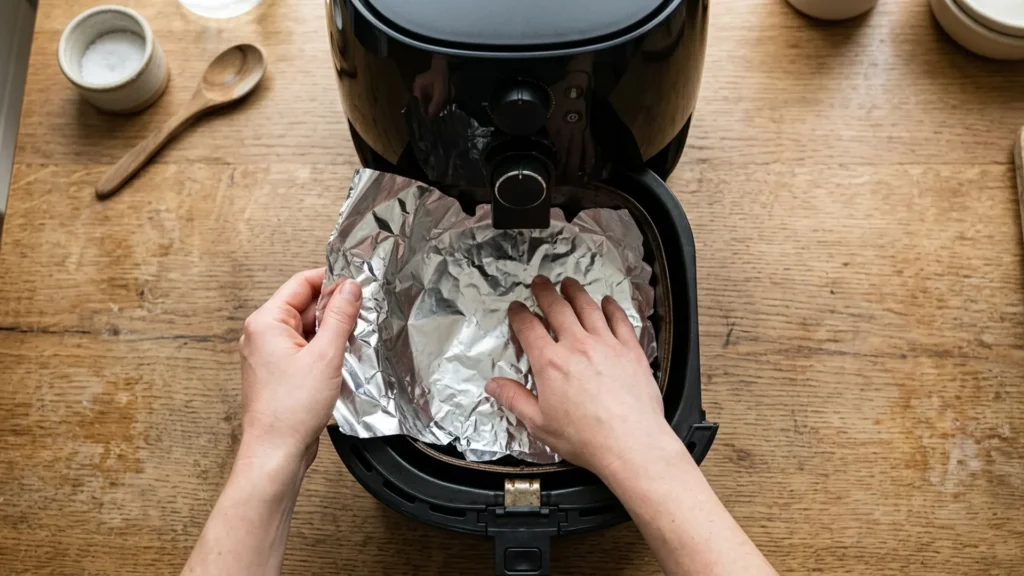
Placement is the single most important rule. Put foil only in the basket where the food actually sits, never on the bottom of the drawer underneath the basket. Lining the drawer floor seems clever for catching grease, but it blocks the perforations that let air and rendered fat flow through, which defeats the entire design and can cause the machine to overheat. The basket needs to breathe from below; do not seal it off.
Keep the foil small. A piece that covers the food and turns up slightly at the edges to catch juices is ideal; a piece that drapes up the sides toward the element is asking for trouble. Leave a clear margin of open basket around the foil so air still circulates and reaches the food from the sides and below. In a basket-style air fryer, the element is usually at the top, so the danger zone is anything that can flap upward. In an oven-style air fryer with racks, keep foil off the top rack nearest the element and well clear of the fan at the back.
Secure the Foil So It Cannot Fly
The most common foil accident is a loose sheet getting lifted by the fan, so always weigh the foil down with food before you start the machine. Place the foil, then set the food on top of it immediately; do not run an empty foil-lined basket even for a preheat, because there is nothing holding the foil down. The food is the anchor.
Fold the edges of the foil up and in toward the food rather than letting them stand tall, which both contains juices and removes the flapping edges the fan can grab. If you are cooking something light that will not pin the foil, like a few small vegetables, either skip the foil or crimp it tightly into a shallow tray shape that the airflow cannot easily lift. When the cook ends and you open the basket, let it cool a moment before pulling the foil, since hot foil tears easily and can dump grease. Treating the foil as something that must be physically held in place, every time, is what keeps it out of the element.
Acidic Foods: The One Real Chemical Risk
Aluminum reacts with acidic and salty foods, and this is the rule most people have never heard. Tomatoes, citrus, vinegar-based marinades, and anything heavily salted will slowly leach trace aluminum and can leave a metallic taste and pitting on the foil. For a quick cook it is a minor issue, but for longer cooks with acidic glazes or sauces, it is enough to change the flavor and is best avoided.
If you are air frying tomato-topped foods, citrus-marinated proteins, or vinegar-glazed dishes, skip the foil and use parchment or a silicone liner instead, neither of which reacts with acid. The same caution applies to highly seasoned, salt-heavy rubs over a long cook. For dry, neutral foods like reheating bread, catching crumbs under baked goods, or wrapping a plain potato, foil is perfectly fine. Match the liner to the food: acidic or salty goes on parchment or silicone, dry and neutral can go on foil.
Foil Versus Parchment Versus Silicone Liners
Foil is not always the best choice, and knowing the alternatives makes you a better cook. Perforated parchment liners, sold specifically for air fryers with holes punched through, are often the smarter pick because the holes preserve airflow that solid foil blocks. Parchment does not react with acid, lifts food cleanly, and makes cleanup easy. Its limit is heat: most parchment is rated to around 420 to 425 degrees F, so do not exceed that, and like foil it must be weighed down with food so it cannot lift.
Reusable silicone liners and silicone basket inserts are the most durable option. They tolerate high heat, never react with food, and last for years, though their solid bases can reduce airflow to the bottom of the food, so they suit some foods better than others. Foil still wins for one specific job: forming a custom shape, like a little sling to lift a delicate fish fillet or a folded boat to contain a saucy dish. Use foil when you need to shape or contain, parchment when you want airflow and easy cleanup, and silicone when you want a durable reusable base. Each has its place, and the food decides which one. Building a small kit with a roll of foil, a pack of perforated parchment rounds sized to your basket, and one reusable silicone insert covers every situation you will run into, and it costs very little to assemble.
When to Skip Foil Entirely
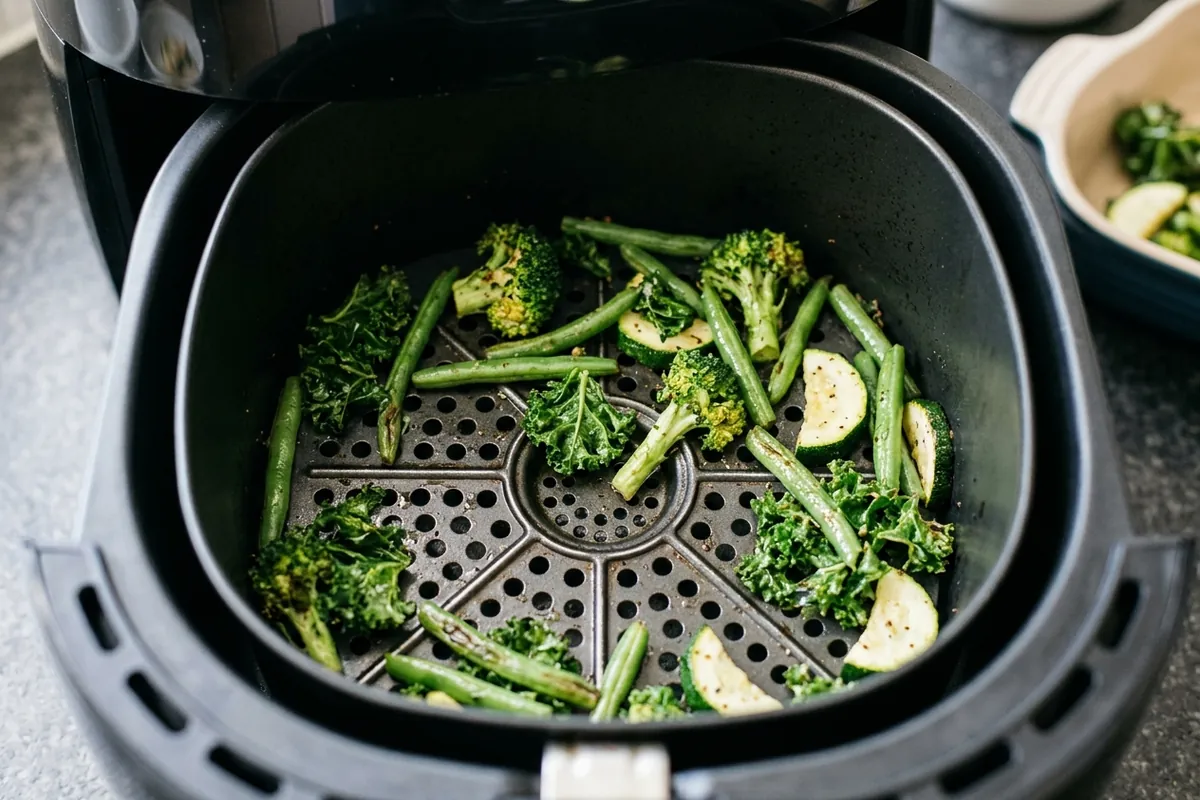
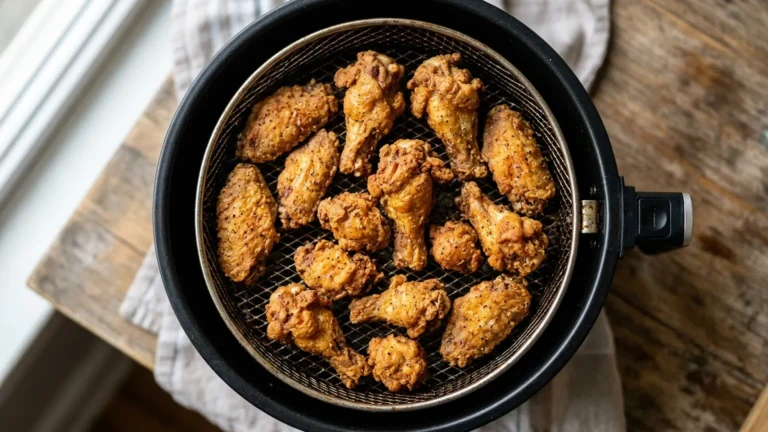
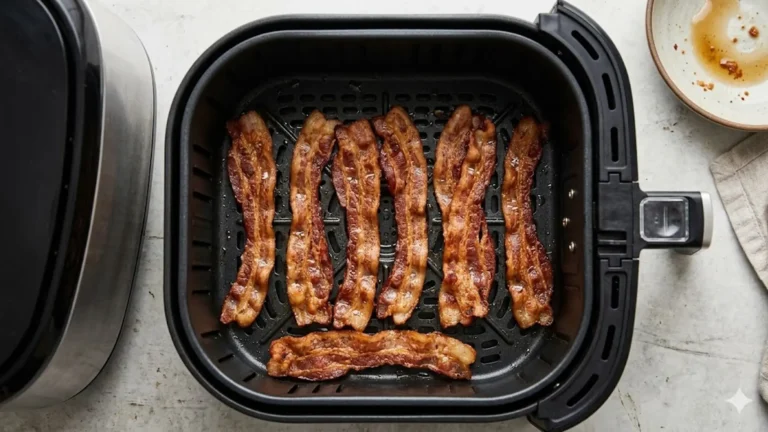
Some situations call for no liner at all. Foods you want maximally crisp, like fries or wings, do best directly on the bare perforated basket so hot air reaches every surface and rendered fat drips away; a foil base under them traps moisture and softens the bottom. This is exactly why cooking french fries in an air fryer works best with nothing underneath, letting the air circulate fully.
Also check your manual, because not every machine welcomes foil. Some manufacturers, notably certain Philips models, advise against foil, and some basket designs with the perforations on the bottom are easily smothered by it. If your air fryer’s bottom is the main air path, foil there is a clear mistake. When you do want a barrier for a messy or delicate food, reach for a perforated liner instead, the same way you would protect the basket when cooking something prone to sticking like air fryer frozen corn dogs. The default for crisping is a bare basket; reach for foil only when you have a specific reason.
Does Foil Affect Cooking and Crisping?
Foil changes how your food cooks, and not always for the better, so it pays to know the tradeoff. A solid foil base under food blocks the hot air from reaching the bottom surface, which means that side will not crisp the way it would on a bare perforated basket. For anything where all-over crunch is the goal, foil works against you. It also traps rendered fat and moisture against the food rather than letting it drip away, which can leave the underside greasy or steamed.
Where foil helps the cook is heat moderation and containment. A loose tent over the top of a browning food reflects some heat and slows the surface so the inside can catch up, exactly like tenting a roast in a regular oven. A foil boat keeps a saucy or buttery dish from leaking through the basket and smoking in the drawer below. A small foil packet can even steam-finish vegetables alongside a protein, trapping a little moisture so they stay tender rather than drying out in the aggressive convection. So the question is not just whether foil is safe, but whether it serves the texture you want. For crisp, skip it; for moist, contained, or shaped foods, it earns its place. According to general guidance from appliance makers like KitchenAid, the airflow tradeoff is the main reason to use foil sparingly and only where it adds value.
The practical upshot is to treat foil as a targeted tool, not a default liner. If you find yourself reaching for foil every single cook, you are probably costing yourself crispness on foods that would do better on the bare basket. Save it for the handful of jobs where containment or shaping genuinely matters, and let everything you want crisp cook directly on the perforations.
Cleaning, Maintenance, and Foil Fragments
Foil makes cleanup easier in theory, but it brings its own maintenance notes. When you remove used foil, check that no small torn fragments stayed behind in the basket or fell through into the drawer, because loose scraps can get pulled toward the element on the next cook. A quick visual sweep of the basket and drawer after pulling the foil takes five seconds and prevents the most avoidable problem, and it is a habit worth building into your routine every single time you use foil rather than something to remember only occasionally.
Never use foil as an abrasive scrubber on the nonstick coating of your basket; the coating is what keeps food from sticking, and scraping it with a wad of foil shortens its life. If food baked onto the basket, soak it in warm soapy water instead. Standard household foil is fine for air fryer use; heavy-duty foil is a little more tear-resistant for slings and boats but is not safer in any meaningful way, so use whichever you have. Whatever you use, the foil is single-use; do not try to wash and reuse a greasy, crumpled sheet, since reused foil tears more easily and is exactly the kind of loose fragment that gets lifted into the element. A fresh small sheet each time costs almost nothing and removes the risk entirely, which is a fair trade for the few cents of foil involved.
Practical Uses Where Foil Genuinely Helps
Used correctly, foil solves real problems. A small foil sling under a flaky fish fillet lets you lift it out whole without it falling apart. A folded foil boat contains a buttery or saucy dish so the liquid does not run through the basket and smoke in the drawer. A loose foil tent over the top of something browning too fast slows the surface while the inside finishes, the same trick you use in an oven. Foil also makes a quick custom divider to cook two small foods separately in one basket.
For reheating, a small foil wrap keeps bread or a tortilla from drying out while it warms, though leave it loosely open so it does not fully steam. The key in every case is that the foil serves the food, not the cleanup of the drawer below. Keep it in the basket, weighed down, clear of the element, off acidic foods, and out of the airflow path, and foil is a handy, safe tool. Ignore those rules and it becomes the most common cause of air fryer scares, almost all of which are entirely preventable.
Frequently Asked Questions
Is it safe to put aluminum foil in an air fryer?
Yes, in most air fryers, because they cook with hot circulating air rather than the electromagnetic waves that make metal spark in a microwave. The risks are mechanical: keep foil weighed down with food, clear of the heating element, and out of the airflow path. Always check your manual, since a few models advise against it.
Why is foil safe in an air fryer but not a microwave?
A microwave induces electrical currents in metal that concentrate at thin foil edges and arc into sparks. An air fryer is a small convection oven that heats with a glowing element and a fan, so metal behaves normally, the same way a metal baking pan is fine in a regular oven. The hazard in an air fryer is loose foil moving, not electricity.
Where should I place foil in the air fryer?
Only in the basket where the food sits, never on the drawer floor beneath the basket. Lining the drawer blocks the perforations that let air and grease flow through and can cause overheating. Keep the foil small with a clear margin of open basket around it so air still circulates from the sides and below.
Can foil touch the heating element?
No. Foil must stay well clear of the element, which in basket air fryers is at the top. The danger is a loose sheet getting lifted by the fan into the element, where it can scorch. Always weigh foil down with food, fold the edges in toward the food, and never run an empty foil-lined basket, even for a preheat.
What foods should not be cooked on foil in an air fryer?
Acidic and very salty foods like tomatoes, citrus, vinegar marinades, and heavy salt rubs react with aluminum, leaching a metallic taste and pitting the foil over a long cook. Use parchment or a silicone liner for those instead. Foil is fine for dry, neutral foods like plain potatoes, bread, or catching crumbs.
Is parchment paper better than foil in an air fryer?
Often, yes. Perforated parchment made for air fryers has holes that preserve the airflow solid foil blocks, does not react with acid, and lifts food cleanly. Its limit is heat, usually around 420 degrees F, and like foil it must be weighed down with food. Foil still wins when you need to shape a sling or contain a saucy dish.