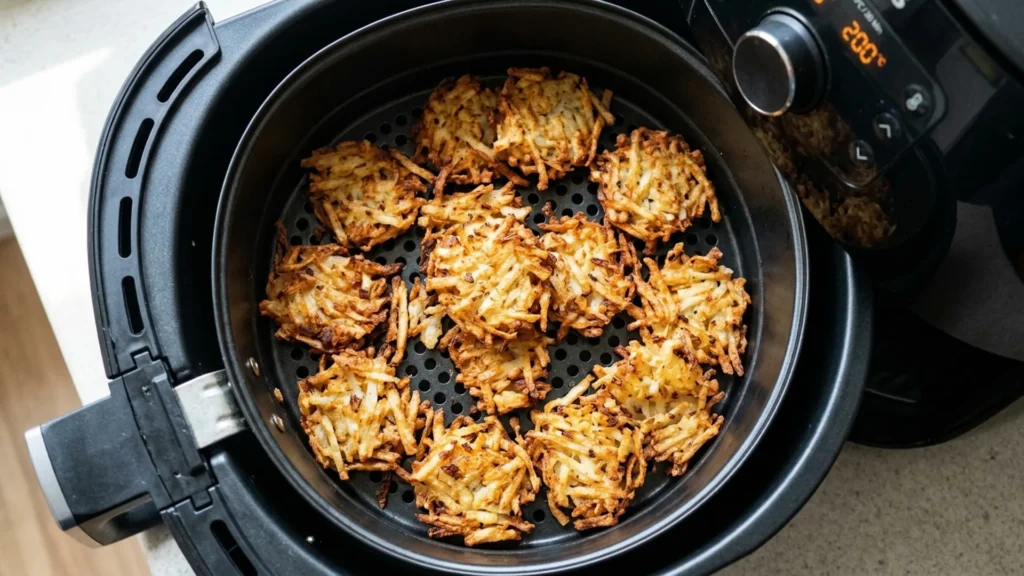
Air fryer frozen hash browns are the fastest route to a diner-style crispy edge without standing over a greasy skillet, and the method changes depending on whether you are cooking patties or loose shredded potatoes. I have run dozens of batches across a basket model and a toaster-oven style air fryer, and the single biggest variable people get wrong is crowding the basket. Give the potatoes room, hold the temperature steady, and you get a shatter-crisp exterior with a tender center. Crowd them, and you steam them into a pale, limp disappointment. This guide walks through exact temperatures, times, the flip, and every fix for the problems that actually come up.
I am Cole, and I test this stuff the boring way: a probe thermometer, a kitchen scale for portioning, and a lot of repeat runs at slightly different settings. What follows is the version that survived all of that. No guessing, no padding, just the times and the troubleshooting that get you crisp hash browns straight from the freezer.
Patties Versus Shredded: They Are Not the Same Cook
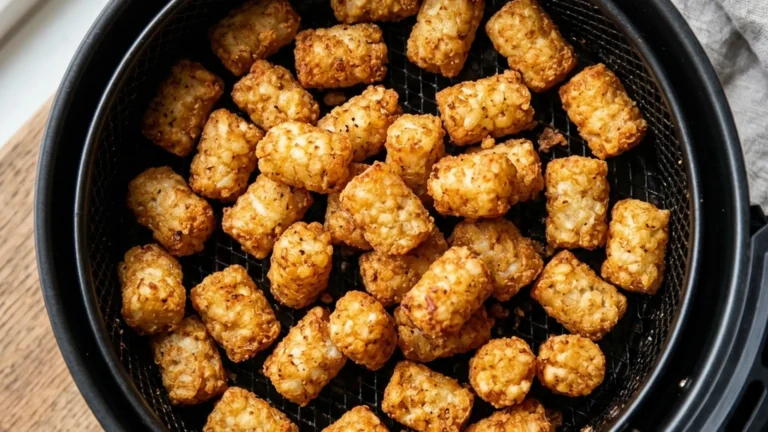
The first decision is what is actually in your freezer, because the two formats behave differently in moving hot air. A frozen hash brown patty is a pressed rectangle, dense and uniform, so it crisps on two flat faces and needs a flip. Loose shredded hash browns are a pile of thin strands with a huge amount of surface area, so they crisp fast but burn at the edges if you ignore them, and they need shaking rather than flipping. Frozen hash brown nuggets or tots are a third case that sits between the two.
Patties want a moderate temperature and a longer hold so the inside thaws and warms before the outside scorches. Shredded potatoes want a slightly lower temperature and frequent tossing so the strands brown evenly instead of welding into a single mat. If you treat shredded hash browns like a patty and walk away, you come back to a brick that is dark on top and raw underneath. Knowing which format you have is half the battle, and most of the recipes online only cover one of the two.
Air Fryer Frozen Hash Brown Patties: Temperature and Time
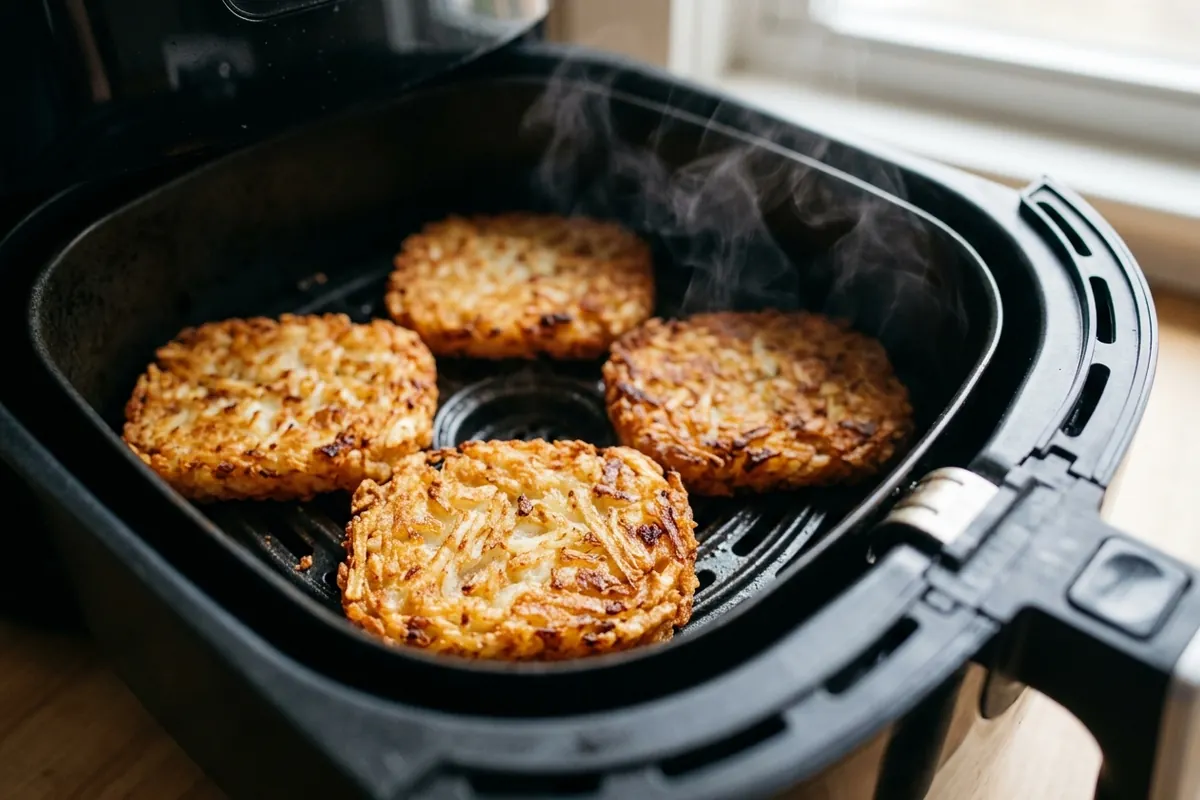
For standard frozen hash brown patties, set the air fryer to 380 degrees F. Place the patties in a single layer with at least half an inch of space between them, and do not stack. Cook for 10 minutes, flip with a thin metal spatula, then cook another 6 to 8 minutes until the edges are deep golden and the surface is crisp to a tap. Total time lands around 16 to 18 minutes depending on your machine and how crisp you like them.
You will see other sources call for 400 degrees F and 10 to 12 minutes with no flip. That works in a hotter, smaller basket, but it browns the outside before the center is hot in many machines, and skipping the flip gives you one crisp face and one pale one. I prefer 380 with a flip because it is forgiving across more air fryers. If your model runs hot, start checking at 12 minutes total. If you want extra crunch, add 1 to 2 minutes at the end rather than raising the temperature, which only scorches the surface.
Do not preheat for patties. Starting in a cold basket gives the dense center a head start to thaw while the air comes up to temperature, which reduces the cold-middle problem. If your air fryer demands a preheat, knock 2 minutes off the first stage.
Shredded Frozen Hash Browns: The Toss-and-Spread Method
For loose shredded frozen hash browns, set the air fryer to 375 degrees F. Spread roughly two cups in a thin, even layer; a thick pile will never crisp through. Cook for 17 to 18 minutes total, but open the basket every 5 to 6 minutes and toss or shake so the strands on the bottom rotate to the top. The first toss is the most important because that is when the mat wants to form.
Shredded potatoes carry more surface moisture than pressed patties, so a light spritz of neutral oil before cooking genuinely helps here, where it is optional for patties. Aim for a one-second spray over the spread layer, then toss to coat. For a clumpy, restaurant-style hash brown patty feel from shredded potatoes, press the layer down firmly during the last 4 minutes and stop tossing so the bottom can set into a crust.
The Single-Layer Rule and Why Airflow Wins
An air fryer is a small convection oven with an aggressive fan. Crispiness comes from hot air hitting wet surface and flashing off the moisture. The moment you overlap or stack pieces, you block that airflow, trap steam, and the contact points go soft and gray. This is the number one reason home cooks complain their hash browns came out soggy.
Cook in batches if you have to. Four patties in a single layer beats eight crammed in two layers every single time, even though it costs you a few minutes. If you are feeding a crowd, hold finished batches on a wire rack in a 200 degree F oven; do not pile them on a plate, where the bottoms steam themselves limp. The same airflow logic applies to other frozen potatoes, which is why frozen diced potatoes in the air fryer also need a single shaken layer rather than a heaped basket.
Brand and Thickness Differences That Change Your Time
Not all frozen hash browns are built the same, and the bag matters more than most guides admit. Thicker, denser patties from brands aimed at diner-style breakfasts run 1 to 3 minutes longer than thin economy patties. Pre-seasoned or pre-oiled patties brown faster because the surface oil accelerates crisping, so check them early. Shredded products vary in moisture content; some are flash-frozen drier than others and will crisp in 15 minutes while wetter bags need the full 18 plus an extra toss.
The practical move is to treat the package time as a starting point, run your first batch by eye, and write the working number on the bag with a marker. Once you know your machine wants 17 minutes for one specific brand of shredded potatoes, you never have to guess again. Air fryer wattage ranges widely, and a 1700-watt basket simply cooks faster than an 800-watt compact, which is why no single time fits every kitchen. The same machine-to-machine spread shows up when you compare an air fryer versus a conventional oven for the same frozen food.
Seasoning and Upgrades Without Killing the Crisp
Salt is the only seasoning that should touch hash browns before cooking, and even then only lightly, because salt pulls moisture to the surface. Everything else goes on after. Once the potatoes are crisp, hit them with garlic powder, smoked paprika, onion powder, or a finishing salt while they are still hot so it sticks. For a loaded version, top crisp shredded hash browns with shredded cheese during the final 2 minutes so it melts without sliding off.
Resist the urge to drown them in oil for flavor. Excess oil pools in the basket, smokes, and actually makes the contact side greasy rather than crisp. A light coat is plenty; the convection does the rest. If you want richness, serve with a runny egg or a dollop of sour cream rather than frying in fat. According to America’s Test Kitchen, dry surface and steady high heat are what drive browning, which is exactly what a lean air fryer setup delivers.
Troubleshooting: Soggy, Sticking, Burnt, or Cold in the Middle
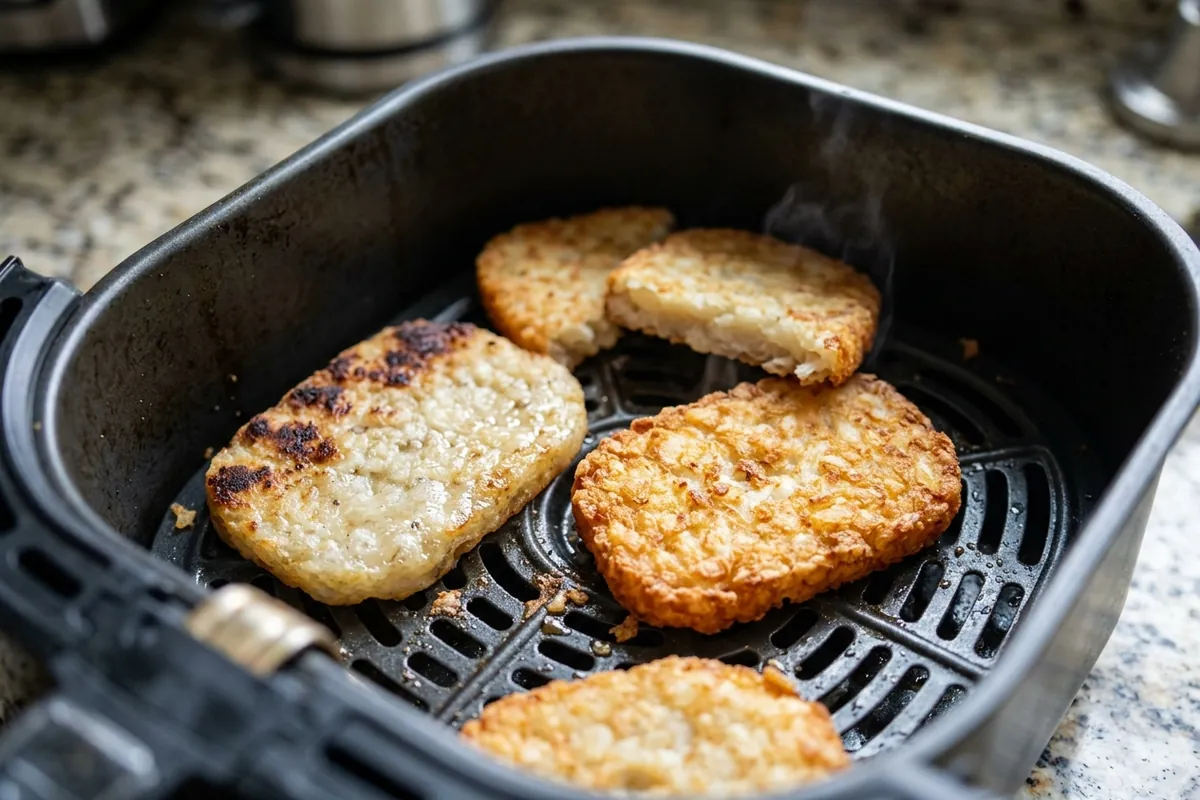
Soggy hash browns almost always mean a crowded basket or too low a temperature. Spread them out and confirm your air fryer is actually reaching 380; many run 15 to 25 degrees cool, which an inexpensive oven thermometer will reveal. Sticking to the basket is fixed with a light spray of oil or a thin layer of cooking spray before the potatoes go in; never use aerosol sprays with propellants that strip nonstick coatings, use a refillable oil mister instead.
Burnt edges with a cold center means the temperature was too high. Drop to 375, extend the time, and flip or toss more often. A cold middle on patties specifically usually means they went into a hot preheated basket; skip the preheat or add 2 minutes at a lower setting. White, pale patches after the cook indicate pieces were touching; rearrange and give them a final 2 to 3 minutes solo. None of these problems require throwing out the batch, they just need one variable adjusted.
One more failure mode worth flagging: hash browns that taste fine but look anemic and gray. That is undercooking, plain and simple, and it comes from pulling them at the package time instead of cooking to a visual cue. Deep golden brown is the target, not pale tan. When in doubt, give them another 2 minutes and judge by color and a finger tap; a properly crisp patty sounds and feels firm, while a soft one yields with no resistance. Color is the most reliable doneness signal you have, more trustworthy than any timer, because every machine and every brand drifts.
How the Air Fryer Beats the Skillet and the Oven
I grew up making hash browns in a cast iron skillet, and they were good, but the air fryer wins on three counts that matter on a busy morning. First, there is no oil management; you are not babysitting a quarter inch of fat, flipping at exactly the right moment, and mopping up spatter afterward. The convection does the crisping with a fraction of the oil, which also means fewer calories and a cleaner stovetop. Second, the result is crisp on more than one face. A skillet only browns whatever is in contact with the metal, so you flip once and pray; the air fryer attacks every exposed surface at once.
Third, it is genuinely hands-off between the flip and the finish. You set the time, walk away to scramble eggs or start coffee, and come back to crisp potatoes. The oven can match the air fryer on texture but takes far longer to preheat and tends to need 25 minutes at 425 degrees F to hit the same crisp, by which point a basket air fryer has already plated breakfast. The tradeoff is batch size: a sheet pan in the oven holds more patties at once, so for feeding six people the oven still has a place. For one to four servings, the air fryer is faster start to finish.
There is also a texture difference worth naming. Skillet hash browns can develop a wonderful greasy-crisp lacy edge that the air fryer does not fully replicate because there is no pool of fat to fry in. If that specific diner texture is what you crave, the skillet still wins. For an everyday crisp-but-light result with almost no cleanup, the air fryer is the smarter default, and it is the format I reach for five mornings out of seven.
Reheating Leftover Hash Browns So They Crisp Again
Leftover hash browns are notorious for turning to mush in the microwave, but the air fryer revives them better than any other method. Spread cold cooked patties or shreds in a single layer, set 400 degrees F, and run them 3 to 4 minutes without oil. The high heat drives off the moisture they absorbed in the fridge and re-sets the crust. Do not add water or cover them; both trap steam and defeat the purpose. If the potatoes have a lot of toppings already on them, drop to 350 degrees F so the toppings warm without burning while the base re-crisps.
The same blast-and-crisp logic rescues plenty of next-day foods, which is why the air fryer earns its counter space well beyond breakfast. Treat any starchy leftover the same way: thin layer, high heat, short time, no cover. The result is a far cry from the limp, gummy texture a microwave leaves behind, and it takes about the same total minutes.
Serving Ideas and Make-Ahead Notes
Crisp air fryer hash browns are a breakfast base, not just a side. Build a quick hash by tossing finished shredded potatoes with pre-cooked diced peppers and onions for the last 2 minutes. Stack a patty under a fried egg and a slice of cheese for a fast breakfast sandwich, or pile shredded hash browns into a bowl with bacon, scallions, and hot sauce. They also round out a savory dinner plate next to something hearty; I will happily put a crisp patty beside air fryer frozen corn dogs for a no-cook-mess weeknight.
You can hold cooked hash browns warm, but they do not improve sitting around. If you must make ahead, undercook by 2 minutes, cool completely, refrigerate, then blast them at 400 degrees F for 3 to 4 minutes to re-crisp before serving. They will never be quite as good as fresh out of the basket, but they beat the microwave by a mile. For breakfast-for-dinner nights you can lean on America’s network of quick comfort plates like these chicken soups alongside a tray of hash.
Frequently Asked Questions
Do I need to thaw frozen hash browns before air frying?
No. Cooking from frozen is the entire point and gives the crispest result. Thawing first releases water that steams the potatoes and makes them mushy. Take them straight from the freezer to the basket, and do not let them sit out and sweat while the air fryer comes up to temperature.
Why are my air fryer hash browns soggy instead of crispy?
The basket is too crowded or the temperature is too low. Hot air needs to reach every surface to flash off moisture, so spread pieces in a single layer with space between them, and verify your machine actually hits 380 degrees F with an oven thermometer. A light spray of oil on shredded potatoes also helps the crisp set.
What temperature is best for frozen hash brown patties?
Set 380 degrees F for 16 to 18 minutes with a flip at the halfway point. Some recipes use 400 degrees F for 10 to 12 minutes, which works in hot compact baskets but tends to brown the outside before the center warms, so 380 with a flip is more reliable across different air fryers.
Should I flip or shake hash browns while they cook?
Flip pressed patties once at the halfway mark so both flat faces crisp. Shake or toss loose shredded hash browns every 5 to 6 minutes so the strands rotate and brown evenly instead of welding into a single mat. The format decides the motion: patties flip, shreds toss.
How do I keep hash browns from sticking to the basket?
Give the basket a light coat of oil from a refillable mister before adding the potatoes. Avoid aerosol cooking sprays with propellants, which can damage nonstick coatings over time. A perforated parchment liner also works for shredded potatoes, but leave the center open so air still circulates.
Can I cook a full bag of shredded hash browns at once?
Only if it fits in a thin single layer, which a full bag rarely does. A thick pile steams instead of crisps. Cook in two batches and hold the first on a wire rack in a low oven, or accept softer results. Spreading thin is non-negotiable if you want the strands genuinely crisp.