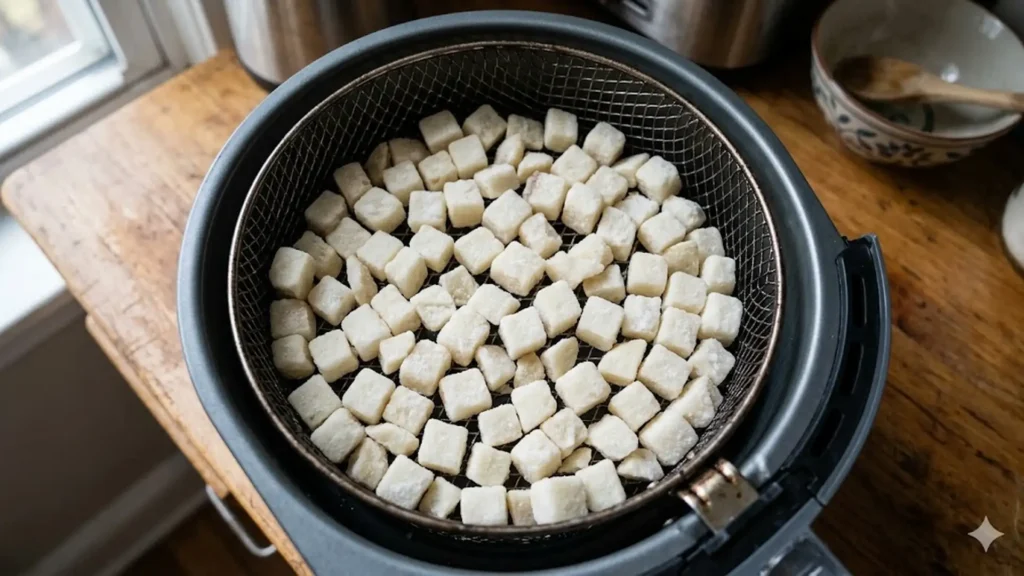
Frozen diced potatoes in air fryer are one of the easiest wins the appliance offers: pour them in straight from the bag, cook at 400 degrees Fahrenheit for about 15 to 20 minutes, and you get crispy edges and a soft center with almost no effort. The only real rules are do not thaw them, keep them in a single layer, and add the oil after the first few minutes once the surface has dried out. Miss those and you get the one thing nobody wants, which is a basket of pale, soggy potato cubes. Get them right and these beat oven hash potatoes on both speed and crunch.
This guide gives the exact times and temperatures in US units, explains why cooking from frozen actually works in your favor, covers the different products you will find in the freezer aisle such as plain diced potatoes, Potatoes O’Brien, and southern-style cubes, and walks through seasoning, breakfast and dinner uses, and a full troubleshooting list. Whether you are making a quick side or a loaded breakfast hash, this is everything you need to know.
Do Not Thaw: Cook Straight From the Bag
The most important rule is also the most counterintuitive: do not thaw frozen diced potatoes before air frying. Thawing lets the cubes release moisture and turn mushy, and that surface water is exactly what stops them from crisping. Frozen potatoes are already blanched at the factory, so they only need to finish cooking and brown, not cook from raw. Tip them into the basket frozen, spread them out, and let the air fryer’s heat both defrost and crisp them in one pass. This is the same logic behind cooking frozen fries from frozen, and it is why these are a true grab-and-go side.
The one wrinkle is oil timing. If you toss frozen cubes in oil right out of the bag, the oil just coats a layer of frost and slides off as the ice melts. The trick most experienced air-fryer cooks use is to run the potatoes dry for the first 5 minutes so the frost cooks off, then pull the basket, toss the now-dry potatoes with a tablespoon or two of oil and seasoning, and finish cooking. That single change is the difference between greasy, uneven potatoes and crisp, evenly browned ones.
Temperature and Time
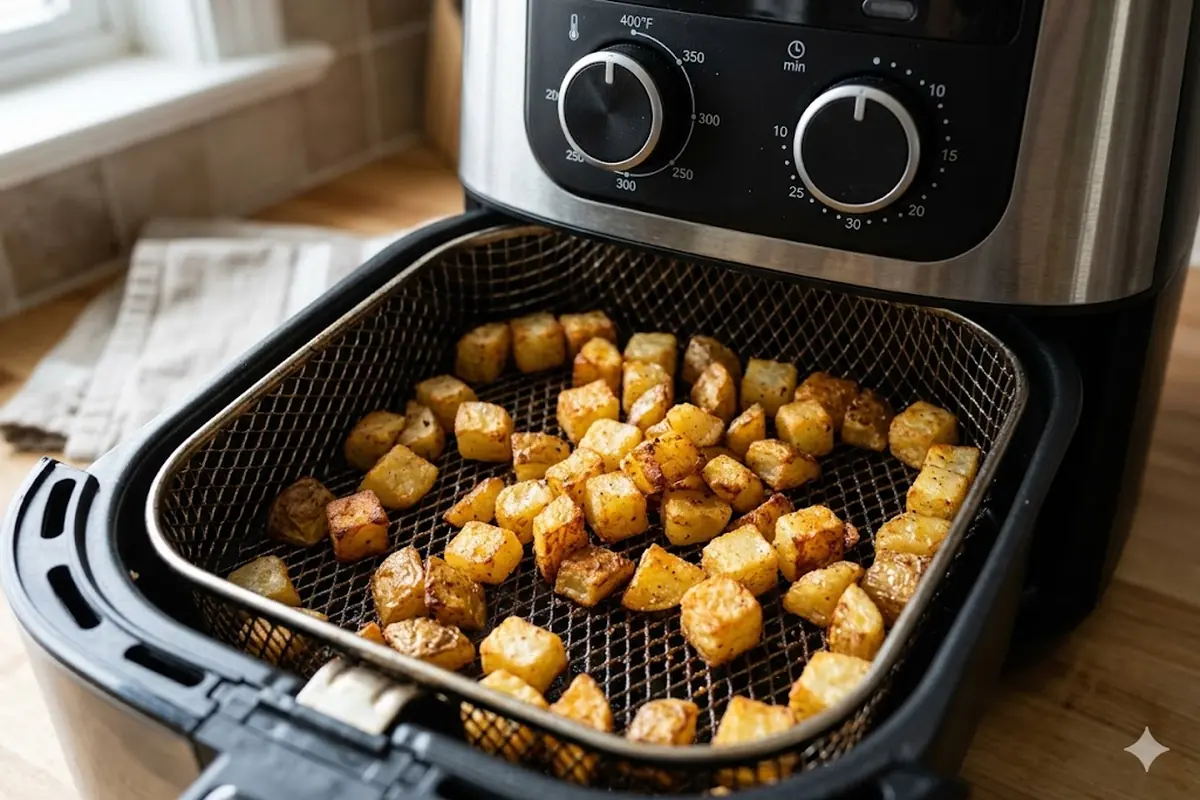
For plain frozen diced potatoes, 400 degrees Fahrenheit is the right temperature, hot enough to brown without burning before the inside softens. Total cook time runs about 15 to 20 minutes depending on the size of the dice and your air fryer’s wattage. Shake the basket two or three times so every face of every cube gets exposed to the moving air, since potatoes love to settle and brown only on one side.
| Product | Temperature | Total time | Oil added |
|---|---|---|---|
| Plain diced potatoes | 400 F | 15-20 min | After 5 min |
| Potatoes O’Brien (with peppers) | 390-400 F | 14-18 min | After 5 min |
| Southern-style cubes | 400 F | 16-20 min | After 5 min |
| Small hash-brown dice | 400 F | 12-16 min | After 4 min |
These are starting points. The first time you cook a particular brand, check at the early end and add time in two-minute increments until the cubes are deep golden and crisp at the corners. Once you know how a bag behaves in your machine, the timing becomes second nature.
Know Your Product
The freezer aisle sells several things that all look like diced potatoes but behave a little differently. Plain diced potatoes are just blanched cubes and are the most forgiving. Potatoes O’Brien add diced onion and bell pepper, which carry more moisture and can brown faster, so they often need a slightly lower temperature and a careful eye near the end so the peppers do not char. Southern-style cubes are usually a bit larger and denser, so they take the longest. Small hash-brown dice are cut fine, defrost almost instantly, and crisp quickly, so they need the least time and the earliest oil. Reading the cut on the bag tells you most of what you need to adjust.
Pre-seasoned bags are common too. If the potatoes already list salt and seasoning on the label, skip adding more salt until you taste them at the end, because it is easy to oversalt a product that was salted at the factory. Plain bags are a blank slate and take seasoning well, which we will get to next.
Dice size on the bag is the single best predictor of timing. Small dice have more surface area relative to their volume, so they defrost and crisp fast and can overcook if you walk away. Large cubes have more interior to heat through, so they need a lower temperature and a longer cook so the center is not still cold when the outside is brown. When you open a new brand, glance at the cube size before you set the timer and lean toward the shorter time for small dice and the longer time for big ones. A quick test cube pulled out near the end tells you instantly whether the inside is hot and tender.
Oil and Seasoning
A little oil is what turns soft potato into crisp potato, so do not skip it entirely even though the bag says you can. One to two tablespoons for a full basket, added after the first few minutes once the frost has cooked off, is the right amount. Use a neutral high-smoke-point oil such as avocado or canola; these handle 400 degrees without smoking, while extra-virgin olive oil can turn bitter at that heat. If you cook completely oil free, mist the basket so the cubes do not stick.
For seasoning, a simple blend of salt, pepper, garlic powder, paprika, and a little onion powder makes an all-purpose savory potato that works at breakfast or dinner. Add dry spices when you toss in the oil so they bloom in the heat. Save anything that burns, like grated cheese, fresh herbs, or a squeeze of lemon, for the moment the potatoes come out of the basket. A finishing sprinkle of flaky salt while they are still hot makes them taste like a restaurant side.
Single Layer Is the Whole Game
If your potatoes come out soft instead of crisp, the cause is almost always a crowded basket. The air fryer crisps by blowing fast-moving air across every surface, and a heaped pile blocks that airflow so the cubes in the middle steam each other into mush. Spread the potatoes in a single layer with a little room between them. If you are feeding a crowd, cook in two batches rather than doubling up, and hold the first batch warm. A second light layer tossed often will work in a pinch but will never be as crisp as a single layer. This single-layer rule applies to every food in the basket, which is why our general guide to how to cook in an air fryer treats airflow as the master variable.
Air Fryer vs Oven vs Stovetop
Frozen diced potatoes can be cooked three ways, and the air fryer wins for most weeknight cooking. The oven works but is slow: you preheat for 10 to 15 minutes, then roast on a sheet pan at 425 degrees for 25 to 30 minutes, flipping once, and the result is good but rarely as crisp as the air fryer because still oven air browns more gently. The stovetop in a skillet gives great crust on the side touching the pan but uneven results overall, and it needs more oil and constant attention so the cubes do not stick or burn. The air fryer splits the difference: it preheats in two or three minutes, crisps all sides at once thanks to the moving air, uses a fraction of the oil a skillet needs, and frees your hands except for a couple of shakes. For one or two servings it is the clear choice. The oven only pulls ahead when you need a huge batch that would take three or four rounds in a basket.
The reason the air fryer crisps frozen potatoes so well comes down to how it removes water. A frozen cube is covered in frost and holds internal moisture, and crisping requires driving that water off the surface fast. The air fryer’s high-speed fan strips the damp surface layer away quickly and keeps it moving, so the exterior dries and browns while the inside stays soft. A still oven cannot move air that fast, so moisture lingers longer at the surface and the crust forms more slowly. That single mechanical difference is why the same bag of potatoes comes out crisper from a basket than from a sheet pan in the same amount of time.
Make Ahead and Reheating
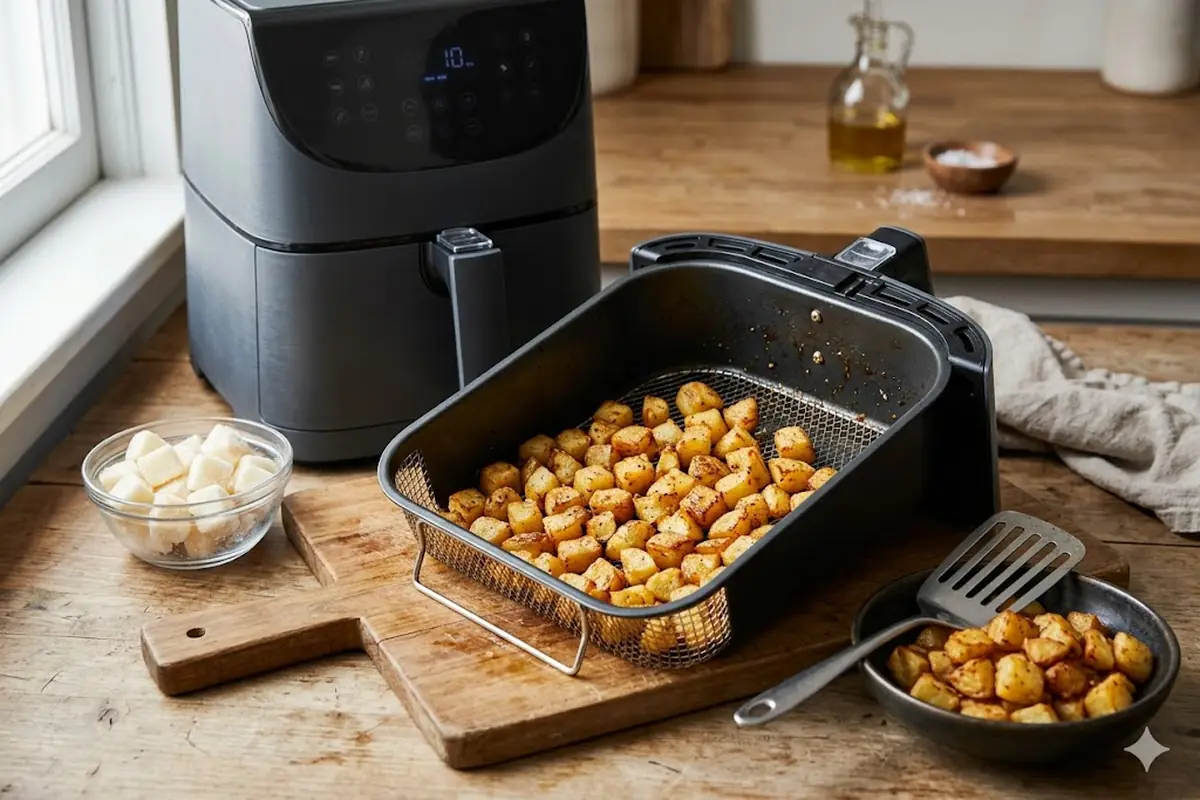
These potatoes are best straight out of the basket, but they reheat better than most foods because the air fryer can re-crisp them. If you have leftovers, do not microwave them, which turns crisp cubes soft and rubbery. Instead, spread them in a single layer and run them at 375 to 400 degrees for three to five minutes until they sizzle and crisp again. You can also partially cook a big batch ahead, stopping a few minutes early, then finish them hot just before serving so they reach the table crisp. Either way, store cooled leftovers in an airtight container in the fridge for up to three or four days, and always reheat in the air fryer rather than the microwave for the best texture.
Frozen vs Fresh Diced Potatoes
It is worth knowing when to reach for frozen versus dicing your own. Frozen wins on speed and consistency: they are pre-cut, pre-blanched, and ready to pour, so they go from freezer to crisp in under 20 minutes with zero prep. Fresh-diced potatoes give you control over size and a slightly better flavor, but they need peeling, dicing, soaking to remove starch, and thorough drying before they will crisp, which adds 30 to 45 minutes. For a fast breakfast or a last-minute side, frozen is the obvious pick. When you have time and want the best flavor, fresh is worth the extra steps, and the same crisping rules of single layer, oil, and shaking apply to both.
Breakfast and Dinner Uses
Crispy diced potatoes are the backbone of a fast breakfast hash. Cook them on their own, then in the last few minutes add diced cooked bacon or sausage, and crack the eggs to fry alongside or scramble separately. Top with cheese for the final minute so it melts onto the hot potatoes. For dinner they make an instant side under almost anything, from a rotisserie chicken to a pan-seared steak. They also pair naturally with other air-fryer favorites, so you can run a batch of these and then a quick round of sausages like the ones in our guide to cooking bratwurst in an air fryer for a full plate with one appliance. If you are doing a bigger spread of frozen sides, the cut-by-cut times in our frozen fries guide help you time everything together.
Troubleshooting Common Problems
Soggy potatoes are the top complaint, and the fix is almost always more space and the oil-after-defrost trick: thin the layer and let the frost cook off before adding oil. Pale, undercooked cubes mean the temperature was too low or the time too short, so push to 400 degrees and add a few minutes while watching the color. Potatoes that stick to the basket need either a light oil coat or a mist of spray before they go in. Uneven browning, crisp on top and soft underneath, means you did not shake enough; toss the basket two or three times so every side faces the airflow. And mushy interiors with hard outsides usually come from cooking too hot too fast on large southern-style cubes, so drop the heat slightly and give them more time so the center catches up.
One small caution on accessories. A strong air-fryer fan can lift a loose parchment liner into the heating element, so if you line the basket, weigh the liner down with the potatoes or skip it during the high-heat phase. For independent appliance testing and the broader science of why fast airflow crisps food, America’s Test Kitchen is a solid reference, and Consumer Reports rates air fryers if you are still choosing a machine.
Frequently Asked Questions
Do I need to thaw frozen diced potatoes before air frying?
No, and you should not. Thawing releases moisture that makes the cubes mushy and stops them from crisping. Cook them straight from the bag; the air fryer defrosts and browns them in one pass. The potatoes are already blanched at the factory, so they only need to finish cooking and crisp up.
What temperature and time for frozen diced potatoes in an air fryer?
Cook plain frozen diced potatoes at 400 degrees Fahrenheit for about 15 to 20 minutes, shaking the basket two or three times. Smaller hash-brown dice finish faster, around 12 to 16 minutes, while larger southern-style cubes can take the full 20. Check at the early end and add time in two-minute steps until deep golden.
Why are my frozen diced potatoes soggy?
The two usual causes are crowding and oil timing. A packed basket blocks airflow so the cubes steam instead of crisp, so cook in a single layer. And tossing frozen cubes in oil before the frost melts leaves them greasy, so run them dry for the first 5 minutes, then add the oil and finish cooking.
Do I need to add oil?
Oil is technically optional but strongly recommended for crispness; a totally dry cube comes out soft. Use one to two tablespoons of a neutral high-smoke-point oil like avocado or canola for a full basket, added after the first few minutes once the surface has dried. If you cook oil free, mist the basket to prevent sticking.
Can I cook Potatoes O’Brien in the air fryer?
Yes. Potatoes O’Brien cook much like plain diced potatoes but include onion and bell pepper, which carry more moisture and brown faster. Cook them at 390 to 400 degrees for about 14 to 18 minutes, and watch the peppers near the end so they do not char. They make an easy, colorful breakfast side.
Can I make a breakfast hash with frozen diced potatoes?
Absolutely. Crisp the potatoes first, then in the last few minutes add cooked bacon or sausage, and top with cheese for the final minute so it melts. Cook eggs alongside or separately. The crispy cubes are the base of a fast, hearty hash that needs only one appliance and very little hands-on time.
Bottom Line
Frozen diced potatoes in air fryer are a genuine shortcut once you follow three rules: cook them straight from frozen, keep them in a single layer, and add the oil after the first few minutes so it sticks to dry, crisp-ready surfaces. Run plain cubes at 400 degrees for 15 to 20 minutes, adjust for the cut and your machine, shake the basket a few times, and season at the end. Whether they anchor a breakfast hash or round out a weeknight dinner, these go from freezer to crispy in under 20 minutes, which is exactly the kind of fast, reliable cooking the air fryer was built for.