Can parchment paper go in an air fryer? Yes, parchment paper is safe in an air fryer as long as you keep it under the food, never run it empty, and stay under its heat limit of about 420 to 450 F. Used that way, it catches crumbs, keeps food from sticking, protects the basket coating, and turns cleanup into lifting out a sheet. Used carelessly, a loose sheet can blow into the heating element and catch fire, since parchment is paper and paper burns. This guide covers exactly how to use it safely, why perforated air-fryer parchment beats a plain sheet, the temperature ceiling that matters, and when to skip parchment for the bare basket instead.
The short answer is reassuring, but the details are what keep you safe and keep your food crisp. Parchment is a great tool for sticky, crumbly, and delicate foods, and a poor choice when you want maximum crunch. Knowing which is which is the whole point.
Why Parchment Is Safe (Within Limits)
Parchment paper is made for the oven. It is treated to resist heat and moisture, and it does not react with acidic foods the way aluminum foil does, so you can use it under tomato, citrus, and vinegar dishes without any metallic taste. In an air fryer it does the same job it does on a baking sheet: it gives food a nonstick surface, catches grease and crumbs, and keeps the basket clean. It also protects the basket’s nonstick coating from scratches and from sticky residue that is hard to scrub off, which matters because a worn coating is what leads to sticking and smoking later in the appliance’s life. None of that comes at the cost of safety as long as you respect the two limits that follow: the heat ceiling and the weigh-down rule.
The catch is the heat ceiling. Most parchment is rated to roughly 420 to 450 F. Air fryers regularly run at 375 to 400 F, which is comfortably under that line, but some recipes push to 425 F or higher. Above the parchment’s rating the paper darkens, scorches, and can eventually ignite. Stay at or below 400 F when parchment is in the basket and you have a wide safety margin. Cooking references like Serious Eats note that parchment makers print the maximum temperature right on the box, so check yours, since brands differ.
The One Rule That Prevents Fires
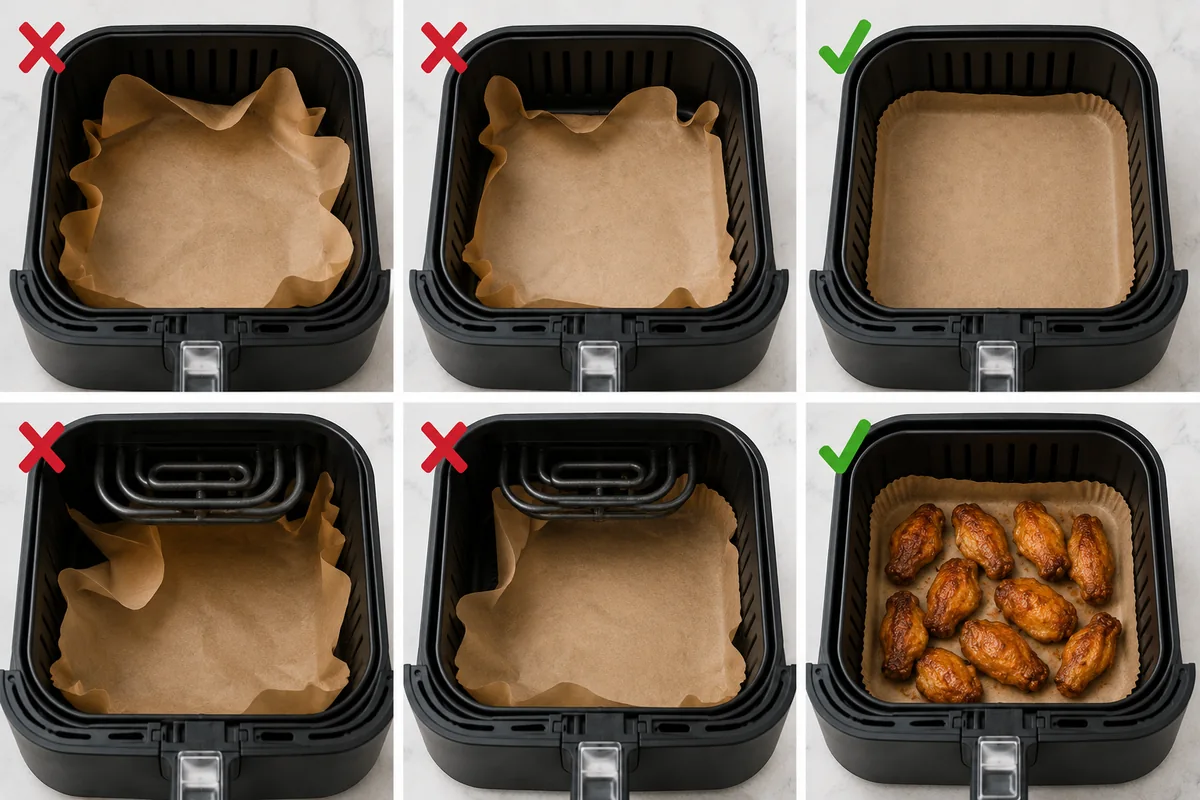
Parchment is light, and the air fryer’s fan moves air across the chamber at high speed. A loose, unweighted sheet can lift, fold, and float straight up into the glowing heating element above the basket, where paper does exactly what paper does near a heat source. This is the single real danger, and it is completely preventable.
Always put the food on top of the parchment so its weight holds the sheet flat. Never run parchment in an empty basket, and never add it during a preheat when there is no food to anchor it. Preheat the empty basket first, then drop in the parchment and lay the food on it immediately. If you ever see a corner the airflow could catch, trim it or fold it under the food before you start. Treat this rule as absolute, not optional.
Perforated Air-Fryer Parchment vs a Plain Sheet
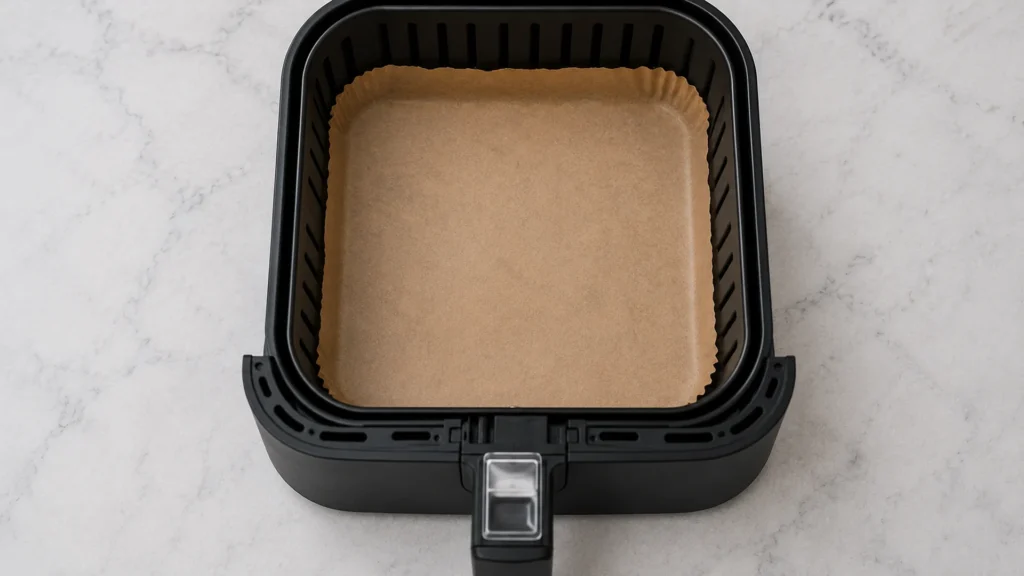
The biggest upgrade you can make is switching from a torn-off sheet of regular parchment to the pre-cut, perforated rounds and squares made for air fryers. The holes are the whole point. An air fryer crisps food by circulating hot air through the perforations in the basket floor; a solid sheet of parchment seals those holes and traps moisture under the food, giving you a soggy bottom and a longer cook. The perforated liners keep air moving through both the basket and the paper, so you get the cleanup benefit without killing the crisp.
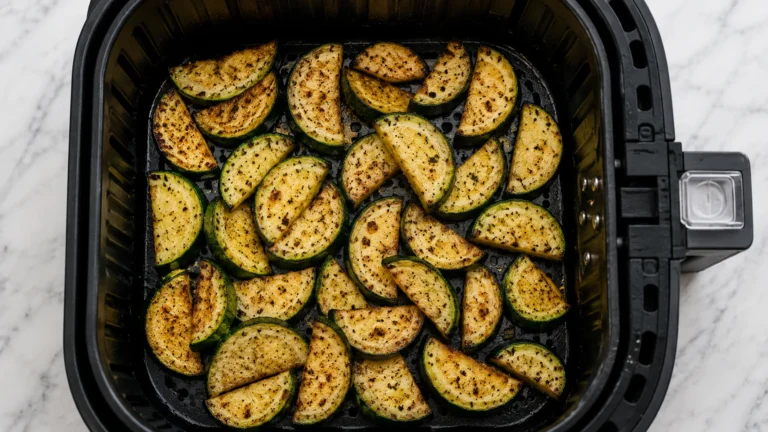
Perforated liners also come pre-sized to common basket shapes, so you skip the cutting and you avoid the temptation to use an oversized sheet whose edges flap up into the airflow. If you only buy one air-fryer accessory, perforated parchment is the most useful. A solid sheet is fine for foods where crisp does not matter, like a delicate fish fillet or a batch of cookies, but for anything you want crunchy, perforated wins. This is the same logic behind cooking a forgiving food like air fryer zucchini on an open surface so the moving air can dry the surface instead of steaming it.
When Parchment Actually Helps
Parchment earns its place on specific foods.
Sticky and breaded foods
Marinated proteins, breaded cutlets, and anything coated in a sticky glaze tend to weld to the basket. A parchment liner lifts them off cleanly and keeps the breading intact instead of leaving half of it stuck to the metal.
Small or crumbly items
Crumbs from breaded shrimp, small vegetables, or anything that sheds fall through the perforations onto the bottom of the unit, where they burn and smoke. Parchment catches the crumbs and saves you a cleanup, while perforated liners still let the air through.
Acidic dishes
Where foil reacts with tomato, citrus, and vinegar, parchment does not. For a lemon-garlic fish or a tomato-based bake, parchment is the safer liner. The cooking team at America’s Test Kitchen reaches the same conclusion in their air-fryer testing: parchment is the friendlier liner for delicate and acidic foods, while the bare basket stays best for maximum crisp.
Baking in the air fryer
For small cakes, muffins, and cookies, a parchment round in a pan keeps the bake from sticking and makes it easy to lift out. Since baked goods cook at lower temperatures (300 to 325 F), you are well under the parchment heat limit.
When to Skip Parchment Entirely
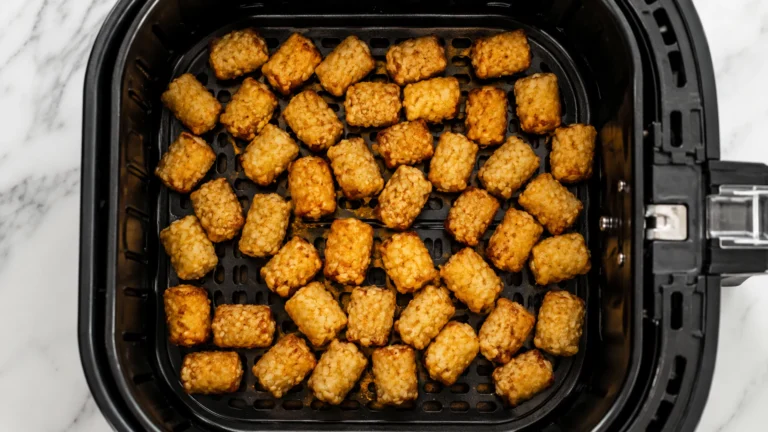
For the crispest possible food, skip the liner. Fries, wings, frozen snacks, and anything where shattering crunch is the goal do best on the bare, open basket so air reaches every surface including the bottom. A batch of reheated fries is the clearest example: on the open basket the bottoms re-crisp, while on a solid parchment sheet they steam soft. Also skip parchment at high temperatures above 400 to 420 F, during any preheat, and any time you cannot weigh it down with food. When in doubt, the bare basket plus a light oil coat is always safe and always crisp.
Parchment vs Foil vs Silicone Liners
Each liner solves a different problem. Here is how they compare for air-fryer use.
| Liner | Strengths | Watch out for |
|---|---|---|
| Perforated parchment | Keeps airflow open, nonstick, acid-safe | Flammable above ~420 F, must be weighted |
| Plain parchment sheet | Catches crumbs, easy cleanup | Blocks airflow, soggy bottoms if full-floor |
| Aluminum foil | Moldable slings, great for sticky sauces | Reacts with acid, blocks airflow if overused |
| Silicone liner | Reusable, nonstick, no flammability | Can block airflow, traps some crisp |
For most cooks the honest ranking is: bare basket for crisp, perforated parchment for sticky or crumbly foods, foil for slings and saucy messes, silicone if you want reusable and do not mind a slightly softer result. None of them is a default; each is a tool for a specific job.
A Real Example: Breaded Chicken on Parchment
Breaded chicken cutlets are the food parchment was made for, because breading sticks to a bare basket and tears off when you flip. Here is the sequence. Preheat the basket empty at 380 F for 3 to 4 minutes. While it heats, set a perforated parchment liner ready, sized so it sits flat with no edges climbing the basket walls. When the preheat ends, drop the liner in and immediately lay the breaded cutlets on top so their weight pins it down. Spray the tops lightly with oil for color. Cook at 380 F for about 12 to 15 minutes, flipping once at the halfway point; the perforations let air reach the bottom so the underside still browns instead of steaming. When the chicken hits 165 F internal, lift the cutlets and the liner out together. The breading stays on the chicken, and the basket needs only a wipe.
Run the same cutlets on a solid sheet and two things change: the bottom browns less because airflow is blocked, and you lose the perforated liner’s main advantage. Run them on a bare basket and the breading tends to weld to the metal and tear when you flip. That trade-off, clean release and intact breading versus slightly less bottom crisp, is exactly when perforated parchment is the right call.
Parchment Myths Worth Clearing Up
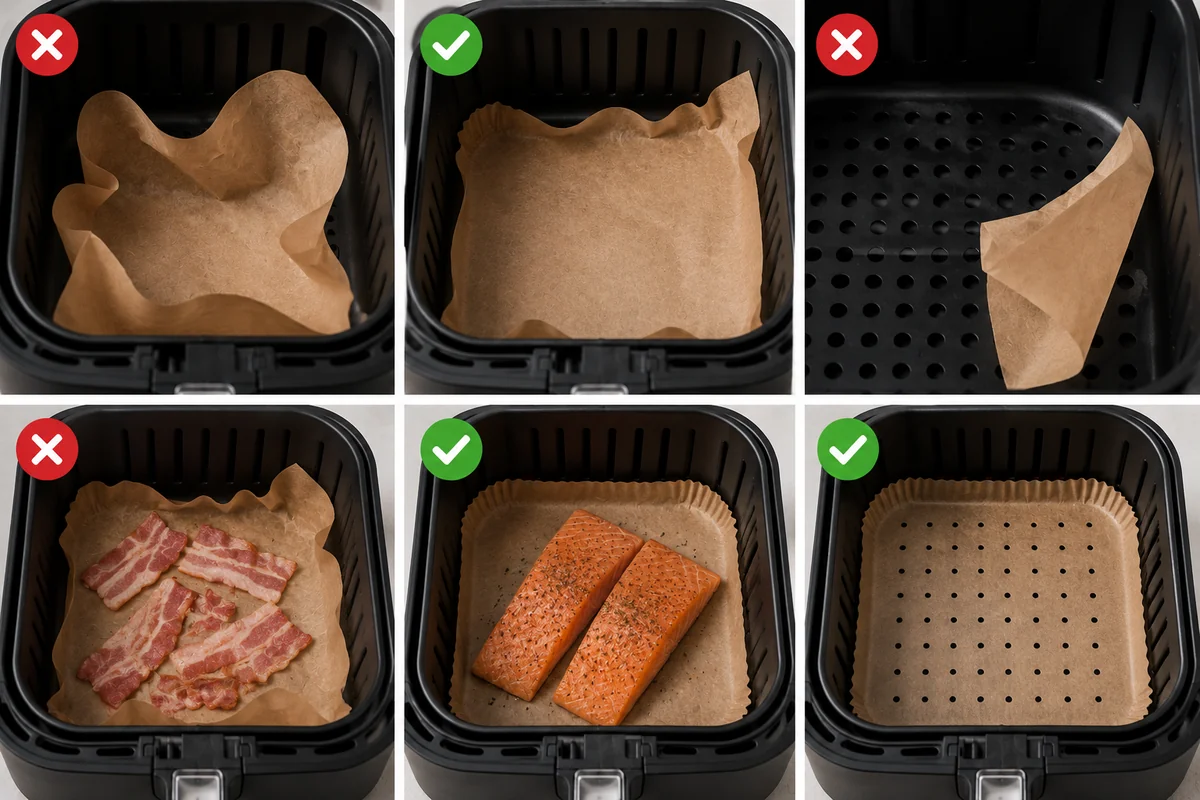
A few beliefs about air-fryer parchment are wrong and worth correcting. First, parchment is not the same as wax paper. Wax paper has a wax coating that melts and smokes at air-fryer temperatures and can transfer wax to your food, so never use wax paper in an air fryer; only true parchment is heat-rated. Second, parchment does not need oil to work; its surface is already nonstick, though a light oil spray still helps food brown. Third, a coffee filter or a paper plate is not a substitute for parchment, since neither is rated for sustained high heat and both can scorch. Fourth, more parchment is not safer; an oversized sheet whose edges flap up is more dangerous than a trimmed one, because those loose edges are exactly what the fan catches.
Basket vs Oven-Style Air Fryers
The parchment rules shift slightly with the machine. In a basket-style air fryer, the heating element sits close above the basket, so weighting the parchment down matters even more, and you should only ever place parchment inside the basket under the food. In an oven-style or toaster-oven air fryer, the chamber is larger and the element is farther from the food, which gives a little more margin, but the same core rules apply: weigh it down, stay under the heat rating, and keep edges from flapping toward the fan. In either machine, a perforated liner sized to your tray is the safest and most effective choice.
Troubleshooting Parchment Problems
If your parchment is browning or smoking, the temperature is too high for the paper, so drop below 400 F or remove the liner. If the food bottom is soggy, you are using a solid sheet that blocks airflow, so switch to a perforated liner or the bare basket. If the parchment keeps lifting, there is not enough food weight on it, so use a smaller sheet and make sure the food sits centered on top. Spreading the food evenly across the liner rather than piling it to one side also keeps the whole sheet pinned down and stops a bare corner from catching the airflow. If food still sticks to perforated parchment, give the surface a light oil spray, which is usually all a stubborn breading needs to release cleanly from the paper.
How to Use Parchment Step by Step
The method is short. Preheat the empty air fryer at your target temperature for 3 to 4 minutes. While it heats, choose a parchment piece that fits inside the basket without the edges climbing the walls; a perforated liner sized to your basket is ideal, or trim a sheet so it sits flat on the floor with no flaps. When the preheat finishes, set the parchment in the basket and immediately place the food on top so its weight pins the paper down. Cook at or below 400 F. When the food is done, lift the food and parchment out together, bin the paper, and the basket needs little more than a wipe. Never reuse a scorched or grease-soaked sheet, and never leave parchment sitting in a hot empty basket between batches.
Frequently Asked Questions
Is parchment paper safe in an air fryer?
Yes, when used correctly. Keep the parchment under the food so its weight holds it down, never run it in an empty basket or during a preheat, and stay at or below the paper’s heat rating of about 420 to 450 F. Used that way, parchment is safe and makes cleanup much easier.
Will parchment paper catch fire in an air fryer?
It can if it lifts into the heating element or if you exceed its temperature rating. Parchment is paper and burns near a glowing element. Prevent it by always weighting the sheet down with food, never preheating with it in the basket, and keeping the temperature under 400 to 420 F.
Should I use perforated or plain parchment in an air fryer?
Perforated air-fryer parchment is better for most foods because the holes let hot air circulate, so the bottom of the food still crisps. A plain solid sheet blocks airflow and gives a soggier bottom, so save it for delicate or non-crisp foods like fish or cookies.
Does parchment paper make food less crispy?
A solid sheet does, because it seals the perforations and traps moisture under the food. Perforated parchment has much less effect since air still moves through it. For the crispest result, use no liner and cook directly on the bare basket.
Can I put parchment paper in the air fryer during preheating?
No. With no food to weigh it down, the fan can blow the parchment into the heating element during the preheat. Always preheat the empty basket first, then add the parchment and food together right before you start the cook.
Is parchment paper or foil better for an air fryer?
It depends on the food. Parchment is better for acidic dishes and delicate or crumbly foods, and perforated liners keep airflow open. Foil is better for moldable slings and sticky sauces but reacts with acid. Both must be weighted down by food and kept off the heating element.
Can I reuse parchment paper in the air fryer?
A clean, lightly used sheet can be reused once or twice for the same kind of food, but discard any parchment that is scorched, brittle, torn, or grease-soaked. Damaged paper is more likely to tear and lift into the element, and burnt residue can smoke or transfer off-flavors to the next batch.
Can I use wax paper instead of parchment in an air fryer?
No. Wax paper has a wax coating that melts and smokes at air-fryer temperatures and can transfer wax onto your food. Only true heat-rated parchment paper is safe in an air fryer. Never substitute wax paper, paper plates, or coffee filters, since none are rated for sustained high heat.
Bottom Line
Parchment paper can go in an air fryer, and it is one of the handiest accessories for sticky, breaded, crumbly, and acidic foods. The rules that keep it safe are short: weigh it down with food, never preheat with it inside, and stay under its 420 to 450 F heat limit. Reach for perforated air-fryer parchment so you keep the airflow that crisps food, save the bare basket for fries and wings where crunch is everything, and treat parchment as a targeted tool rather than a permanent liner. Used with those few precautions in mind, it makes the messiest cooks far easier to clean up while keeping your basket coating in good shape for years.