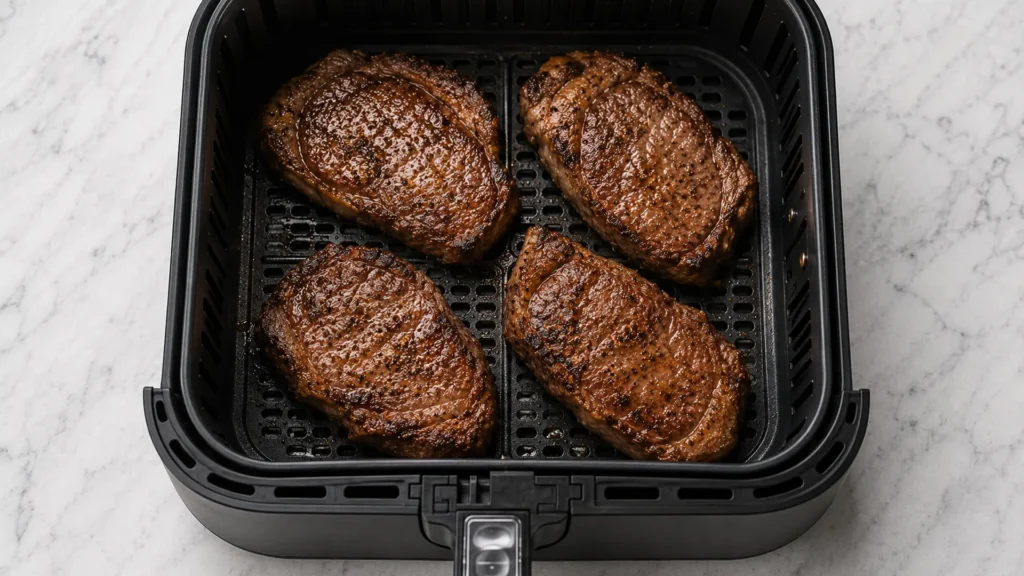
How to cook in an air fryer comes down to three controllable variables: the temperature you set, how much food you load, and how often you turn it. Get those right and the appliance does the rest. An air fryer is a small, high-powered convection oven. A fan drives hot air around the food fast enough to dry and brown the surface the way a deep fryer does, but with a fraction of the oil. Once you stop treating it like a mystery box and start treating it like the convection oven it is, the dial stops being intimidating and the basket becomes the most-used tool on your counter.
This guide covers the whole job: how the machine actually moves heat, what to do before the food goes in, the temperatures and times that work for the foods people cook most, the handful of habits that separate steamy food from shatteringly crisp food, the foods that fail in an air fryer, and how to fix the three problems every owner runs into. No vague hand-waving, just the numbers and the reasons behind them.
How an Air Fryer Moves Heat (and Why It Matters)
Inside the unit is a heating element and a fan, usually right above the basket. The element warms the air, the fan blows that hot air down and around the food at high speed, and the perforated basket lets it circulate underneath as well as on top. That moving heat is the entire trick. Still air insulates food and steams it; moving air strips moisture off the surface and browns it fast. It is the exact same principle as the convection setting on a full-size oven, packed into a small chamber that heats up in a minute or two with almost no preheat.
Because the cavity is small and the heat is concentrated, an air fryer cooks faster and hotter than the same setting in a big oven. A tray of fries that takes 25 minutes in a conventional oven is usually done in 14 to 16. That speed is the appliance’s biggest advantage and the exact reason food scorches the moment you stop watching it during the first week. The fix is simple: set a timer, check early, and you will learn your specific unit within five or six cooks. Every air fryer runs a little hot or a little cold, and only your own batches will tell you which way yours leans.
Before the Food Goes In: Setup and Preheat
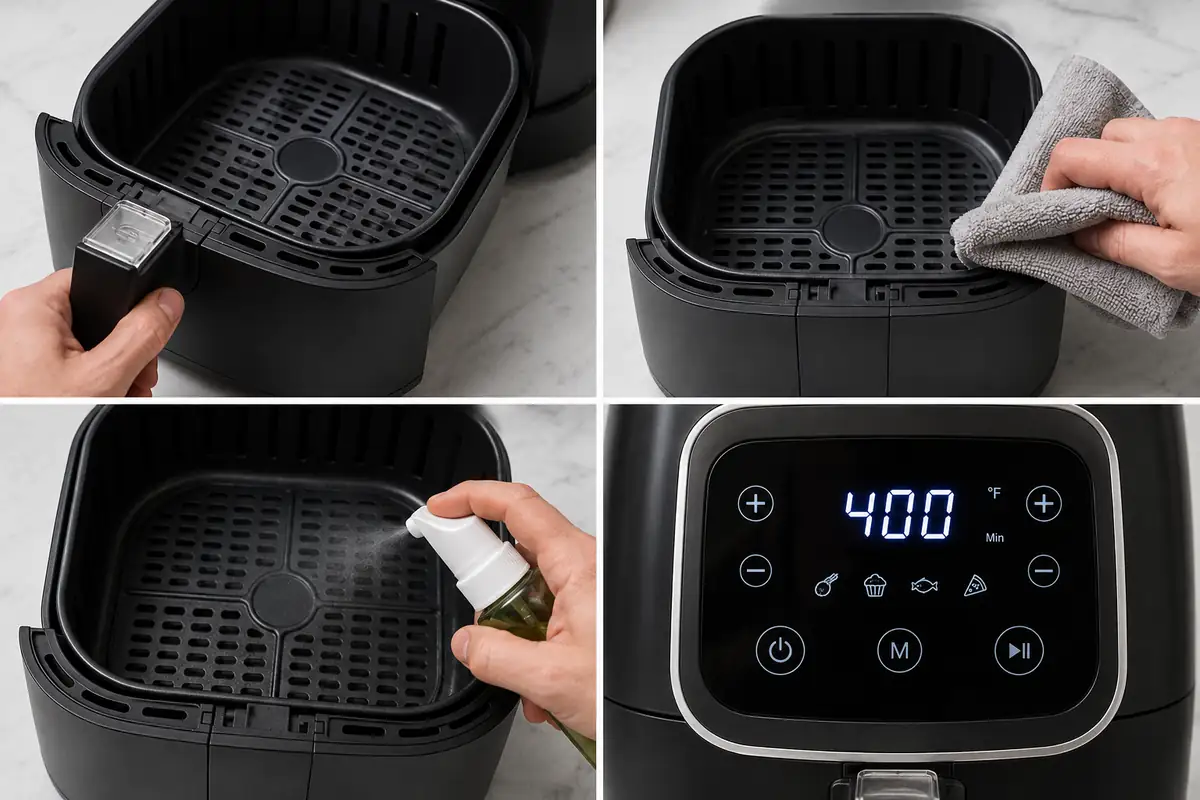
Wash the basket, drawer, and any racks in warm soapy water and dry them fully before the first use. This clears manufacturing residue and the faint plastic smell most new units have. Then set the machine on a flat, heat-safe surface with real clearance. The exhaust vents at the back push out a lot of hot air, so leave at least five inches behind and above the unit and keep it clear of cabinets, curtains, and the wall.
Preheating is worth the two minutes for anything you want crisp. Run the empty machine at your target temperature for 3 to 4 minutes, then load the food. A preheated basket starts browning the surface immediately instead of letting the food sit and steam while the chamber comes up to heat. Skip the preheat only when you are gently reheating soft leftovers, where you do not want an aggressive surface blast. Some newer models preheat fast enough that the manual says you can skip it; trust your own results over the manual here.
Oil: how much and which kind
Most foods need a light coat of oil to crisp and to keep lean items from drying out. A teaspoon to a tablespoon tossed through a basket of vegetables or potatoes is plenty; you are coating surfaces, not frying. Use an oil with a high smoke point, because the chamber regularly runs at 375 to 400 F. Avocado, refined canola, grapeseed, and light olive oil all hold up. Skip extra-virgin olive oil at high heat, since it smokes and turns bitter. Do not use aerosol nonstick sprays with propellants, which can pit and strip the basket coating over time; a refillable pump mister filled with your own oil is the safer move. Battered and reheated foods usually need no added oil at all.
The Time and Temperature Cheat Sheet
This is the single most useful thing to keep near the appliance. These are starting points for fresh food in a single layer. Frozen food usually needs a few extra minutes, and a crowded basket always needs more time. Always confirm meat with an instant-read thermometer rather than the clock.
| Food | Temperature | Time |
|---|---|---|
| Frozen fries | 400 F | 14-18 min, shake twice |
| Fresh cut vegetables | 375 F | 10-15 min, shake once |
| Chicken wings | 380 F | 22-26 min, flip once |
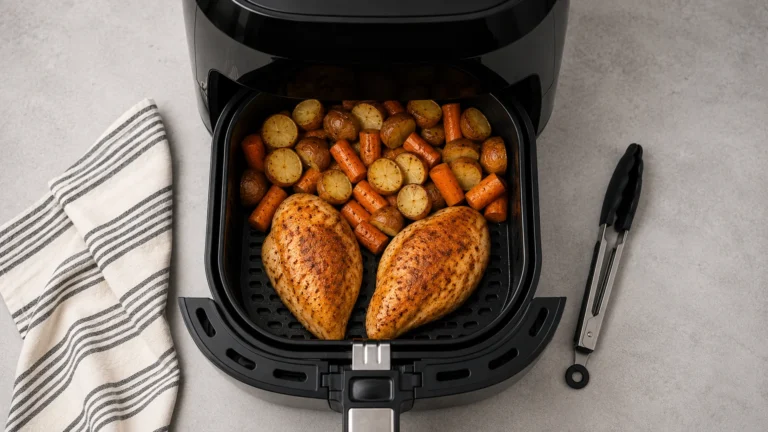
| Boneless chicken breast | 375 F | 16-20 min, flip once (165 F) |
| Salmon fillet | 390 F | 8-11 min (125-130 F) |
| Bacon | 350 F | 8-10 min |
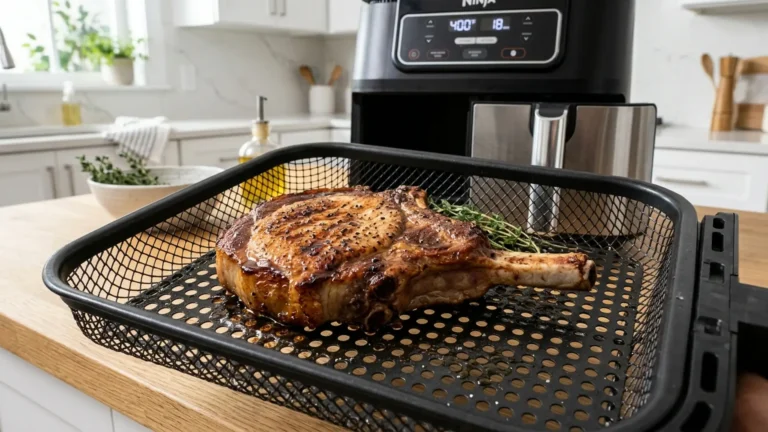
| Steak (1 inch) | 400 F | 10-14 min, flip once |
| Reheating leftovers | 350 F | 3-6 min |
| Baked goods | 300-325 F | varies, check often |
Notice the pattern. High heat (390-400 F) goes to things you want crackly, like fries, wings, frozen snacks, and steak. Medium heat (350-375 F) handles most proteins and vegetables. Low heat (300-325 F) is for delicate baked goods that would scorch on the outside before the middle sets. When in doubt, start lower. You can always add minutes, but you cannot un-burn a wing.
Converting oven and deep-fryer recipes
You do not need air-fryer-specific recipes. To adapt an oven recipe, drop the temperature by about 25 F and cut the time by roughly 20 percent, then check early. To adapt a deep-fryer recipe, set the air fryer about 25 F below the fry temperature and use a similar time. These are starting points, not laws; the small chamber and strong airflow mean you should always check a few minutes before you expect the food to be done.
The Five Habits That Make Food Crisp
The appliance does the work, but these five habits are the difference between pale, steamy results and the crunch you bought it for.
1. Do not crowd the basket
This is the number one mistake. Air fryers crisp by moving hot air over every surface, and a piled-up basket blocks that airflow so the food steams instead of browning. Spread food in a single layer with space between pieces. If you are cooking a lot, work in two batches. It is faster than it sounds and the results are not close. This is exactly why a batch of air-fried tater tots turns golden when spaced out and turns limp when dumped in a heap.
2. Shake or flip partway through
The food touching the basket browns fastest. Shaking small items (fries, vegetables, tots) and flipping larger ones (chicken, steak, fish) halfway through exposes every side to the moving air and gives you even color. For most foods, one shake or flip is enough; for fries and frozen snacks, two is better.
3. Dry the surface first
Surface moisture is the enemy of crisp. Pat proteins dry with a paper towel before seasoning, and dry washed vegetables well. A wet surface spends the first few minutes boiling off water before it can brown, which costs you texture and time.
4. Season for the heat
Dry rubs and spices do great. Wet sauces with sugar (barbecue, teriyaki, honey glazes) burn at high heat, so brush them on in the last few minutes rather than at the start. For sticky glazes, cook the food plain, then toss it in sauce after it comes out.
5. Use a thermometer for meat
The clock is a guide; an instant-read thermometer is the truth. Chicken is done at 165 F, salmon around 125 to 130 F, and steak depends on your target doneness. The USDA safe minimum internal temperature chart is the reference worth bookmarking for poultry, pork, and ground meat. Pulling meat at the right internal temperature beats guessing every time, especially since air fryers vary so much unit to unit.
The Best Foods to Start With
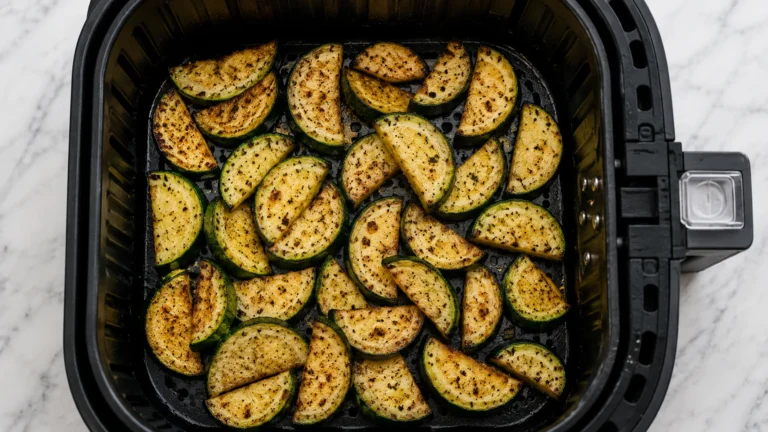
Frozen foods are the easiest win and the best confidence builder, because they are engineered for high, dry heat. Fries, tots, mozzarella sticks, dumplings, and chicken nuggets all come out crisp with no oil and almost no effort. From there, move to fresh vegetables. Broccoli, brussels sprouts, zucchini, and cauliflower roast beautifully with a light coat of oil and a hot basket. If you want a clean, repeatable vegetable result, the method for air fryer zucchini shows how to keep it crisp instead of soggy, which is the usual failure point with watery vegetables.
Proteins are the next step. Chicken wings, drumsticks, salmon, shrimp, and pork chops are all forgiving and fast. Bacon is a revelation in the air fryer because the fat drips away and the strips crisp evenly. Reheating is the underrated superpower: pizza, fried chicken, and fries come back to life far better than in a microwave. America’s Test Kitchen has tested air fryers extensively and reaches the same conclusion, that the appliance shines at small batches of crisp-surfaced food rather than as a do-everything replacement for the oven; you can read their hands-on testing at America’s Test Kitchen.
Foods That Fail in an Air Fryer
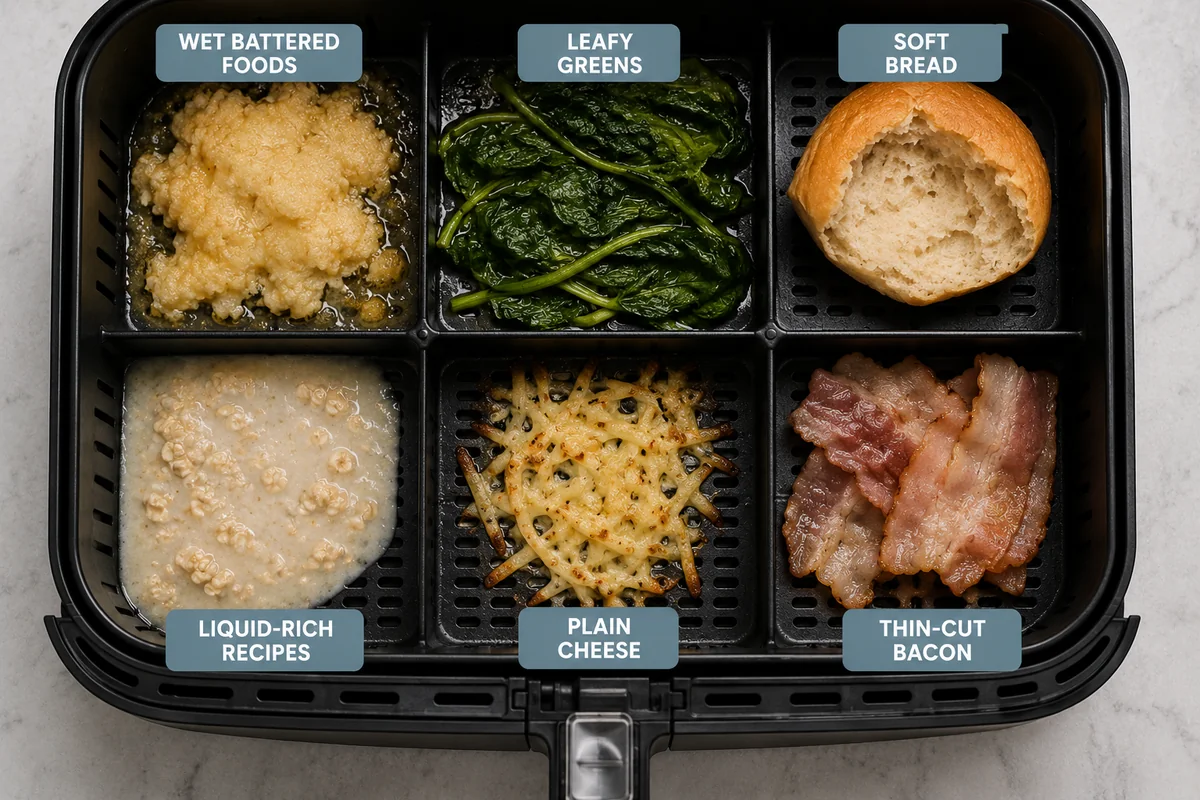
The air fryer is not universal, and knowing its limits saves you a wasted dinner. Wet batters are the classic failure. A beer-battered fish or a loose tempura will drip off and splatter before it can set, because there is no oil bath to flash-fry the coating. If you want crunch on something battered, use a dry breading (flour, egg, breadcrumbs) instead.
Light, loose foods get blown around by the fan. Plain leafy greens, raw rice, and anything weightless will swirl into the heating element. Cheese on its own melts straight through the basket holes into a puddle. Large cakes and delicate quick breads tend to dry out or cook unevenly because the surface sets long before the center, though small portions in a dedicated pan can work. And big roasts simply will not fit or cook evenly in most basket-style units. For those jobs, your oven is still the right tool. The air fryer earns its place on crisp-surfaced, single-layer foods, not on everything.
Fixing the Three Problems Everyone Hits
My food is not crisp
Almost always one of three causes: the basket is crowded, the surface was wet, or there was not enough oil. Cook in a single layer, pat food dry, add a light coat of oil, and bump the temperature up 10 to 15 F for the last few minutes. A quick blast at 400 F at the end crisps the exterior without overcooking the inside.
My air fryer is smoking
White smoke usually means fat is dripping onto the hot element. This is common with bacon, sausages, and fatty cuts. Add a tablespoon of water to the bottom drawer (not the basket) to keep dripping fat from smoking, and clean the unit after greasy cooks. Blue or acrid smoke can mean leftover food residue is burning, so a clean basket fixes it. If you used a high-smoke-point oil and still see smoke, the chamber temperature is likely above your oil’s limit, so switch oils or drop the heat.
The middle is raw but the outside is done
The temperature is too high for the thickness of the food. Drop the heat 25 F and add time so the heat has a chance to reach the center before the surface burns. This is most common with thick chicken breasts and bone-in pieces. Cutting food into more even, slightly smaller pieces also helps the center keep pace with the surface.
Cleaning So It Lasts
Let the basket cool, then wash it in warm soapy water after every greasy cook and at least every few uses otherwise. Most baskets are nonstick, so use a soft sponge, not steel wool, which strips the coating and leads to sticking and smoking down the line. For baked-on grease, soak the basket in hot soapy water for 10 minutes before wiping. Wipe the heating element with a damp cloth (unplugged and cool) when food residue builds up there, since that residue is the usual cause of mystery smoke. A clean machine runs hotter, crisps better, and lasts years longer than a neglected one.
Frequently Asked Questions
Do I need to preheat my air fryer?
For crisp foods, yes. A 3 to 4 minute preheat at your target temperature means the food starts browning the moment it lands instead of steaming while the chamber heats up. Skip the preheat only when gently reheating soft leftovers. A few newer models heat fast enough to skip it, so trust your own results over the manual.
How much oil should I use in an air fryer?
Very little. A teaspoon to a tablespoon tossed through a basket of vegetables or potatoes is enough to crisp the surface. Use a high-smoke-point oil like avocado or refined canola, and avoid aerosol nonstick sprays with propellants, which damage the basket coating. Battered and reheated foods often need no oil at all.
Can I put aluminum foil or parchment paper in an air fryer?
Yes, with care. Both can be used to line the basket, but they must be weighted down by food so the fan does not blow them into the heating element. Never cover the whole basket bottom, because blocking the perforations stops airflow and ruins the crisping. Keep foil away from acidic foods like tomatoes and citrus, which react with it.
Why is my air fryer food soggy?
The three usual causes are a crowded basket, a wet food surface, or too little oil. Cook in a single layer, pat food dry first, add a light coat of oil, and finish with a short blast at 400 F. Frozen foods that have thawed and refrozen also turn soggy, so cook them straight from the freezer.
How do I convert a regular recipe for the air fryer?
For an oven recipe, lower the temperature by about 25 F and cut the time by roughly 20 percent, then check early. For a deep-fryer recipe, set the air fryer about 25 F below the fry temperature and use a similar time. Always check a few minutes before you expect the food to be ready, since the small chamber cooks fast.
Is air frying actually healthier than deep frying?
Yes, for fat content. Air frying uses a teaspoon or two of oil to get a deep-fry-like crisp instead of a quart of oil, which sharply cuts the fat and calories. It is not magic, since the food itself matters, but for fries, wings, and breaded foods it is a clear improvement over a deep fryer with comparable texture.
Bottom Line
Cooking in an air fryer is mostly about respecting three things: keep the basket in a single layer, dry and lightly oil the surface, and turn the food partway through. Preheat for crisp foods, lean on the time and temperature chart as a starting point, and confirm meat with a thermometer rather than the clock. Learn which foods it loves (crisp-surfaced, single-layer items) and which it does not (wet batters, big roasts, loose greens), and the appliance pays for itself in fast, crisp, low-oil meals you actually want to make on a weeknight.