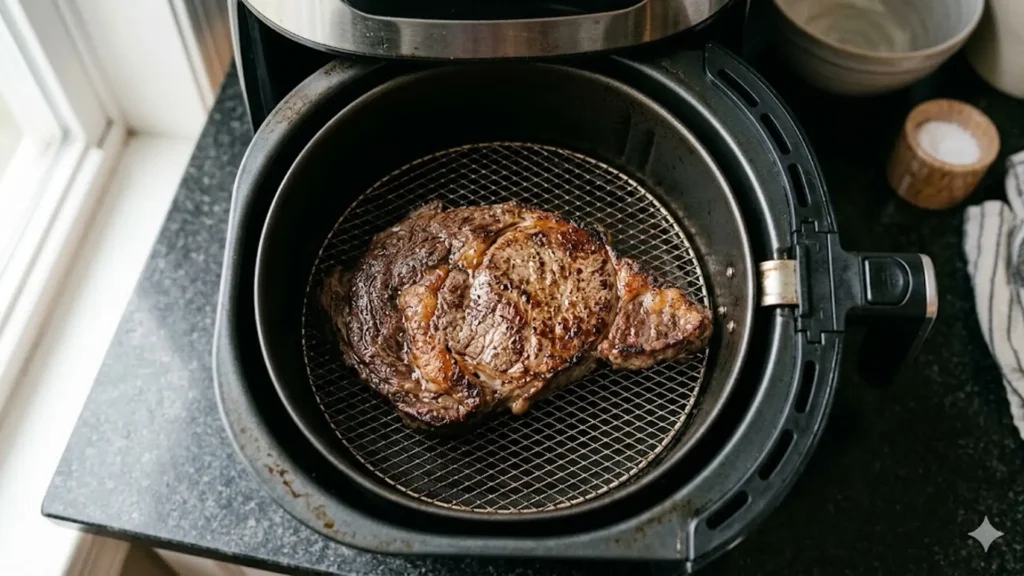
Reheat steak in air fryer the right way and yesterday’s leftover comes back warm, tender, and with a crisp edge, instead of the gray, rubbery puck a microwave produces. The whole trick is gentle heat and patience: bring the steak to room temperature first, run the air fryer at a low 350 degrees Fahrenheit, and pull the meat the moment it hits about 110 to 120 degrees inside, then let it rest. Reheating is not re-cooking, so the goal is to warm the steak through without pushing it past the doneness it already had. Do that and a leftover ribeye tastes almost as good as the night you grilled it.
This guide gives the exact temperatures and times in US units, explains why low and slow beats fast and hot for leftovers, covers how to keep the meat from drying out, lists internal-temperature targets so you do not overshoot, and walks through cuts, food safety, and what to do with the reheated steak. If you have ever been disappointed by tough, dry leftover steak, the method here fixes it.
Why the Air Fryer Beats the Microwave
A microwave heats from the inside out and unevenly, which is exactly wrong for steak. It drives moisture out of the muscle fibers fast, so the meat seizes up, turns gray, and goes tough, often with hot and cold spots in the same bite. The air fryer instead surrounds the steak with moderate moving air that warms it gradually and evenly, much closer to how a low oven would, while the fan keeps the exterior dry enough to recrisp the crust. The result is a steak that warms through without overcooking and keeps the sear it had. The microwave is faster, but for a cut of meat you paid good money for, the few extra minutes in the air fryer are well worth it.
The air fryer also beats a skillet for reheating in one way: it warms the whole steak evenly rather than blasting the side touching the pan while the middle stays cold. A skillet can refresh a crust beautifully, but it is easy to overcook the surface before the center is warm. The air fryer’s all-around heat sidesteps that problem, which is why it has become the go-to for leftover steak.
Step by Step
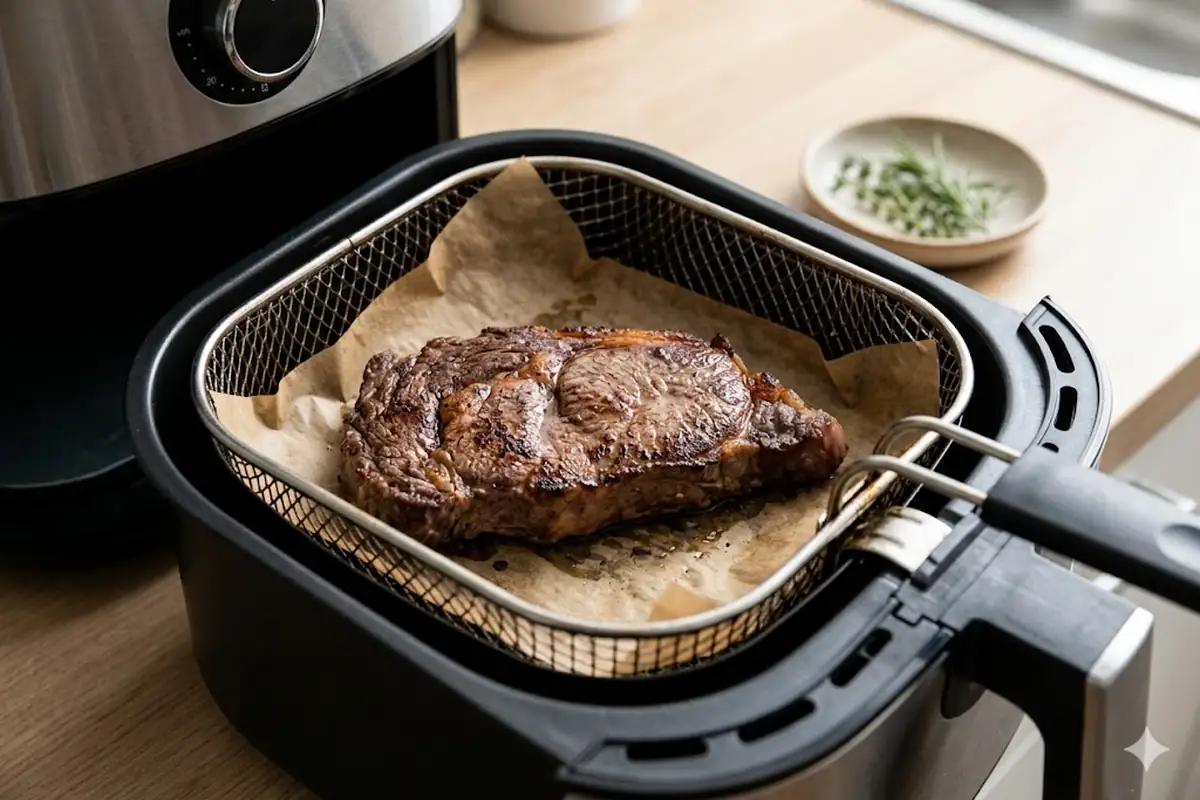
The method is simple but the order matters. First, take the steak out of the fridge and let it sit on the counter for 15 to 20 minutes to take the chill off. A cold center means a longer reheat, which means more time for the outside to overcook. Second, pat the steak dry and rub or spray it with a thin film of oil, or add a small pat of butter on top, to keep the surface from drying and to help the crust come back. Third, preheat the air fryer to 350 degrees Fahrenheit. Fourth, place the steak in the basket in a single layer and warm it for about 3 to 5 minutes, flipping halfway, checking with a thermometer. Pull it the moment the center reads your target, then let it rest a few minutes before slicing. Resting lets the warmed juices settle back into the meat instead of running out onto the plate.
Temperature and Time by Thickness
Time depends almost entirely on thickness, since a thick steak has more cold center to warm. Use these as starting points and trust the thermometer over the clock.
| Steak thickness | Temperature | Time | Flip |
|---|---|---|---|
| Thin, under 1 inch | 350 F | 3-4 min | At halfway |
| Medium, 1 to 1.5 inch | 350 F | 4-6 min | At halfway |
| Thick, over 1.5 inch | 325-350 F | 6-8 min | At halfway |
| Sliced or cubed pieces | 350 F | 2-3 min | Shake once |
Internal Temperature: The Number That Matters
Reheating is about hitting a warm-through temperature, not a doneness temperature, because the steak is already cooked. Aim to pull the steak when the center reads about 110 to 120 degrees Fahrenheit, which is warm and pleasant to eat without pushing the meat further along the doneness scale. If you like your leftover hotter, you can go to 125 or 130, but the higher you climb the more you risk turning a medium-rare steak into a well-done one. A medium-rare steak was cooked to around 130 to 135 degrees originally, so any reheat that overshoots that range cooks it further and toughens it. The single biggest mistake people make is treating reheating like cooking and blasting the steak to a high temperature, which is exactly how leftovers go dry.
How to Keep It From Drying Out
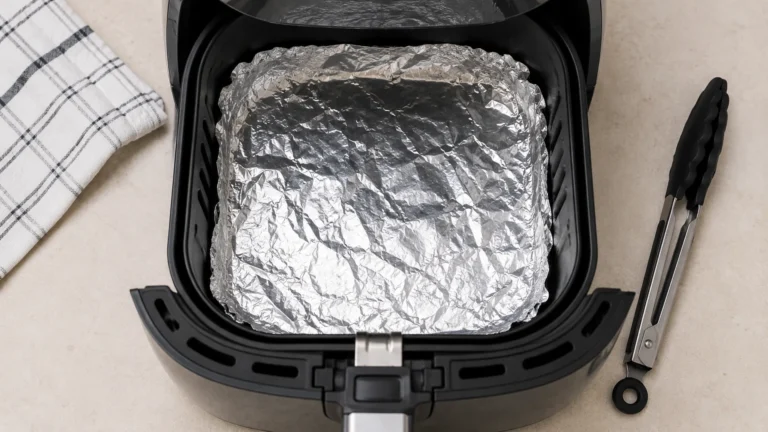
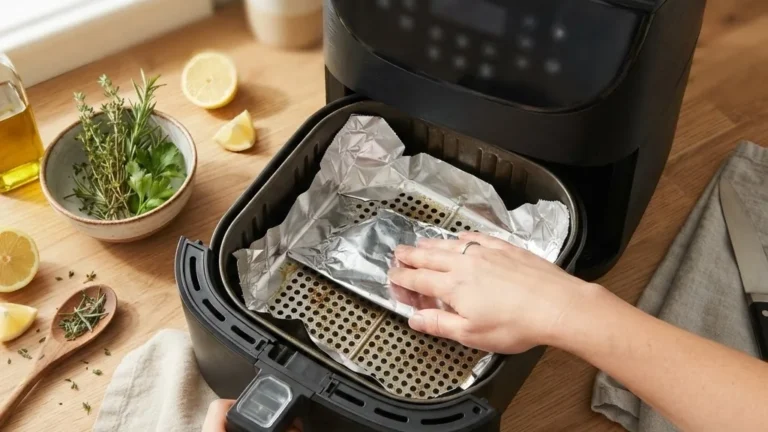
Moisture loss is the enemy, and a few habits prevent it. The room-temperature rest before reheating shortens the time in the basket, which means less moisture driven off. A thin coat of oil or a pat of butter on top adds fat back to the surface and helps it stay moist and crisp. Loosely tenting the steak with foil for part of the reheat traps a little steam and slows surface drying, useful for very lean cuts, though it softens the crust, so leave the foil off for the last minute if you want the sear back. And the most important habit of all is pulling the steak early and resting it, because carryover heat keeps warming the center for a minute or two after it leaves the basket. Stop short of your target and let the rest finish the job.
Different Cuts Reheat Differently
Fatty, well-marbled cuts like ribeye and strip reheat best because the fat keeps them moist and forgiving. Lean cuts like filet, sirloin, and flank are less forgiving and dry out faster, so treat them gently: lower temperature, shorter time, and consider the foil tent. Thin cuts and already-sliced steak warm very fast and need close watching, since a thin piece can overshoot in under a minute. If you know you will have leftovers, slightly undercooking the steak the first time gives you more room to reheat it without overcooking, a trick worth remembering for cuts you plan to eat over two days.
Tougher cuts that were cooked low and slow, such as a braised chuck or a tri-tip, reheat differently from a quick-seared steak. These benefit from a touch of liquid, a spoonful of leftover juices or broth under a foil tent, which steams them gently back to tenderness rather than drying them out. Then, if you want a crisp edge, finish uncovered for a minute. Knowing whether your leftover was cooked fast and rare or slow and well-done tells you whether to chase a crisp crust or a moist, steamy reheat, and steering the method to the cut is what keeps every kind of leftover steak worth eating.
Bringing Back the Sear
Warming the steak through is only half the job; the other half is reviving the crust so the leftover does not feel limp. The air fryer is well suited to this because the same moving air that warms the meat also dries and crisps the exterior. To maximize the sear, leave any foil off, pat the surface dry before it goes in, and give it the last minute or two at the top of the temperature range, around 375 degrees, to brown the outside without overcooking the inside. A light brush of oil helps the surface crisp rather than steam. If the original crust was heavily seasoned, it usually comes back nicely on its own; if it was plain, a quick sprinkle of salt and a knob of butter as it finishes adds flavor and sheen. The aim is a steak that not only is warm in the center but also has that appetizing browned exterior, which is exactly what a microwave can never deliver.
Reheating Steak From Frozen
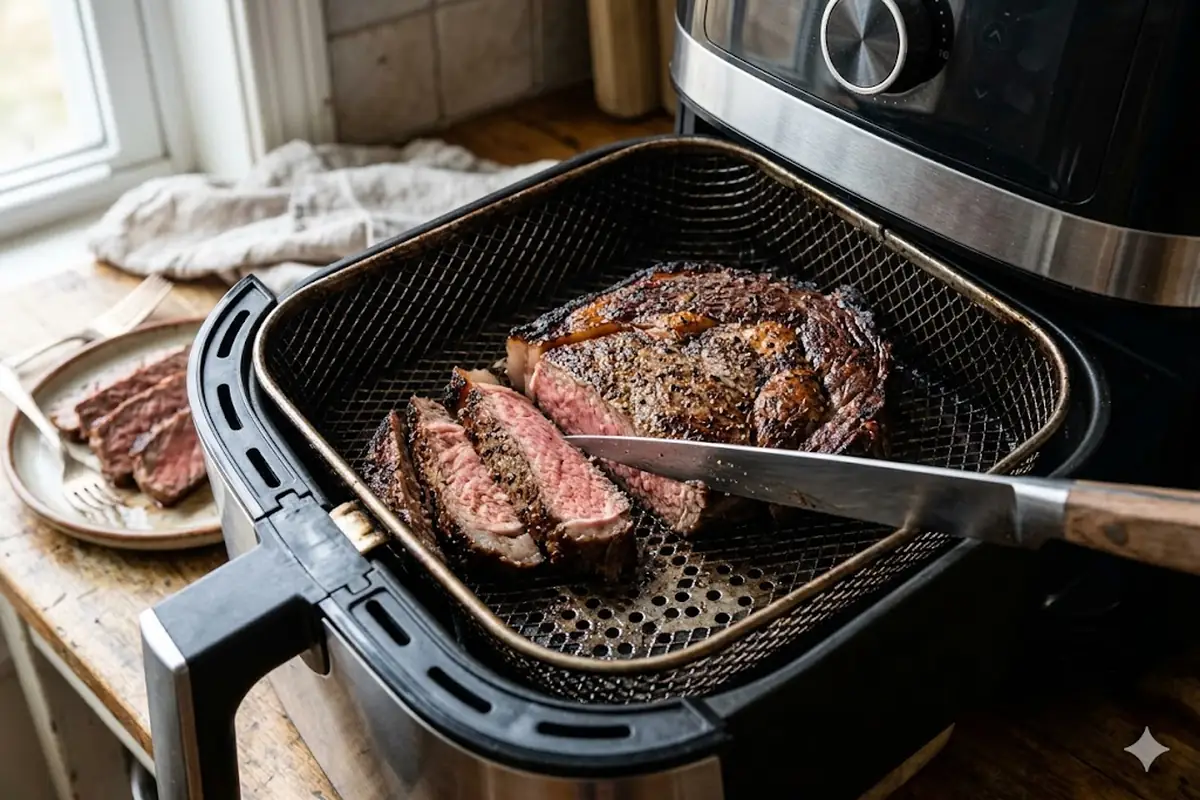
If your leftover steak is frozen rather than refrigerated, the best result comes from thawing it in the fridge overnight first, then reheating as described above. Thawed steak warms evenly and stays tender. If you are in a hurry and must go from frozen, use a lower temperature, around 300 to 325 degrees, and a longer time, checking often, so the outside does not overcook while the frozen center catches up. Even then, expect a slightly less even result than a properly thawed steak. A foil tent helps here, trapping gentle steam to thaw and warm the center before you finish uncovered for the crust. Frozen reheating is a compromise, so when you can plan ahead, move the steak to the fridge the night before.
Common Mistakes to Avoid
The mistakes that ruin reheated steak are predictable. The first is using too high a temperature in the name of speed, which cooks the meat further and dries it out; keep it low at 350. The second is skipping the thermometer and guessing, which leads to either a cold center or an overcooked one; a cheap instant-read thermometer solves both. The third is reheating straight from a cold fridge, which lengthens the cook and overcooks the exterior; let it sit out 15 to 20 minutes first. The fourth is forgetting to rest the steak, so the juices spill onto the cutting board instead of staying in the meat. And the fifth is overcrowding the basket with several steaks at once, which blocks airflow and warms them unevenly; reheat in a single layer and work in batches if needed.
Reheating Several Steaks at Once
When you are warming more than one steak, the single-layer rule still applies. Crowding the basket means the moving air cannot reach every surface, so some pieces warm faster than others and none crisp well. Arrange the steaks in one layer without overlapping, even if that means a second batch, and hold the first batch loosely tented in foil while the second warms. Because reheating is quick, two small batches add only a few minutes and give a far better result than one crowded basket. If the steaks are different thicknesses, group them by size or pull the thinner ones earlier, since a thin steak warms through well before a thick one. Matching the batch to the basket is the same discipline that governs all air-fryer cooking.
Food Safety
There is a real tension between food safety and steak quality. Standard public guidance recommends reheating leftovers to an internal temperature of 165 degrees Fahrenheit to be fully safe, which for a steak means cooking it well past medium-rare and accepting a firmer, drier result. For steak that was cooked, cooled, and stored properly in the fridge within two hours and eaten within three to four days, many people reheat to a lower, more enjoyable warm-through temperature and accept that trade-off, but it is your call to make with the safety guidance in mind. Always store leftover steak in a shallow airtight container in the fridge, eat it within three to four days, and when in doubt, reheat hotter. For the science of meat doneness and reheating, America’s Test Kitchen is a reliable resource, and Consumer Reports covers food storage and kitchen safety as well.
What to Do With Reheated Steak
Reheated steak shines in dishes as much as on its own. Slice it thin against the grain for steak tacos, fajitas, or a grain bowl, where a little less than perfect tenderness disappears into the dish. Slicing against the grain shortens the muscle fibers and makes even a slightly firmer leftover taste tender, which is a useful trick for lean cuts you reheated a touch too far. Fold it into a breakfast hash with crispy potatoes, layer it into a quesadilla or a sandwich with melted cheese, or pile it on a salad for a fast lunch. Leftover steak also makes a quick stir-fry: warm the sliced meat for the last minute alongside vegetables so it does not overcook. Pairing it with another quick air-fryer side keeps everything in one appliance, so you can warm the steak and then run a batch of crispy potatoes using our guide to frozen diced potatoes in air fryer, or finish with a quick round of frozen fries for a steak-and-fries plate. The air fryer makes the whole meal, not just the meat.
Frequently Asked Questions
What temperature should I use to reheat steak in an air fryer?
Use a low 350 degrees Fahrenheit, or 325 for very thick cuts. Low heat warms the steak through gently without overcooking it, which is the key to keeping it tender. Avoid high temperatures, which cook the meat further and dry it out, turning a medium-rare steak tough.
How long does it take to reheat steak in an air fryer?
About 3 to 6 minutes depending on thickness, flipping halfway. Thin steaks under an inch take 3 to 4 minutes, medium steaks 4 to 6 minutes, and thick steaks over an inch and a half take 6 to 8 minutes at a slightly lower temperature. Always check with a thermometer rather than trusting the clock.
What internal temperature should reheated steak reach?
For the most tender result, pull the steak when the center reads about 110 to 120 degrees Fahrenheit, which is warm without cooking it further. For full food safety, the USDA recommends reheating leftovers to 165 degrees, though that will push the steak past medium-rare and make it firmer and drier.
How do I keep reheated steak from drying out?
Bring it to room temperature first, coat it lightly with oil or top it with a pat of butter, use low heat, and pull it early so carryover heat finishes the job. A loose foil tent for part of the reheat traps a little steam and helps lean cuts stay moist; remove it for the last minute to bring back the crust.
Should I let the steak rest after reheating?
Yes. Let it rest a few minutes after it comes out of the basket so the warmed juices settle back into the meat instead of running out when you slice it. Resting also lets carryover heat even out the temperature, which is why you pull the steak a little before your target.
Can I reheat steak straight from the fridge?
You can, but letting it sit at room temperature for 15 to 20 minutes first gives a better result. A cold center takes longer to warm, which means more time in the basket and more chance the outside overcooks and dries. Taking the chill off shortens the reheat and keeps the steak more even.
Bottom Line
To reheat steak in air fryer without ruining it, treat the job as warming, not cooking. Let the steak come to room temperature, oil it lightly, run the air fryer at a low 350 degrees, and pull the meat at about 110 to 120 degrees internal before resting it a few minutes. Lean and thin cuts need extra care and a watchful eye, fatty cuts are forgiving, and a thermometer beats the clock every time. Weigh the food-safety guidance against the texture you want, and you will turn leftover steak into a meal almost as good as the first night, with a crisp edge no microwave can match.