Can you put aluminum foil in an air fryer? Yes, you can, as long as you follow three simple rules: keep it away from the heating element, weigh it down so it cannot blow around, and never wrap it over anything acidic. Place it well and foil makes cleanup easier and keeps sticky food from welding itself to the basket. Place it badly and a loose sheet can blow up into the element, which is a real fire risk. So the answer is yes, with a few conditions that take about ten seconds to get right.
This guide covers exactly how foil behaves inside an air fryer, the three safety rules in plain detail, the acidic-food problem most people have never heard of, where foil should and should not go in basket and oven-style models, and the times a different liner is the smarter call. Get these right and foil becomes a handy tool rather than a risk.
The Short Answer
Foil is safe in the vast majority of air fryers when it is secured and kept clear of the heating element. The two real dangers are loose foil getting sucked up by the fan into the glowing element, and acidic foods reacting with the aluminum. Avoid those two situations and you are fine. The one exception is a small number of manufacturers who specifically tell you not to use foil, usually on models with an exposed bottom element, so a thirty-second check of your manual settles any doubt before you start.
Why Placement Matters: Airflow and the Element
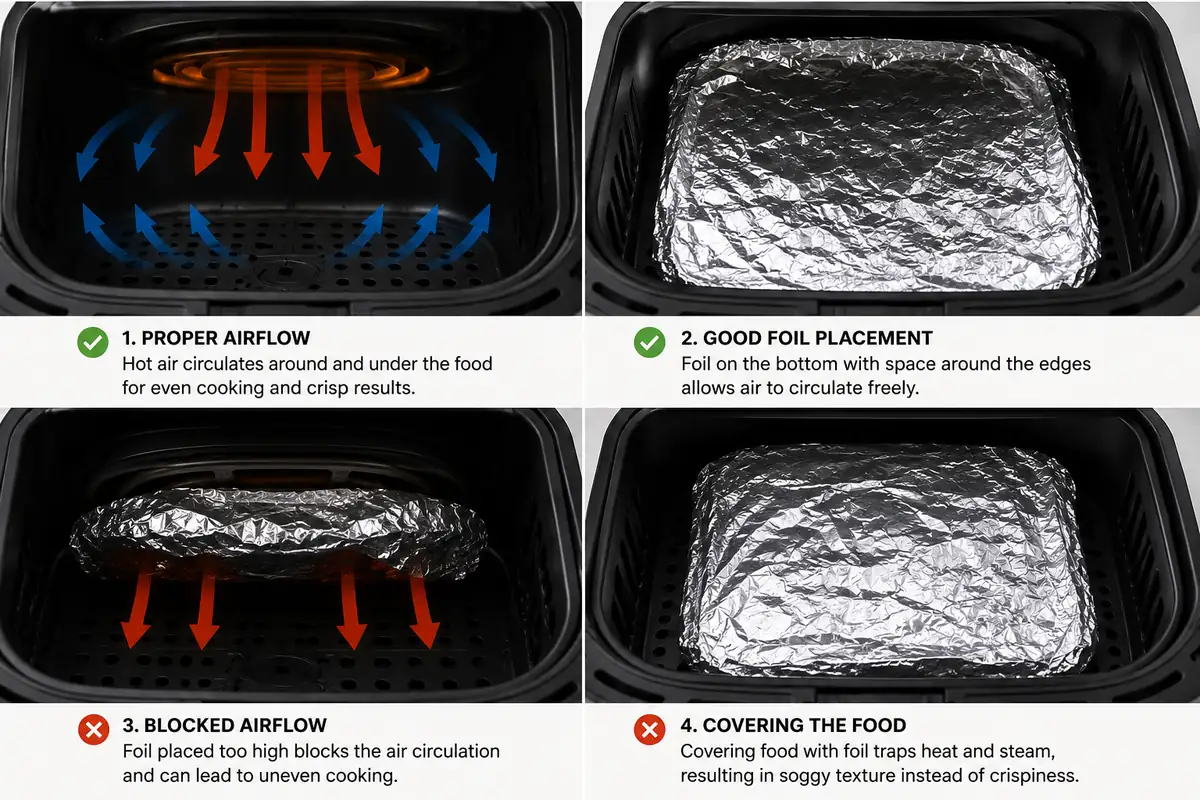
An air fryer crisps food by blasting hot air around it with a powerful fan, and that airflow is the whole point of the machine. Anything that blocks the air, including a sheet of foil spread across the entire basket, stops the circulation and leaves food steamed and pale instead of crisp. So the first principle is that foil should never cover the perforated holes in the bottom of the basket completely. If you understand how the appliance moves air, the foil rules make intuitive sense; if you are still learning the basics, our guide on how to use an air fryer explains the airflow that everything here depends on.
The second principle is about the heating element, which sits at the top of most basket-style air fryers. A loose piece of foil is light enough for the fan to lift it up toward that element, where it can scorch, spark, or catch. This is the single most important safety point, and it is also the easiest to manage, as the next section explains.
The Three Safety Rules
Rule 1: Weigh the foil down with food
Never run the air fryer with an empty piece of foil inside. Always place food on top of the foil before you turn the machine on, so the weight holds it flat against the basket. Loose foil with nothing on it is exactly what gets lifted into the element. If you are preheating, add the foil and food together, never the foil alone in an empty, preheating basket.
Rule 2: Keep foil clear of the heating element
Leave plenty of room between the top of your foil and the element above. Do not build a tall foil tent or let edges curl upward. A low, flat piece or a sealed packet sitting in the bottom of the basket is ideal. The more clearance you leave above the food, the safer you are.
Rule 3: Do not block the airflow
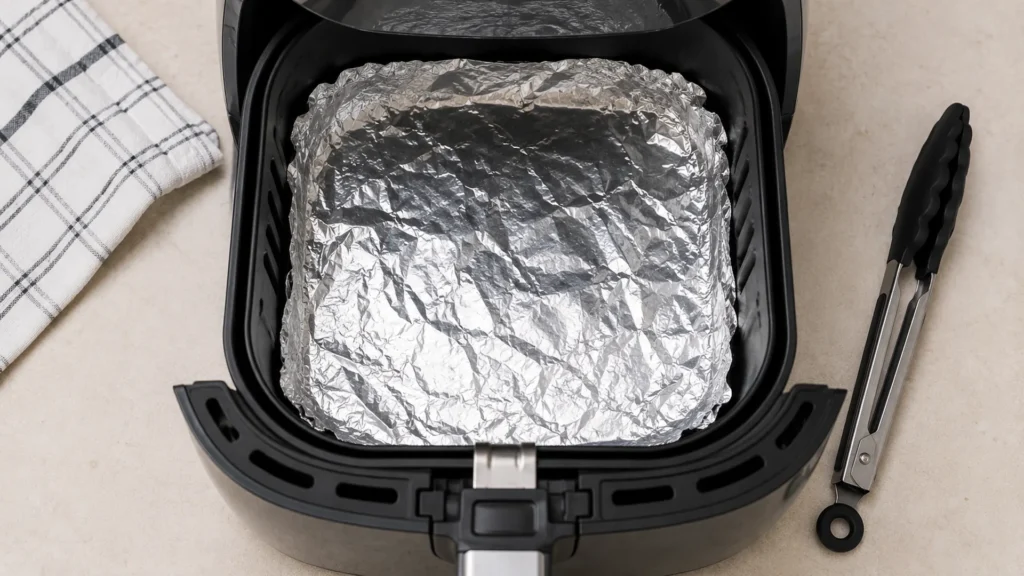
Use a piece of foil smaller than the basket so air can still move around the edges, or poke a few holes in it. Covering every perforation defeats the purpose of the appliance and gives you soft, disappointing food. Think of foil as a small tray under the food, not a full lining of the basket.
| Do | Do not |
|---|---|
| Place food on the foil to weigh it down | Run foil in an empty basket |
| Use a piece smaller than the basket | Line the whole basket and cover the holes |
| Keep it low, well below the element | Build a tall tent near the element |
| Use it for sticky or drippy foods | Wrap acidic foods like tomatoes or citrus |
The Acidic Food Problem
One rule trips up almost everyone: do not let foil touch acidic foods. Ingredients high in acid, such as tomatoes, citrus, vinegar-based marinades, and pickled items, react with aluminum. The acid breaks down the metal surface and a small amount of aluminum can leach into the food, leaving a metallic taste and pitting the foil. For an occasional meal the amount is small, but it is easy to avoid entirely, and dietary aluminum is something nutrition researchers suggest keeping modest over time. If you are cooking anything saucy, lemony, or marinated in vinegar, reach for parchment instead, which does not react.
How Much Aluminum Really Ends Up in Your Food
It is worth putting the health worry in perspective rather than just waving it away. Most foods you cook in foil are not very acidic, and with those the transfer of aluminum is tiny, far below the weekly intake that regulators consider tolerable. The amount climbs when three things stack up at once: high acidity, high heat, and long contact time. A lemon-and-tomato fish fillet sealed in foil for forty minutes is the worst case; a dry chicken thigh resting on foil for fifteen minutes is close to nothing. Salt and spices rubbed straight onto the foil can also speed up pitting. The practical takeaway is simple enough that you do not need to count milligrams: cook acidic and marinated food on parchment or bare, save foil for dry and fatty foods, and you sidestep the issue without thinking about it again. People who cook in foil daily, or who have specific medical guidance about aluminum, can lean on parchment and silicone full time with no downside.
Foil in Basket-Style vs Oven-Style Air Fryers
Where the heating element sits changes how careful you need to be. In a basket-style air fryer, the element is at the top, so the danger is foil being lifted up into it; keeping foil low and weighted handles that. In a toaster-oven-style air fryer with racks, you have more room and can place foil on a lower rack as a drip tray, well away from the top element. A few oven-style models have a bottom heating element, and those are the ones most likely to warn against foil in the manual, because foil resting on a bottom element is a real hazard. Always match your habits to where your element actually is.
What Different Brands Say
Manufacturer guidance is not identical, which is why the manual beats any blog. Ninja and Cosori, two of the most common basket-style brands, generally allow foil as long as it is weighted and clear of the element, the same advice in this guide. Instant and several toaster-oven-style units say much the same for their rack models. The brands that push back tend to be those with an exposed or bottom-mounted element, where a stray piece of foil has nowhere safe to sit. If your manual is long gone, the maker’s website usually has a care or FAQ page, and when the instructions and a recipe disagree, follow the instructions. This is also a good moment to confirm what oils and accessories your specific model approves, since the same care page that covers foil usually covers those too. If you are still learning your machine’s quirks, a hearty recipe like air fryer lamb chops is a forgiving way to test how your model handles a foil drip layer under fatty food.
When Foil Actually Helps
Used correctly, foil earns its place. It shines for the messy, sticky, and drippy jobs where the basket is annoying to clean.
Easier cleanup
A small piece of foil under marinated or sauced food catches the drips and crumbs, so you lift it out and toss it instead of scrubbing. This is the most popular reason home cooks reach for it, and it is a legitimately good one for foods like saucy wings or sticky glazed pork.
Foil packets
Sealing food in a loose foil packet steams it gently while the outside still gets some air-fryer heat, which is great for fish, delicate vegetables, or a quick all-in-one dinner. Keep the packet low and do not overfill it, and remember that a sealed packet trades some crispness for tenderness and easy cleanup.
Stopping sticking and over-browning
Sticky foods like cheese-topped items or anything glazed can fuse to the basket; a foil base prevents that. Foil can also shield a part of the food that is browning too fast, such as the tips of chicken wings, by laying a small piece over just that spot late in the cook. For a hands-on example, sticky, drippy crispy pork belly bites are exactly the kind of recipe where a foil base saves you a scrubbing session.
When to Skip Foil
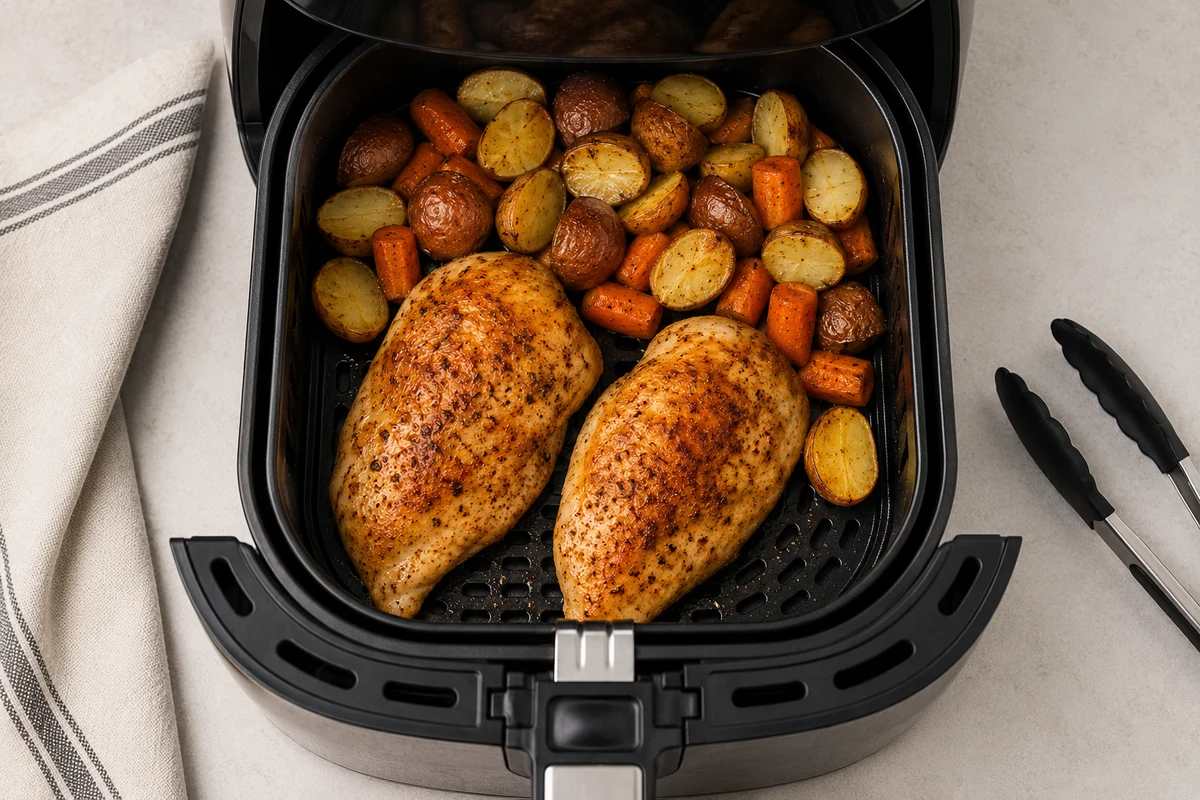
Foil is the wrong choice more often than people think. Skip it any time crispness is the goal, because even well-placed foil reduces the air contact that crisps the bottom of the food; fries, wings, and breaded items are better straight on the basket. Skip it for acidic foods, as covered above. And skip it for very light foods like a single piece of bread or loose greens, where there is nothing heavy to hold the foil down. In all of those cases, either go bare or choose a different liner.
Foil vs Parchment vs Silicone Liners
Foil is not your only option, and the best choice depends on the food.
| Liner | Best for | Watch out for |
|---|---|---|
| Aluminum foil | Drippy, sticky, glazed food; packets | Acidic foods; blowing into the element |
| Perforated parchment | Acidic foods; easy cleanup with airflow | Never preheat empty; weigh it down |
| Silicone liner | Reusable, easy to clean | Blocks some airflow, less crisp |
| No liner | Maximum crisp on fries and wings | More scrubbing for sticky foods |
Perforated parchment is the best all-around partner to foil: it handles the acidic foods foil cannot and keeps airflow through its holes. Like foil, it must never go in an empty preheating basket, since a loose sheet will fly straight up. Whatever you use, the airflow-and-weight rules are the same.
Step by Step: Using Foil Safely
- Check your air fryer manual for any specific foil warning, especially on bottom-element models.
- Tear a piece of foil smaller than the basket so air can flow around the edges.
- Set the foil in the bottom of the basket and place your food on top to weigh it down.
- Make sure no edges curl up toward the element and nothing acidic touches the foil.
- Cook as normal, and if you preheat, add the foil and food together rather than the foil alone.
- Let everything cool, then lift the foil out with the mess and discard it.
Troubleshooting
- Food came out soggy. The foil blocked the airflow. Use a smaller piece, poke holes, or skip foil for anything that needs to crisp.
- The foil blew around. It was not weighted. Always put food on top before turning the machine on, and never run foil in an empty basket.
- Metallic taste or pitted foil. The food was acidic. Switch to parchment for tomatoes, citrus, and vinegar marinades.
- Manual says no foil. Trust it. Use perforated parchment or a silicone liner instead, or cook with no liner at all.
- Foil stuck to the food. It was too thin or the food too sticky. Use a slightly heavier piece and a light spray of oil between the foil and the food.
A Few Practical Touches
Once foil is part of your routine, small habits make it reliable. Fold the edges of a packet loosely rather than crimping them tight, so steam can escape and the food does not turn to mush. Reuse a clean piece only if it is not greasy or torn. And remember that foil is a cleanup and tenderness tool, not a crisping tool, so the moment you want crunch, take it out. For deeper, testing-backed appliance technique, America’s Test Kitchen is a solid reference, and Consumer Reports independently tests air fryers if you are weighing a new model. The same airflow logic that governs foil also makes the air fryer great for plant-based cooking, so a batch of vegan air fryer dishes follows all the same rules.
Frequently Asked Questions
Can you put aluminum foil in the bottom of an air fryer?
You can place a small piece of foil in the bottom of the basket with food on top to weigh it down, but do not line the entire bottom, since that blocks the airflow the appliance needs. On some toaster-oven-style models, avoid resting foil directly on a bottom heating element, and check your manual first.
Is it safe to use foil in an air fryer?
Yes, foil is safe in most air fryers when you keep it away from the heating element, weigh it down with food so it cannot blow around, and keep it off acidic ingredients. A small number of manufacturers advise against it, so check your manual to be sure.
Why should you not put foil in an air fryer with acidic food?
Acidic foods like tomatoes, citrus, and vinegar marinades react with aluminum, which breaks down the foil and can leach a small amount of aluminum into the food, leaving a metallic taste. Use perforated parchment for anything saucy, lemony, or vinegar-based instead.
Will foil stop my food from getting crispy?
It can. Foil reduces the air contact on the side it covers, so food crisps less there. For maximum crunch on fries, wings, and breaded items, cook them directly on the basket. Save foil for drippy, sticky, or delicate foods where easy cleanup matters more than crisp.
Can you use foil instead of parchment in an air fryer?
Often yes, but they suit different jobs. Foil is best for drippy and sticky foods and for packets, while perforated parchment is better for acidic foods and keeps more airflow. Both must be weighed down by food and never placed in an empty preheating basket.
Can you preheat an air fryer with foil in it?
Only if food is already on the foil to hold it down. Never preheat with a loose, empty piece of foil inside, because the fan can lift it into the heating element and create a fire hazard. Add the foil and food together if you preheat.
Bottom Line
So, can you put aluminum foil in an air fryer? Yes, and it is genuinely useful for sticky, drippy, and delicate foods, as long as you respect three rules: weigh it down with food, keep it clear of the heating element, and never wrap acidic ingredients. Use a piece smaller than the basket so air still flows, reach for parchment when the food is acidic, and skip foil entirely when you want maximum crunch. Follow those simple habits and foil goes from a hidden hazard to a handy way to keep your air fryer clean.