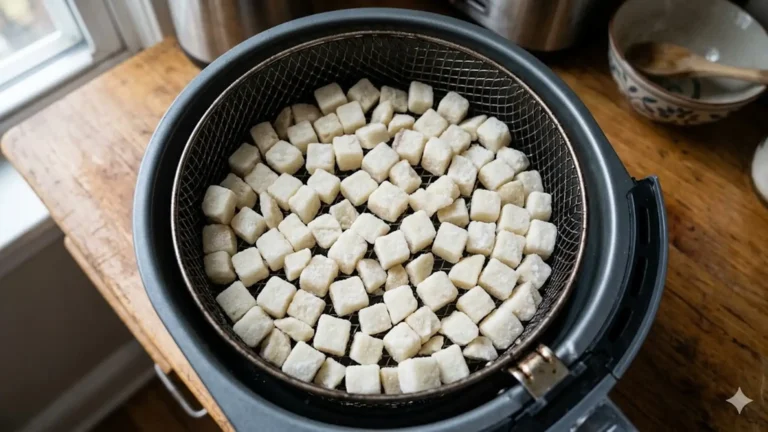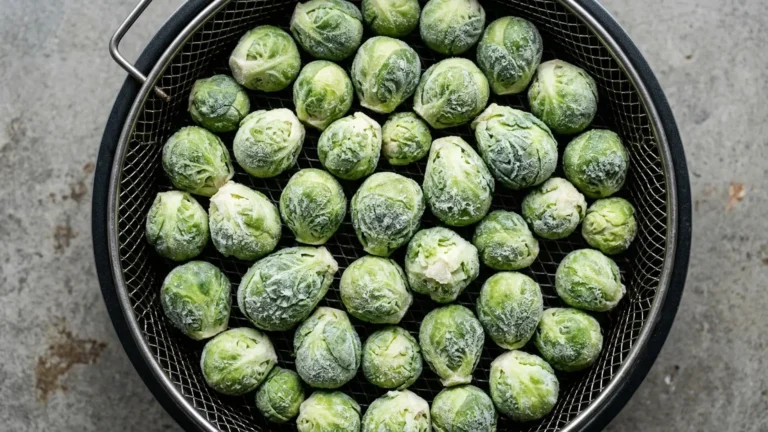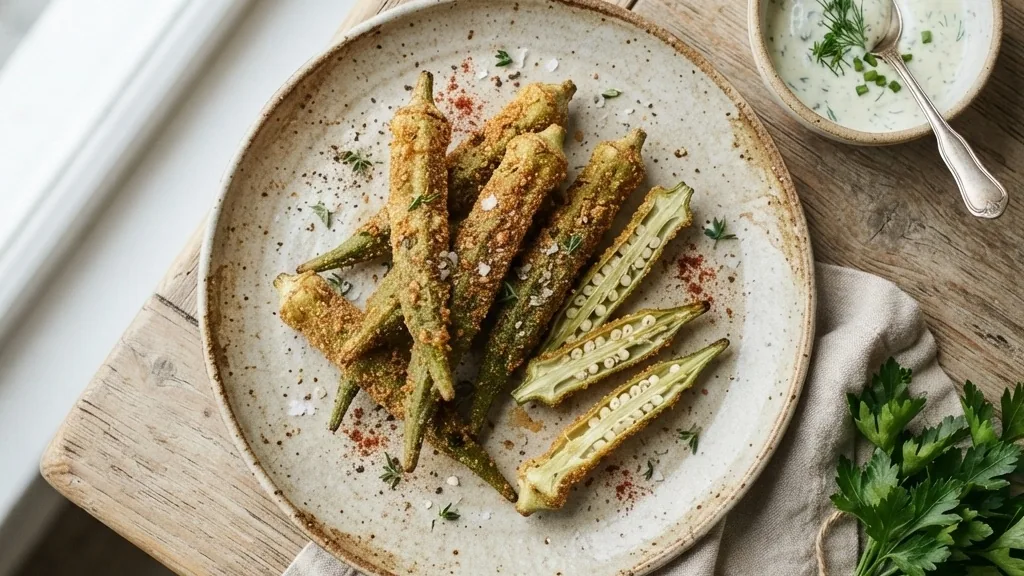
Air fryer frozen okra behaves like three different vegetables depending on the bag you grabbed, and that single fact is why so many batches come out slimy, scorched or raw in the middle. Cut okra, whole pods and pre-breaded okra each need their own temperature and their own shake schedule. Cook them straight from frozen, keep them in a single layer, and lean on high dry heat to fight the slime instead of fighting the clock. The three formats share one rule and disagree on everything else, so the fastest way to a crisp result is knowing which bag you own before you touch the dial.
Most recipes online pick one format and stop there. One handles whole pods, another handles cut, and breaded okra gets ignored almost everywhere. Below you get all three side by side, plus the actual chemistry of why okra turns ropey and how heat and acid shut that down.
Quick answer: Cook frozen okra straight from the bag in a single layer. Cut okra runs roughly 15 to 18 minutes with a shake at 7 minutes. Whole pods run about 15 minutes, flipped at 8 minutes. Breaded okra follows the package but usually lands in the same 400 F window, shaken once. Never thaw first, never crowd the basket, and hit it with a spritz of oil and a squeeze of acid to keep the slime down and the edges brown.
Cut vs whole vs breaded frozen okra: the spec table that ends the guesswork
The single biggest mistake with air fryer frozen okra is treating all three bag types the same. Cut okra exposes more of the seed cavity and releases more mucilage, so it needs a strong shake partway through and a little more time to dry out its cut faces. Whole pods keep their slime sealed inside longer, so they crisp with less fuss and only need one flip. Breaded okra carries its own coating that browns on its own timeline, so it wants a gentle shake and close watching near the end. Here is the working spec, drawn from published recipe specs rather than guesswork.
- Frozen cut okra: 400 F, single layer, roughly 15 to 18 minutes, shake at the 7 minute mark. A Cajun-style crispy version runs 356 F (180 C) for about 20 minutes with an oil spritz and a shake every few minutes.
- Frozen whole pods: 400 F, single layer, about 15 minutes, flip at 8 minutes. This is the tested spec from Whole Lotta Yum.
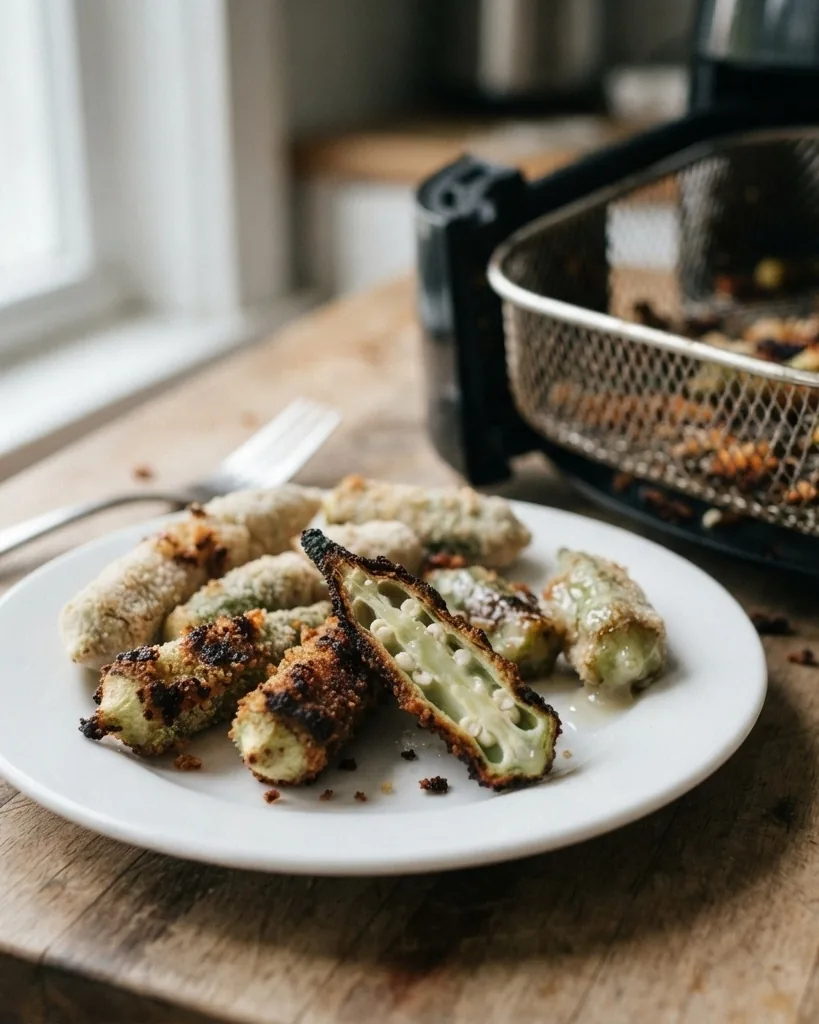
- Frozen breaded okra: follow the bag, but 400 F with one shake around the halfway point tracks the cut-okra window; pull it when the crumb is deep gold.
Basket-style machines run hotter at the food than most oven-style units, so if you own a countertop oven air fryer, add two to three minutes and shake more often. Whichever format you cook, that 400 F ceiling is the friend here: short, hot, dry heat is exactly what tames the texture.
Want another straight-from-frozen benchmark for how a real machine treats a packaged product? The temperature logic in this frozen pizza air fryer timing and safety guide shows the same no-thaw, single-layer thinking applied to a denser food.
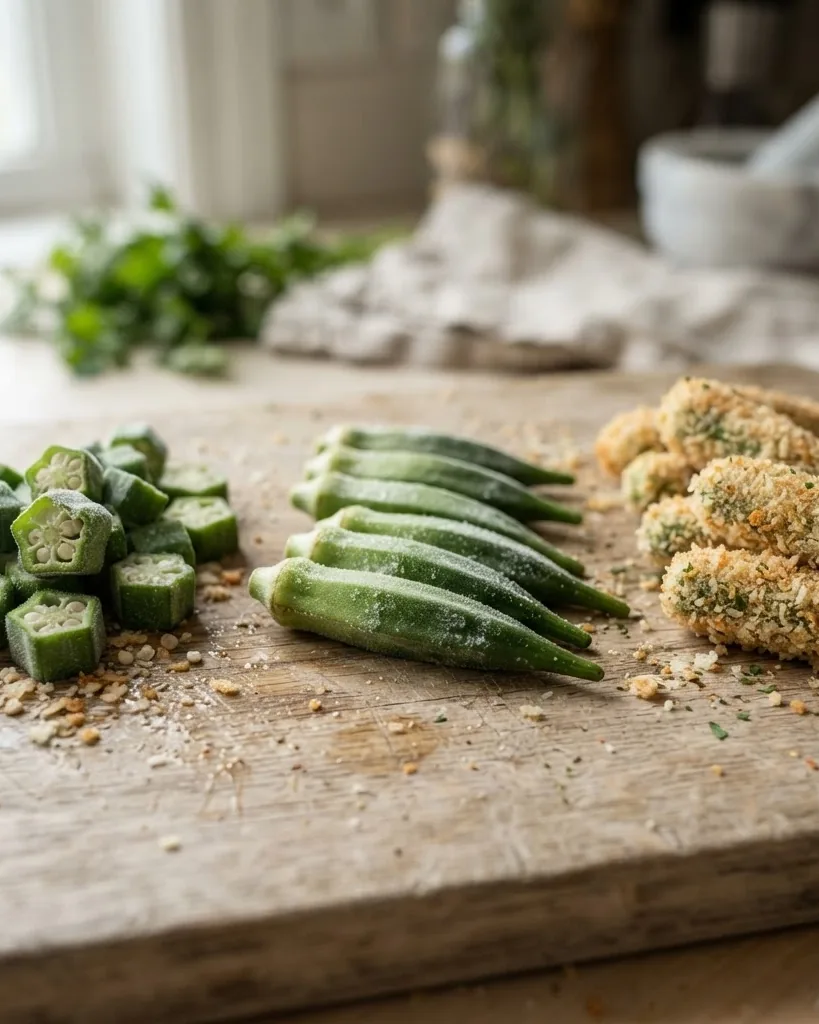
Why frozen okra turns slimy, and the chemistry that stops it cold
Okra slime is not dirt or spoilage. It is mucilage, a soluble fiber the plant makes to hold water, and understanding it is the difference between crisp okra and a gummy tangle. The peer-reviewed review hosted on NCBI PMC describes okra mucilage as a polysaccharide built mainly from D-galactose, L-rhamnose and galacturonic acid. That gel is harmless and even nutritious, but it thickens under the wrong conditions and coats every pod. The two levers you control at home are heat and acid, and both are well documented.
Heat and cutting both change how much slime you feel. Popular Science, citing food scientist Harold McGee, explains that mucilage viscosity rises when it is heated gently and that slicing okra releases far more of it than cooking pods whole. The saving grace is method: short, high-heat cooking releases less mucilage than long, low stewing. An air fryer at 400 F is close to the ideal, driving off surface moisture before the gel can pool.
Acid is the second weapon. NPR’s food desk reported botanists explaining that cooking okra with an acid changes the mucilage molecules and makes them far less viscous, which is exactly why lemon, vinegar and tomato have cut okra slime in kitchens for generations. A squeeze of lemon tossed on before cooking is not folklore. It is a targeted chemical fix.
- Cook from frozen: thawing lets the gel weep out and go ropey before the heat ever hits.
- Stay high and dry: 400 F evaporates surface moisture faster than the mucilage can spread.
- Add acid up front: lemon or vinegar restructures the gel so it never gels.
- Consider whole over cut: uncut pods keep more slime locked inside.
The no-thaw, single-layer rules that decide crisp or mush
Two habits sink more batches of frozen okra than any wrong temperature: thawing the bag and dumping it all in at once. Both flood the basket with water. Frozen okra carries surface ice and internal moisture, and when that melts in a crowded basket it turns to steam. Steam is the enemy of browning. Instead of roasting, the pods poach in their own vapor and come out pale, soft and slick. The fix is dull but decisive: cook straight from the freezer and spread everything to a single layer with breathing room between pieces.
The single-layer rule matters because an air fryer is a convection oven with a strong fan. Hot air has to reach every surface to dry and brown it. Stack the okra two or three deep and the interior pieces never see moving air; they sit in a humid pocket while the top layer scorches. Work in batches if your basket is small. Two fast batches beat one crowded, disappointing one.
Oil helps, but less than people think. A light spritz or a toss with a teaspoon or so is enough to promote browning and carry seasoning. Drown the okra and you fry rather than air fry, which defeats the point and adds calories the vegetable does not need. For the same reason, avoid piling seasoning that clumps wet against the pods before they have started to dry.
If you like the mechanics of getting a vegetable genuinely crisp in this machine, the timing habits in this 10-minute air fryer broccoli side dish transfer almost directly to okra.
Seasoning frozen okra: four directions that actually stick
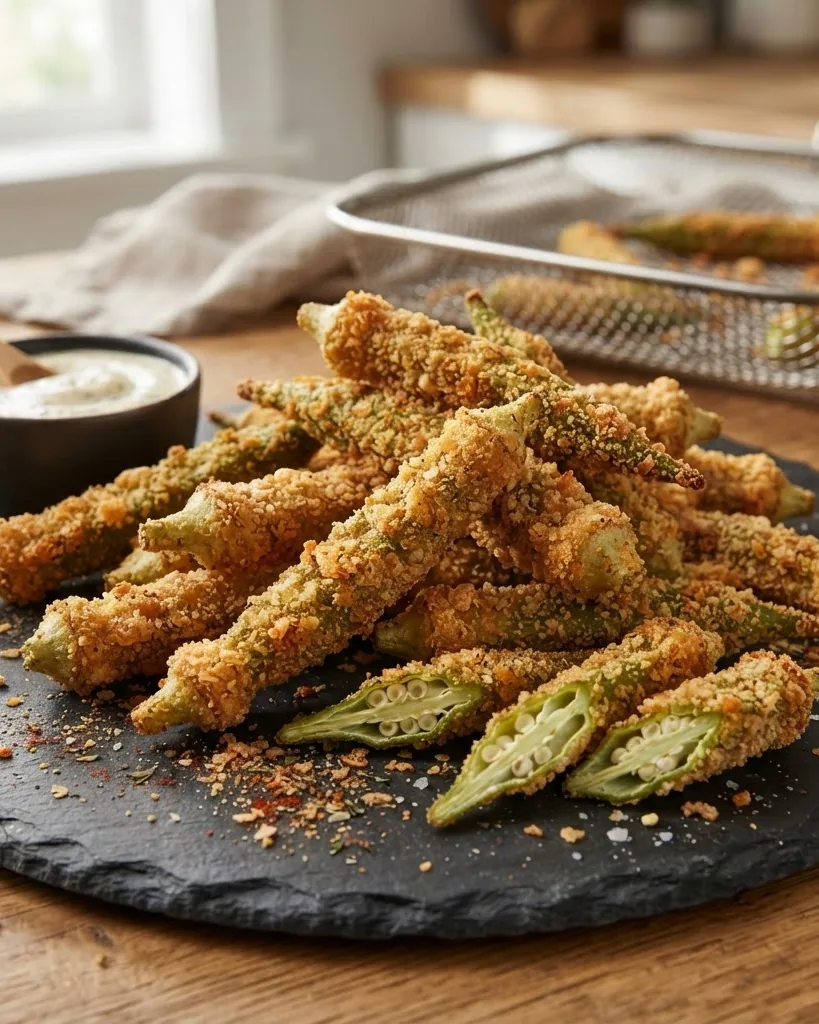
Plain frozen okra is a blank canvas, and because the surface is slightly tacky as it cooks, dry seasoning clings well once the pods start to dry out. The trick is timing: toss lightly with oil and salt before cooking, then add the punchier spices at the halfway shake so they toast rather than burn. Four reliable directions cover most tastes, from a simple garlic-paprika weeknight side to a cornmeal coat that mimics classic Southern fried okra without the deep fryer.
- Garlic and paprika: the default. Oil, salt, garlic powder and sweet paprika. Clean and fast.
- Cajun: paprika, cayenne, oregano, thyme and garlic. Pairs with the 356 F, roughly 20-minute crispy method.
- Indian masala: turmeric, cumin, coriander and chili, echoing the classic bhindi profile.
- Cornmeal fried-okra style: a light toss in fine cornmeal for a crunchy shell that reads as deep-fried.
Salt draws water, so if you are chasing maximum crisp, salt at the end rather than the start on the driest formats. For breaded okra, skip added coating entirely; the bag already carries its crumb, and extra oil just makes it greasy.
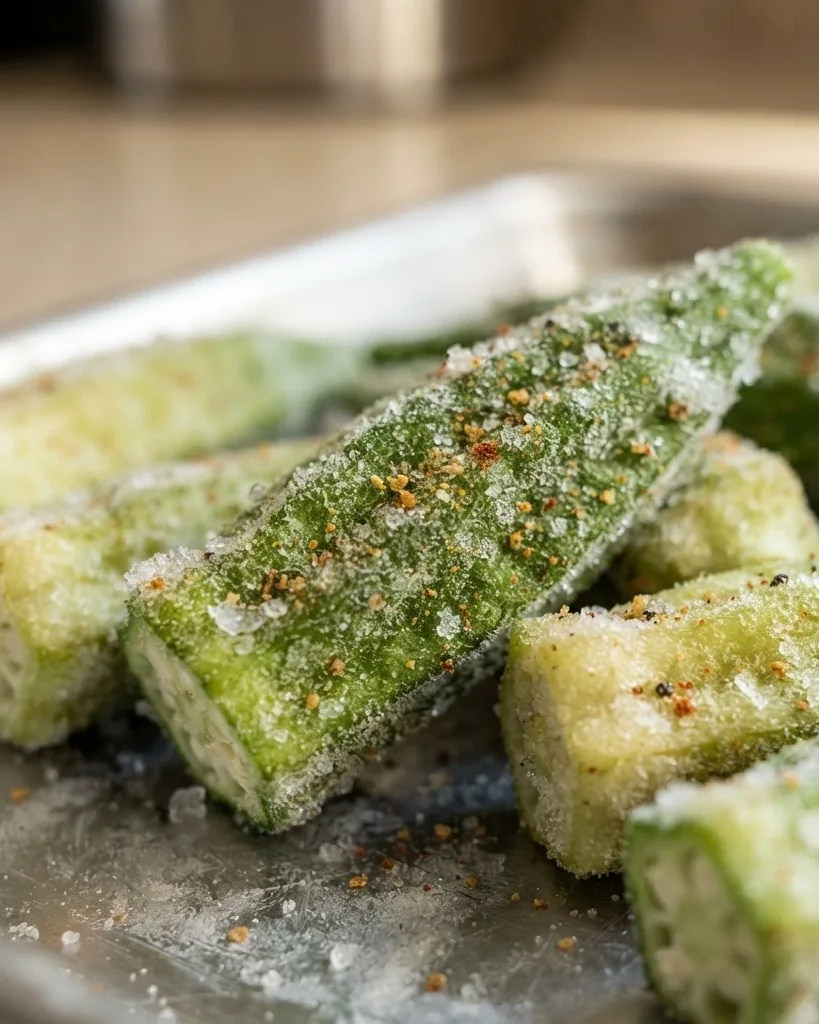
Troubleshooting frozen okra: still slimy, burnt edges, cold center
When air fryer okra goes wrong it usually fails in one of three specific ways, and each has a clear cause and a clear fix. Slimy okra almost always means too much moisture and not enough heat exposure, from thawing, crowding or cutting. Burnt edges with a cold or slimy middle point to a basket that is too full or okra straight from a deep freeze in too thick a layer. Okra that simply will not crisp is nearly always an overcrowding problem or too much oil turning the air fryer into a shallow fryer. Match the symptom to the cause and the next batch behaves.
- Still slimy: you thawed it, crowded it, or ran too low a temperature. Cook from frozen, single layer, 400 F, and add a squeeze of lemon before cooking.
- Burnt edges, cold middle: layer too deep or basket overloaded. Split into batches and shake more often so heat reaches every pod.
- Won’t crisp at all: too much oil or too little airflow. Cut oil to a light spritz and drop to a true single layer.
- Uneven browning: no shake or flip. Cut okra needs a shake at 7 minutes, whole pods a flip at 8.
Doneness is a look, not just a timer. Pull okra when the edges are browned and the inside gives easily to a fork; that combination of tender interior and toasty exterior is the target, and it beats staring at the clock every time.
Frozen okra nutrition and the USDA grade behind the bag
Frozen okra is a low-calorie, high-value vegetable, and the numbers hold up to scrutiny. USDA-sourced data presented through MyFoodData puts frozen unprepared okra at about 29 kcal per 100 g, which makes it one of the leanest sides you can crisp up. That same okra carries meaningful micronutrients: it delivers roughly 49 ug of vitamin K per 100 g, about 41 percent of the Daily Value, and around 148 ug of folate per 100 g, about 37 percent of the Daily Value, according to FoodStruct’s nutrient breakdown. The slime you may be fighting is itself soluble fiber, so it is doing quiet nutritional work even as it annoys you.
The bag also sits inside a formal quality system. The USDA Agricultural Marketing Service sets the official United States grade standard for frozen okra, defining what a grade designation legally means, and that standard has been in effect since November 16, 2011, issued under the Agricultural Marketing Act of 1946. You can read the specification directly in the USDA frozen okra grade standard document. For selection and storage guidance, the USDA Food and Nutrition Service publishes an okra page through its SNAP-Ed seasonal produce guide for okra.
The science of the slime is documented too. Popular Science covers the mucilage, heat and slicing relationship, while the review indexed on NCBI PMC lays out the polysaccharide chemistry in detail.
Nutrition per 100 g of frozen unprepared okra
- Calories: about 29 kcal
- Vitamin K: about 49 ug (about 41 percent DV)
- Folate: about 148 ug (about 37 percent DV)
Storage, reheat and what to serve with crisp okra
Air fryer okra is best the minute it comes out, but leftovers do not have to be sad. The enemy in storage is the same moisture that causes slime during cooking, so cool the okra fully before it goes in a container to keep condensation from softening the crust. When you reheat, skip the microwave, which steams okra back to limp, and return it to the air fryer instead. A short blast at 400 F re-crisps the edges far better than any other method because it drives off the moisture that accumulated in the fridge.
Pairing is where okra earns its keep. Its browned, tender bite plays against creamy and tangy dips, so it slots naturally next to a rich main. Serve it with aioli or ranch, alongside catfish, shrimp or grilled chicken, or as a vegetable-forward snack in its own right.
- Dips: garlic aioli, ranch, or a lemony yogurt sauce that doubles down on the acid trick.
- Mains: catfish, shrimp, grilled chicken, or a smoky sausage.
- Snack move: cornmeal-coated okra with a spicy remoulade.
If you like turning simple ingredients into crunchy, crowd-friendly bites, this crispy air fryer Chex Mix recipe works on the same principle of dry heat and frequent shaking. For an outside authority on convection browning technique, the food-science writeups at Serious Eats back up why moving hot air crisps better than a static oven.
Frequently asked questions
Do you need to thaw frozen okra before air frying?
No. Cook frozen okra straight from the bag. Thawing lets the mucilage weep out and go ropey before the heat can dry the surface, and it floods the basket with water that turns to steam. Steam poaches the pods instead of roasting them, giving you pale, slimy results. Frozen straight to 400 F is the crispest path.
How do you make air fryer okra not slimy?
Use high dry heat, avoid crowding, and add acid. Cook at 400 F in a single layer so surface moisture evaporates fast. Toss the okra with a squeeze of lemon or a splash of vinegar first, because acid changes the mucilage molecules and cuts their viscosity. Whole pods stay less slimy than cut, since slicing releases more mucilage.
What temperature and time for frozen breaded okra?
Follow the package first, since coatings vary, but most breaded frozen okra crisps well at 400 F with one shake around the halfway point, tracking the same window as cut okra. Watch it near the end and pull the okra when the crumb is deep gold. Skip extra oil, because the coating already carries fat and more just turns it greasy.
Should you use cut or whole frozen okra in the air fryer?
Both work, and the choice is about texture and slime. Whole pods keep more mucilage sealed inside and crisp with just one flip at 8 minutes, so they are the low-slime option. Cut okra browns on more surfaces and takes seasoning better but needs a firm shake at 7 minutes. Pick whole for the least slime, cut for maximum crunch.
How much oil does air fryer okra need?
Very little. A light spritz or a toss with roughly a teaspoon is enough to promote browning and help seasoning stick. Drowning the okra in oil turns the machine into a shallow fryer, adds calories to a vegetable that only runs about 29 kcal per 100 g, and can leave the pods greasy rather than crisp. Less oil, more airflow.
How do you reheat air fryer okra so it stays crisp?
Return it to the air fryer, not the microwave. A short blast at 400 F drives off the moisture the okra picked up in the fridge and re-crisps the edges, while a microwave just steams it soft. Cool leftovers completely before storing so condensation does not build up and soften the crust before you even reheat.
Frozen okra rewards a little precision and punishes crowding. Match the bag to its spec, keep the heat high and the layer thin, lean on acid, and the slime that scares people off simply does not show up. Whether you crisp cut, whole or breaded, the same short, hot, dry approach turns a bag of frozen pods into a genuinely craveable side.