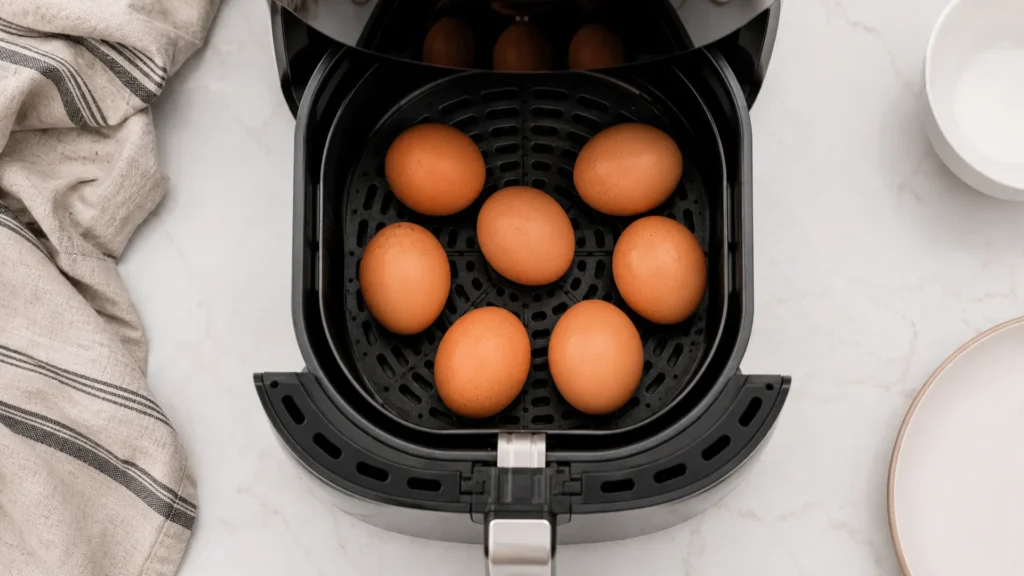
Air fryer hard boiled eggs are the easiest eggs you will ever make: no pot, no boiling water, and no standing over the stove. You set the eggs in the basket dry, run the machine for about fifteen minutes, drop them in ice water, and peel. The shells slip off so cleanly that this method has quietly become the reason a lot of people stopped boiling eggs the old way. There is no water to bring up to temperature, no timing the moment it hits a boil, and you can do a full dozen at once without crowding a saucepan.
This guide gives the exact times for soft, jammy, medium, and fully hard yolks, walks through the simple method step by step, explains the one quirk to watch for (the brown spots that can form where eggs touch the basket), and covers peeling, storage, and what to do with a batch once you have it. By the end you will never reach for a pot again.
Why Cook Hard Boiled Eggs in an Air Fryer
The appeal is mostly about being hands-off and consistent. Because the air fryer holds a steady temperature and surrounds the eggs with even, dry heat, you get the same result every time once you find your machine’s number, with none of the babysitting that boiling demands. You skip heating a pot of water, which alone saves several minutes, and you can cook as many eggs as fit in a single layer rather than being limited by pot size. For meal prep, that means a week of eggs in one quick, walk-away batch.
The standout benefit, though, is peeling. Air-fried eggs are famously easy to peel, and there is a good reason for it. The dry convection heat gently sets the egg and helps the membrane pull away from the shell as it cooks, so the shell tends to come off in large pieces instead of tearing the white into a cratered mess. Fresh eggs, which are notoriously hard to peel when boiled, behave far better in the air fryer. If you are new to the machine in general, the steady airflow that makes eggs so consistent is the same principle behind everything it does, which our guide on how to use an air fryer explains from the ground up.
The Time and Temperature Chart
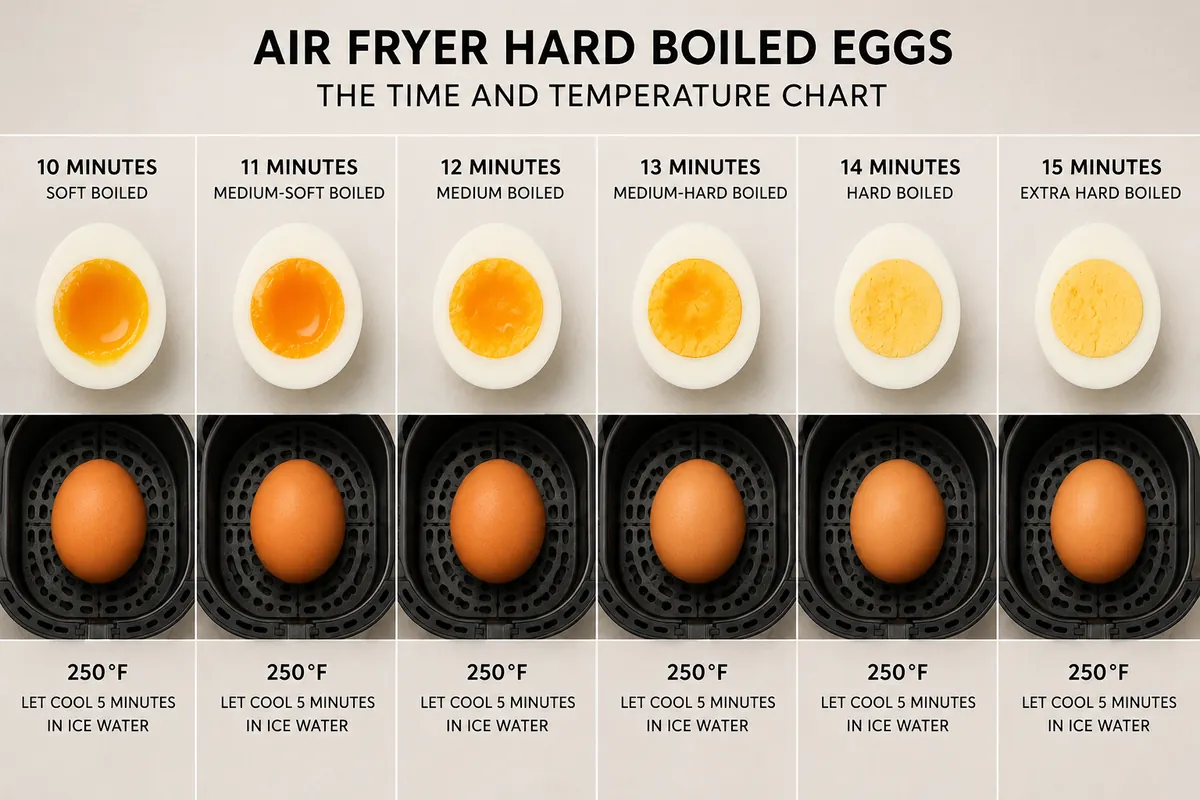
The single most important thing is to cook eggs at a low temperature, much lower than you use for fries or chicken. Most air fryers do this best between 250 and 275 degrees Fahrenheit. If your model does not go below 300, use 300 and shave a few minutes off. Times vary a little from machine to machine, so treat your first batch as a calibration run and write down what worked.
| Yolk | Temperature | Time |
|---|---|---|
| Soft, runny yolk | 270 F | 9-10 min |
| Jammy, custardy yolk | 270 F | 11-12 min |
| Medium, just set | 270 F | 12-13 min |
| Fully hard boiled | 270 F | 14-16 min |
| Hard boiled (higher heat) | 300 F | 10-12 min |
For classic hard boiled eggs with a fully set, pale yellow yolk, fourteen to sixteen minutes at 270 degrees is the reliable starting point. Want a jammy center for ramen or a grain bowl? Pull them at eleven or twelve minutes. The window between soft and hard is only a few minutes, so the timer matters more than anything else here.
Step by Step
- Place whole, uncracked eggs straight from the fridge into the basket in a single layer, leaving a little space between each one.
- Set the air fryer to 270 degrees and cook for the time that matches the yolk you want from the chart above. Preheating is not necessary.
- While they cook, fill a bowl with ice and cold water for an ice bath.
- When the timer ends, move the eggs straight into the ice bath with tongs and leave them for at least five to ten minutes.
- Peel under a little running water or right in the bowl, starting at the fat bottom end where the air pocket sits.
That ice bath is not optional. It stops the cooking instantly so the yolks do not overcook into that chalky, gray-rimmed state, and the rapid cooling contracts the egg slightly away from the shell, which is a big part of why the peeling is so easy. Skipping it is the most common reason a batch turns out rubbery.
Soft, Jammy, and Medium Eggs, Not Just Hard
The same method makes every level of doneness, which is part of why it replaces the saucepan entirely. A soft egg with a runny yolk, pulled around nine to ten minutes, is perfect spooned over toast or a rice bowl. A jammy egg at eleven to twelve minutes, with a center that is set on the outside but still bright and custardy in the middle, is the one to put on ramen, a salad nicoise, or a grain bowl, and it is the doneness most worth learning because it is hard to nail by boiling. A medium egg around twelve to thirteen minutes has a fully set but still moist, deep-yellow yolk that slices cleanly without crumbling. Only at fourteen to sixteen minutes do you reach the classic firm, pale hard boiled egg for deviled eggs and egg salad. Because the difference between each stage is only a couple of minutes, the timer is doing the real work, so keep your phone handy and trust the clock rather than guessing.
Air Fryer Eggs vs Boiling vs the Instant Pot
It is worth knowing how this method stacks up against the two it competes with. Compared to boiling on the stove, the air fryer skips heating a pot of water entirely, runs completely hands-off once the timer is set, and produces eggs that are noticeably easier to peel, since boiling fresh eggs is a well-known struggle. The trade-off is that boiling is slightly more forgiving on timing because water cannot exceed its boiling point, while a too-hot air fryer can overcook the outside, which is why the low temperature matters. Compared to a pressure cooker like the Instant Pot, the air fryer is faster to get going because there is no time spent coming up to pressure and releasing it, and it does not take up a large appliance footprint, though the pressure cooker can do larger quantities at once. For a typical batch of six to a dozen eggs, the air fryer hits the sweet spot of speed, ease, and peelability, which is exactly why it has won so many people over. None of the three makes a meaningfully more nutritious egg; the choice is purely about convenience and how reliably the shells come off.
The One Quirk: Brown Spots
The only thing that surprises first-timers is that air-fried eggs can develop small brown or tan spots on the shell where the egg sits against the hot basket. These spots are harmless, they do not affect the egg inside, and they disappear when you peel. If they bother you, there are a couple of easy fixes. Setting the eggs on a silicone trivet or in a silicone muffin-cup tray lifts them off the metal so the contact points do not scorch. Some people lightly wrap each egg, though a liner is simpler and there are real rules about foil placement worth knowing first, which our guide on whether you can put aluminum foil in an air fryer lays out. Turning the eggs once halfway through also spreads the contact around and reduces any single dark spot. None of this changes the taste; it is purely cosmetic.
How to Peel Air Fryer Eggs
Peeling is where this method earns its reputation, but a few habits make it even cleaner. Wait until the eggs are cool to the touch but not ice cold, then tap the fat bottom end on the counter to crack the air pocket first, since that gives you a flap of shell and membrane to grip. Roll the egg gently under your palm to craze the shell all over, then peel from the bottom up, keeping the membrane attached to the shell as you go. A quick dip back in the water rinses away any stray bits. With air-fried eggs you will usually find the shell comes off in just two or three large pieces, even with eggs that are only a day or two old, which would be a struggle in a pot.
What to Do With a Batch
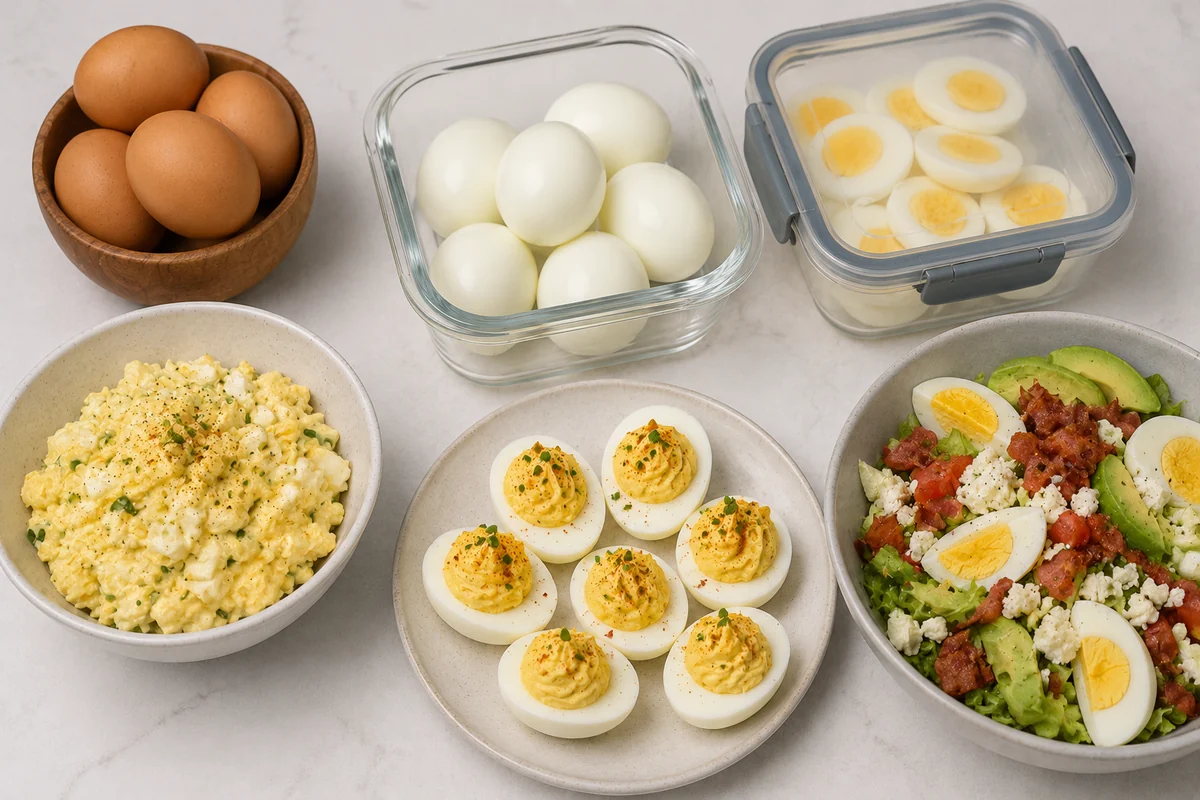
The whole point of cooking a dozen at once is having them ready all week. Hard boiled eggs are one of the most useful things to keep in the fridge: a fast high-protein snack, a topping for grain bowls and salads, the base for egg salad sandwiches, or the starting point for deviled eggs. Sliced over avocado toast or chopped into a green salad, they turn a light meal into a filling one. They also slot neatly into a low-carb routine, and a batch pairs well with a rotation of keto breakfasts when you want protein without the carbs. If you are doing a full prep session, the air fryer can knock out a tray of crispy potato wedges in the same stretch, so breakfast and a side are both handled.
Storage and Food Safety
Hard boiled eggs keep in the fridge for up to one week, and they store best with the shell still on, since the shell protects the white from drying out and picking up fridge odors. Peel them only when you are ready to eat. If you have already peeled a few, keep them in a covered container with a damp paper towel so they do not dry out, and use those within a couple of days. Never leave cooked eggs at room temperature for more than two hours. Label the container with the date if you cook eggs in batches, because a week goes by faster than you think and a quick sniff is not a reliable test on its own.
Troubleshooting
- Green or gray ring around the yolk. The eggs cooked too long or did not get cooled fast enough. Shave a minute off and always use the ice bath.
- Eggs are rubbery. Same cause, overcooking. Drop the time and pull them a touch early, since the residual heat finishes them.
- Brown spots on the shell. Harmless contact marks from the basket. Use a silicone trivet or muffin tray and turn the eggs once if you want to avoid them.
- Hard to peel. The eggs were peeled while too warm or skipped the ice bath. Cool them fully, crack the fat end first, and peel under running water.
- An egg cracked while cooking. It was likely already cracked, or the basket was crowded and eggs knocked together. Leave space between them and check shells before cooking.
A Few Pro Touches
After a batch or two, small refinements make this reliable. Because every air fryer runs a little differently, calibrate once by cooking two eggs at fourteen minutes, cutting one open, and adjusting your standing time up or down by a minute from there; then that number is yours for good. Use eggs straight from the fridge rather than room temperature for the times above, since the chart assumes cold eggs. If you want perfectly centered yolks for deviled eggs, there is not much you can do in dry heat, so just rotate the eggs once. And keep the ice bath genuinely cold with real ice, not just cool tap water, because the speed of the cooling is what protects the texture and loosens the shell. For testing-backed egg technique and the science of doneness, America’s Test Kitchen is a dependable reference, and Consumer Reports independently tests air fryers if you are still choosing one.
Frequently Asked Questions
How long do you cook hard boiled eggs in an air fryer?
Cook them at 270 degrees Fahrenheit for fourteen to sixteen minutes for fully hard yolks, or 300 degrees for ten to twelve minutes if your model does not go lower. For jammy yolks, pull them at eleven to twelve minutes. Always move them to an ice bath right after.
What temperature do you cook eggs at in an air fryer?
Use a low temperature, ideally 250 to 275 degrees Fahrenheit, which cooks the eggs gently and evenly. If your air fryer does not go below 300 degrees, set it to 300 and reduce the time by a few minutes to avoid overcooking.
Do air fryer hard boiled eggs peel easily?
Yes, they are one of the easiest eggs to peel. The dry convection heat helps the membrane separate from the shell, so the shell tends to come off in large pieces, even with fresh eggs. A cold ice bath afterward makes peeling easier still.
Why do my air fryer eggs have brown spots?
Brown or tan spots form where the eggshell touches the hot basket. They are completely harmless, do not affect the egg inside, and vanish once you peel. To avoid them, set the eggs on a silicone trivet or muffin tray and turn them once partway through.
Do you need to preheat the air fryer for eggs?
No, preheating is not necessary for eggs and the times given assume a cold start. If your particular model runs cool, a short preheat can help, but in most air fryers you can place the eggs in and start the timer straight away.
Can you make soft boiled or jammy eggs in an air fryer?
Yes, the same setup makes any doneness and only the time changes. For a soft, runny yolk pull the eggs at nine to ten minutes, and for a jammy, custardy center aim for eleven to twelve minutes, both at 270 degrees. Move them to the ice bath immediately so they do not keep cooking, since a single extra minute is the difference between jammy and fully set. Jammy eggs are actually easier to nail in the air fryer than in a pot, which is why many people switch just for those.
How long do hard boiled eggs last in the fridge?
Up to one week when stored in the shell, which protects the white from drying out. Peel them only when you are ready to eat, and keep any already-peeled eggs in a covered container with a damp paper towel, using those within a couple of days.
Bottom Line
Air fryer hard boiled eggs win on every front that matters: no pot of water to heat, a completely hands-off cook, a full dozen at once, and shells that practically fall off. Cook them at 270 degrees for fourteen to sixteen minutes, drop them straight into an ice bath, and peel from the fat end, adjusting the time by a minute or two to dial in your machine. Use a silicone trivet if the little brown spots bother you, store them in the shell for up to a week, and you will always have protein ready to go. Once you make eggs this way, the old saucepan starts gathering dust.