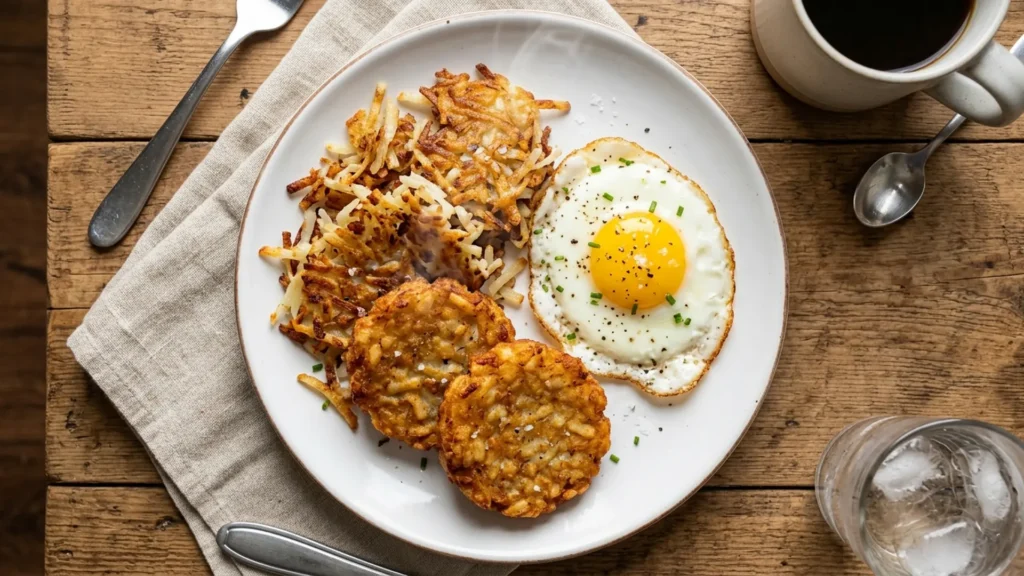
Frozen hash browns are the most forgiving breakfast in the freezer aisle, and the air fryer turns them into the crispiest version you can make without standing over a skillet. After running the same bags through several baskets in my Austin test kitchen, I landed on settings that work whether you grabbed shredded, patties, or diced. This guide walks through every form, the temperatures and times that actually crisp them, and the small habits that separate a golden, shatter-crisp hash brown from a pale, limp one. No skillet, no flipping a spatula full of loose shreds, and no waiting on a preheated oven.
If you only remember one number, make it this: most frozen hash browns crisp best between 375 F and 400 F, cooked straight from frozen, in a single layer. Everything else below is about reading your specific product and your specific machine so you hit that crunch every time.
Why the air fryer beats the skillet for frozen hash browns
A skillet crisps whatever touches the metal and steams everything that does not. That is why the bottom of a pan of shredded hash browns browns while the top stays gummy, and why you end up pressing, flipping, and adding more oil than you wanted. An air fryer is a small convection cooker that blasts hot air around every surface at once. The moving air strips the cool, damp layer that clings to frozen potato and drives off the surface moisture fast, so the starch can brown instead of steam. That is the entire trick to crispness: get the water off before the inside overcooks.
Because the heat surrounds the food, you also use a fraction of the oil. Most frozen hash browns are already coated in fat during manufacturing, so in the air fryer you frequently need none at all. That means fewer calories from added oil and a cleaner finish than pan frying, which is the same reason air-fried potatoes have become a weeknight dinner in so many kitchens.
Temperatures and times for every kind of frozen hash brown
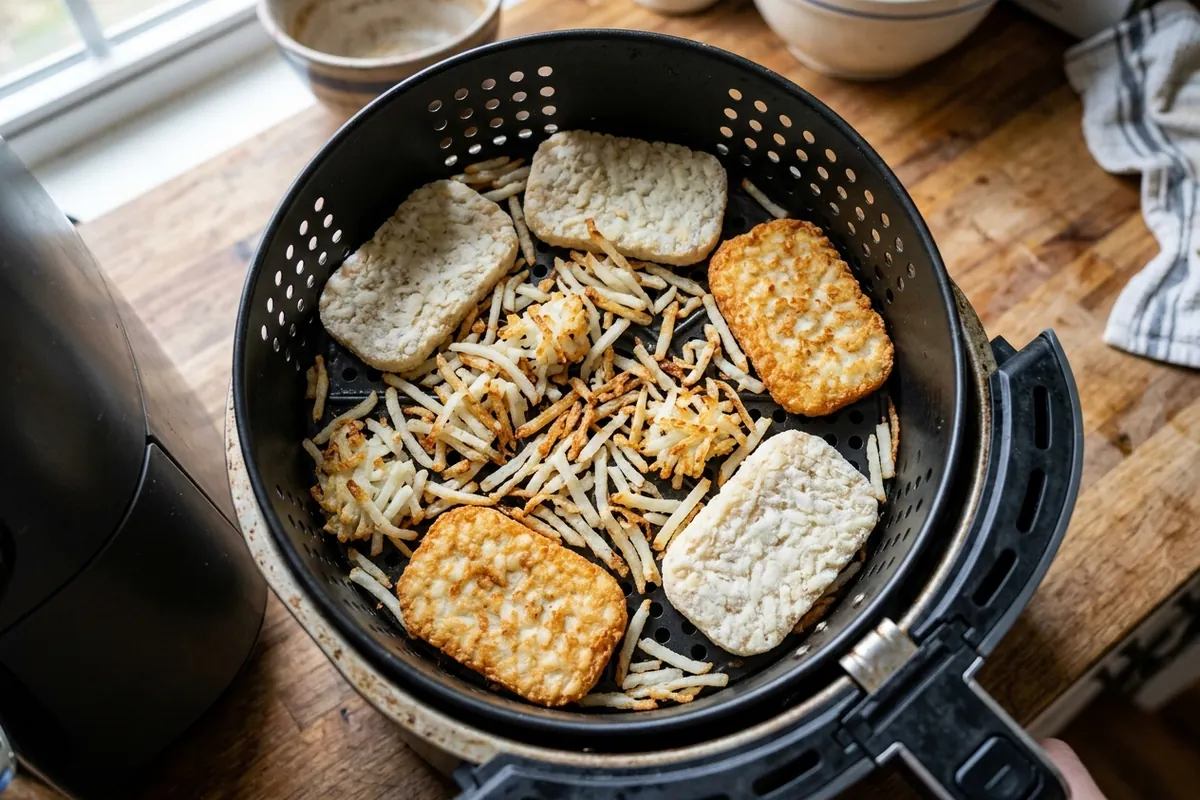
The biggest mistake I see is treating all frozen hash browns as one food. Shredded, patties, and diced potatoes have different thicknesses and densities, so they need different handling. Use the chart below as your starting point, then adjust by a minute or two for your machine. Times assume the food goes in straight from the freezer, arranged in a single layer.
| Hash brown form | Temperature | Total time | Flip or shake | Doneness cue |
|---|---|---|---|---|
| Shredded (loose) | 375 F | 12 to 16 min | Shake at the halfway mark | Edges turn deep golden and lacy |
| Patties (rectangular) | 380 F | 14 to 18 min | Flip once at 10 min | Surface is crisp, center is steaming hot |
| Diced or cubed (potato O’Brien style) | 380 F | 12 to 15 min | Shake twice, every 5 min | Corners darken and crackle when pressed |
| Tater-tot style rounds | 400 F | 10 to 14 min | Shake at the halfway mark | Uniform bronze color, audible crunch |
Air fryers vary more than any other appliance I test. A compact 2-quart basket runs hotter and crisps faster than a 6-quart model or a flat shelf-style oven, so check your food two minutes before the low end of the range the first time you cook a new brand. Once you know how your machine behaves, the numbers above become muscle memory.
Shredded frozen hash browns
Loose shredded potatoes have the most surface area, which is good for crispness and bad for sticking. Spread them in a thin, even layer rather than a thick mound. If you pile them, the center steams while the outside browns, and you get that frustrating soggy middle. At 375 F, a single layer crisps in about 12 to 16 minutes. Shake the basket once around the seven-minute mark to expose the underside. For a hash brown patty shape, gather the shreds into a loose round and press lightly, but do not pack it tight or the air cannot get through.
Frozen hash brown patties
Patties are dense and rectangular, so they take longer than shreds even though they look smaller. At 380 F they need roughly 14 to 18 minutes with one flip at the 10-minute mark. The flip matters because the side facing the heating element browns faster. Thin store-brand patties may finish closer to 12 minutes, while thick diner-style patties can push past 18, which is why the doneness cue, a crisp surface with a piping-hot center, beats the clock.
Diced and cubed hash browns
Diced potatoes, sometimes sold as potatoes O’Brien with peppers and onion, behave like little fries. They crisp fastest of all because each cube has corners that catch the air. Shake them twice so they tumble and brown on more sides. They are forgiving, so this is the form to start with if you are new to the appliance.
Step by step: the method that works every time
The forms differ, but the workflow is identical. Lock this in and you will not need a recipe again.
- Skip the thaw. Cook frozen hash browns straight from the freezer. Thawing releases water that turns to steam and kills the crunch. The ice crystals on the surface actually help by flashing off in the hot air.
- Preheat if your machine allows it. Three to four minutes at the target temperature gives the potatoes a hot surface to hit, which jump-starts browning. If your model has no preheat, just add two minutes to the cook time.
- Mist lightly, only if needed. Most products are pre-oiled. If yours look dry or you want extra crunch, a light mist of oil on the basket and the surface helps. Use a refillable oil sprayer rather than aerosol cans, which can strip the basket coating over time.
- Single layer, always. Crowding is the number one reason hash browns come out soft. Air needs a path around every piece. Cook in batches before you cook in a pile.
- Shake or flip once. Loose shreds and diced potatoes get a shake; patties get a flip. This is the difference between even bronzing and a half-pale batch.
- Judge by sight and sound. Done hash browns are deep golden, the edges look lacy or crackled, and they sound crisp when you tap them. If they are pale, give them two or three more minutes; they will not overcook quickly at these temperatures.
This same single-layer, shake-once logic carries over to nearly everything you pull from the freezer aisle, from crispy tater tots to frozen biscuits, which is why the air fryer earns its counter space fast.
Troubleshooting soggy, burnt, and sticking hash browns
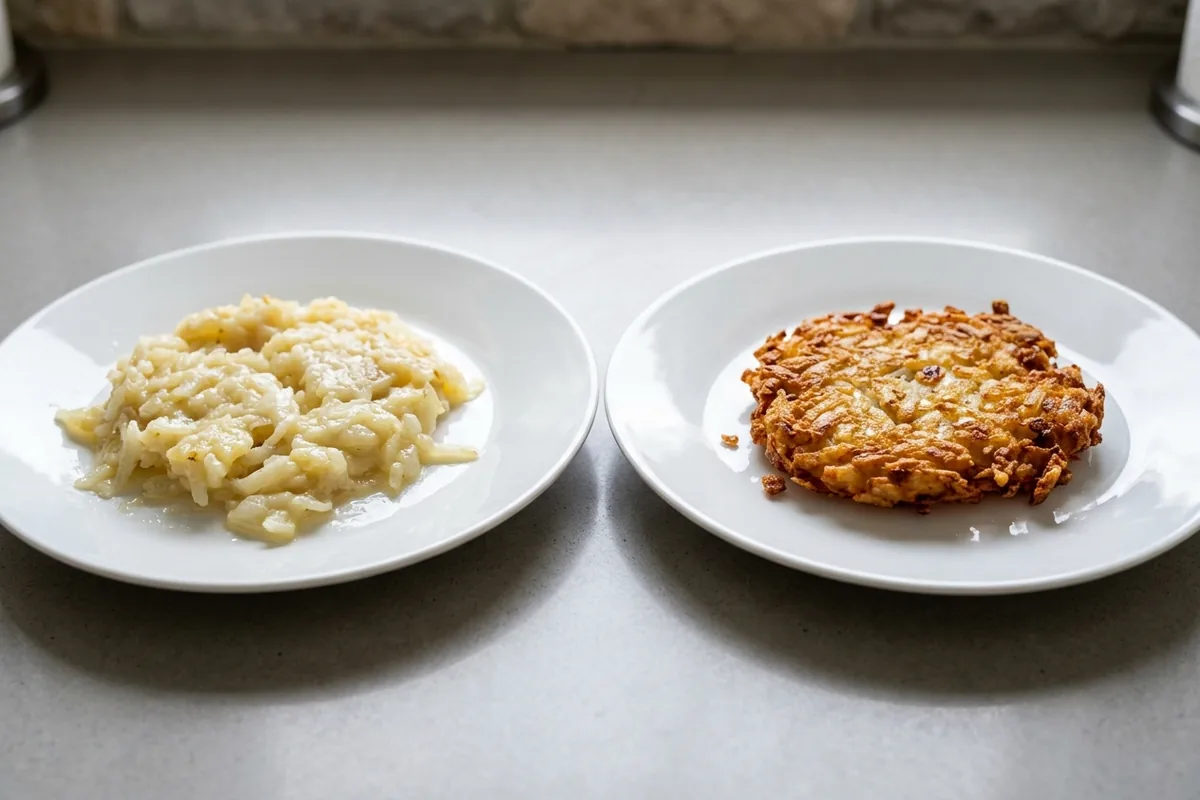
When a batch comes out wrong, the cause is almost always one of five things. Diagnose it once and you will never repeat it.
| Problem | Most likely cause | Fix on the next batch |
|---|---|---|
| Soggy or pale | Basket overcrowded or temp too low | Single layer, bump to 380 to 400 F, add 2 to 3 min |
| Burnt edges, raw middle | Temp too high for a thick patty | Drop to 375 F and extend time instead of heat |
| Sticking to the basket | No oil and a bare metal basket | Mist the basket and the surface lightly before cooking |
| Uneven browning | Pieces piled or never shaken | Shake or flip at least once, leave space between pieces |
| Greasy aftertaste | Too much added oil on pre-oiled product | Skip extra oil, most frozen hash browns already carry fat |
The pattern across all of these is moisture and airflow. Soggy means water never left, so raise heat or thin the layer. Burnt outside with a cold center means the heat browned the surface before it could reach the middle, so lower the temperature and give it more time. Once you think in terms of getting moisture out evenly, every fix becomes obvious.
Preheating, oil, and the science of a crisp crust
Two small decisions, preheating and oil, do most of the heavy lifting on texture, and both are widely misunderstood. Start with preheating. When you drop frozen potatoes into a cold basket, the machine spends the first several minutes just bringing itself up to temperature, and during that warm-up the potato sits in lukewarm, moist air. That is prime soggy territory. A hot basket, by contrast, hits the surface starch immediately and starts the browning reaction before the interior has time to weep moisture. If your model offers a preheat cycle, give it three to four minutes. If it does not, simply add about two minutes to the total cook time and expect the first batch to need a little extra attention.
Oil is the second lever, and the right amount is almost always less than people assume. The browning you want comes from the Maillard reaction, the same chemistry that gives toast and seared steak their color and flavor. That reaction needs heat and a dry surface, not a pool of fat. A light film of oil helps conduct heat and carries flavor, but most frozen hash browns are already manufactured with oil in the mix, so adding more can leave them greasy rather than crisp. My rule: cook the first batch with no added oil and judge the result. If the surface looks chalky or refuses to brown, mist lightly on the next round. When you do add oil, use a refillable pump sprayer with a high smoke-point oil such as avocado or refined canola. Avoid commercial aerosol sprays, which often contain propellants and lecithin that build up and degrade the nonstick coating on a basket over time.
There is also a moisture trick worth knowing for loose shredded potatoes. If a bag has been in the freezer a while and the shreds clump with frost, break them apart before cooking so the air can reach each strand. Frost is just water, and water you can knock off before it ever turns to steam is water that will not soften your hash browns.
How your air fryer type changes the rules
The phrase air fryer covers several very different machines, and the one on your counter shapes your settings more than any recipe does. Knowing your type lets you adapt the chart above with confidence instead of guessing.
Basket-style air fryers
The classic drawer or basket model is the most common and the easiest for hash browns. The basket sits close to the heating element and the airflow is concentrated, so food crisps quickly and evenly once you avoid crowding. Compact 2 to 4 quart baskets run hot and fast, so lean toward the lower end of the time ranges and check early. Larger 6 to 8 quart baskets give you more room for a true single layer, which is exactly what shredded hash browns want.
Oven-style and shelf air fryers
Toaster-oven hybrids and shelf-style air fryers spread food across a flat tray or rack rather than a deep basket. They hold more, which is great for feeding a family, but the airflow is gentler and the food sits farther from the element. Expect to add two to four minutes compared with a basket, and rotate the tray once if your model has hot spots. The single-layer rule matters even more here because you cannot shake a flat tray as easily, so flip patties by hand and stir loose potatoes with a spatula at the halfway point.
Dual-basket and large-capacity models
Dual-zone machines let you crisp hash browns in one drawer while cooking bacon or sausage in the other, which is how I handle a full breakfast plate without juggling batches. Just remember the two zones can finish at different times; use the sync feature if your model has one, or start the longer item first. The timing for the hash brown drawer itself is identical to any other basket.
Making hash browns part of a real meal-prep routine
Frozen hash browns earn their place in the freezer when you stop treating them as a last-minute side and start batching them. Because they reheat so well in the air fryer, a single larger cook on the weekend can cover several rushed weekday mornings. Cook a double batch in rotation, two single layers back to back rather than one crowded pile, then cool them completely on a wire rack so trapped steam does not soften the bottoms before they hit the container.
Portion the cooled hash browns into a shallow airtight container with a sheet of parchment between layers so they do not fuse. In the refrigerator they hold three to four days. They also freeze again surprisingly well once cooked: lay them flat on a tray, freeze until solid, then bag them, and you can reheat straight from frozen at 360 F for four to six minutes. This twice-frozen route is handy when a bag is about to expire and you want to lock in the crisp now and eat later.
For weekday assembly, think in plates rather than single items. Crisp hash browns pair naturally with eggs and a protein, and the air fryer can stage all of it. The same appliance that crisps your potatoes also reheats leftovers without the rubbery texture a microwave leaves behind, which is the quiet reason it becomes the most-used tool in a small kitchen.
Brand and product notes that change your timing
Not all frozen hash browns are built the same, and the differences matter more than most guides admit. Store-brand shredded potatoes tend to be drier and crisp a touch faster than premium bags that include added moisture or seasoning. Patties from a value brand are usually thinner and finish a few minutes early, while thicker restaurant-style patties run long. Diced products with peppers and onions, like the classic O’Brien blend, brown faster on the potato but the vegetable pieces can darken quickly, so a shake protects them.
The history behind these forms helps explain the texture. As the hash brown moved from a shredded griddle dish to a frozen patty engineered for handling and shipping, manufacturers compacted the potato so it would hold its shape. That density is exactly why patties need more time than loose shreds even though both start frozen. Read the bag for any printed air fryer guidance, treat it as a baseline, and trust your own eyes over the box once you know your machine.
Storing, reheating, and serving leftovers
Cooked hash browns keep in an airtight container in the refrigerator for three to four days. Skip the microwave, which turns them to rubber. To bring back the crunch, reheat in the air fryer at 350 to 360 F for two to four minutes, just long enough to drive off the moisture they picked up in the fridge. They crisp up nearly as well as fresh, which makes a Sunday batch a smart weekday shortcut.
For serving, hash browns are a blank canvas. Top shredded ones with a fried or soft-scrambled egg, fold diced potatoes into a breakfast taco, or stack a crisp patty under avocado and hot sauce. If you are building a fuller spread, browse a wider set of air fryer breakfast ideas to pair alongside, or work through the rest of the frozen foods you have stashed away. Plant-based cooks can match them with a tofu scramble and a tray of crispy vegan air fryer sides, and anyone watching carbs can build the plate around the eggs and meat from a low-carb keto breakfast instead of leaning on the potatoes.
Frequently asked questions
Do I need to thaw frozen hash browns before air frying?
No. Cook them straight from frozen. Thawing releases surface water that turns to steam in the basket and leaves you with soft, pale potatoes instead of crisp ones. The frozen surface flashes off quickly in the hot air, which is what gives you the crunch.
What temperature is best for frozen hash browns in an air fryer?
Most forms land between 375 F and 400 F. Use 375 F for loose shredded potatoes, 380 F for patties and diced blends, and 400 F for tater-tot style rounds. If a thick patty browns before the center is hot, drop to 375 F and add time rather than raising the heat.
Why are my air fryer hash browns soggy?
The two usual culprits are an overcrowded basket and a temperature that is too low. Hot air needs to reach every surface, so always cook in a single layer and in batches if needed. If they are still soft, raise the temperature toward 400 F and add two to three minutes so the surface moisture has time to leave.
Can I cook hash browns and eggs together in the air fryer?
It is easier to cook them separately because they finish at different times and the potatoes need room to crisp. Run the hash browns first, then crack eggs into a small oven-safe dish or silicone mold and air fry at 350 F for a few minutes while the potatoes rest. Everything stays hot and you avoid soggy results from a crowded basket.
Frozen hash browns reward a little attention and punish crowding, but the rules are simple: cook from frozen, keep a single layer, hold the heat between 375 and 400 F, and shake or flip once. Read your own machine on the first batch, lean on the doneness cues instead of the clock, and you will pull crisp, golden hash browns every single morning.