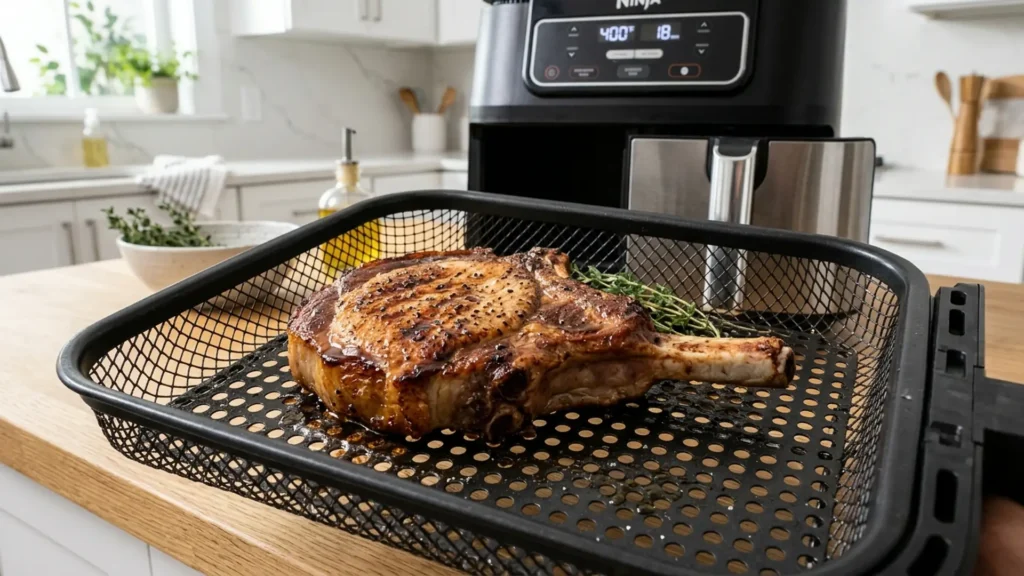
Pork chops have a reputation for coming out dry, and most of the time the air fryer is not the problem, the timing is. The good news is that an air fryer is one of the easiest ways to nail a juicy chop, because the fast circulating heat sears the surface and cooks the inside quickly enough that there is little time for moisture to escape. The whole challenge is matching the time to the thickness and the cut, then pulling the chop at the right internal temperature instead of guessing. Get those two things right and you will get a browned, tender chop every time.
This guide gives you exact air fryer times for boneless and bone-in chops across every common thickness, the internal temperatures that separate juicy from overcooked, and the resting and seasoning steps that protect the meat. Modern pork is safe and best at 145F, not the old, dry 160F your grandmother aimed for, and that single change is the biggest upgrade you can make. Once you stop cooking pork to gray, firm doneness and start pulling it at the right temperature, you will wonder why anyone ever called pork chops dry to begin with.
The short answer: time and temperature
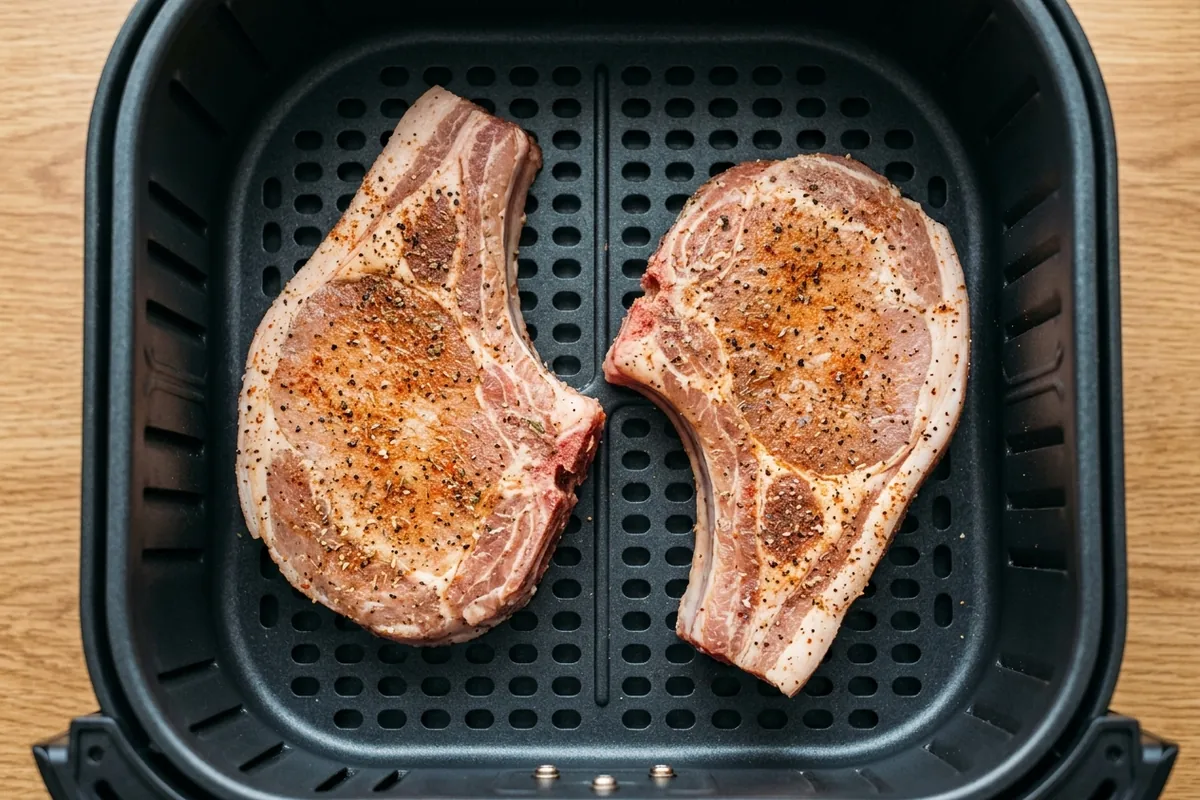
Cook a 1-inch boneless pork chop at 400F for 10 to 12 minutes, flipping halfway, and pull it at an internal temperature of 145F. Thinner chops need less time, bone-in chops need more, and very thick chops do better at a slightly lower temperature so the inside can catch up to the outside. Here is the full chart by cut and thickness.
| Chop type | Thickness | Temperature | Time | Flip |
|---|---|---|---|---|
| Boneless | 1/2 inch | 400F | 7 to 9 min | At halfway |
| Boneless | 1 inch | 400F | 10 to 12 min | At halfway |
| Bone-in | 1 inch | 400F | 12 to 14 min | At halfway |
| Bone-in | 1.5 inch | 380F | 15 to 18 min | At halfway |
| Thin-cut | 1/4 inch | 400F | 6 to 7 min | At halfway |
Thickness matters far more than weight here, so measure with your eye at the thickest point. A 1-inch chop and a half-inch chop can differ by four or five minutes, which is the difference between juicy and dry. Bone-in chops take a little longer than boneless of the same thickness because the bone slows heat transfer, and very thick bone-in chops do best dropped to 380F so the center reaches temperature before the crust overcooks.
Preheat the air fryer for 3 to 5 minutes before adding the chops. A hot basket gives you an immediate sear on contact, which builds flavor and helps lock in juices. If your model takes a while to come up to temperature, the minute you spend learning to preheat your air fryer properly pays off most on proteins like this.
Step by step
- Bring the chops to room temperature for about 20 to 30 minutes before cooking. Cold chops straight from the fridge cook unevenly, leaving the center underdone when the outside is ready.
- Pat dry and season. A dry surface browns far better than a wet one. Rub both sides with a little oil, then salt, pepper, and your spices.
- Preheat to 400F for 3 to 5 minutes, then lay the chops in a single layer with space between them.
- Cook and flip halfway using the time from the table. The flip gives you even browning on both faces.
- Check the internal temperature in the thickest part, away from the bone. Pull the chop at 140F to 142F, because it will keep climbing to 145F as it rests.
- Rest 5 minutes before cutting. This is not optional; it is where the juices redistribute and the chop finishes cooking.
The internal temperatures that matter
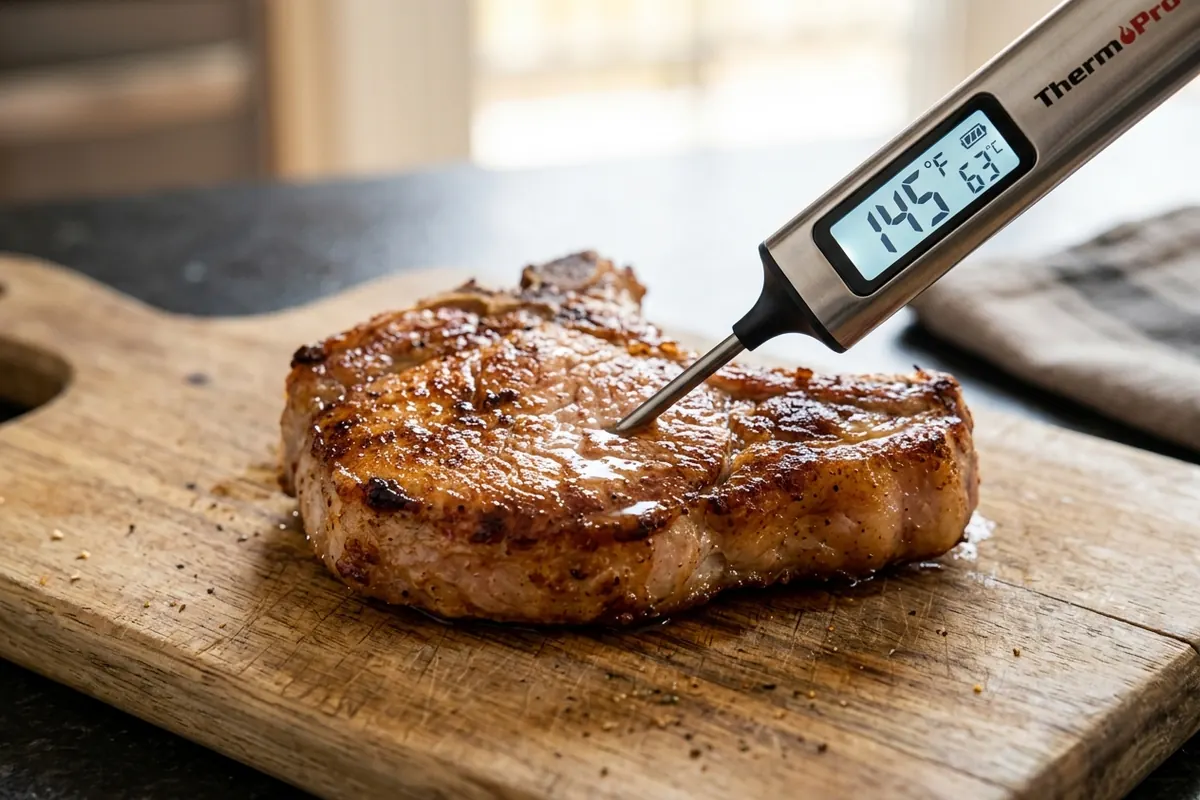
The single most important upgrade for pork chops is to stop cooking by time alone and start cooking to temperature. Pork is safe at a lower temperature than people raised on dry chops expect, and respecting carryover heat is what keeps a chop juicy.
| Stage | Internal temperature | What it means |
|---|---|---|
| Pull from air fryer | 140F to 142F | Carryover heat finishes the cook |
| After a 5-min rest | 145F | USDA safe minimum, juicy and slightly pink |
| Well done | 155F to 160F | Firmer and drier; avoid going past this |
The USDA lowered the safe minimum internal temperature for whole cuts of pork to 145F followed by a 3-minute rest, which is why a properly cooked chop can look faintly pink in the center and still be perfectly safe. That guidance is published in the USDA safe minimum internal temperature chart. Pulling the chop at 140F to 142F and letting carryover heat carry it to 145F during the rest is the trick to landing exactly at safe and juicy rather than overshooting into dry. An instant-read thermometer is the only tool that makes this reliable, since thickness and air fryer wattage vary too much to trust the clock alone.
Bone-in versus boneless: which to choose
The cut you buy changes both the timing and the result, so it is worth knowing the trade-off. Bone-in chops, usually cut from the rib or loin, cook a little slower because the bone slows heat transfer to the meat right around it. The payoff is flavor and forgiveness: the bone helps insulate the surrounding meat, so bone-in chops stay juicy with a slightly wider margin for error. They are the better choice if you are still dialing in your air fryer’s timing.
Boneless chops cook faster and more evenly, and they are easier to eat, but they are also leaner and less forgiving. A boneless chop can go from juicy to dry in the span of a minute or two, which is exactly why cooking to temperature instead of by the clock matters most with this cut. If you buy boneless, consider a quick salted-water brine for thirty minutes before cooking to build in some insurance against dryness. Either cut works beautifully in the air fryer; you just pick your time from the chart by cut and thickness and watch the thermometer.
Thickness is the other half of the decision. Thin-cut chops, around a quarter inch, cook in six to seven minutes and are great for a fast weeknight, but they leave little room for error. Thicker chops, an inch or more, take longer but give you a real margin to hit temperature without overshooting, and they brown better. If you can choose, a one-inch chop is the sweet spot for the air fryer: thick enough to stay juicy, thin enough to cook through quickly.
How to keep pork chops juicy
- Do not skip the rest. Five minutes off the heat lets the juices settle back into the meat instead of running out the moment you cut. This one step saves more chops than any other.
- Pull early, finish on the rest. Take the chop out at 140F to 142F and let carryover heat finish it. Cooking all the way to 145F in the basket usually means overshooting.
- Dry the surface. A patted-dry chop browns; a wet one steams. Browning is flavor and it helps seal the surface.
- Consider a quick brine for lean chops. Thirty minutes in salted water keeps very lean boneless chops moist, though it is optional for bone-in cuts that hold moisture better.
- Match thickness, not weight. Time off the chart by the thickest point, and drop very thick chops to 380F so the center catches up.
Seasoning and flavor
A plain salt-and-pepper chop is great, but pork takes a rub well. A simple blend of paprika, garlic powder, onion powder, salt, and black pepper gives a savory crust, and a pinch of brown sugar in the rub helps the surface caramelize in the air fryer’s dry heat. Rub the seasoning into a lightly oiled surface so it sticks and forms a crust rather than dusting off. For a glaze, brush on something sweet only in the last two minutes, since sugar burns fast at 400F.
Because the air fryer handles proteins so cleanly, pork chops fit the same routine you would use for chicken. If you cook a lot of poultry the same way, the timing logic in our air fryer chicken breast guide carries straight over: preheat, single layer, flip halfway, cook to temperature, rest. Different protein, same discipline.
For deeper flavor, a marinade or a dry brine pays off. A simple marinade of olive oil, garlic, soy sauce or Worcestershire, and a little brown sugar tenderizes and seasons the meat in as little as thirty minutes, though a couple of hours is better. Pat the chops dry before they go in the basket, because a wet surface will steam instead of brown, and the air fryer’s strength is that fast surface sear. A dry brine, which is just salting the chops and letting them sit uncovered in the fridge for an hour or longer, seasons deeply and helps the surface dry out for even better browning. Both approaches add flavor without changing the timing, since the chop thickness is still what drives the cook.
Save sweet glazes for the end. A honey, maple, or barbecue glaze brushed on in the final two minutes will caramelize beautifully, but applied at the start it scorches long before the chop is done. The same goes for any sugar-heavy rub: build the savory crust first, then add sweetness at the finish line so it glazes rather than burns.
What to serve with air fryer pork chops
A chop wants a side that balances its richness. Roasted vegetables done in the same basket after the chops rest are the easy answer. For a heartier plate, a bowl of soup to start turns it into a full dinner. If you are eating low carb, a pork chop is naturally a fit, and a side from a keto dinners lineup rounds out the plate without adding starch. The chop carries the meal; the air fryer just makes sure it lands juicy.
If you want more background on the cut itself, the various pork chop styles, from rib and loin to sirloin and blade, are laid out on the pork chop reference page, and knowing your cut helps you pick the right time off the chart above.
For starch sides, mashed potatoes, rice, or a quick batch of air-fried potato wedges all work, and the wedges can go in the basket while the chops rest so everything lands hot at once. For something brighter, a crisp apple slaw or a simple arugula salad with lemon cuts the richness of the pork nicely. Pork has a natural affinity for fruit, so a spoonful of applesauce or a quick pan of sauteed apples on the side is a classic pairing that never fails. Whatever you choose, the chop comes off the heat first and rests while the sides finish, so plan your timing backward from the five-minute rest.
Can you cook pork chops from frozen?
Yes, though it is not ideal. A frozen pork chop will cook in the air fryer, but it cannot brown well while it is still releasing surface moisture, and the timing becomes harder to judge. If you must cook from frozen, set the air fryer to 360F rather than 400F and add roughly 50 percent more time, flipping partway and checking the internal temperature carefully toward the end. You will not get the same crust, and seasoning will not stick to a frozen surface, so plan to season after the chop has thawed enough on the outside to take a rub.
The far better approach is to thaw chops in the fridge overnight, then bring them to room temperature for 20 to 30 minutes before cooking, exactly as the step-by-step section describes. A properly thawed, dried, and seasoned chop browns beautifully and cooks predictably, which is the whole reason the air fryer does this cut so well. If you are short on time, a quick cold-water thaw in a sealed bag beats cooking from solid frozen. Reserve the cook-from-frozen method for the nights when you genuinely forgot to defrost.
Why the air fryer cooks pork chops so well
Pork chops reward a cooking method that can sear fast and finish quickly, and that is exactly what an air fryer does. The intense circulating heat browns the surface almost on contact, building the savory crust that pan-searing gives you, while the compact chamber cooks the inside fast enough that moisture has little time to escape. A conventional oven cannot match the surface browning without a long bake that dries the chop, and a skillet browns one side at a time while the rest of the chop overcooks. The air fryer browns the whole exposed surface at once and cooks the interior in one short window.
It is also nearly hands-off. Once you preheat, season, and set the time, your only job is one flip and a temperature check. There is no oil splatter to clean, no smoking pan, and no stove to scrub. For a weeknight protein that needs to come out reliably juicy with minimal effort, the air fryer is hard to beat, and the same is true for almost any chop, fillet, or breast you put in it. The discipline is always the same: preheat, dry surface, single layer, flip once, cook to temperature, rest.
Common mistakes and quick fixes
- Dry, tough chop: cooked past 145F or skipped the rest. Pull at 140F to 142F and rest 5 minutes.
- Burnt outside, raw inside: chop too thick for 400F. Drop to 380F and add time for chops over 1.25 inches.
- Pale, no crust: wet surface or skipped preheat. Pat dry, oil lightly, preheat the basket.
- Uneven cooking: cold chop straight from the fridge. Let it sit out 20 to 30 minutes first.
- Seasoning falls off: applied to a damp surface. Pat the chop dry, rub it with a little oil, then season so the spices grip.
Frequently Asked Questions
How long do you cook pork chops in an air fryer at 400F?
A 1-inch boneless chop takes 10 to 12 minutes at 400F, flipping halfway. Bone-in chops of the same thickness take 12 to 14 minutes, thin-cut chops take 6 to 7 minutes, and very thick bone-in chops do better at 380F for 15 to 18 minutes.
What internal temperature should pork chops reach?
Pull the chop at 140F to 142F and let it rest 5 minutes; carryover heat will bring it to the USDA safe minimum of 145F. At 145F a chop can look faintly pink in the center and still be perfectly safe and juicy.
Do I need to flip pork chops in the air fryer?
Yes, once at the halfway mark. Flipping gives both faces even browning and a consistent crust. Pair the flip with a preheated basket and a dry, seasoned surface for the best sear.
Why do my air fryer pork chops come out dry?
The most common cause is overcooking past 145F or skipping the rest. Cook to temperature rather than by the clock, pull the chop a few degrees early, and rest it 5 minutes so the juices redistribute before you cut.