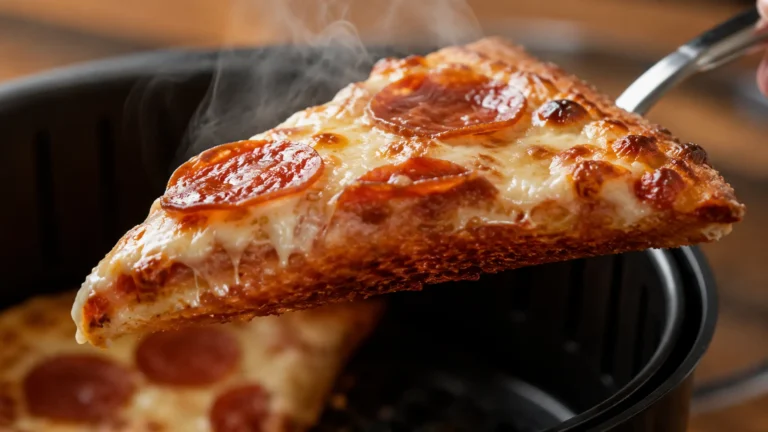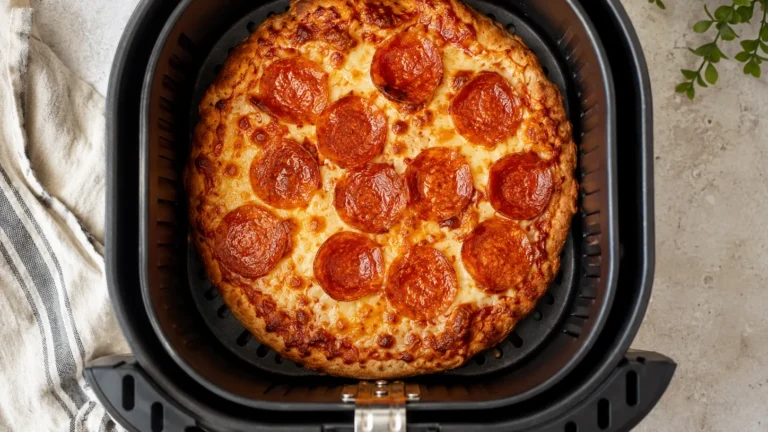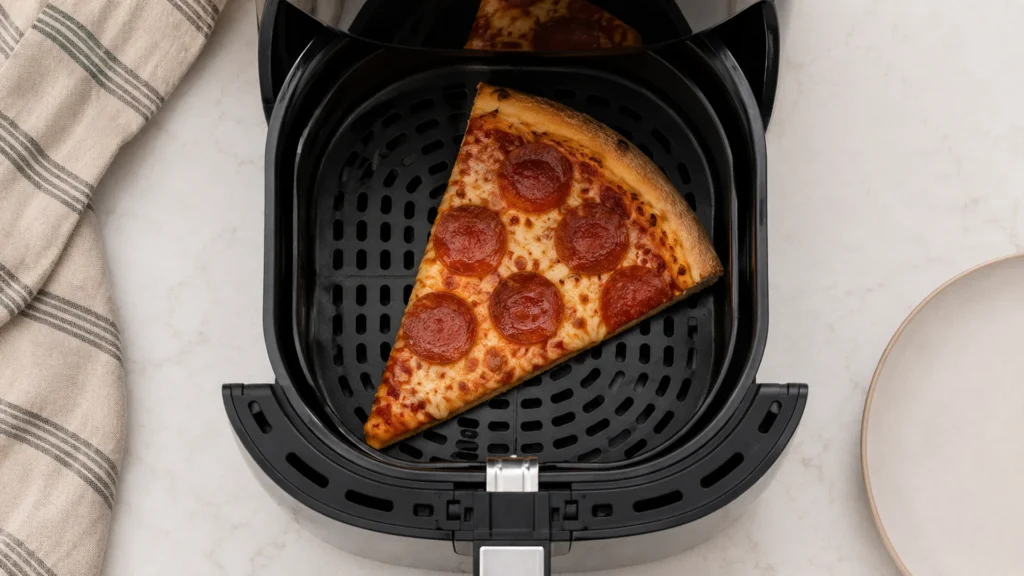
To reheat pizza in air fryer, set it to 350 degrees Fahrenheit and give a slice three to four minutes. That is the whole trick, and it beats every other method by a wide margin. The microwave turns the crust to wet cardboard, the oven takes twenty minutes and dries out the cheese, and a skillet only crisps the bottom. The air fryer does what none of them manage at once: it crisps the crust, melts the cheese until it is gooey again, and gets it all done before you finish pouring a drink.
Below is the exact temperature and time for every crust type, a step-by-step that takes the guesswork out, the fixes for the two things that go wrong (a burnt edge or a cold center), and answers to the questions people actually ask, including whether you can reheat frozen leftover slices and how many days old is too old. Cold pizza has its fans, but reheated-right pizza wins.
Why the Air Fryer Is the Best Way to Reheat Pizza
Reheating is really a texture problem, not a heat problem. Any appliance can make a slice warm; the hard part is making day-old crust crisp again without drying out the toppings. The air fryer wins because it works like a tiny convection oven, driving hot air across the slice so the crust re-crisps from the bottom and edges while the short cooking time keeps the cheese from turning to rubber. A microwave heats the moisture inside the crust and steams it limp. A full oven gets there eventually but wastes fifteen minutes of preheating for one slice. The air fryer splits the difference: oven-quality crust in microwave-level time. If you are new to the appliance, the same airflow that re-crisps pizza is the foundation of everything it does, which our guide to how to use an air fryer walks through in full.
The Exact Time and Temperature
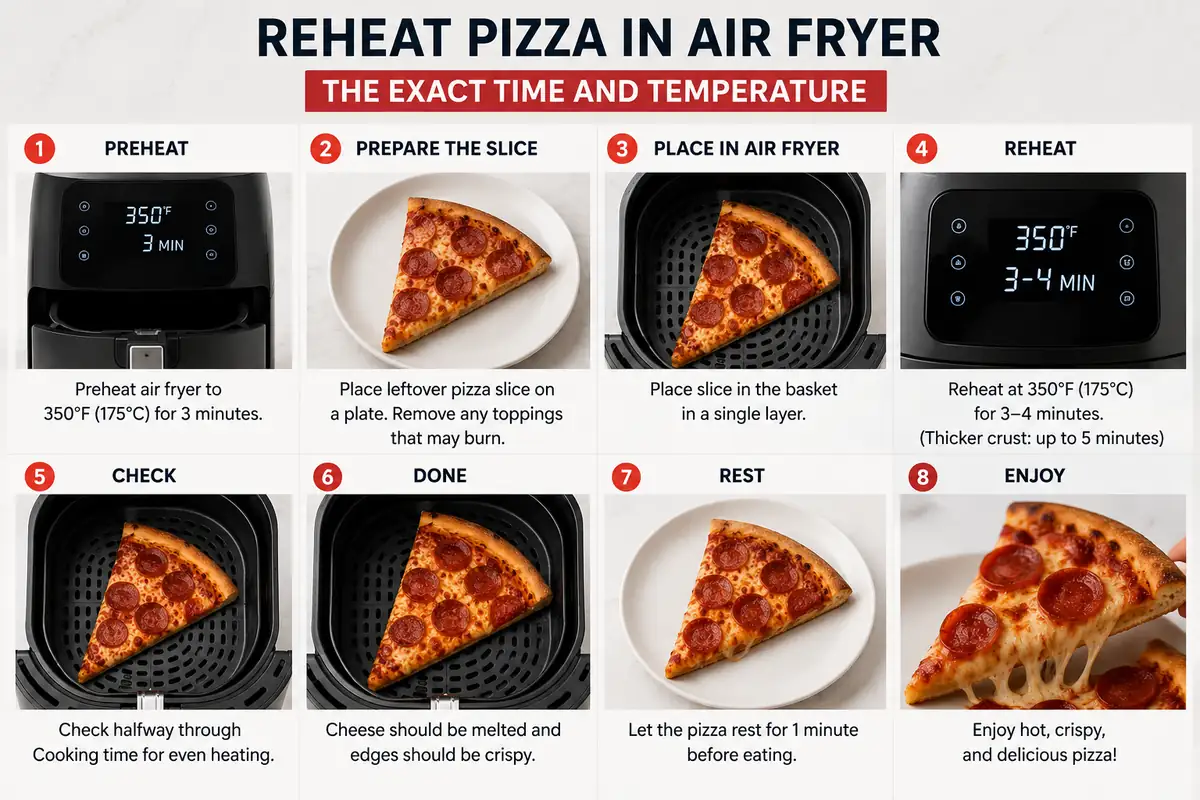
Start at 350 degrees for three to four minutes and adjust from there. Thinner crusts need less time, thicker and loaded slices need a touch more, and anything still cold in the center just goes back in for another minute. These are the numbers to keep on the fridge.
| Pizza type | Temperature | Time |
|---|---|---|
| Thin crust | 350 F | 3 min |
| Regular hand-tossed | 350 F | 3-4 min |
| Thick or deep dish | 325 F | 5-7 min |
| Loaded or extra cheese | 325-350 F | 4-5 min |
| Frozen leftover slice | 325 F | 5-7 min |
The pattern is easy to remember: thinner and lighter slices like it hotter and faster, thicker and heavier slices like it a little cooler and longer so the middle catches up before the edge scorches. When in doubt, pull it early and add time, because a slice that needs another minute is fixable and a burnt crust is not.
Step by Step
- Preheat the air fryer for two minutes at 350 degrees if your model preheats. A hot start crisps the crust immediately.
- Lay the slices in the basket in a single layer, not touching. One or two slices is the sweet spot for most baskets.
- Cook for three minutes at 350 degrees, then check. The cheese should be bubbling and the crust firm.
- If the center is still cool, give it one more minute. If the edges are browning fast while the middle lags, drop to 325 degrees for the rest.
- Lift the slices out with tongs, let them sit thirty seconds so the cheese sets, and eat.
There is no need to add oil. The cheese and any pepperoni release plenty of their own fat as they heat, and extra oil just makes the slice greasy. Salt or season after, not before.
Should You Use Foil or Parchment?
You do not need a liner, but one helps with cleanup and with very cheesy slices that tend to drip. A small piece of parchment under the slice catches stray cheese and keeps it from welding to the basket, and it handles the slight acidity of tomato sauce better than foil does. Foil works too for catching drips, though tomato sauce is acidic enough that parchment is the safer pick for pizza. Either way, weigh the liner down with the slice so the fan cannot lift it, and never run it empty. The full rundown on when each liner is safe lives in our guide on whether you can put aluminum foil in an air fryer, which matters here because pizza sauce is exactly the kind of acidic food that reacts with bare foil.
Reheating Different Kinds of Pizza
Thin and New York style
These reheat the best of any style. The thin base re-crisps fast and the modest cheese load melts evenly, so three minutes at 350 usually nails it. Fold a reheated New York slice and it holds like fresh.
Thick, deep dish, and Sicilian
A tall slice needs a gentler, longer approach so the dense middle warms through before the top burns. Drop to 325 degrees and give it five to seven minutes, checking at five. If the top is perfect but the very center is still cool, a final minute usually finishes it.
Frozen leftover slices
Yes, you can reheat a slice straight from the freezer, no thawing needed. Cook it at 325 degrees for five to seven minutes, checking toward the end. The lower temperature gives the inside time to thaw and heat while the crust still crisps. This is a genuinely great way to keep single slices in the freezer for a fast lunch.
Gluten-free and cauliflower crust
Alternative crusts reheat well but can dry out faster, so start at 325 degrees and watch closely from three minutes on. A cauliflower or chickpea crust crisps beautifully in the air fryer, often better than it was fresh. If you cook gluten-free often, the same air-fryer technique carries over to a whole range of gluten-free pizza and pasta dishes.
How Different Toppings Reheat
The crust gets most of the attention, but the toppings decide how good the reheated slice really is, and they do not all behave the same. Knowing how each one reacts lets you adjust before anything dries out or burns.
Pepperoni and cured meats are the easy winners. They render a little fat and crisp at the edges in the air fryer, often tasting better reheated than they did fresh, so a meat-heavy slice needs no special handling beyond the standard three to four minutes. Extra cheese is the opposite: a heavily loaded slice drips as the cheese loosens, so drop to 325 degrees, give it an extra minute, and put parchment underneath to catch the runoff. Fresh vegetables like peppers, onions, and mushrooms release water in the fridge and can steam rather than crisp, so pat any visible moisture off the top with a paper towel before reheating, and keep the time on the short side so they do not shrivel. White or no-sauce pizzas dry out faster than red-sauce slices because the sauce holds moisture, so watch a garlic-and-cheese or pesto slice closely and pull it the moment the cheese bubbles. Barbecue chicken and other saucy specialty slices sit somewhere in the middle, reheating well at 350 degrees as long as you do not crowd them.
One trick that works across the board: if a slice has lost its freshness in the fridge, add a small handful of fresh topping before reheating. A few torn basil leaves, a pinch of fresh mozzarella, or a scatter of grated parmesan melts in during the last minute and makes a three-day-old slice taste like it just came out of the oven.
Air Fryer vs the Other Reheating Methods
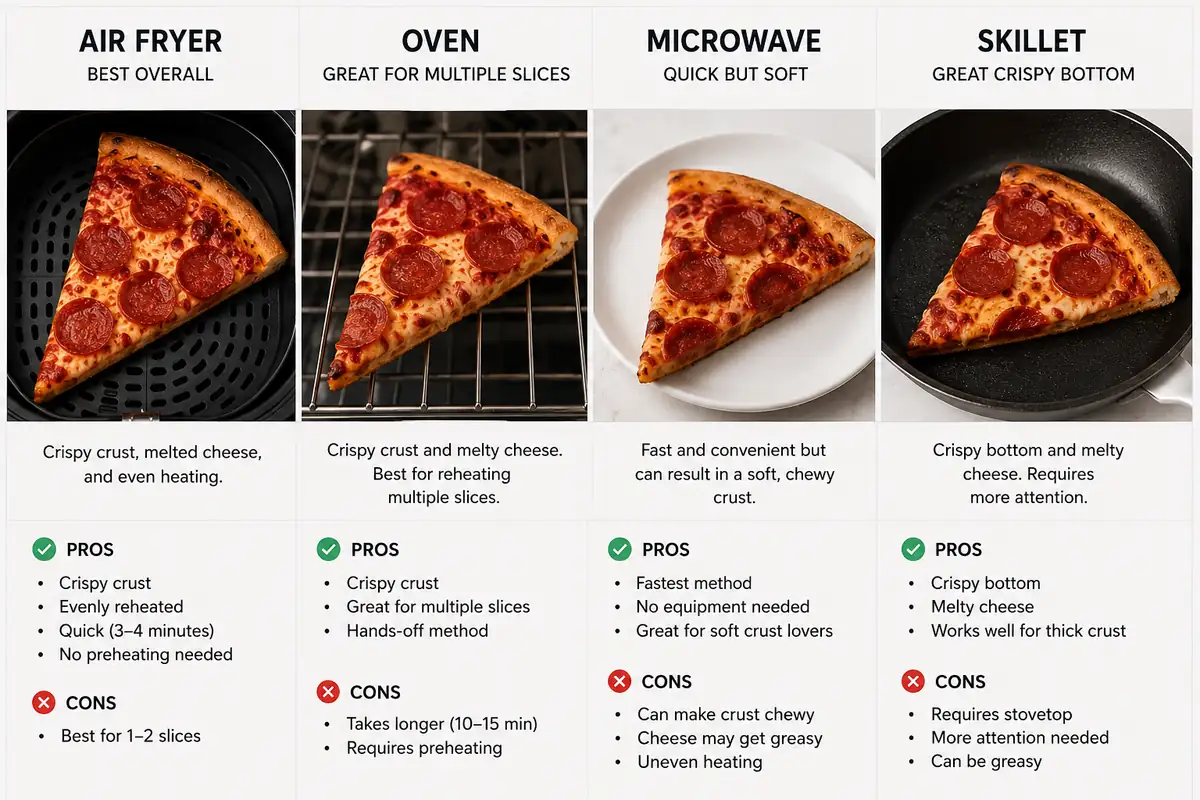
It helps to know exactly why the air fryer beats the alternatives, because each of the other methods fails in a specific, predictable way. The microwave is the fastest but the worst for texture, since it heats the water trapped in the crust and steams it into something soft and chewy; it is fine in a pinch if you only care about warmth, not crunch. A conventional oven produces a genuinely good result, close to the air fryer, but it makes you preheat a large cavity for ten to fifteen minutes to reheat a single slice, which is a lot of energy and waiting for leftovers. A skillet on the stovetop crisps the bottom of the crust nicely and is a favorite of pizza purists, but it does nothing for the top, so the cheese stays cool and the toppings never quite warm through unless you add a lid and a splash of water, at which point you are steaming again.
The air fryer takes the best of each and drops the downsides. It crisps the bottom like the skillet, warms the top and melts the cheese like the oven, and does it in microwave-level time without preheating a giant oven. The only situation where another method wins is volume: if you are reheating an entire large pizza for a group, a full oven fits more at once than a single air-fryer basket, which can only handle one or two slices at a time. For one to four slices, which is how most leftovers actually get eaten, the air fryer is the clear choice. The same speed-and-crisp advantage is why so many people end up reaching for it to reheat fries, wings, and nuggets too, not just pizza.
The Two Things That Go Wrong, and the Fix
Almost every reheating problem is one of two issues. The first is a burnt or hard edge with a cold center, which means the temperature was too high for the thickness. Drop to 325 degrees and add time so the heat penetrates evenly. The second is a soggy or limp result, which almost always comes from crowding the basket so the slices steam each other instead of crisping. Give every slice space, work in two batches if you have a lot, and the crunch comes back. A third, smaller annoyance is cheese sliding off; that happens when a slice is moved while the cheese is molten, so let it rest thirty seconds before you lift it.
| Problem | Cause | Fix |
|---|---|---|
| Burnt edge, cold middle | Too hot for the thickness | Drop to 325 F, add a minute |
| Soggy, limp crust | Basket too crowded | Single layer, two batches |
| Cheese slides off | Moved while molten | Rest 30 seconds before lifting |
| Dry toppings | Cooked too long | Check at 3 min, pull early |
How Long Does Leftover Pizza Keep?
Reheating well only matters if the pizza was stored safely. Cooked pizza is good in the fridge for three to four days in an airtight container or wrapped, and the air fryer revives it just as well on day three as on day one. Pizza left at room temperature for more than two hours should be thrown out, since that is the window in which bacteria multiply, and no amount of reheating makes unsafe food safe. For longer storage, freeze slices in a single layer, then bag them, and reheat straight from frozen using the numbers above. When you do pull a slice from the fridge, the air fryer is also a tidy way to crisp a quick side like potato wedges to round out the meal.
A Few Pro Touches
Small moves sharpen the result. If the crust is crisp but the cheese is not quite melted, a final thirty seconds with the slice closer to the element finishes the top without overcooking the base. A light shake of dried oregano or chili flakes after reheating wakes up flavors that flattened in the fridge. And if you reheat pizza often, jot down the time and temperature that suits your favorite place’s slices, since a thin Neapolitan and a thick pan slice want different settings. For testing-backed technique on crust and reheating in general, America’s Test Kitchen is a reliable reference, and Consumer Reports independently tests air fryers if you are still picking a model.
Frequently Asked Questions
What temperature do you reheat pizza in an air fryer?
Use 350 degrees Fahrenheit for most slices, cooking for three to four minutes. Drop to 325 degrees for thick, deep dish, or frozen slices so the center heats through before the edge browns. Check at the three-minute mark and add time only if needed.
How long does it take to reheat pizza in an air fryer?
Most slices take three to four minutes at 350 degrees. Thick or deep dish slices take five to seven minutes at 325 degrees, and frozen leftover slices take five to seven minutes at 325 degrees as well. Thin crust can be done in three minutes flat.
Can you reheat frozen pizza slices in an air fryer?
Yes, with no thawing needed. Cook frozen leftover slices at 325 degrees for five to seven minutes, checking toward the end. The lower temperature lets the inside thaw and warm while the crust crisps, which makes freezing single slices a smart move.
Do you need to preheat the air fryer to reheat pizza?
Preheating for two minutes helps the crust crisp from the moment the slice goes in, so it is worth doing if your model preheats. It is not strictly required, but skipping it usually means adding about a minute to the cook time.
Do you put oil on pizza before reheating it in an air fryer?
No. The cheese and any meat toppings release enough of their own fat as they heat, so added oil only makes the slice greasy. Season after reheating rather than before if you want a flavor boost.
Why is my reheated pizza soggy in the air fryer?
Soggy pizza almost always means the basket was too crowded, so the slices steamed each other instead of crisping. Reheat one or two slices at a time in a single layer with space around them, and work in batches if you have more.
Can you reheat pizza more than once?
It is best to reheat only the slices you plan to eat, since each round of heating and cooling dries the pizza out a little more and adds time at unsafe temperatures. If you have a large amount, leave the rest in the fridge and reheat fresh batches as you go rather than warming the whole pizza and chilling the leftovers again. Pizza that has been reheated, cooled, and reheated a second time is safe within the three to four day window but noticeably drier, so reheating in small batches keeps the quality up.
Bottom Line
The air fryer is simply the best tool for leftover pizza, and the method could not be simpler: 350 degrees for three to four minutes, a single layer with space between slices, and a drop to 325 degrees for anything thick or frozen. Skip the oil, rest the slice for thirty seconds so the cheese sets, and reach for parchment if you want easy cleanup. Once you reheat a slice this way, the soggy microwave version stops being an option, because a crisp crust and gooey cheese are only a few minutes away.