A toaster gives you a hot bagel with a soft middle and two scorched edges. An air fryer does the opposite. The moving hot air dries and crisps the cut face evenly while leaving the crumb chewy, and it handles a thick deli bagel that would never fit in a toaster slot. I have toasted hundreds of bagels in test baskets, and once you learn the temperature and the timing by bagel type, this becomes the fastest, most consistent way to do it. No babysitting a lever, no jammed slot, no half-frozen center staring back at you.
This guide gives you the exact times and temperatures for every bagel scenario you will actually run into: fresh, frozen, sliced, whole, mini, and stale. It also covers the small mistakes that turn a good bagel into a hockey puck, how to read doneness by eye instead of trusting the timer, and how to load cream cheese or an egg without making a mess of the basket. By the end you will be able to walk up to any bagel in your kitchen and know the setting without looking it up again.
The short answer: time and temperature
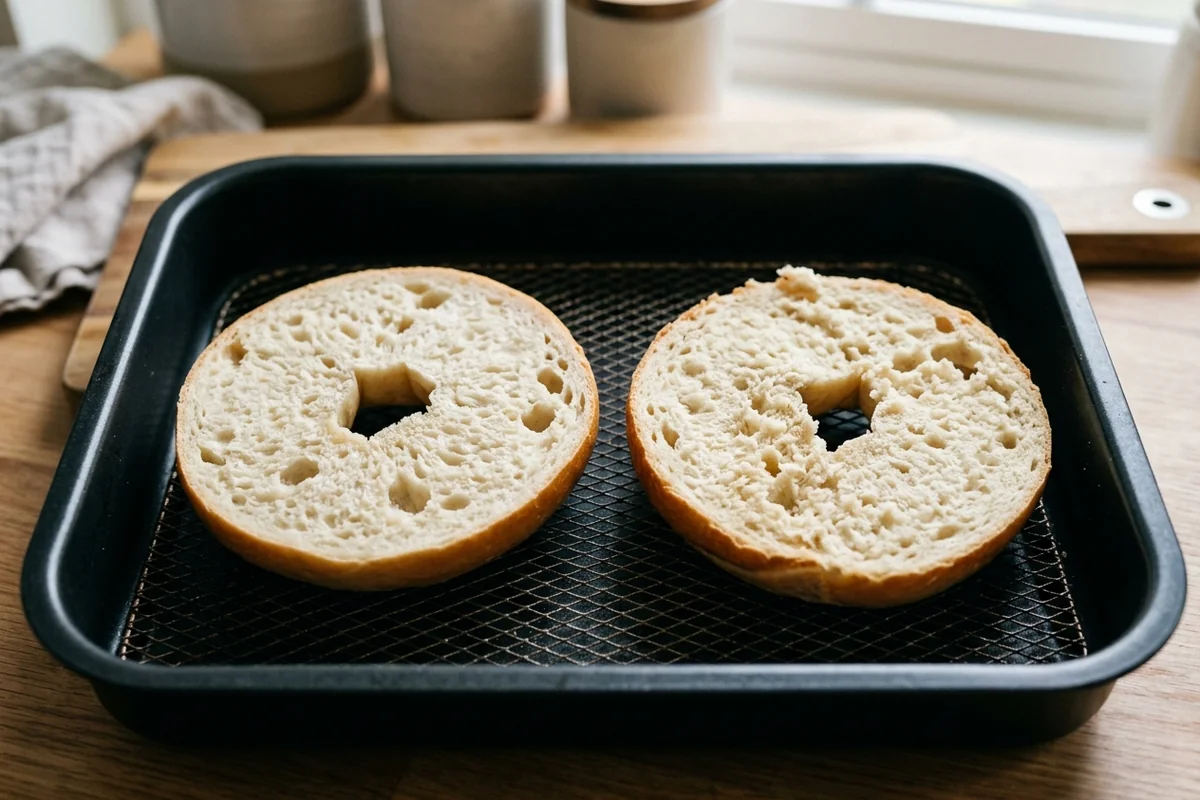
For a fresh, sliced, full-size bagel, set the air fryer to 370F and toast for 3 to 4 minutes, cut side up, no flip. That single setting covers most mornings. Everything else is a small adjustment from there. Mini bagels and stale bagels go cooler and shorter, frozen bagels go cooler and longer, and a dense New York style bagel wants an extra minute. Here is the full breakdown so you are never guessing.
| Bagel scenario | Temperature | Time | Notes |
|---|---|---|---|
| Fresh, full-size (sliced) | 370F | 3 to 4 min | Cut side up, no flip needed |
| Fresh, mini bagel | 350F | 2 to 3 min | Browns fast, check at 2 min |
| Day-old / slightly stale | 350F | 2 to 3 min | A light water mist revives the crumb |
| Frozen, whole (unsliced) | 330F | 5 to 6 min | Then slice and toast 2 to 3 min more |
| Frozen, pre-sliced | 350F | 4 to 5 min | Straight from freezer, cut side up |
| Thick deli / New York style | 370F | 4 to 5 min | Add a minute for a dense crumb |
Notice that frozen whole bagels start at a lower 330F. That lower heat gives the inside time to thaw before the surface browns, so you do not end up with a dark crust wrapped around an icy core. Once the whole bagel has softened enough to slice cleanly, you can open it and give the cut faces another 2 to 3 minutes to crisp. This two-stage approach is the single biggest fix for the most common air fryer bagel complaint.
One more variable worth naming: basket style. A drawer-style air fryer holds heat tightly and runs a touch hotter than a flat oven-style unit with a wider rack. If you own an oven-style model, lean toward the higher end of each time range. If you own a compact drawer model, check at the lower end. After two or three bagels you will know which way your machine drifts, and you can stop thinking about it.
Step by step
The method barely changes across bagel types, so learn it once and you have learned it for all of them.
- Slice the bagel if it is not pre-sliced. A serrated knife and a flat board, fingers tucked back. For a frozen whole bagel, skip this step until it has softened in the basket, because a frozen bagel is dangerous to cut and tends to split unevenly.
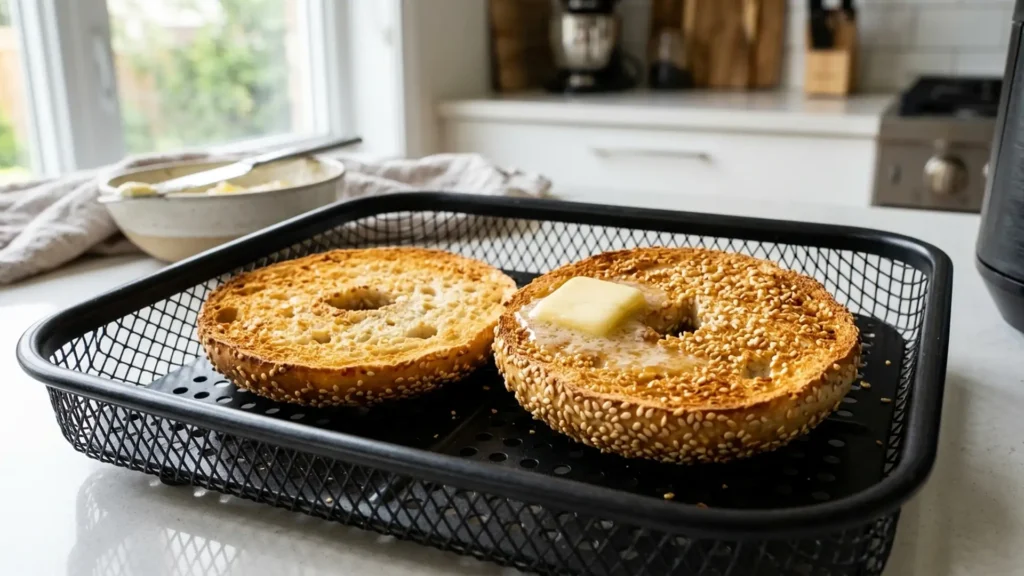
- Place cut side up in a single layer. The cut face is what you want crisp, so it needs to face the airflow. Do not stack halves on top of each other, and leave a little gap between pieces so air can move around each one.
- Set the temperature and timer from the table above. Most air fryers heat fast enough that preheating is optional for toast, but a 2-minute preheat does give a touch more crunch on the first batch of the day.
- Check at the halfway mark. A bagel can go from golden to burnt in about 30 seconds at the end, so peek early. You do not need to flip a sliced bagel; the cut face does the work and the rounded crust takes care of itself.
- Pull it and top it. Butter melts instantly on a hot toasted face. For cream cheese, let it cool 30 seconds first so it does not slide off and pool in the basket.
If you are running the air fryer for the first time that day from cold, add about 30 seconds. A cold basket steals a little heat from the first batch. This is the same principle behind taking a minute to preheat your air fryer when crispness matters most, and it is why batch two often comes out better than batch one.
Reading the toast: how to judge doneness by eye
Times are a starting point, not a guarantee. Wattage, basket size, and even how full the basket is all nudge the result. Train your eye on the cut face instead of trusting the clock blindly, and you will never serve a pale or burnt bagel again.
| Toast level | What to look for | Pull it at |
|---|---|---|
| Light | Edges just turning gold, center still pale | 3 min |
| Medium | Even golden-brown face, crisp rim | 3.5 to 4 min |
| Dark | Deep brown, audible crunch when pressed | 4.5 to 5 min |
The color you are chasing lives on the flat cut surface, not the rounded crust. The rounded outside browns more slowly because it sits away from the most direct airflow, so do not wait for it to darken or you will overcook the inside. If you like a very dark, almost charred New York style toast, push to the dark setting but stand by the basket for the final minute. There is no recovering a burnt bagel.
Toasting frozen bagels without a gummy center
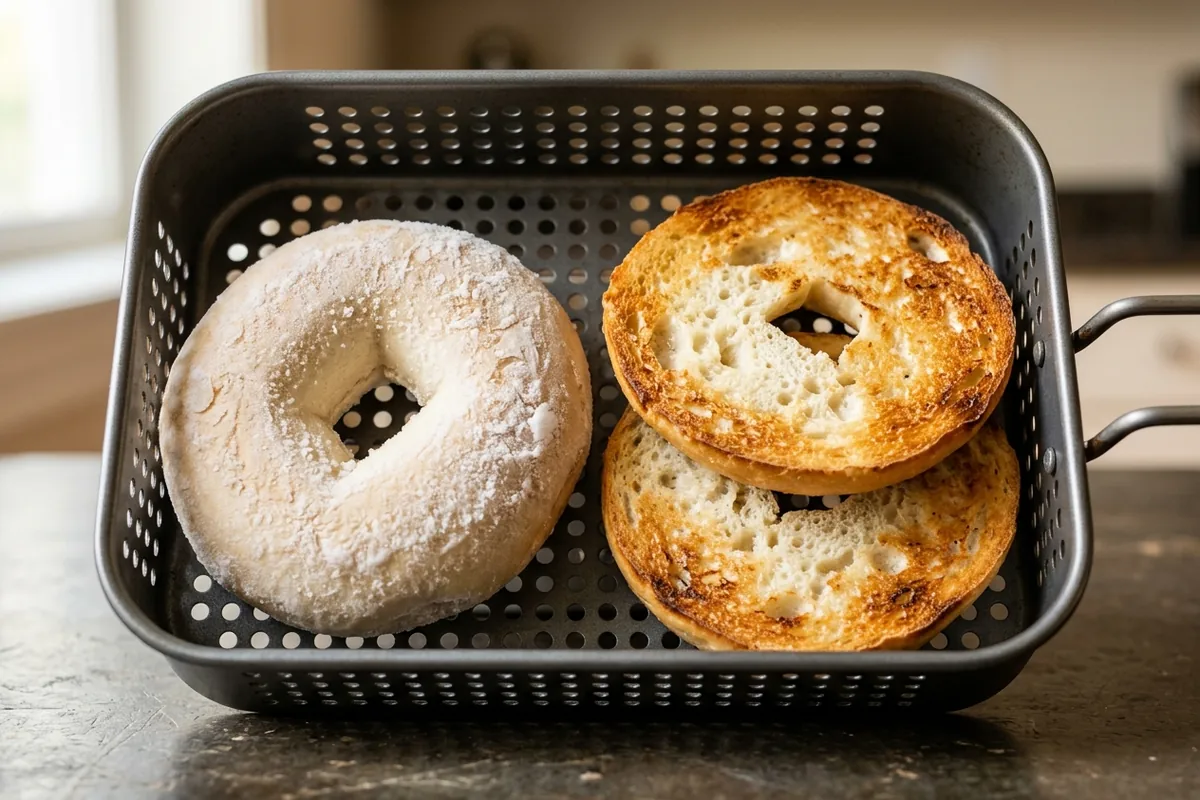
Frozen bagels are where most people go wrong. The instinct is to crank the heat to save time, which browns the surface long before the middle thaws. The fix is patience at a lower temperature. Toast a frozen whole bagel at 330F for 5 to 6 minutes until it is soft enough to slice, then open it, set the halves cut side up, and give them 2 to 3 more minutes at 350F to crisp the faces. If your bagels come pre-sliced, you can skip straight to 350F for 4 to 5 minutes from frozen and finish in one pass.
There is no need to thaw on the counter first. The air fryer handles the thaw and the toast together, which is the same reason it is so good with other freezer staples. The whole air fryer frozen foods category leans on this idea: lower heat to thaw, then a short hot finish to crisp. Once you internalize that two-step rhythm, frozen bagels stop being a gamble.
Tips for the crispiest bagel
- Single layer, always. Overlapping bagel halves block airflow and create soft, pale spots. Toast in batches if your basket is small. Two halves at a time beats four crammed in.
- A thin brush of butter or oil on the cut face before toasting gives a deeper golden crust and a little richness. Skip it if you want a plain dry toast for jam or cream cheese.
- Mist a stale bagel with a few drops of water before toasting. The moisture steams the crumb soft again while the surface crisps, reviving a day-old bagel almost to fresh. This trick alone saves a lot of bagels from the trash.
- Season before, not after. Everything seasoning, sesame, or a sprinkle of flaky salt sticks better to a slightly oiled cut face that then toasts, locking the seasoning in rather than dusting it off your shirt.
- Mind the rounded top. If a tall bagel risks touching the heating element, weigh it down lightly with a small oven-safe rack or toast it cut side up only and skip flipping entirely.
Adding cream cheese, egg, or a breakfast build
You can take a toasted bagel further without a second pan. For a melty cream cheese top, toast the bagel normally, spread the cream cheese, then return it to the basket at 400F for 1 minute to set and lightly brown the edges. For a bagel sandwich, toast the bagel first, cook your filling separately, then assemble so nothing goes soggy. A toasted bagel pairs naturally with air fryer bacon and a quick egg for a full breakfast that never touches the stovetop.
If toast is your weak point in general, the same airflow logic applies to sandwich bread and English muffins. Our guide on making toast in the air fryer breaks down those timings if you want to toast more than bagels in the morning rush.
Adjusting for your air fryer model and basket size
The single biggest reason two people follow the same recipe and get different bagels is the machine. Air fryers vary in wattage from roughly 1,200 to 1,800 watts, and that difference shows up fast on something as quick as toast. A higher-wattage drawer model can brown a bagel a full minute faster than the times in the table, while a lower-wattage or oven-style unit may need an extra minute. The numbers above are a reliable middle ground, but your first bagel is really a calibration run.
Basket size matters too. A compact 2-quart air fryer fits one bagel comfortably and runs hot because the chamber is small, so check early. A large 6-quart basket or an oven-style model with a wide rack holds more air, heats a touch more gently, and lets you toast four halves at once, but you should rotate the basket or swap rack positions halfway if your model has known hot spots. The fix for any of these is the same: watch the cut face, not the clock, until you know your machine. After three or four bagels you will have a number you trust, and you can stop thinking about wattage entirely.
If your bagel keeps touching the top heating element because the basket is shallow, lower the temperature 10 to 15 degrees and add a minute. The extra distance from the element matters less than the total energy delivered, so a slightly longer, cooler toast gives you an even result without scorching the top of a tall bagel.
Why the air fryer beats a toaster and an oven
A pop-up toaster heats from two fixed elements on either side of a narrow slot. That works for thin sandwich bread, but a bagel is thick and dense, so the surface near the elements scorches while the center stays cool. A toaster also cannot fit a tall deli bagel without forcing it, and it offers no real control over how dark the toast gets beyond a vague dial. An oven solves the fit problem but wastes ten minutes preheating to toast a single bagel, and the bottom that rests on the rack browns unevenly.
The air fryer splits the difference and wins on both counts. The circulating hot air reaches every exposed surface, so the cut face crisps evenly without a hot spot, and the open basket fits any size bagel you can buy. You get fine control by adjusting time in 30-second steps, and because the chamber is small it comes up to temperature almost instantly, so there is no real preheat penalty. For a single bagel or a batch of four, it is faster start to finish than the oven and more even than the toaster. Once you switch, you do not go back.
Best toppings and flavor pairings
A toasted bagel is a blank canvas, and the air fryer gives you a sturdier, crisper base than a toaster, which means it holds heavier toppings without going limp. For a classic, cream cheese on a plain or everything bagel is hard to beat; add smoked salmon, capers, and thin red onion for a deli-style build. On the sweet side, a cinnamon raisin bagel toasted dark and spread with butter and a drizzle of honey makes a quick treat. For a savory breakfast, top a toasted bagel half with mashed avocado, a fried egg, and flaky salt.
If you toast the bagel a shade darker than usual, it stands up to wet toppings like a poached egg or a spoonful of marinara for a quick pizza bagel. The extra crispness is insurance against sogginess. Whatever you build, apply soft, cold toppings after the bagel has rested 30 seconds so they do not slide off the hot face, and add anything that needs melting, like cheese, for a final 60-second pass at 400F.
Common mistakes and quick fixes
- Burnt edges, raw middle: heat too high. Drop 20 degrees and add a minute so the inside catches up before the surface scorches.
- Pale and chewy, never crisp: basket overcrowded or bagel placed cut side down. Single layer, cut side up, every time.
- Dry and crumbly: over-toasted, or the bagel was already stale and dry. Cut the time and add a water mist next time.
- Toppings slide off: applied to a too-hot face. Let the bagel rest 30 seconds before spreading soft toppings.
- Uneven browning across the batch: pieces too close together. Air needs a path around each half, so spread them out or work in two rounds.
A note on food safety and freshness
Toasting is gentle on a bagel, but storage is what keeps it good. Keep fresh bagels in a sealed bag at room temperature for two to three days, or freeze them sliced for up to three months. Reheating frozen baked goods follows the same safe-handling logic the FDA lays out in its safe food handling guidance: thaw and reheat thoroughly, and do not leave perishable toppings like cream cheese or egg out at room temperature for more than two hours. The bagel itself, a baked dough, is low risk; any dairy or egg you add to it is the part to watch. If you want the history and the regional styles behind the bagel, the Bagel reference page is a good rabbit hole for a slow morning.
A toasted bagel also slots neatly into a low-effort meal plan. It works as the carb base for a savory breakfast, but if you are feeding a mixed table it pairs with lighter options too, from a gluten-free breakfast spread on the side to a plant-forward vegan breakfast board when not everyone eats the same way. The air fryer does the bagel; the rest of the plate is up to you.
Frequently Asked Questions
What temperature should I toast a bagel at in an air fryer?
For a fresh, sliced, full-size bagel, 370F for 3 to 4 minutes is the reliable setting. Go down to 350F for mini or stale bagels, and down to 330F for frozen whole bagels so the inside thaws before the surface browns. Adjust toward the longer end of the range for oven-style baskets.
Do I need to flip a bagel when toasting it in the air fryer?
No. Place the bagel cut side up and leave it. The cut face gets the most direct airflow and crisps without flipping. Flipping only matters for whole, unsliced items, which is rare for toasting a bagel.
Can I toast a frozen bagel without thawing it first?
Yes. Toast a frozen whole bagel at 330F for 5 to 6 minutes until it is soft enough to slice, then open it and toast the cut faces 2 to 3 minutes more at 350F. Pre-sliced frozen bagels go straight in at 350F for 4 to 5 minutes in one pass.
Why did my bagel come out hard or dry?
It was over-toasted, or the bagel was already stale and dry before toasting. Reduce the time, and for older bagels mist the cut face with a few drops of water first so the crumb steams soft while the surface crisps.