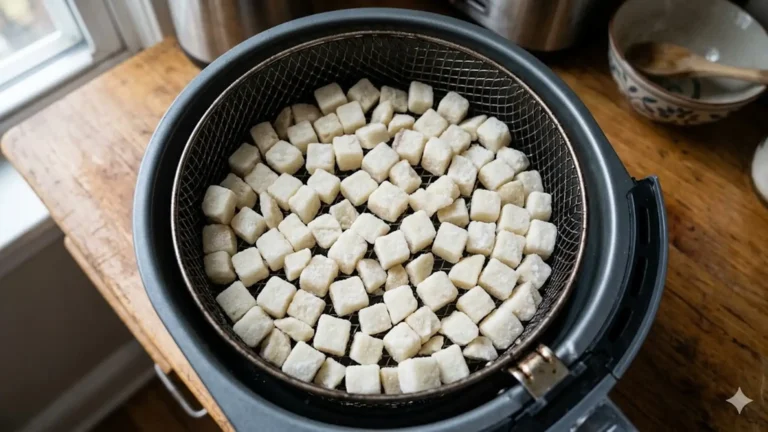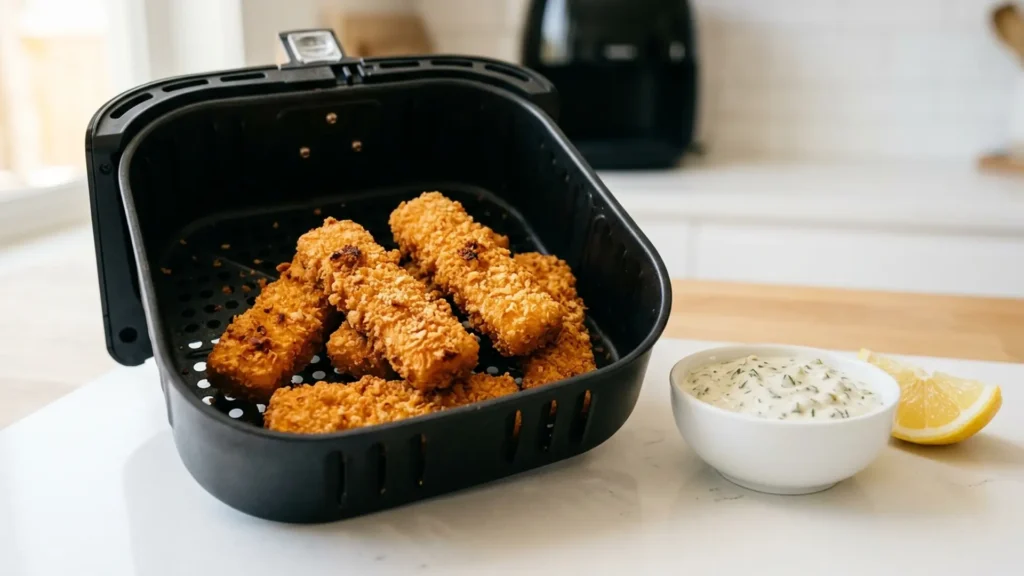
Frozen fish sticks were practically invented for the air fryer. The oven leaves them pale and limp on the bottom where they sit against the tray, and the microwave is not even worth discussing. The air fryer crisps every side, cooks them straight from frozen in under ten minutes, and does it without preheating the whole kitchen. Whether you are feeding kids on a weeknight or building a quick fish sandwich for yourself, this is the fastest route to a crunchy stick with a hot, flaky center.
The whole job comes down to one temperature, a single flip, and knowing when they are done. This guide gives you exact times by stick type and by the brands most people actually buy, the food-safety check that matters for seafood, and the dipping sauces and sides that turn a freezer staple into a real meal. No thawing, no batter, no guesswork. By the time you finish reading, you will be able to cook any box of fish sticks in your freezer to a perfect crisp without checking the package directions again.
The short answer: time and temperature
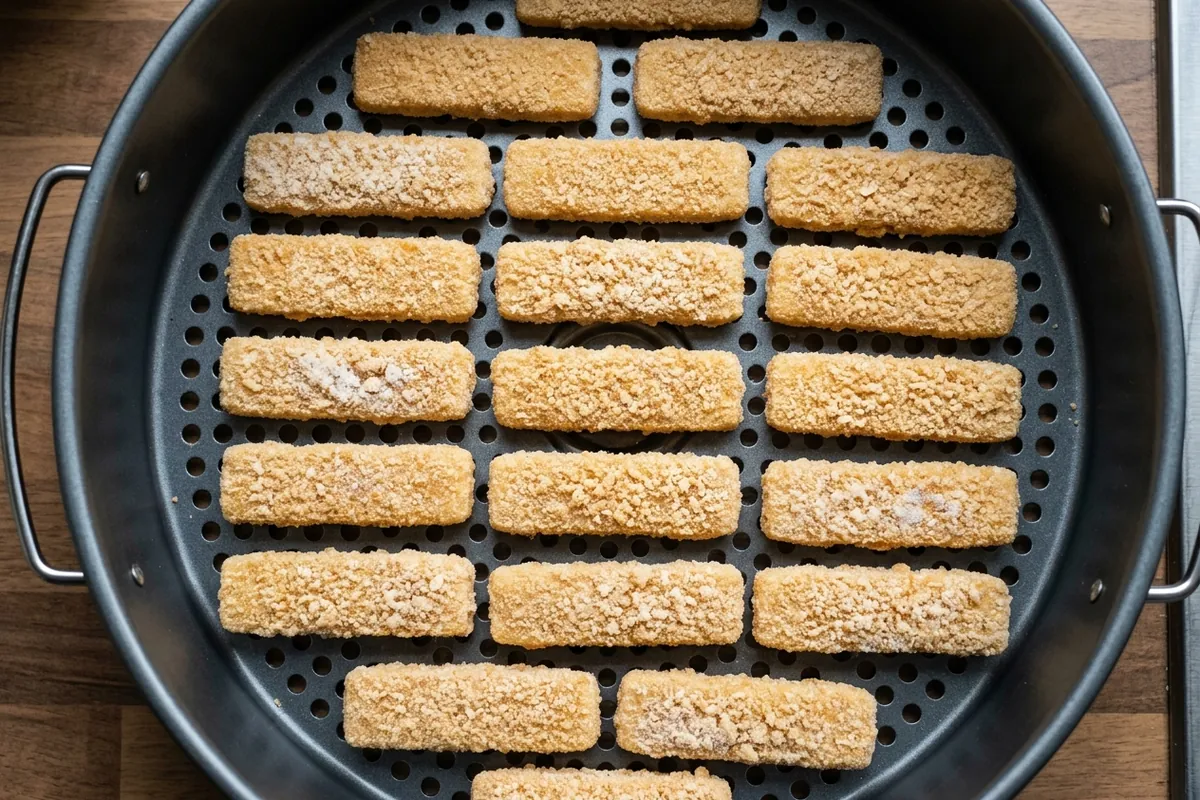
Cook standard frozen fish sticks at 400F for 9 to 10 minutes, flipping once at the 6-minute mark. That covers the most common breaded stick. Thicker battered fillets, mini fish, and extra-crispy panko coatings each shift the timing a little.
| Fish stick type | Temperature | Time | Flip |
|---|---|---|---|
| Standard breaded sticks | 400F | 9 to 10 min | At 6 min |
| Thick / battered fillets | 400F | 11 to 13 min | At 7 min |
| Mini / popcorn fish | 400F | 7 to 8 min | At 5 min |
| Panko / extra-crispy coating | 400F | 8 to 10 min | At 6 min |
Do not thaw the fish sticks first. They are designed to go from freezer to heat, and thawing them just makes the coating soggy and the inside watery. Straight from the box into the basket is correct. The 400F setting is high enough to crisp the breading fast while the dry airflow pulls moisture off the surface, which is the whole reason air-fried sticks beat oven-baked ones.
A single flip at the 6-minute mark is the key move. The bottom side sits closest to the basket and browns first, so turning the sticks once exposes the pale side to the airflow and gives you even color top and bottom. You do not need to flip more than once, and you should not shake the basket aggressively, because thin sticks can break apart.
Step by step
- Lay the sticks in a single layer with a small gap between each one. Overcrowding traps steam and leaves soft, pale spots. Cook in two batches rather than piling them up.
- Set the air fryer to 400F and the time from the table. No oil spray needed; the breading already contains enough fat to crisp.
- Flip once at the 6-minute mark for standard sticks, or as noted in the table for other types. Use tongs and a gentle touch so they do not snap.
- Check for doneness: the coating should be deep golden and crisp, and the fish inside should flake. For certainty, probe one with a thermometer for 165F.
- Serve hot with your dip of choice. Fish sticks lose their crunch as they cool, so eat them fresh.
This freezer-to-crisp method is the same one that makes the air fryer shine across the board with breaded freezer foods. If you keep a stocked freezer, the wider air fryer frozen foods guide collects the timings for everything from fries to mozzarella sticks using this same approach.
Timing by brand
Not all fish sticks are the same size. The big national brands run slightly thicker, while store brands tend to be a touch thinner and cook a minute faster. Here is a quick reference for the brands you are most likely to have in the freezer.
| Brand | Typical size | Suggested time at 400F |
|---|---|---|
| Gortons crunchy breaded | Standard stick | 9 to 10 min |
| Van de Kamps | Standard stick | 9 to 10 min |
| Great Value / store brand | Slightly thinner | 8 to 9 min |
| Mrs. Pauls | Standard stick | 9 to 10 min |
These are starting points. The real variable is your air fryer’s wattage and basket style, so treat the first batch as a calibration run. Once you know whether your machine runs the sticks a minute fast or a minute slow, you can lock in your number for that brand and stop checking. Thicker battered cod or pollock fillets, the kind sold as fish portions rather than sticks, always need the longer 11-to-13-minute window because there is more fish to heat through.
Breaded versus battered, and what is inside
Frozen fish sticks come in two broad styles, and knowing which you have helps you set the time. Breaded sticks have a dry, crumbly coating, often panko or a fine cracker crumb, and they crisp fast and hard in the air fryer, usually in 9 to 10 minutes. Battered sticks or portions have a thicker, doughier wet-batter shell that puffs and browns more slowly, so they need the longer 11-to-13-minute window and benefit from the flip to keep the underside from staying pale. If you are not sure which you bought, look at the texture of the frozen coating: gritty and dry means breaded, smooth and shell-like means battered.
Inside, most sticks are made from mild white fish, typically pollock, cod, haddock, or hake, formed or cut into uniform pieces. Pollock is the most common and the most affordable, while cod portions cost more and flake into larger, meatier pieces. The fish type does not change the air fryer timing much, but thicker cod portions count as battered fillets for timing purposes because of their size. Whatever the fish, the air fryer treats it the same way: high heat, single layer, one flip, cook until the coating is deep gold and the center is hot and flaky.
If you keep a few different freezer proteins on hand, the air fryer handles all of them with the same basic method, which is why a stocked freezer plus an air fryer is one of the most useful weeknight combinations there is. Learn the rhythm once and you can cook almost anything frozen and breaded without a recipe.
The food-safety check for fish sticks
Fish sticks are pre-cooked at the factory, but reheating frozen seafood from the freezer still needs to reach a safe internal temperature. The target for fish is 145F, and most fish sticks comfortably exceed it by the time the breading is crisp, but the USDA reheating standard for leftovers and convenience foods is 165F, which is the number to aim for when you want zero doubt. A quick probe in the thickest stick confirms it. The USDA safe minimum internal temperature chart lists 145F for fresh fish and 165F for reheating, so you are well covered either way once the center is hot and the fish flakes cleanly.
Store any leftover cooked sticks in the fridge and use them within three to four days, and never refreeze sticks that have already been cooked. For the broader rules on handling frozen and reheated foods safely, the FDA’s safe food handling page is the authoritative reference. If you are curious where this freezer staple came from, the fish finger history is a fun read.
Getting even, golden results across the batch
The most common complaint with fish sticks is uneven color: some come out deep gold while others next to them stay pale. The cause is almost always airflow. In a crowded basket, the sticks in the center or those touching the basket walls get less moving air than the ones in open space, so they brown more slowly. The fix is simple but strict: leave a clear gap between every stick, and if your basket is small, cook in two batches rather than forcing a single crowded round.
Position matters too. In an oven-style air fryer with a flat rack, the sticks near the back, closest to the fan, brown fastest, so rotate the rack when you flip. In a drawer-style basket, a gentle shake plus the single flip evens things out, but be careful not to break thin sticks. If one or two sticks are still pale after the timer, pull the done ones and give the stragglers another minute or two on their own. There is no rule that the whole batch has to come out at the same instant; the goal is every stick crisp, however you get there.
Finally, resist the urge to open the basket constantly. Each peek drops the temperature and lengthens the cook. One check at the flip and one near the end is plenty. The air fryer does its best work when you let it run.
Tips for the crispiest fish sticks
- Single layer, no stacking. This is the rule that matters most. Stacked sticks steam each other and never crisp.
- Skip the oil. The breading already has fat. Spraying oil makes them greasy rather than crunchy.
- One gentle flip. Turn at the 6-minute mark with tongs. Aggressive shaking breaks thin sticks.
- Do not thaw. Cook straight from frozen for the best texture; thawed sticks go mushy.
- Eat them fresh. Crispness fades fast as they cool, so time your sides to finish at the same moment.
- Calibrate once. Use your first box as a test run to learn whether your air fryer runs the sticks a minute fast or slow, then lock in that number.
Dips, sandwiches, and sides
Plain fish sticks are fine; dressed up they are dinner. Tartar sauce is the classic, but ranch, honey mustard, sriracha mayo, cocktail sauce, and a squeeze of lemon all work. For a fish sandwich, layer crisp sticks on a soft bun with lettuce, pickles, and tartar, and toast the bun in the air fryer for the last minute. For a kid-friendly plate, pair them with fries cooked in the same basket beforehand.
If you are rounding out the meal for a mixed table, fish sticks slot in next to lighter options. A bowl of chicken soup makes a comforting starter, and for a plant-based eater at the table a few vegan air fryer sides cook in the same machine, keeping cleanup to one basket. The sticks are the anchor; the rest of the plate comes together in minutes.
Why the air fryer beats the oven for fish sticks
The box almost always tells you to bake fish sticks on a sheet pan, and that method has a built-in flaw. The side of each stick that rests on the tray sits in its own released moisture and never gets direct heat, so it comes out pale and soft while the top is crisp. You end up flipping them on the tray, the oven takes ten minutes just to preheat, and the whole batch still cooks unevenly because a home oven has hot and cool zones.
The air fryer’s open basket lets hot air reach the bottom of each stick, not just the top, so both sides crisp. There is no tray to trap moisture, no long preheat, and the small chamber means even heat throughout. A batch that would take twenty-plus minutes in the oven, counting preheat, is done in under ten in the air fryer, and every stick comes out crisp on all sides. For a freezer staple you cook on a busy weeknight, that combination of speed and consistency is the whole point.
Making fish sticks part of a real meal
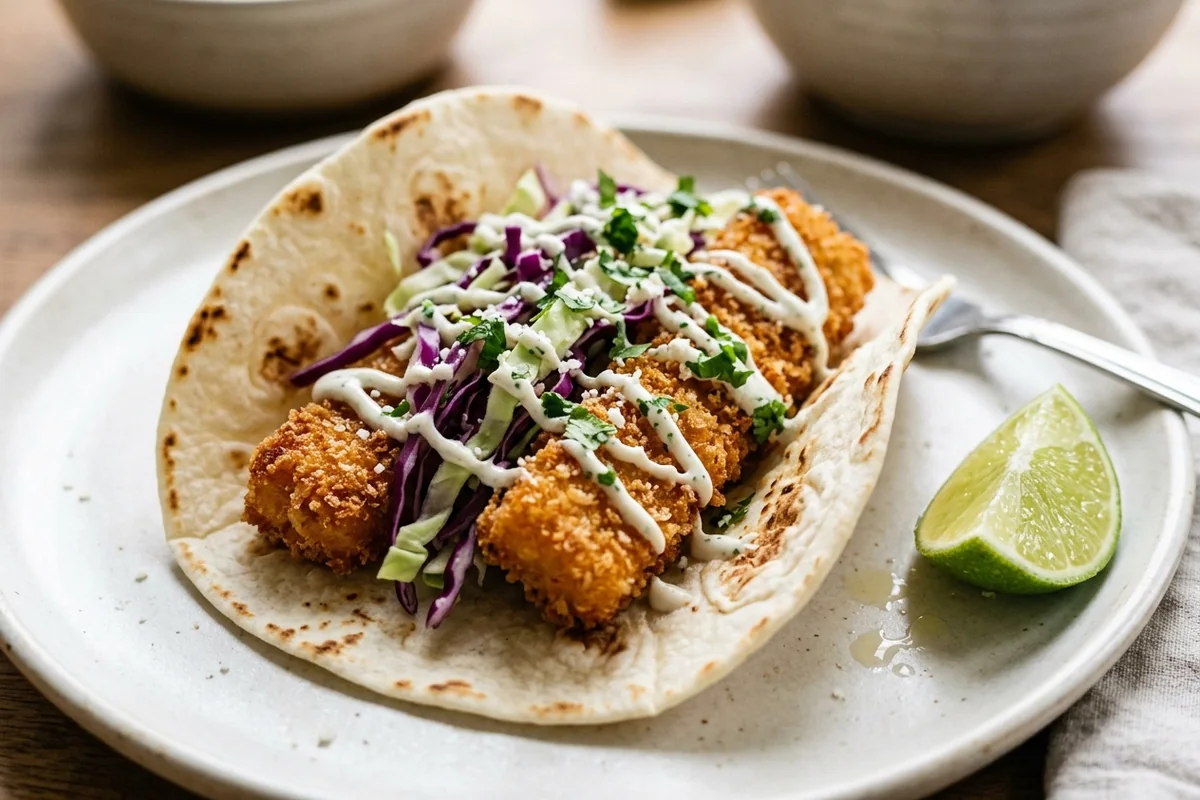
Fish sticks get dismissed as kid food, but a few simple builds turn them into something you would happily eat as an adult. A fish taco is the easiest upgrade: warm a tortilla, add two crisp sticks, shredded cabbage, a squeeze of lime, and a drizzle of sriracha mayo. A fish stick po-boy on a soft roll with lettuce, tomato, pickles, and remoulade is a Friday-night favorite. For a lighter plate, flake the cooked sticks over a green salad with a lemon vinaigrette and call it a crispy fish salad.
Because they cook in one basket with no fuss, fish sticks are also a great anchor for a quick fish-and-chips night. Cook a batch of fries first, hold them warm, then run the fish sticks while the fries rest. Serve with malt vinegar and tartar sauce. Our guide on cooking frozen fries in the air fryer gives you the timing for the chips half of the plate, and the air fryer does both jobs back to back with nothing more than the same basket and a quick wipe between batches.
Reheating leftover fish sticks
If you cooked too many, the air fryer is also the best way to bring leftovers back. Reheat already-cooked fish sticks at 350F for 3 to 4 minutes, flipping once. Use the lower 350F rather than the 400F you used to cook them, because the fish is already done and you only need to warm it through and re-crisp the coating. As with reheating any breaded food, lay them in a single layer and skip the oil. They will not be quite as good as fresh, since fish sticks are at their peak straight out of the basket, but they beat a microwave by a mile.
Do not reheat fish sticks more than once, and toss any that have been in the fridge longer than three to four days. Cooked seafood has a short safe window, so when you are unsure of the timeline, it is not worth the risk.
Common mistakes and quick fixes
- Soggy bottoms: sticks were stacked or thawed first. Single layer, straight from frozen.
- Burnt outside, cold center: thick battered fillets cooked on the stick timing. Use the 11-to-13-minute window for thick portions.
- Broken sticks: flipped too roughly or too often. One gentle turn with tongs is all they need.
- Greasy coating: you added oil. Cook them dry; the breading carries its own fat.
Frequently Asked Questions
How long do you cook frozen fish sticks in an air fryer?
Standard breaded fish sticks take 9 to 10 minutes at 400F, flipping once at 6 minutes. Mini or popcorn fish need 7 to 8 minutes, and thick battered fillets need 11 to 13 minutes. Store-brand sticks often cook about a minute faster.
Do I need to thaw fish sticks before air frying?
No. Cook them straight from frozen. Thawing first makes the breading soggy and the fish watery. Frozen-to-basket is exactly how they are designed to be cooked.
What temperature should frozen fish sticks reach inside?
Fish is safe at 145F, but the USDA reheating standard for convenience foods is 165F, which is the safest target. The sticks usually exceed it by the time the coating is crisp; probe the thickest one to be sure and check that the fish flakes.
Do I need to flip fish sticks in the air fryer?
Yes, once. Flip standard sticks at the 6-minute mark so both sides crisp evenly. Use tongs and a gentle touch, since thin sticks break if you shake the basket hard or flip them repeatedly.