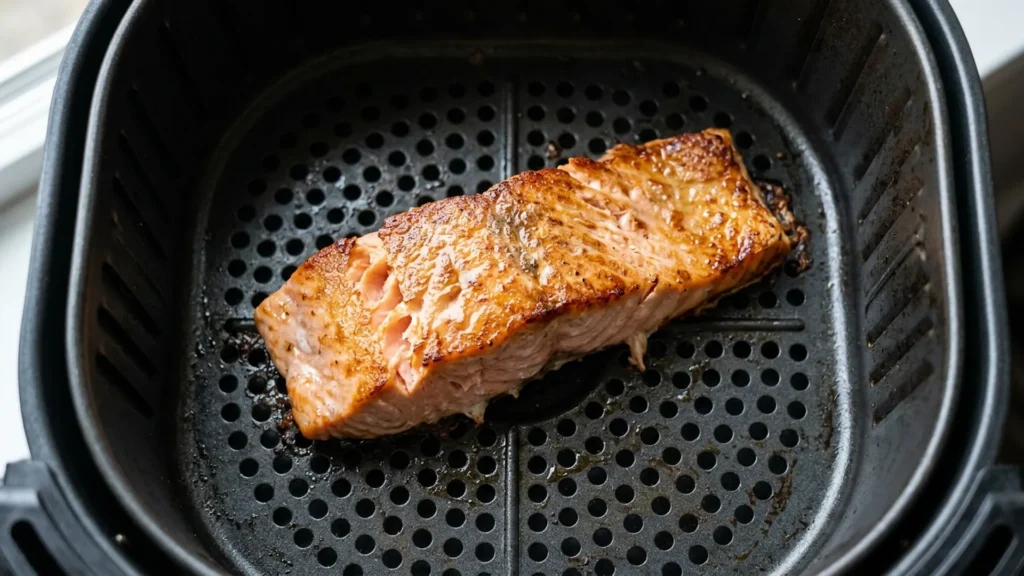
How to cook salmon in air fryer terms comes down to three numbers and one habit: 400 degrees F, about 7 to 9 minutes for a standard fillet, a 145 degree F finish, and pulling it a few degrees early so carryover heat does the rest. Salmon is fast and forgiving in moving hot air, but it is also unforgiving of overcooking, and the gap between perfectly flaky and chalky-dry is only a minute or two. The convection crisps the surface and renders the fat without the oil mess of a skillet, which is why a single fillet can go from fridge to plate in under ten minutes. This guide gives you the times by thickness, how to handle skin, and the fixes for the dry, stuck, or weeping-white-stuff problems that come up.
I am Cole, and I cook salmon the same boring, reliable way every time: pat it bone dry, season simply, lay it skin-side down, and check the center with an instant-read thermometer rather than a clock. What follows is the version that produces moist, flaky fillets across thick center cuts and thin tail pieces, fresh or frozen.
How to Cook Salmon in Air Fryer: Temperature and Time
Set the air fryer to 400 degrees F. A standard one-inch-thick fillet of 6 to 8 ounces takes 7 to 9 minutes. Thin tail-end pieces around half an inch need only 5 to 6 minutes, while thick center-cut steaks of an inch and a half can run 10 to 12 minutes. Lay the fillet skin-side down and do not flip; the circulating air cooks the top without turning, and flipping a delicate fillet only tears it.
You will see recipes call for everything from 390 to 450 degrees F. Hotter and faster, like 450 for 6 to 7 minutes, gives a more aggressive surface and works for thin fillets, while 390 for 10 minutes is gentler and more forgiving for thick cuts. I default to 400 because it balances a browned top with a moist interior across the widest range of thicknesses. The deciding factor is always the thickness of the fish, not the recipe you read, so measure your fillet at its thickest point and start from the ranges above.
Preheating helps salmon because a hot basket starts the surface searing immediately, which firms the exterior before the inside overcooks. A 3 to 5 minute preheat at 400 is plenty. If your machine cannot preheat, add a minute to the cook time.
The 145 Degree Finish and Why You Pull It Early
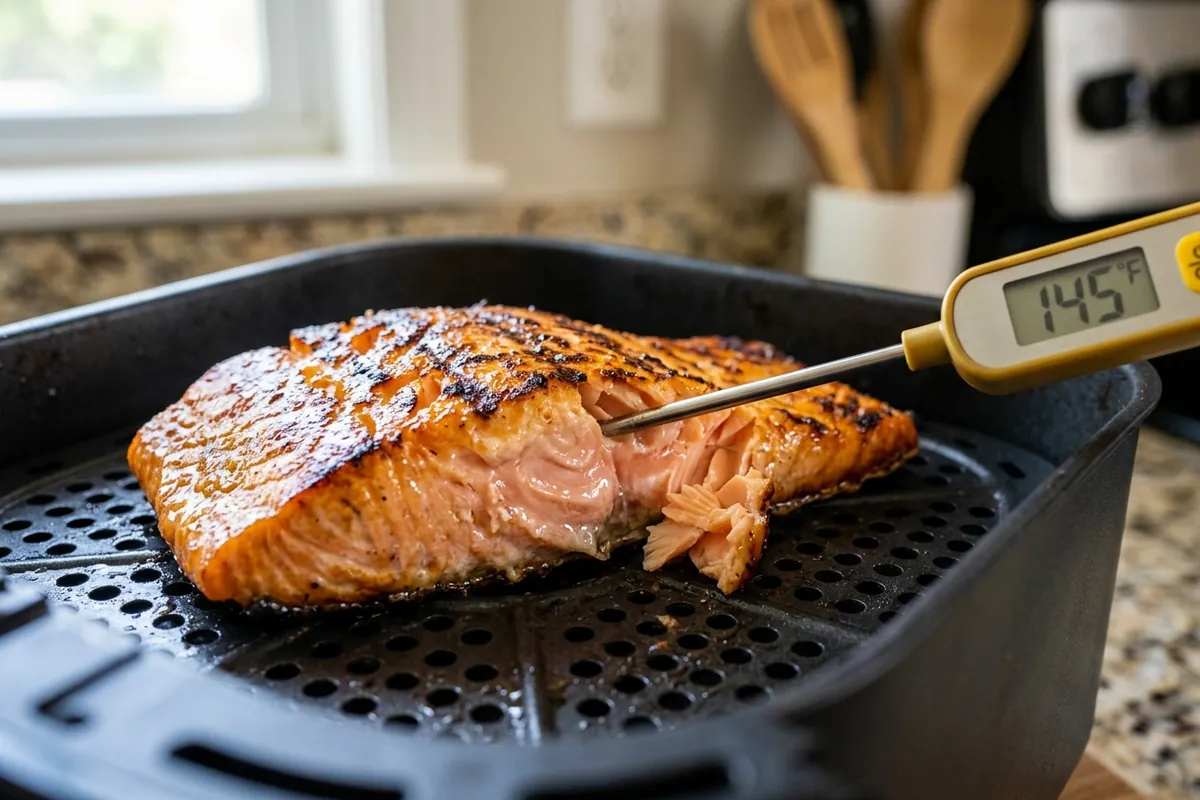
The food-safe finish for salmon is 145 degrees F in the thickest part, measured with an instant-read thermometer pushed into the center. Here is the part most guides skip: salmon keeps cooking after it leaves the basket. That carryover can add 5 to 10 degrees as the residual heat works inward, so pull the fillet at 135 to 138 degrees F and let it rest 3 to 4 minutes to coast up to a moist 145.
If you wait until the thermometer reads 145 in the basket, it will overshoot to 150 plus during the rest and turn dry. People who prefer a silkier, medium texture pull at 125 to 130 degrees F, accepting that it is slightly less cooked than the official guideline. The America’s Test Kitchen approach to salmon leans on gentle heat and a thermometer for exactly this reason: the difference between moist and dry is a handful of degrees, and color alone will lie to you.
Skin On, Skin Off, or Crispy Skin
Skin-on fillets are easier to cook in an air fryer because the skin acts as a heat shield and a structural layer that keeps the flesh from drying and falling apart. Cook them skin-side down the entire time. The skin protects the bottom from the hottest direct contact and lifts away cleanly after cooking if you do not want to eat it.
For genuinely crispy skin, pat the skin extremely dry, give it a light oil coat, and let the fillet ride the full time skin-side down; the dry convection crisps it better than a covered method ever will. Skinless fillets cook the same way and at the same temperatures but are more fragile, so use a parchment liner with the center open for airflow to keep them from sticking and tearing. Never wrap salmon fully in foil if you want any browning, because sealed foil steams the fish and blocks the crisping the air fryer does best.
Seasoning, Glazes, and How Long to Marinate
Simple seasoning wins with salmon. Pat dry, brush with a little olive oil or melted butter so the seasoning sticks, then add salt, pepper, garlic powder, and a touch of paprika. The dry surface is what lets the air fryer brown the top, so do not skip the pat-dry step; wet fish steams instead of sears.
Glazes like honey-Dijon, maple-mustard, soy-ginger, or brown sugar work beautifully but contain sugar that scorches under high dry heat. Brush the glaze on during the last 2 to 3 minutes rather than at the start so it caramelizes without burning. As for marinating, salmon is delicate and acidic marinades, anything with citrus or vinegar, start to break down the flesh quickly. Keep marinating to 15 to 30 minutes maximum; longer turns the surface mushy and the texture mealy. A dry rub or a last-minute glaze gives you more flavor with none of that risk.
Cooking Frozen Salmon Straight From the Freezer
You do not have to thaw salmon to air fry it, which makes it a genuine weeknight option. For frozen fillets, run a thaw-and-warm stage first: 360 degrees F for about 7 minutes to release the surface ice and firm the fish, then season or glaze, then continue at 400 degrees F for another 6 to 11 minutes depending on thickness until the center hits the same 135 to 138 degree pull point.
Frozen salmon weeps more moisture, so pat it dry after the thaw stage before you season, or the seasoning slides off and the surface steams. The two-stage method gives a far better result than dumping a frozen fillet in at full heat, which scorches the outside while the core is still icy. The same staged approach helps with other frozen proteins; if you ever reheat steak in the air fryer, you treat the first minutes as a gentle warm-up rather than a hard sear, and salmon rewards the same patience.
Cooking Multiple Fillets and Even Thickness
Lay fillets in a single layer with space between them; touching fillets block airflow and cook unevenly with pale, steamed sides. Most baskets fit two to three standard fillets at once. If you are cooking more, work in batches and keep finished fillets loosely tented on a warm plate rather than stacked, since stacking traps steam and softens the surface.
Even thickness matters more than people expect. A fillet that tapers from an inch at the center to a quarter inch at the tail will overcook the thin end before the thick end is done. Either buy uniform center-cut portions or tuck the thin tail under itself to even out the thickness so the whole piece finishes together. Matching thickness within a batch also means one timer works for all of them instead of pulling pieces at different moments. For a complete plate from the same machine, a batch of frozen diced potatoes in the air fryer can follow the fish while it rests, since they hold their heat and crisp in the same basket.
Troubleshooting: Dry, Stuck, Undercooked, or White Albumin
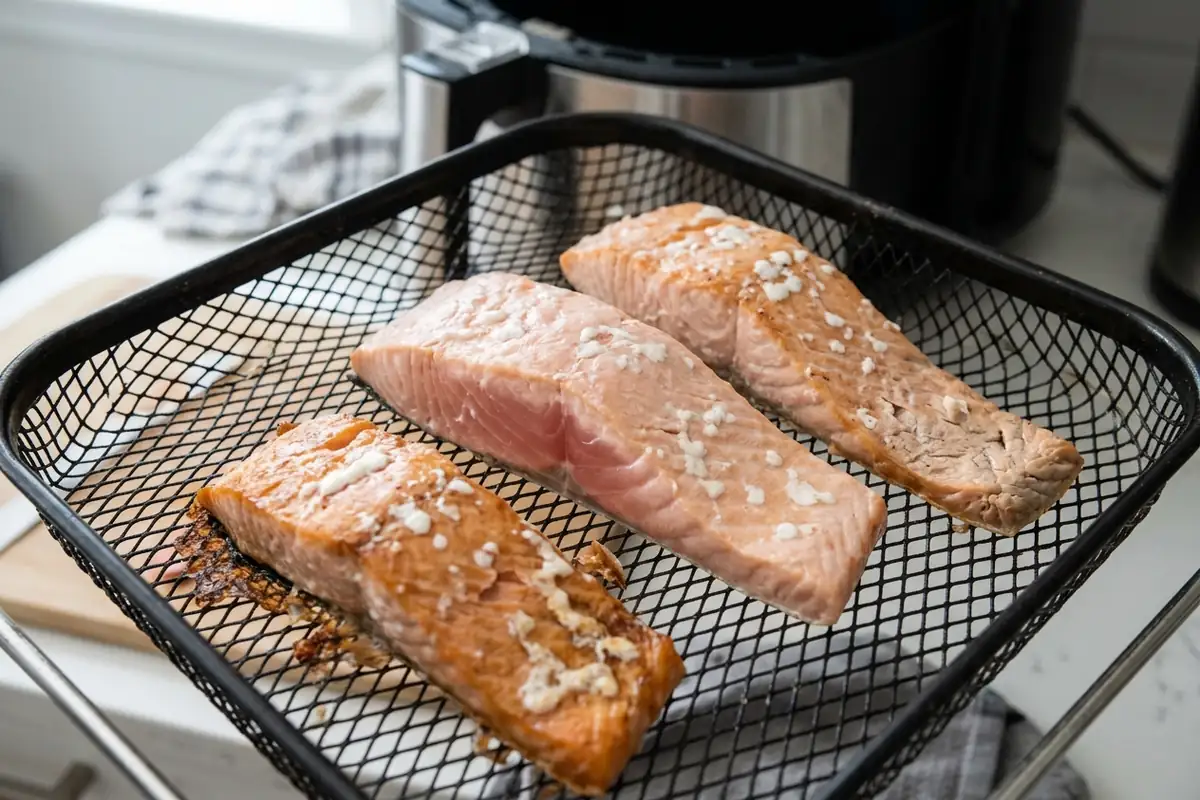
Dry salmon is almost always overcooking, full stop. Pull at 135 to 138 degrees F and rest, rather than chasing 145 in the basket. If it is already dry, a spoonful of compound butter or a drizzle of glaze on the hot fillet rescues the bite. A fillet that sticks and tears was either skinless on a bare basket or pulled too soon; use a parchment liner, give it a light oil coat, and let the surface set fully before lifting with a thin fish spatula.
An undercooked center with a done exterior usually means the fillet was too thick for the time or the machine ran cool. Add 2 minutes and re-check the center, not the edge. The white stuff that oozes out, called albumin, is harmless coagulated protein and signals the surface cooked a bit fast or hot; reduce the temperature slightly, pat the fish drier before cooking, and pull a touch earlier to minimize it. None of these problems ruin the fillet, they each point to one variable to adjust next time.
Choosing the Right Salmon for the Air Fryer
The fish you buy matters as much as the technique. Wild salmon like sockeye and coho is leaner and firmer, so it cooks a touch faster and dries out sooner; pull it on the early end of the range and watch it closely. Farmed Atlantic salmon carries more fat, which makes it more forgiving in the air fryer because the extra fat keeps the flesh moist even if you slightly overshoot. Neither is wrong, but knowing which one is on your cutting board tells you how much margin for error you have.
Buy uniform center-cut portions when you can, because they cook evenly and finish on the same timer. A whole side of salmon can be cut into matching pieces at home; aim for portions of similar thickness rather than similar weight, since thickness is what drives the cook time. Fresh salmon should smell clean and faintly briny, never fishy, and the flesh should spring back when pressed. If you are working from frozen, look for individually vacuum-sealed fillets, which thaw cleaner and hold less surface ice than a block frozen together. Skin-on portions also freeze and reheat better than skinless ones, since the skin protects the flesh from freezer burn and from drying out on the second cook.
Thickness is the single number to check before anything else. Lay your fillet flat and eyeball the thickest point, because that is what dictates the time. A pound of salmon cut as one thick slab cooks far longer than the same pound cut into three thinner pieces, so do not let total weight fool you into a wrong time. Match the cut to the ranges above and the rest of the method falls into place.
How Air Fryer Salmon Compares to Oven and Pan
The air fryer sits between a pan sear and an oven bake, and it borrows the best of each. A pan gives you a hard sear but only on one face, demands oil management, and spatters fish-scented grease across the stovetop. The oven cooks gently and evenly but takes far longer to preheat and rarely browns the top without broiling. The air fryer preheats in a few minutes, browns the surface from the circulating heat, and renders the fat with almost no added oil, all in under ten minutes for a standard fillet.
Where the oven still wins is volume: a sheet pan holds a whole side of salmon for a dinner party, while a basket air fryer caps out at two or three fillets per batch. Where the pan still wins is that lacquered, deeply seared crust some people crave. For a fast weeknight fillet that is moist inside with a lightly crisped top and a clean kitchen afterward, the air fryer is the smartest default, and it is the one I reach for most nights of the week. The convection also reheats leftover salmon better than either alternative, since the moving air re-crisps the surface instead of drying the whole piece. Once you have cooked salmon this way a few times, the timing becomes second nature and you stop reaching for the skillet at all, because the cleanup alone is worth the switch and the texture holds up just as well.
Serving and Pairing the Fillet
Rest the salmon 3 to 4 minutes before serving so the carryover finishes and the juices settle. A squeeze of lemon, a pat of herb butter, or a spoon of the caramelized glaze finishes it cleanly. Salmon pairs with bright, acidic sides that cut its richness, like a quick slaw, roasted asparagus, or a grain bowl. For a heartier plate, run crisp potatoes in the basket after the fish, since they hold their heat while the salmon rests.
Leftover air fryer salmon flakes beautifully into salads, pasta, or rice bowls the next day, and it reheats best at a gentle 325 degrees F for 3 to 4 minutes to warm without drying further. If you want a warm dinner around it on a cool evening, a bowl of chicken soups alongside makes the fish feel like a full meal without much extra effort. The goal start to finish is the same: cook by thickness, pull early, rest, and let the air fryer do the crisping that a skillet would only make messier.
Frequently Asked Questions
What temperature and time cook salmon in an air fryer?
Set 400 degrees F. A standard one-inch fillet takes 7 to 9 minutes, thin tail pieces 5 to 6 minutes, and thick center cuts 10 to 12 minutes. Do not flip; the circulating air cooks the top. Always judge by thickness and a thermometer rather than a fixed time, since machines vary in power.
Do I flip salmon in the air fryer?
No. The convection cooks the top without turning, and flipping a delicate fillet tears it. Lay it skin-side down and leave it for the whole cook. The skin shields the bottom and the moving air handles the rest, giving an even cook with no risk of the fillet breaking apart.
What internal temperature should salmon reach?
The safe finish is 145 degrees F in the thickest part. Because salmon keeps cooking after it leaves the basket, pull it at 135 to 138 degrees F and rest 3 to 4 minutes so carryover heat brings it up to a moist 145. Waiting for 145 in the basket overshoots and dries the fish.
Can I cook frozen salmon in an air fryer without thawing?
Yes. Run a thaw stage at 360 degrees F for about 7 minutes to release surface ice, pat the fillet dry, season or glaze, then continue at 400 degrees F for 6 to 11 minutes by thickness. This two-stage method beats cooking frozen salmon at full heat, which scorches the outside before the center thaws.
Why is my air fryer salmon dry?
Overcooking is the cause nearly every time. Pull the fillet at 135 to 138 degrees F and rest it, rather than chasing 145 while it is still in the basket, where carryover heat pushes it past done. If it is already dry, a pat of herb butter or a drizzle of glaze on the hot fillet restores moisture and flavor.
Should I cook salmon skin-on or skin-off?
Skin-on is easier and more forgiving because the skin shields the flesh and keeps the fillet from falling apart. Cook it skin-side down the entire time. For crispy skin, pat it very dry and oil it lightly. Skinless fillets cook the same way but are fragile, so use a parchment liner to prevent sticking.