How to reheat fries in air fryer terms is almost embarrassingly simple: 350 to 400 degrees F, a single layer, 3 to 5 minutes with one shake, and they come out crisp instead of the limp, greasy mush a microwave leaves behind. Leftover fries go soft because the moisture trapped inside the potato migrates to the surface in the fridge, and the dry, circulating heat of an air fryer drives that moisture back off while re-crisping the exterior. That is the whole trick, but the details, the temperature for your specific fry, whether to add oil, and how to rescue truly soggy fries, are what separate a good reheat from a great one. This guide covers all of it.
I am Cole, and I reheat fries constantly because nobody finishes a restaurant portion. What follows is the method I have settled on across thin shoestrings, thick steak fries, waffle fries, and sweet potato fries, plus the fixes for the fries that come out rubbery or burnt. The air fryer is the single best tool for this job, full stop, and once you do it this way you will never microwave a fry again.
How to Reheat Fries in Air Fryer: Temperature and Time
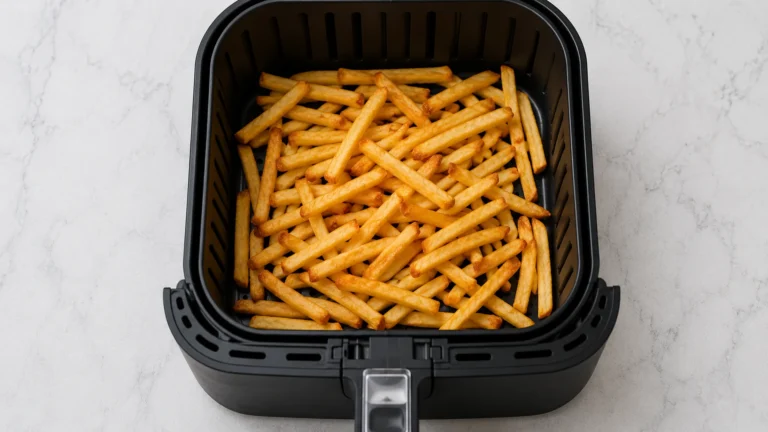
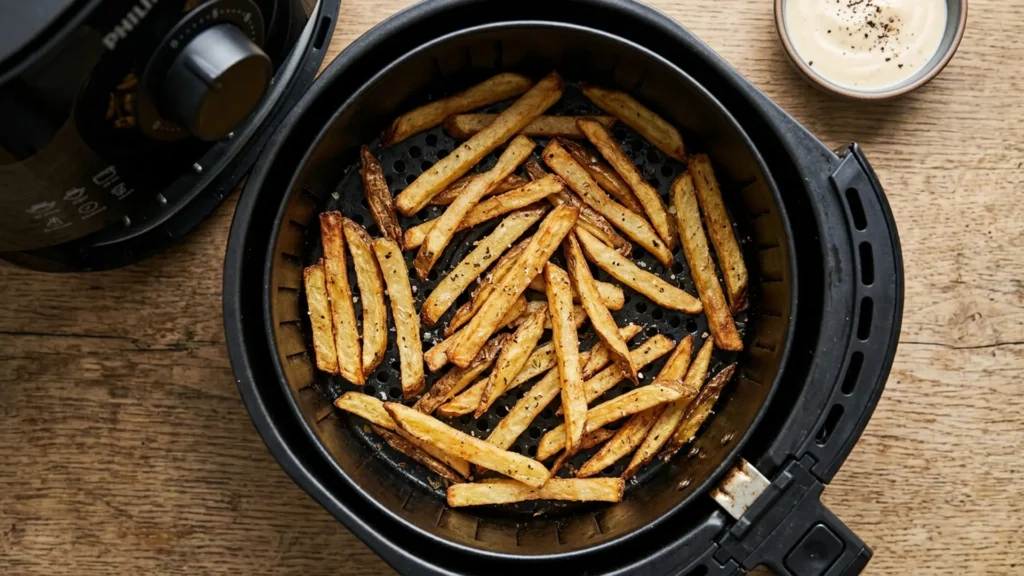
Set the air fryer to 375 degrees F as your default. Spread the cold fries in a single layer in the basket and reheat for 3 to 5 minutes, shaking the basket once at the halfway point so they crisp on all sides. Thin shoestring fries need only 3 minutes; thick steak fries and wedges need 5 to 6. The fries are done when the surface is crisp and they are heated through, which happens fast since they are already cooked.
You will see ranges from 350 to 400 degrees F. Lower and slower, around 350, is gentler and good for thin fries that burn easily. Higher and faster, 400, crisps thick fries quickly but can scorch thin ones, so match the heat to the fry. I default to 375 because it crisps most fries without burning the edges, and I only move off it for very thin or very thick cuts. The fries are already fully cooked, so you are crisping and warming, not cooking, which is why the time is so short.
Watch them closely the first time with a new fry type. Reheating moves fast, and the gap between crisp and burnt is only a minute. Pull them the moment the surface tightens and browns; they will crisp a little more as they cool out of the basket.
Why Fries Go Soggy in the Fridge
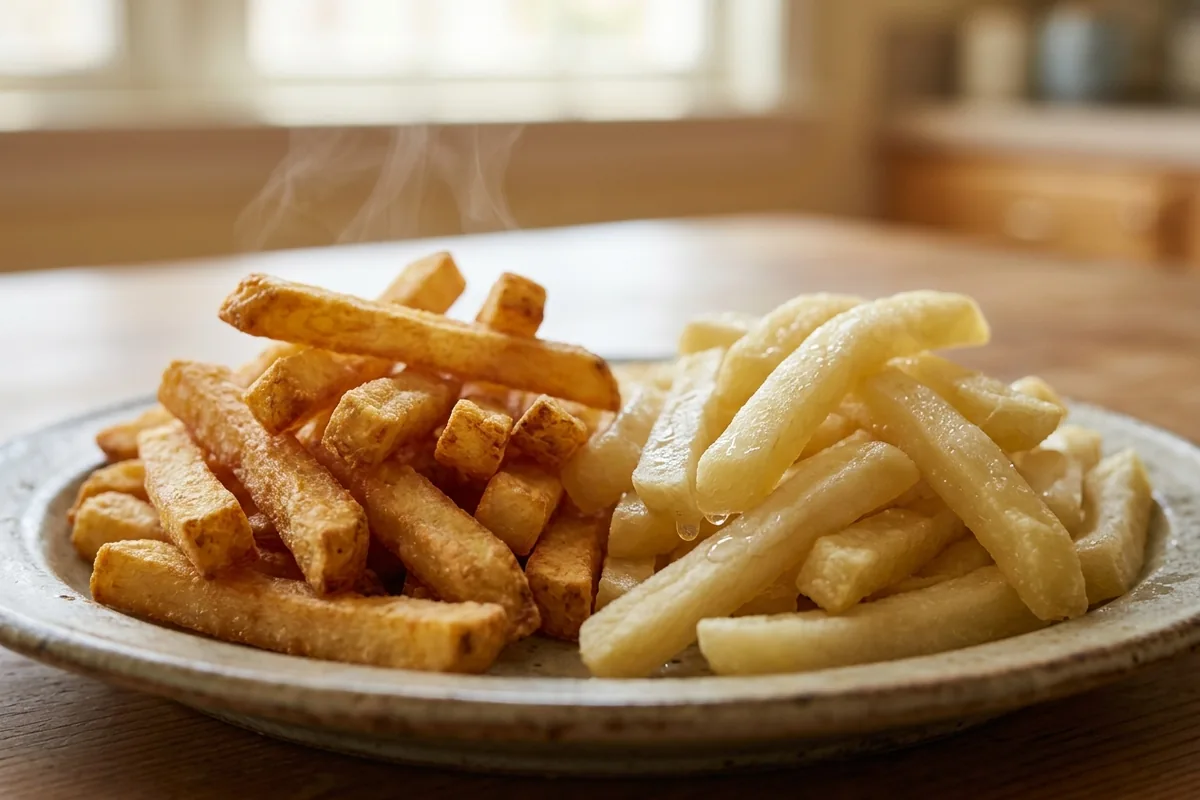
Understanding the sogginess helps you fight it. A fresh fry has a crisp, dehydrated shell around a fluffy, moist interior. In the fridge, the starches in the potato recrystallize in a process called retrogradation, and the interior moisture migrates outward to the surface. That surface moisture is what makes a reheated fry limp; the crisp shell has rehydrated from the inside out. Steam-based reheating, like a microwave, makes it worse by adding even more moisture and never giving it anywhere to go.
The air fryer reverses the problem because its dry, fast-moving hot air evaporates that migrated surface moisture and re-dehydrates the shell, rebuilding the crisp. This is exactly why the single-layer rule matters so much: fries piled on top of each other trap the escaping steam against their neighbors and stay soft at the contact points. Give them room and the moisture has somewhere to escape. The same physics governs cooking fries fresh, which is why cooking french fries in an air fryer also depends on a spread-out, uncrowded basket.
The Single-Layer Rule and Whether to Add Oil
Crowding is the number one reason reheated fries stay soggy. Hot air has to reach every surface to flash off moisture, so a single layer with a little space between fries beats a heaped basket every time. If you have a lot of fries, reheat in two batches; the first batch holds its crisp for several minutes on a wire rack while the second cooks. Stacking finished fries on a plate steams the bottoms soft again, so resist piling them up.
Oil is optional and depends on how dry your fries are. Restaurant fries that came with plenty of oil need nothing. Home-baked or older fries that have dried out benefit from the lightest spritz of neutral oil or a quick toss with a teaspoon, which helps re-crisp the surface and adds a little richness. Do not overdo it; too much oil pools in the basket and makes the fries greasy rather than crisp. A one-second spray over a single layer is plenty. If you want salt, add it after reheating while the fries are hot so it sticks to the freshly crisped surface.
Different Fry Types Need Different Settings
Not all fries reheat the same. Thin shoestring and crinkle-cut fries have a high surface-to-interior ratio, so they crisp and overheat fast; use 350 to 375 degrees F and check at 3 minutes. Thick steak fries, wedges, and potato wedges have a moist interior that needs to warm through, so give them 375 to 400 degrees F and 5 to 6 minutes. Waffle fries fall in the middle and crisp beautifully in 3 to 4 minutes thanks to their open lattice.
Sweet potato fries are the trickiest because their natural sugars scorch faster than regular potato; keep them at 350 degrees F and watch closely, since they go from crisp to burnt quickly. Battered or coated fries, like seasoned curly fries, re-crisp well but can shed their coating if you over-shake, so toss gently. Loaded fries with cheese or toppings should be reheated at a lower 325 degrees F so the toppings warm without burning while the base crisps. Knowing your fry tells you the setting before you even start.
Reheating Frozen Fries Versus Leftover Cooked Fries
There is a difference between reheating already-cooked leftover fries and cooking frozen fries from the bag. Leftover cooked fries are warming and re-crisping, so they need only 3 to 5 minutes. Frozen fries are raw-ish and need a full cook, usually 12 to 18 minutes at 400 degrees F with a shake or two. Do not treat them the same, or you will serve cold-centered frozen fries or scorched leftovers.
If you are starting from frozen, the goal and timing are completely different, and the basket should not be preheated as aggressively. For leftover fries, a brief preheat to your target temperature speeds the crisp and is worth the two minutes. The dry-heat, single-layer logic carries across plenty of frozen potato products; the same approach that crisps reheated fries also revives a tray of frozen diced potatoes in the air fryer when they have gone soft. Match the method to whether the food is raw or already cooked, and the timing falls into place.
How to Store Leftover Fries So They Reheat Well
Good reheating starts with good storage. Let leftover fries cool to room temperature before refrigerating; sealing hot fries in a container traps steam and accelerates the sogginess. Store them in an airtight container or a loosely closed bag, lined with a paper towel to absorb surface moisture, for up to 3 to 4 days. Do not store them with sauces or toppings on, which speed the breakdown; keep those separate.
Avoid stacking fries in a deep pile in storage, which crushes the bottom ones and traps moisture. A shallow, single-ish layer holds up better. According to America’s Test Kitchen, controlling surface moisture is the key to crisp results, and that principle applies just as much to how you store fries as to how you reheat them. Fries that are stored dry and cool reheat far crisper than fries sealed warm and wet.
Air Fryer Versus Microwave, Oven, and Skillet
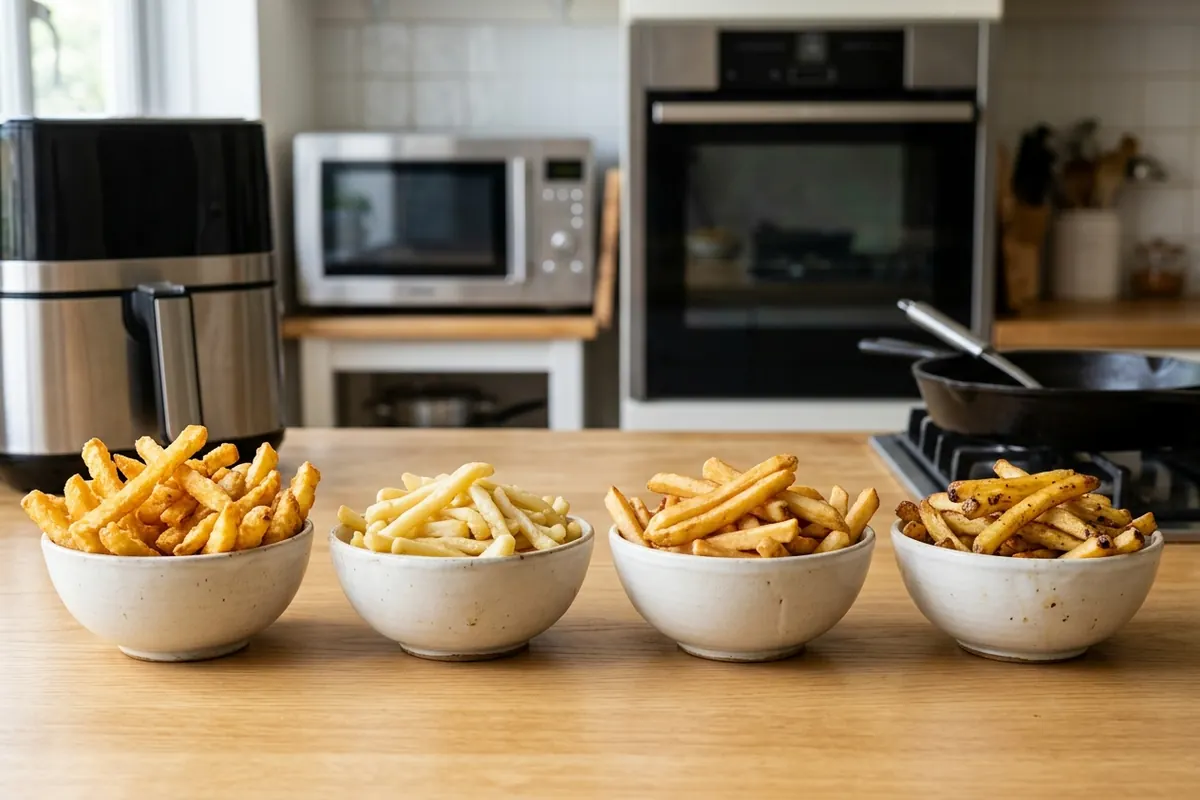
The microwave is the worst tool for reheating fries and it is worth understanding why. A microwave heats the water already in the food, so it pushes even more moisture to the surface and never evaporates any of it, leaving fries limp, steamed, and sometimes rubbery in spots where the heating was uneven. It is fast, but the result is the soggy fry everyone complains about. There is no setting that fixes this, because the mechanism itself is wrong for crisp food.
A conventional oven does a respectable job, spreading fries on a hot sheet pan at 425 degrees F for about 8 to 10 minutes, but it takes far longer to preheat and uses a lot of energy to warm a small portion of fries. A skillet can re-crisp fries in a little oil, but it only crisps the faces in contact with the pan, demands flipping, and adds grease and cleanup. The air fryer beats all three for a typical leftover portion: it preheats in two minutes, crisps every surface at once with the circulating air, needs little or no added oil, and cleans up as a single basket.
The only place the oven still wins is volume, since a sheet pan holds far more fries than a basket. For a big party platter, the oven makes sense. For the half-portion of fries you brought home in a takeout box, the air fryer is faster start to finish and gives a crisper result, which is why it has quietly become the default reheating tool in kitchens that own one. It is genuinely the closest you can get to fresh-from-the-fryer texture from a leftover.
Common Mistakes That Ruin Reheated Fries
The first mistake is dumping the whole container in at once. A heaped basket cannot crisp because the fries shield each other from the airflow and trap steam, so the middle of the pile stays soft no matter how long you run it. Always spread fries thin, and reheat in batches if you have a lot. The second mistake is reheating at too low a temperature for too long, which dries the fries into tough, leathery sticks instead of crisping the shell while keeping the interior tender. Short and hot beats long and gentle for most fries.
A third common error is over-shaking or over-tossing, which knocks the crisping surface off battered or coated fries and can break thinner fries apart. Shake once, gently, at the halfway mark and otherwise leave them be. The fourth is salting before reheating; salt draws moisture to the surface and works against the crisp, so always season after the fries come out. The fifth, and most avoidable, is forgetting them for an extra minute, since reheating is so fast that the window between perfectly crisp and burnt is tiny, especially on thin and sweet potato fries. Set a timer and stay nearby. Avoiding these five mistakes matters more than any single temperature setting, because the technique is what makes or breaks the reheat, and the fries you start with are already fully cooked. Get the spread, the heat, and the timing right, and almost any leftover fry comes back crisp.
Troubleshooting: Rubbery, Burnt, or Still Soggy
Rubbery or tough fries usually mean they were reheated too long or too hot for their thickness, which drives off all the interior moisture and toughens the potato. Drop the temperature, shorten the time, and pull them the moment they crisp. Burnt edges with cool centers mean the heat was too high; lower to 350 and add a minute instead. Sweet potato and thin fries are the usual victims here, so watch them closely.
Fries that are still soggy after reheating were almost always crowded or under-time. Spread them into a true single layer and give them another 1 to 2 minutes. Very limp, day-old fries that have gone fully soft may need a light oil spritz and a slightly longer reheat to rebuild the crisp; they will never be quite as good as fresh, but the air fryer gets them remarkably close. If the surface crisps but the inside is cold, the fries were too thick or too cold from the fridge; let them sit out 5 minutes to take the chill off before reheating, and the center warms through evenly.
Getting the Most Out of Reheated Fries
Reheated fries are a base, not just a side. Once crisp, hit them with fresh salt, garlic powder, or a sprinkle of grated parmesan while hot. Turn them into loaded fries by adding cheese for the last minute, then topping with scallions and a drizzle of sauce off the heat. A quick aioli or a side of seasoned ketchup makes day-old fries feel intentional rather than leftover.
The air fryer earns its counter space precisely because it rescues foods the microwave ruins, and fries are the clearest example. Pair a basket of revived fries with a quick weeknight protein or a bowl of something warm like chicken soups and the leftover becomes a real meal. The method never changes: single layer, 375 degrees F, a shake at the halfway point, and pull them the moment they crisp. Do that and soggy reheated fries become a thing of the past.
Frequently Asked Questions
What temperature reheats fries best in an air fryer?
Use 375 degrees F as a default for most fries, 350 for thin or sweet potato fries that burn easily, and up to 400 for thick steak fries. Reheat for 3 to 5 minutes in a single layer with one shake. The fries are already cooked, so you are crisping and warming, not cooking, which keeps the time short.
Why do my reheated fries turn out soggy?
The basket is too crowded or the time was too short. Hot air must reach every surface to drive off the moisture that migrated to the fry while it sat in the fridge. Spread the fries in a true single layer with space between them, shake once, and give them another minute or two if they are still soft.
Should I add oil when reheating fries?
Only if the fries have dried out. Restaurant fries with plenty of oil need none. For home-baked or older fries, a one-second spritz of neutral oil or a light toss helps rebuild the crisp surface. Avoid heavy oil, which pools and makes the fries greasy rather than crisp. Salt after reheating, not before.
How long do reheated fries stay crispy?
Best within the first 5 to 10 minutes out of the basket. They soften as they cool because interior moisture keeps migrating outward. Reheat only what you will eat soon rather than the whole batch at once, and hold extras on a wire rack rather than a plate to slow the softening.
Can I reheat fries straight from frozen?
Frozen fries are not leftovers; they need a full cook at 400 degrees F for 12 to 18 minutes with shakes, not the 3 to 5 minute reheat. Only already-cooked leftover fries get the short reheat. Treating frozen fries like leftovers leaves cold centers, and treating leftovers like frozen scorches them.
Do I need to preheat the air fryer to reheat fries?
A short preheat to your target temperature speeds the crisp and is worth the two minutes for leftover fries. It gets the surface crisping immediately instead of slowly warming. If your machine cannot preheat, just add a minute to the reheat time and shake the basket once so they crisp evenly.