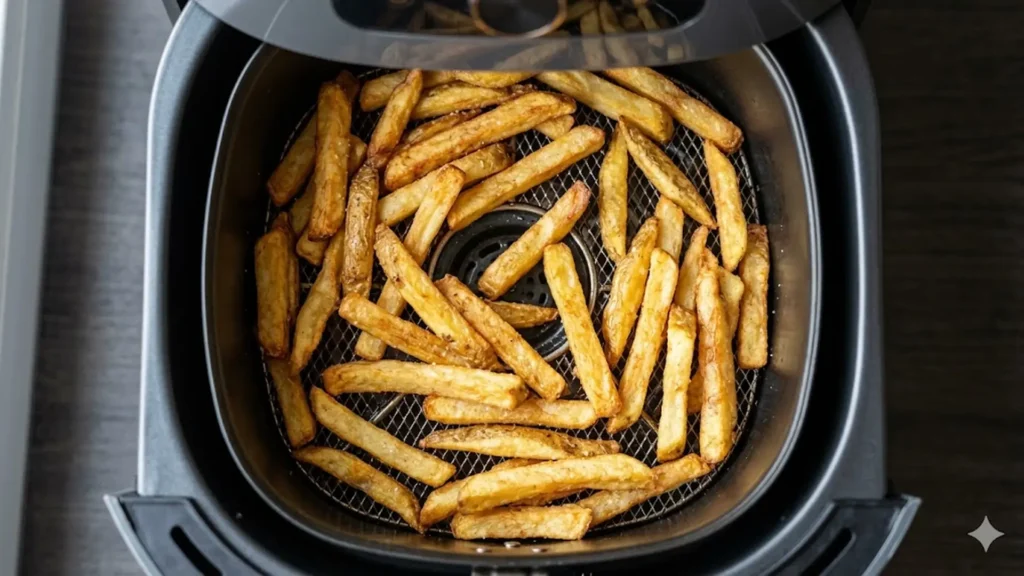
Cooking french fries in an air fryer is the easiest way to get a crisp, golden fry at home without a pot of hot oil, and the whole job comes down to four things: the right potato, a soak to wash off starch, a thorough dry, and a single layer at the right temperature. Get those four right and a russet potato turns into a fry with a crunchy shell and a fluffy inside in about 15 to 18 minutes, using a teaspoon or two of oil instead of a quart. Skip any one of them and you get pale, soggy, or stuck-together fries, which is why most people who say the air fryer cannot do fries simply missed a step.
This guide covers it all in US units and real numbers: which potatoes work and why, how to cut them, exactly how long to soak and why it matters, how much oil to use, the temperature and time for fresh-cut fries, the two-stage trick for extra crunch, how to handle sweet potato and frozen fries, and a full troubleshooting list for the problems people actually hit. By the end you will be able to make a better fry than the freezer aisle whenever you want one.
Pick the Right Potato
The single biggest factor in a good fry is starch. High-starch, low-moisture potatoes fry up light and crisp, while waxy potatoes hold too much water and turn dense. Russets, also sold as Idaho potatoes, are the gold standard because they are the starchiest common potato and give that classic restaurant interior: dry, fluffy, and almost hollow. Yukon golds are the strong runner-up, a touch waxier so the inside comes out creamier rather than fluffy, which some people prefer. Avoid red and new potatoes for fries; they are waxy and will never crisp the same way.
Sweet potatoes are a different animal. They are lower in starch and higher in sugar, so they brown faster, stay a little softer, and rarely get as rigidly crisp as a russet. They are still excellent in the air fryer, you just cook them a touch cooler to keep the sugar from scorching and accept a slightly softer texture. We will cover the timing for those below. A light dusting of cornstarch on dried sweet potato sticks before the oil helps them firm up if you want a crisper edge.
Cut Them Evenly
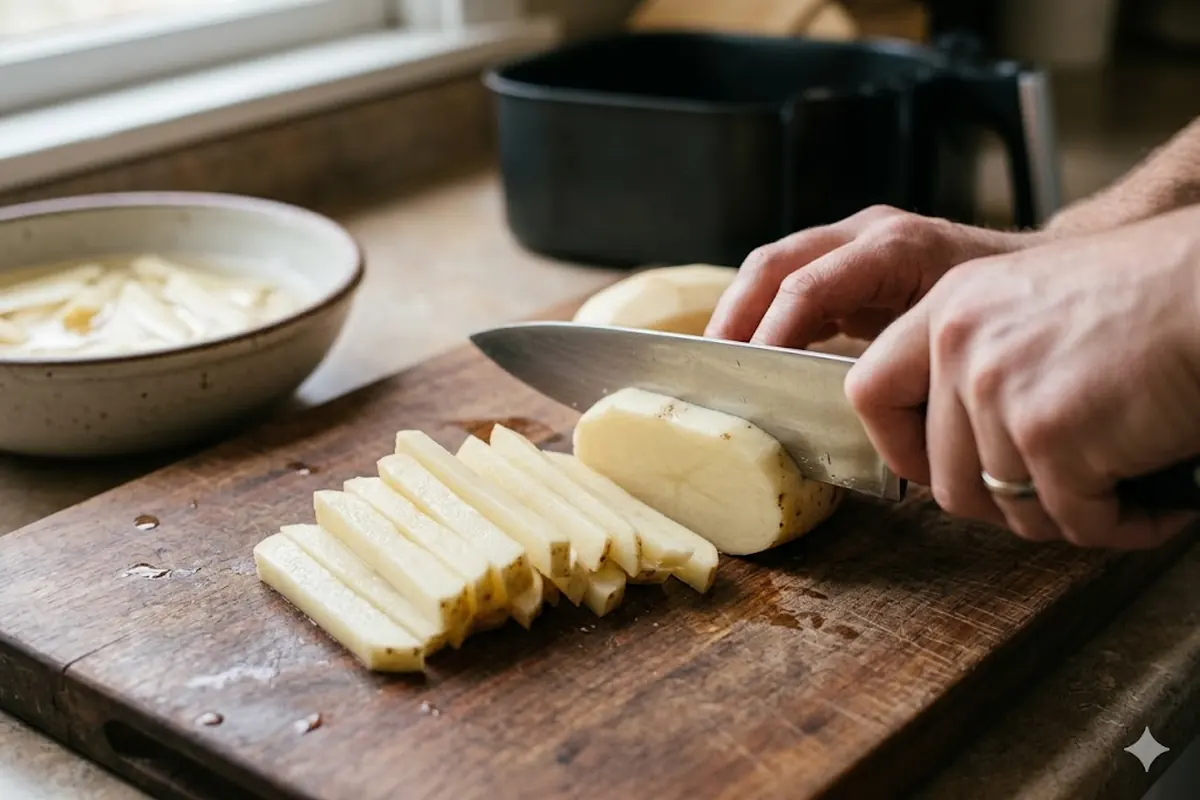
Even cutting matters more than people think, because the air fryer cooks by surface airflow and mismatched sizes finish at different times. Aim for sticks about one quarter inch to three eighths inch on each side and three to four inches long. Thinner fries, closer to a shoestring, crisp faster and all the way through but burn more easily; thicker steak fries stay fluffier inside but need more time and a lower temperature so the center cooks before the outside hardens. Whatever size you choose, keep them consistent. A mandoline or a fry cutter makes this fast, but a sharp knife and a little patience work fine.
Soak, Then Dry Completely
Soaking is the step home cooks skip most often, and it is the one that separates limp fries from crisp ones. Cut potatoes are coated in surface starch, and that starch turns gummy under heat and keeps fries from crisping while also gluing them together. Soaking in cold water rinses that starch away. Thirty minutes to an hour in cold water is ideal, changing the water once when it goes cloudy; if you are short on time, even a 10-minute soak in hot water or a hard rinse under the tap removes enough to help. The longer cold soak also firms the potato so the fries hold their shape.
Drying is just as important. Any water clinging to the fries turns to steam in the basket, and steam is the enemy of crisp. After soaking, spread the fries on a clean towel and pat them until they are genuinely dry, not just damp-free on top. Wet fries are the number one cause of soggy results, full stop. Do not skip this even when you are in a hurry.
Oil and Seasoning
You need far less oil than a deep fryer, but you do need some; a totally dry fry comes out leathery rather than crisp. About one to two teaspoons of oil per large potato is right, just enough to coat every stick in a thin film. Toss the dried fries with the oil in a bowl until they look glossy but not wet. A neutral high-smoke-point oil like avocado, canola, or refined peanut oil handles air-fryer heat best; extra-virgin olive oil works at lower temperatures but can taste bitter and smoke near 400 degrees.
Salt is the debated part. Salt draws out moisture, so many cooks wait and salt the fries the moment they come out of the basket, when the surface is hot and the salt sticks. If you like other seasonings such as garlic powder, paprika, or pepper, toss them in with the oil before cooking, since dry spices will not pull out water the way salt does. Cheese and fresh herbs always go on at the end so they do not burn.
Temperature and Time for Fresh-Cut Fries
For fresh-cut fries, 375 to 380 degrees Fahrenheit is the sweet spot. It is hot enough to crisp the outside but not so hot that the shell sets before the inside cooks. Lay the fries in a single layer with space between them, cook for about 15 to 18 minutes total, and shake or toss the basket two or three times so every side gets exposed to the airflow. Thin fries lean toward the shorter end, thick fries toward the longer, and you check for a deep golden color rather than trusting the clock exactly, since air-fryer wattage varies by model.
| Fry type | Temperature | Time | Shake |
|---|---|---|---|
| Shoestring, thin | 375 F | 12-14 min | Twice |
| Standard, 1/4 inch | 375-380 F | 15-18 min | Twice or three times |
| Steak fries, thick | 370 F | 18-22 min | Three times |
| Sweet potato | 370 F | 15-18 min | Twice |
The Two-Stage Trick for Extra Crunch
If you want fries that rival a restaurant, borrow the double-fry idea and split the cook into two stages. Cook the fries first at a lower temperature, around 350 degrees for 8 to 10 minutes, just to cook the inside through without browning much. Then crank the air fryer up to 400 degrees for a final 5 to 8 minutes to blast the outside crisp. This mimics the classic two-temperature deep-fry method, where a low pass cooks the potato and a hot pass sets the crust. It takes a few extra minutes and one temperature change, but the payoff is a noticeably crunchier shell that stays crisp longer on the plate.
Single Layer Is Non-Negotiable
The most common reason air-fryer fries come out steamed instead of crisp is overcrowding. The whole point of the appliance is that fast-moving air touches every surface, and a heaped basket blocks that airflow so the fries in the middle steam each other. Cook in a single layer with a little space between sticks. If you must cook more, either work in batches or accept that a second light layer, tossed often, will be slightly less crisp. Two layers is the practical maximum; three or more and crispness drops off a cliff. The same single-layer rule governs every food in the basket, which is why our broader guide to how to cook in an air fryer hammers on airflow above everything else.
Fresh vs Frozen Fries
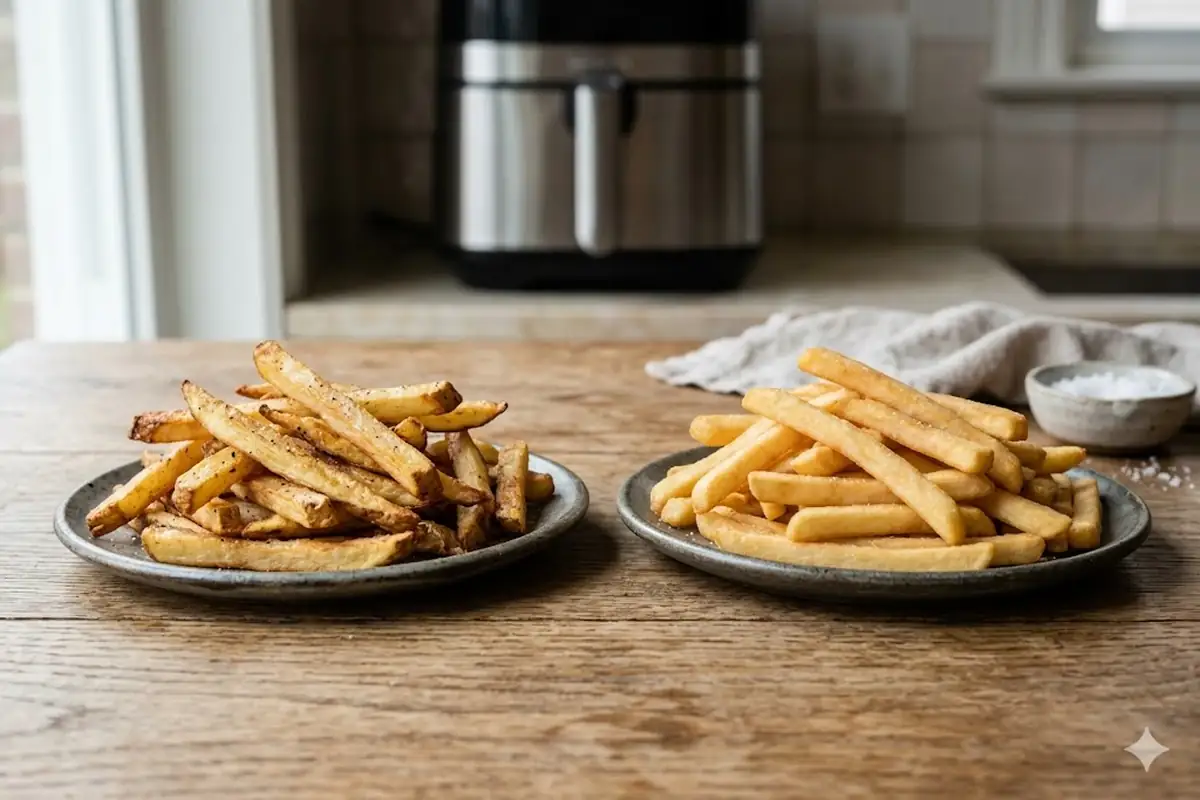
Frozen fries are not the same job. They are already blanched and coated at the factory, often par-fried, so they need no soaking, no oil, and a different time and temperature. They are also more forgiving and faster, which is why they are the weeknight default for a lot of people. If you are reaching for a bag rather than a fresh potato, follow the cut-by-cut times in our dedicated guide to how to cook frozen fries in an air fryer instead of the fresh-cut numbers above, because the starting points are different. Fresh-cut fries reward the extra prep with better flavor and a fluffier inside; frozen fries win on speed and consistency.
Troubleshooting Common Problems
Soggy fries almost always trace back to moisture or crowding: the fries went in wet, or the basket was packed. Dry them harder and thin out the layer. Pale, undercooked fries usually mean too low a temperature or too short a time; nudge the heat up or add a few minutes and check the color. Fries that burn on the outside while staying raw inside are cut too thick for the temperature; drop the heat to 370 and extend the time so the center catches up. Fries sticking together come from leftover surface starch, so soak longer and dry better next time. And limp fries that crisp up and then go soft on the plate were either underdone or piled while still steaming, so cook them a minute longer and spread them out to cool.
One more note on the basket itself. A light film of oil on the fries usually prevents sticking, but if you cook with no oil at all, a quick mist on the basket helps. Skip loose parchment liners during the high-airflow part of the cook unless they are weighed down by food, because a fan strong enough to crisp a fry is strong enough to lift a loose sheet into the element. For the testing behind air-fryer fries and the science of crisping, America’s Test Kitchen is a reliable reference, and Consumer Reports publishes independent ratings if you are still shopping for a machine.
How to Keep Fries Crisp Until They Hit the Plate
Fries lose their crunch fast once they leave the heat, because trapped steam softens the shell from inside. There are a few habits that buy you time. First, do not pile hot fries in a deep bowl where they steam each other; spread them in a single layer on a rack or a wide plate so the steam escapes. Second, salt and serve immediately, since fries are at their best in the first few minutes. Third, if you are cooking in batches, hold the finished fries in a 200-degree oven on a wire rack rather than stacking them, which keeps them warm without steaming. And if you have leftovers, do not microwave them; a quick three to four minutes back in the air fryer at 375 degrees revives most of the original crunch far better than any other method.
Seasoning Ideas Beyond Salt
Once the basic crisp is reliable, the air fryer makes flavored fries easy. Toss the dried fries with the oil plus garlic powder, smoked paprika, and a little onion powder before cooking for a savory all-purpose blend. For a steakhouse feel, finish hot fries with grated parmesan, chopped fresh parsley, and cracked pepper, all added after cooking so the cheese does not scorch. A sprinkle of chili powder and lime zest at the end turns plain fries into something closer to street food. The rule of thumb is simple: dry powders that can handle heat go on before cooking, while cheese, fresh herbs, and anything that burns go on the moment the fries come out. Because the air fryer uses so little oil, these seasonings stick best when the fries are still hot and slightly glossy.
You can also lean into dips rather than coatings, which keeps the fry itself crisp. A quick garlic aioli, a spiced ketchup, or a tangy sauce on the side lets the crunch stay intact while adding flavor bite by bite, and it sidesteps the sogginess that comes from tossing fries in a wet sauce. Whatever you add, build flavor in layers and let the air fryer do what it does best, which is deliver a crisp, golden fry with a fraction of the oil and none of the deep-fryer cleanup.
A Quick Word on Air Fryer Models
Basket-style and oven-style air fryers handle fries a little differently, and it pays to know which you have. A basket model concentrates airflow tightly, so it crisps a single layer fast but holds less, meaning more batches for a crowd. An oven-style or toaster-oven air fryer with racks fits more fries at once but spreads the airflow over a larger space, so it crisps slightly less aggressively and may need an extra minute or two. Either way the same rules apply: single layer, dry potatoes, shake or rotate partway. Wattage also matters; a 1,700-watt unit runs hotter and faster than an older 1,200-watt model, so treat the times here as a starting point and learn how your specific machine behaves over a batch or two. Once you know your air fryer’s personality, fries become one of the most repeatable things you can make in it.
Frequently Asked Questions
What potatoes are best for air fryer french fries?
Russet, also called Idaho, potatoes are best because they are high in starch and low in moisture, which gives a crisp shell and a fluffy inside. Yukon golds are a good second choice with a creamier center. Avoid waxy red or new potatoes, which hold too much water to crisp well.
Do I have to soak the potatoes first?
Soaking is not strictly required, but it makes a real difference. It washes off surface starch that otherwise turns gummy and glues fries together, so the result is crisper and the sticks stay separate. Thirty minutes to an hour in cold water is ideal; even a 10-minute soak helps if you are short on time. Always dry the fries completely afterward.
How long do fresh french fries take in an air fryer?
Standard quarter-inch fries take about 15 to 18 minutes at 375 to 380 degrees Fahrenheit, shaking the basket two or three times. Thin shoestring fries finish in 12 to 14 minutes, while thick steak fries need 18 to 22 minutes at a slightly lower 370 degrees so the center cooks through.
How much oil do air fryer fries need?
About one to two teaspoons per large potato, just enough to coat every stick in a thin film. A totally dry fry comes out leathery, but too much oil makes them greasy and can pool in the basket. Use a neutral high-smoke-point oil like avocado or canola for the best results at air-fryer temperatures.
Why are my air fryer fries soggy?
The two usual causes are moisture and crowding. If the fries went into the basket wet, the water turns to steam and they cannot crisp, so dry them thoroughly after soaking. If the basket is packed, airflow cannot reach every surface and they steam each other, so cook in a single layer and work in batches if needed.
Can I make sweet potato fries the same way?
Yes, with small changes. Sweet potatoes are lower in starch and higher in sugar, so cook them a little cooler, around 370 degrees, to keep the sugar from scorching, and expect a slightly softer texture than a russet fry. They still need the same single-layer rule and a light coat of oil, and they take about 15 to 18 minutes.
Bottom Line
Cooking french fries in an air fryer is genuinely simple once you respect the four fundamentals: choose a starchy russet, cut the sticks evenly, soak and dry them well, and cook a single layer at 375 to 380 degrees while shaking the basket. Add the two-stage low-then-high trick when you want extra crunch, salt them the second they come out, and never crowd the basket. Do that and you get a fry with a crackly shell and a fluffy middle on a few teaspoons of oil, ready in under 20 minutes, with none of the mess of a deep fryer. Once the method is second nature you will reach for fresh potatoes as often as the freezer.