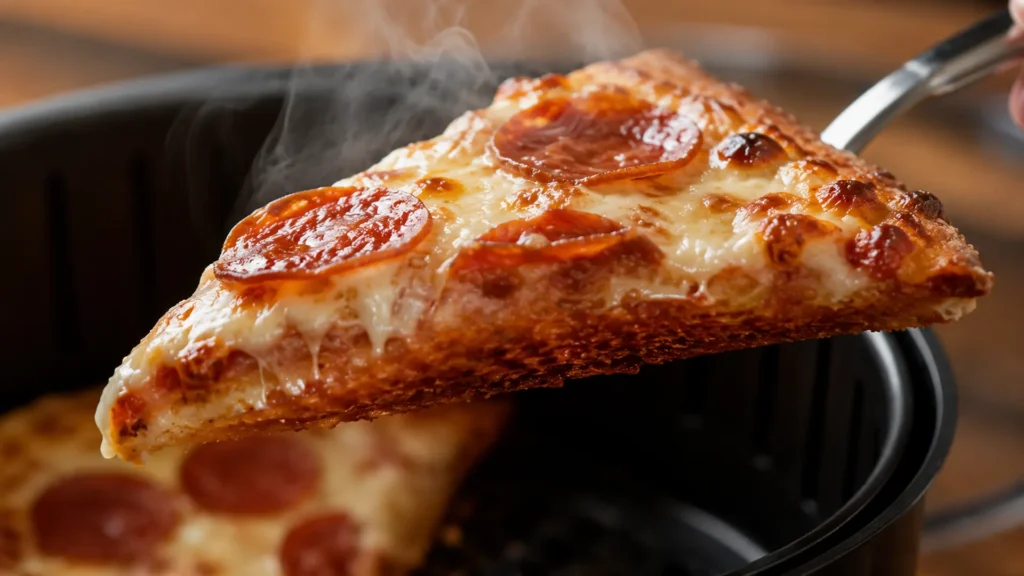
Reheating pizza in air fryer form is the best argument for owning the appliance, because it does the one thing every other method fails at. It crisps the crust while warming the cheese, instead of turning the slice into a hot floppy disappointment. A microwave steams the bread soft. A cold oven takes 15 minutes to even get warm. The air fryer hits leftover pizza with fast dry air that drives moisture off the crust and re-crisps the bottom in a few minutes flat. This is the full method, including the temps for different styles, the foil question, and the fixes for when toppings slide or cheese scorches.
The method covers everything from thin New York slices to deep dish wedges to next-morning frozen-then-thawed leftovers, in basket units and oven-style ones alike. The pattern is always the same. Lower temp than you would guess, a short cook, and a small move to protect the toppings. Get those right and a day old slice tastes closer to fresh than you would believe. The crust shatters slightly when you bite it and the cheese pulls instead of rubberizing.
Why the Air Fryer Beats Every Other Reheat Method
The enemy of leftover pizza is moisture sitting in the crust. When a slice cools in the fridge, water migrates from the toppings down into the bread and the bottom goes from crisp to limp. A microwave makes this worse by heating that trapped water into steam, which is why microwaved pizza is hot but soggy and goes leathery the moment it cools. The air fryer does the opposite. Its fast moving hot air evaporates surface moisture and re-toasts the bottom crust, restoring the crackle that makes a slice worth eating.
It is also fast and efficient compared to firing up a full oven for one or two slices. No long preheat, no heating your whole kitchen for a snack. If you are weighing the appliance against your range for small reheats like this, the breakdown of air fryer versus conventional oven lays out where each one wins, and pizza reheating is squarely in the air fryer column. The basket concentrates heat on a single slice in a way a cavernous oven cannot match for speed.
It is worth being honest about the one method that rivals it, which is a cast iron skillet on the stove. A hot dry skillet crisps the bottom beautifully and a lid traps enough heat to melt the cheese, and for a single slice it is genuinely excellent. Where the air fryer pulls ahead is hands off convenience and even heat on the top of the slice, since the skillet only crisps from below and can leave the cheese lukewarm. The air fryer crisps the bottom and warms the top at the same time without you standing over a pan. For two or three slices at once, the air fryer wins outright, because you would be cooking skillet slices one at a time while the basket handles the whole batch in a single run.
The Core Temperature and Time Chart
Lower and slower is the rule, which surprises people. If you blast a cold slice at 400 F the cheese browns and the edges char before the center is even warm. The sweet spot for most pizza is 320 to 350 F. That warms the slice through, melts the cheese smoothly, and crisps the bottom without scorching anything. Start from this chart and adjust for your style and your machine.
| Pizza style | Temp | Time | Notes |
|---|---|---|---|
| Thin crust, New York | 350 F | 3 to 4 min | Watch the edge, it crisps fast |
| Regular hand tossed | 340 F | 4 to 5 min | The everyday default |
| Thick or pan pizza | 320 F | 5 to 7 min | Lower temp, longer to heat center |
| Deep dish, single wedge | 320 F | 6 to 8 min | Foil-tent the top half the time |
| Stuffed crust | 320 F | 5 to 6 min | Center needs extra time |
These assume a refrigerated slice, not frozen. Check at the early end of the range, since slice size and topping load change everything. A loaded meat lover’s slice holds more moisture and takes longer than a plain cheese. The cheese should be fully melted and just starting to bubble, and the underside should feel firm and sound crisp when you tap it. If your machine tends to run hot, the notes on how to cook in an air fryer explain why the same setting finishes faster on some units than others.
Should You Preheat First?
For a quick reheat you can usually skip the preheat, since pizza only needs a few minutes and the unit comes up to temp fast on a small load. That said, preheating for 2 to 3 minutes gives you a more even crisp on the bottom because the slice meets hot metal and hot air from the first second. Preheat when you want the crust as crisp as possible, and skip it when you just want a warm slice without fuss. If you are unsure how your model behaves, the guide on how to preheat an air fryer covers which units benefit and which barely change.
The difference is most noticeable on thin crust, where a preheated basket sears the bottom on contact and gives you that audible snap. On a thick or pan slice the preheat matters less, since the long cook gives the bottom plenty of time to crisp regardless. Basket style units heat up fastest and barely need the head start, while larger oven style models with more empty space inside benefit more from the few extra minutes. If you only ever reheat one or two slices at a time, you can make preheating a habit and forget about it, since the cost is just a couple of minutes and the payoff is a more reliably crisp crust. There is no downside beyond the small wait.
The Foil and Parchment Question
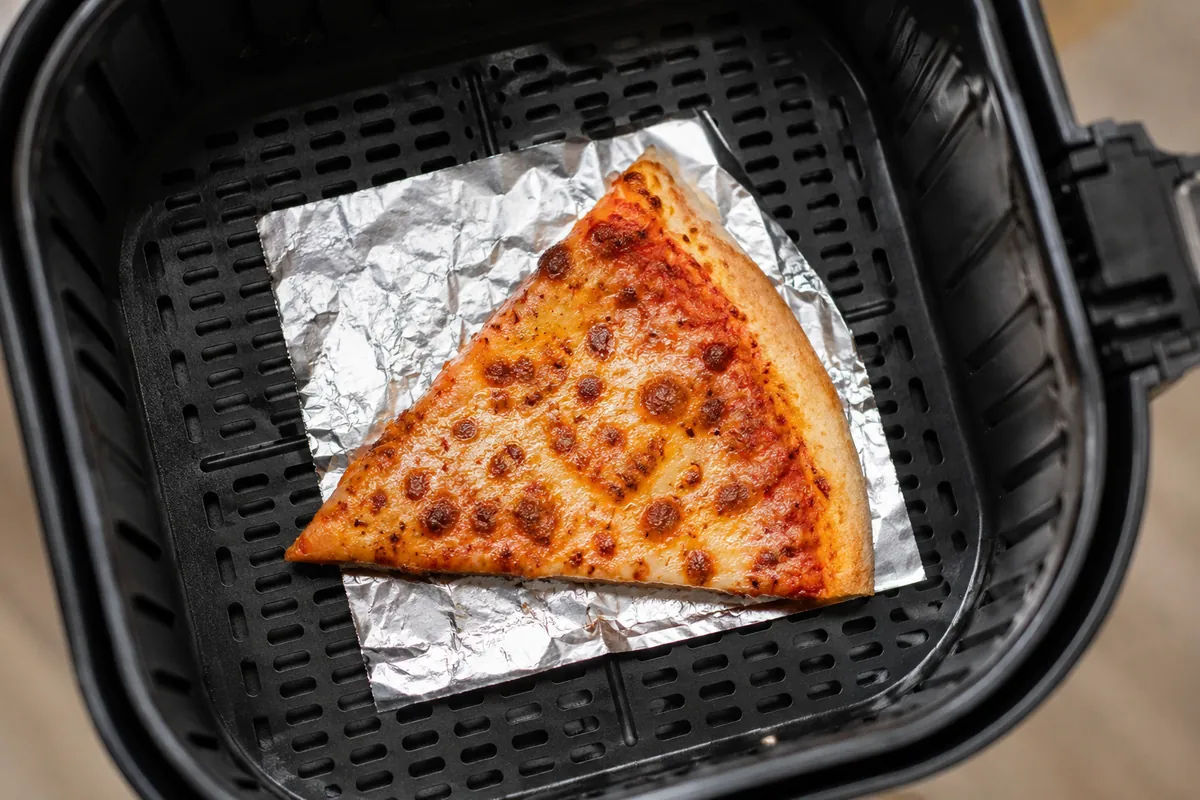
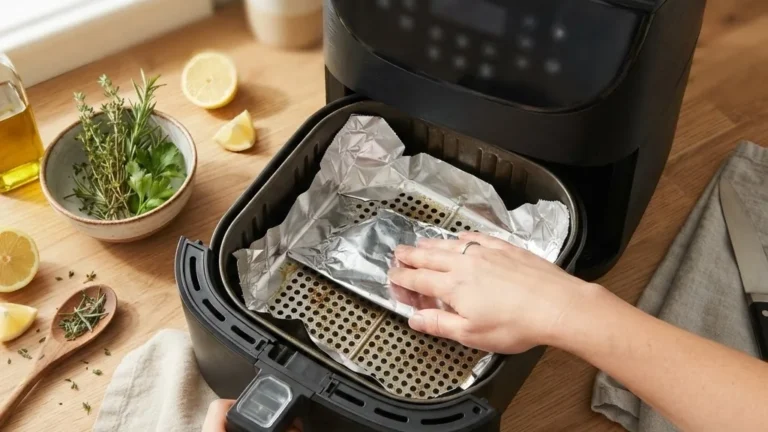
You do not have to line the basket, but a small square of foil or parchment under the slice catches drips of grease and stray toppings and makes cleanup trivial. The catch is airflow. If you wrap foil up the sides or cover the whole basket floor, you block the air that crisps the bottom and you end up with a softer crust. Use a piece just big enough for the slice and leave the perimeter open so air still circulates underneath.
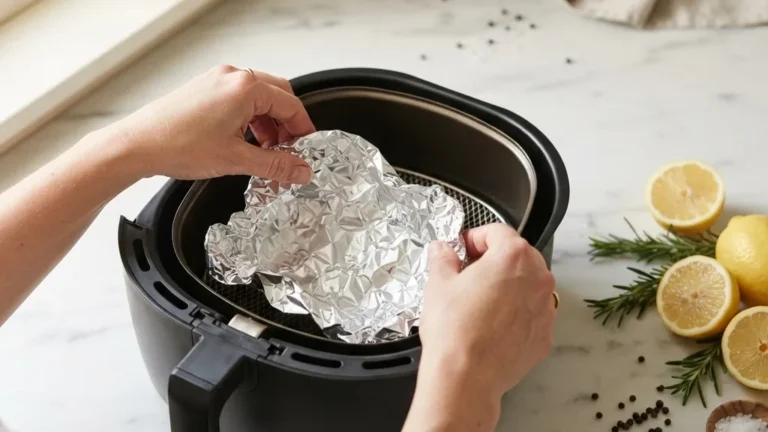
Foil has a second use as a shield. On a thick or deep dish slice the cheese on top can brown before the dense center is warm. Tent a loose piece of foil over the top for the first half of the cook, then remove it to let the cheese finish. Never let loose foil flap near the heating element, since the fan can lift it into the coil. Tuck it under the slice or weight it with a topping. Parchment rated for the oven works too and will not reflect heat the way foil does, but it also browns and should not touch the element.
| Liner choice | Best for | Watch out for |
|---|---|---|
| No liner | Crispiest bottom | Grease drips into basket |
| Small foil square | Easy cleanup, top shield | Do not block side airflow |
| Parchment square | Cleanup, no reflection | Keep away from the element |
Troubleshooting Sliding Toppings and Burnt Edges
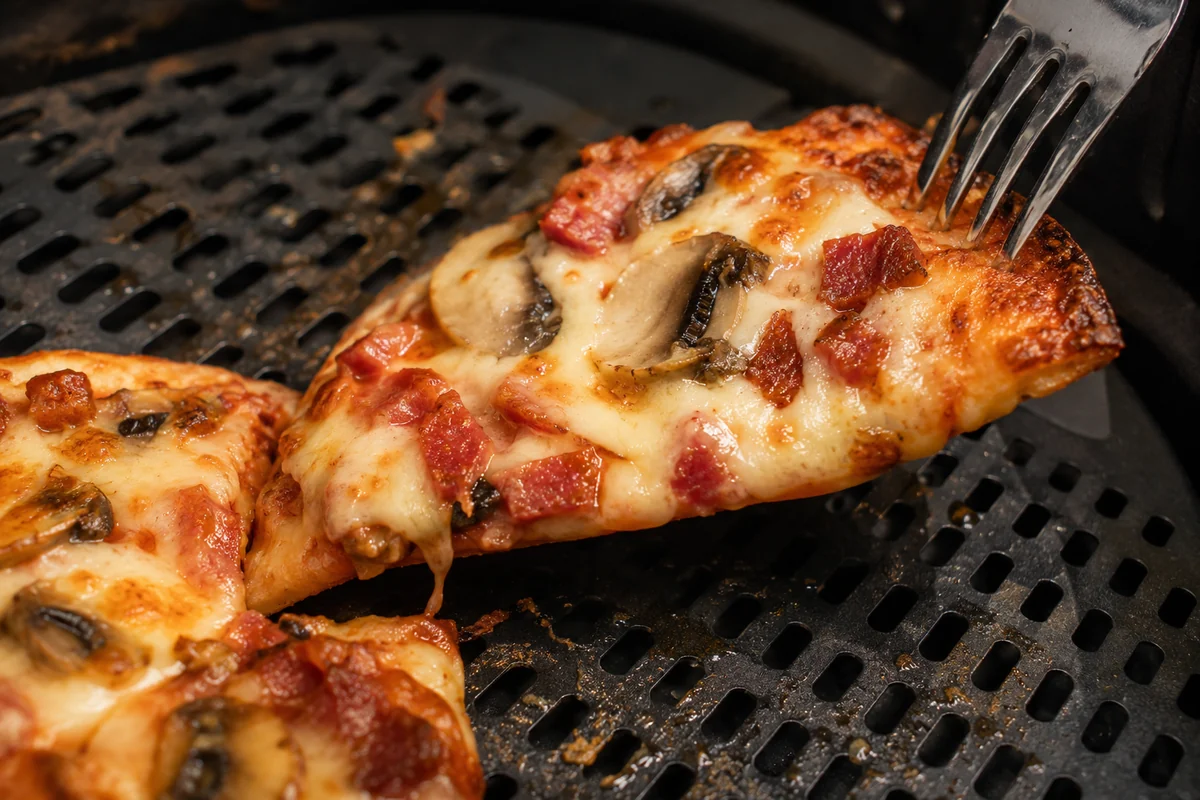
The most common complaint is toppings blowing around or sliding off, and that is the fan doing its job a little too well. Light toppings like fresh basil, sliced onion, or a sprinkle of parmesan can lift in the airflow. The fix is to add those after reheating, or to lay a loose foil tent over the top for the first minute until the cheese sets and grabs everything in place. Once the cheese melts it acts like glue and nothing moves.
Burnt or overly dark edges mean the temp was too high or the slice sat too long. Drop to 320 F and pull a minute earlier. Cheese that scorches in spots while the rest is fine usually means the slice was too close to the element on a small basket, so move it to the center or use a rack to drop it down a level. A crust that is crisp on the bottom but the tip is still cold points to uneven thickness, so rotate the slice halfway or tent the thin point to keep it from overcooking while the thick base catches up.
A dried out, cracker hard slice is the opposite failure, and it comes from too much time or too high a temperature on a thin slice with little moisture to spare. Thin crust and white pizza are the usual victims, so treat them gently at 340 F and check early. If a slice consistently comes out drier than you want, a very light brush of olive oil on the crust edge before reheating adds back some richness and helps it crisp rather than dry. Another common gripe is cheese that slides off the moment you lift the slice, which means you cut into it before the cheese had a chance to set. Give it thirty seconds to rest after it leaves the basket and the cheese firms back up enough to hold together. Rushing the slice straight to your mouth is how you end up wearing the toppings.
One real safety note since this is leftover food. Reheated leftovers should reach an internal temperature of 165 F to be safe, and pizza that has sat out of the fridge for more than 2 hours should be tossed rather than reheated. The temperature range between 40 F and 140 F is where bacteria multiply fastest, so do not leave a box on the counter overnight and plan to revive it. For the full rules on safe reheating temperatures, the MedlinePlus food safety guide is a solid reference, and the broader story of how leftovers are best handled is covered well in the leftovers overview on Wikipedia. Reheat hot, eat promptly, and do not gamble on a slice that has been out too long.
Handling Tricky Slices and Big Batches
Not every slice reheats the same, and a few styles need a slightly different touch. A slice loaded with wet toppings like fresh tomato, pineapple, or a heap of mushrooms carries a lot of moisture, so it benefits from an extra minute and a slightly higher finish to drive that water off, otherwise the area under the toppings stays soft even when the crust edge is crisp. A very greasy pizza, like a heavy pepperoni or sausage slice, will render fat into the basket, so a foil square underneath saves cleanup and a paper towel blot before serving cuts the grease pooling on top. White pizza and slices without much sauce dry out faster, so knock thirty seconds off and check, because there is less moisture buffer between crisp and cardboard.
Big batches are where the air fryer earns its keep, but you have to respect the single layer. Slices that overlap shield each other from airflow and reheat unevenly, with the covered edges going soft while the exposed parts crisp. If you are feeding a crowd, reheat in rounds and hold the finished slices on a wire rack rather than stacking them on a plate, since stacked hot slices trap steam between them and undo the crisp you just built. A standard basket fits one large slice flat or two folded slightly, while an oven style unit with full trays can do three or four at once. Cut oversized slices in half if they will not lie flat, because a slice curling up against the basket wall cooks unevenly and the raised part can brush the heating element.
Cold center, hot edges is the classic big slice problem, and the fix is patience at a lower temperature rather than a quick blast. Drop to 320 F and give a thick slice the full time so the heat reaches the middle before the rim overcooks. If you are reheating a folded slice or a calzone style piece, that low and slow approach is the only way to warm the dense interior without scorching the outside. The thicker and denser the slice, the lower and longer you go. If you are ever unsure whether the middle is hot, press a fingertip to the center of the cheese for a second, and if it is only warm rather than hot, give it another minute at the same temperature before serving.
Reheating Frozen and Other Leftovers in the Same Machine
If your leftover slice went into the freezer rather than the fridge, let it thaw in the refrigerator first for the best result, then reheat using the chart above with an extra minute or two. Reheating straight from frozen works in a pinch at 320 F for 8 to 10 minutes, but the crust crisps better from thawed. The same low and slow logic that revives pizza also brings back other fried and baked leftovers, which is why the air fryer becomes the default reheater once you start using it this way.
The technique transfers cleanly to other foods. My walkthrough on how to reheat fries in the air fryer uses the same crisp-the-surface principle on a different leftover, and the reheat chicken tenders guide shows how breaded foods come back to crisp. For pizza alternatives across the network, the gluten-free pizza hub at Recipesbend has options for celiac households, and the baked pasta collection at Pastapeak scratches the same cheesy comfort itch when the pizza box is empty. Both reheat beautifully in the same basket.
Frequently Asked Questions
What temperature is best for reheating pizza in air fryer?
For most pizza, 320 to 350 F is the sweet spot. Thin crust slices do well at 350 F for 3 to 4 minutes, while thick or deep dish slices reheat better at 320 F for 5 to 8 minutes so the dense center warms through before the cheese browns. Going hotter than 350 F risks burnt edges and scorched cheese before the middle is even hot, so resist the urge to crank it up.
Do I need to use foil when reheating pizza?
No, foil is optional. Skipping it gives you the crispiest bottom because nothing blocks the airflow under the crust. A small foil or parchment square makes cleanup easier and catches grease, and a loose foil tent over the top protects cheese on thick slices from browning too fast. Just keep any liner small so it does not block the side airflow, and never let loose foil flap near the heating element.
Why does my reheated pizza come out soggy?
Soggy reheated pizza usually means the temperature was too low, the basket was lined in a way that blocked airflow, or the slice did not cook long enough to drive moisture off. Run it at 340 to 350 F, leave the basket floor mostly open so air reaches the underside, and cook until the bottom feels firm and sounds crisp when tapped. A short preheat also helps the crust crisp from the first second.
Is reheating pizza in air fryer safe for leftovers?
Yes, as long as the pizza was refrigerated promptly and reheated thoroughly. Leftovers should reach an internal temperature of 165 F, which the air fryer hits easily in a few minutes. Discard any pizza that sat at room temperature for more than 2 hours, since the 40 F to 140 F range is where bacteria multiply fastest. Reheat hot, eat promptly, and do not revive a slice that was left out overnight.