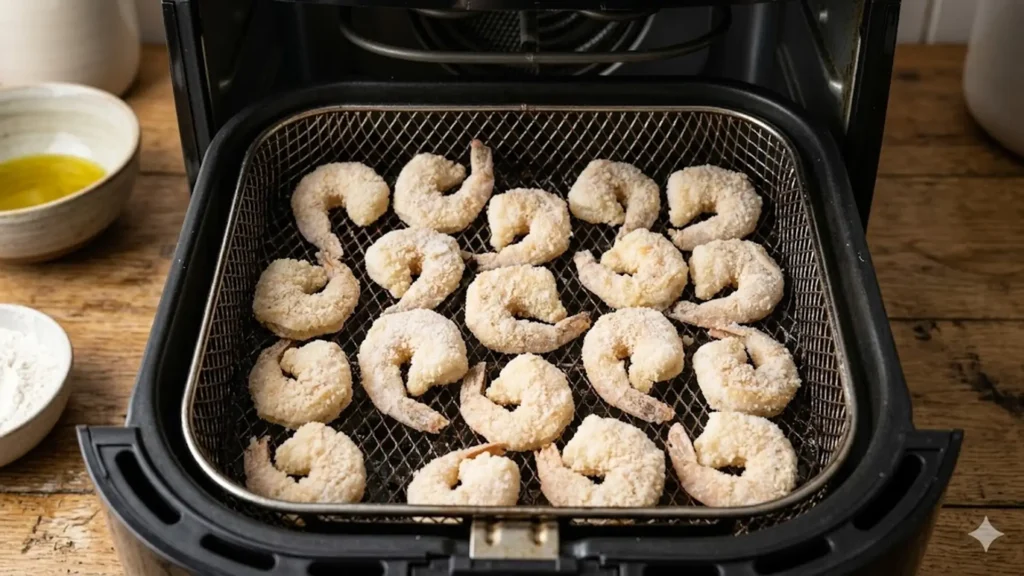
Shrimp in air fryer frozen is the fastest protein you can put on a plate, and you do not need to thaw it first. Raw frozen shrimp cooks in about 6 to 8 minutes at 380 degrees F, using a two-stage method: a few minutes to shake off the ice, then a quick blast to finish. Precooked frozen shrimp only needs warming, around 3 to 4 minutes. The whole thing goes from freezer to fork before a pot of water would even boil.
That is the headline. The reason frozen shrimp works so well in an air fryer, where it often turns to rubber in a skillet, is that the dry circulating heat drives off the surface ice fast instead of letting the shrimp poach in its own meltwater. I keep a bag of frozen shrimp in the freezer specifically because it is my answer to nights when I forgot to plan dinner. It has bailed me out more times than I can count.
Raw or precooked? Check the bag first
Before you set a single dial, look at the bag. This is the step everyone skips, and it is the difference between juicy and chewy. Frozen shrimp comes two ways and they are not interchangeable.
Raw frozen shrimp is gray and translucent in the bag. It needs to actually cook, so it gets the full time and turns from gray to pink in the basket. Precooked frozen shrimp is already pink and curled tight, often sold as cocktail shrimp. It is done; you are only reheating it. If you give precooked shrimp the full raw cooking time, you will overcook already-cooked protein and end up with tiny rubber commas. Pull the bag out and read the front. It will say raw, or it will say cooked. That one glance saves the meal.
| Type | Temp | Total time | Goal |
|---|---|---|---|
| Raw frozen | 380 F | 6 to 8 min | Pink and opaque, 145 F inside |
| Precooked frozen | 380 F | 3 to 4 min | Heated through, not shrunken |
| Breaded frozen | 400 F | 8 to 10 min | Golden, crisp coating |
Size changes everything: a time chart by count
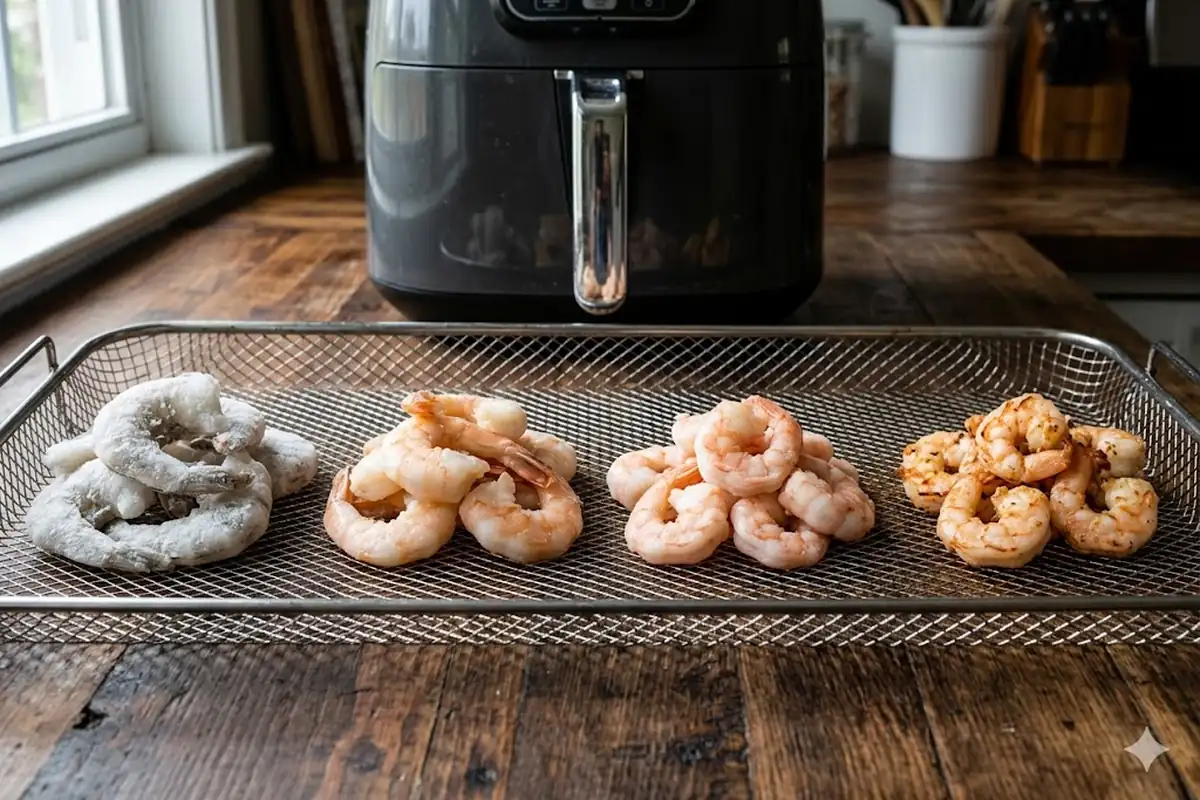
Shrimp is sold by count per pound, and that number is printed right on the bag. A bag marked 16/20 means 16 to 20 shrimp make up a pound, so they are large. A bag marked 51/60 means tiny salad shrimp. Bigger shrimp need more time because there is more cold mass in the center. Most quick recipes give you one time and one size, which is why your shrimp comes out wrong when your bag does not match theirs.
Here is the chart I actually use, all for raw frozen shrimp at 380 degrees F, shaking the basket halfway.
| Count per pound | Size | Time at 380 F |
|---|---|---|
| 51/60 | Small | 5 to 6 min |
| 41/50 | Medium | 6 min |
| 26/30 | Large | 7 min |
| 16/20 | Jumbo | 8 to 9 min |
| U15 | Colossal | 9 to 10 min |
For food safety, the target is an internal temperature of 145 degrees F, which the FDA seafood guidance lists as the safe cooked temperature for shrimp. In practice the shape gets you there faster than a thermometer on something this small.
Shrimp tells you when it is done with its shape. Raw shrimp lies in a loose C. As it cooks it curls into a tighter C, and that is your perfect window. If it curls all the way into a closed O, you went too far and it has tightened into rubber. Watch the curl and you barely need a timer.
The two-stage no-thaw method that beats a skillet
Frozen shrimp carries a glaze of ice, and that ice is the problem. If you blast it on full heat from the start, the ice melts into water and the shrimp boils in a puddle instead of roasting. So split the cook in two.
Stage one is the shake-off. Spread the frozen shrimp in a single layer and run the basket at 380 degrees F for about 3 to 4 minutes. They will look pale and release a little water. Pull the basket, tip out any pooled liquid, pat the shrimp with a paper towel, then toss them with a teaspoon of oil and your seasoning. Now the seasoning sticks, because there is no ice film fighting it.
Stage two is the finish. Slide them back in at 380 degrees F for the remaining 2 to 5 minutes based on the size chart above, shaking once. This is where they turn pink, firm up, and pick up a little color. Seasoning after the thaw is the move that frustrated cooks miss; garlic powder and paprika slide right off an icy shrimp but cling to a damp-dry warm one. America’s Test Kitchen has long pushed the same idea for proteins, that drying the surface before seasoning is what lets flavor and browning actually happen.
Peeled, shell-on, and deveined: which to buy
The bag has more than one decision baked into it, and the format you buy changes both the cooking and the eating. Peeled and deveined shrimp is the no-fuss option. It goes from bag to basket to plate with zero prep, which is exactly why it lives in my freezer. The shrimp cooks a touch faster because there is no shell insulating it, so shave a minute off the chart if you are working with peeled jumbo.
Shell-on shrimp takes a little longer and a little more patience at the table, but the shell protects the meat and keeps it juicier, and it adds flavor as it cooks. If you go shell-on, the timing nudges up by a minute or two because the shell slows the heat reaching the meat. Tail-on versus tail-off is purely about presentation and how you plan to eat them; tails make a nice handle for dipping but a nuisance in a rice bowl. Deveined matters mostly for the big sizes, where the dark vein is large enough to be gritty. On small shrimp it is barely there and most people leave it.
One thing worth knowing is where your shrimp came from, since farmed and wild shrimp behave a little differently in the basket. Wild-caught tends to be firmer and a bit more forgiving, while some farmed shrimp holds more water and can release a little extra liquid during the shake-off stage. Neither is wrong, but if your shrimp seems to weep more than expected, that pooled water is why, and draining the basket after stage one handles it.
The night I served rubber, and what fixed it
I once cooked a pound of jumbo shrimp for friends and proudly overshot the timer because I was talking and not watching. They came out tight, squeaky, and faintly chewy, the texture of a pencil eraser. Shrimp overcooks in seconds, not minutes, because the pieces are small and the protein sets fast. There is no rescuing rubber shrimp once it happens.
The fix was discipline, not a new gadget. I started pulling shrimp a full minute before I thought it was ready and checking the curl, because carryover heat keeps cooking them on the plate just like it does salmon. I also stopped overcrowding. A pound of jumbo shrimp piled two layers deep steams the bottom layer while the top roasts, so now I cook a single layer and do a second batch if needed. Since then, no rubber. If you want a deeper feel for how the basket moves heat, the team’s guide on lining the basket safely explains why airflow and single-layer loading matter so much.
Why the air fryer beats boiling and pan-searing frozen shrimp
I used to cook frozen shrimp two ways before the air fryer took over, and both have a flaw worth naming. Boiling from frozen is fast but it waterlogs the shrimp; the meat absorbs water and ends up mushy with washed-out flavor, and any seasoning you added floats off into the pot. Pan-searing from frozen is worse, because the ice glaze melts into the hot pan and the shrimp boils in its own puddle until the water cooks off, by which point the shrimp is already overdone. You end up with gray, steamed shrimp pretending to be seared.
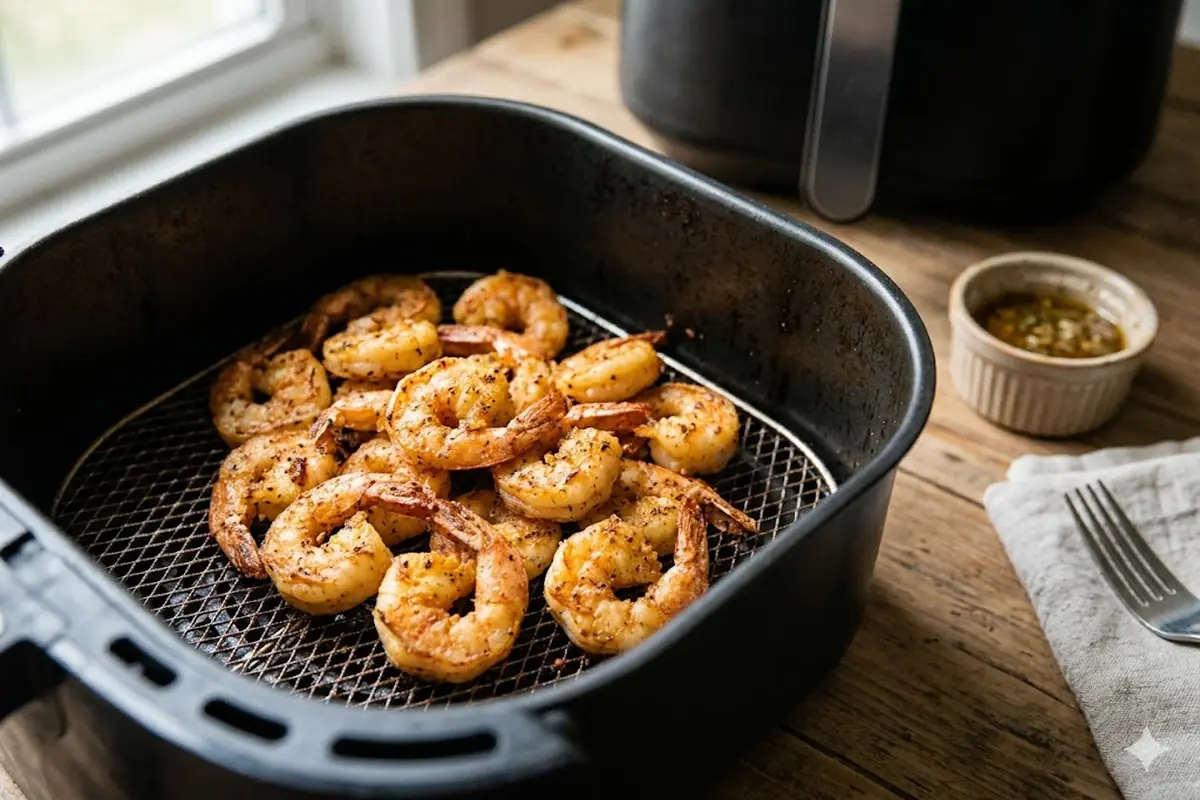
The air fryer sidesteps both problems. The circulating air carries the surface moisture away instead of trapping it, so the shrimp roasts rather than steams. That is why the texture comes out plump and slightly firm with a hint of browning, the texture you actually want, instead of waterlogged or rubbery. It also means hands-off cooking. You are not standing over a pan flipping pieces; you set the time, shake once, and walk away. For a quick weeknight protein, that combination of better texture and less babysitting is hard to beat.
There is a cleanup angle too that I appreciate more than I expected. A boil leaves a pot of shrimp-smelling water to dump and a pan-sear leaves a greasy skillet, while the air fryer basket rinses clean in seconds because there is no standing oil or water. On a night when the whole point is speed, not having a sink full of dishes afterward matters.
Breaded frozen shrimp and popcorn shrimp
Bagged breaded shrimp, coconut shrimp, and popcorn shrimp are a different animal and they are where the air fryer truly shines, because it crisps the coating without the deep-fryer oil. Skip the thaw entirely and skip the oil toss; the breading already has fat in it. Run them at 400 degrees F for 8 to 10 minutes, shaking at the halfway mark so they brown evenly. Popcorn shrimp, being tiny, lands closer to 6 to 8 minutes. You want the coating golden and crunchy and the inside steaming hot.
One tip for breaded shrimp: do not pile them. A single layer with gaps lets the hot air hit every surface, which is the entire reason the coating crisps instead of going pale and soft on the touching sides. If you bought a big bag for a crowd, work in batches and hold the finished ones in a warm oven. They pair perfectly with a quick dip; if you want ideas, browse some asian sauces for a sweet-heat option.
Seasoning that survives the heat
Shrimp is a blank canvas, which is a polite way of saying plain shrimp is boring. The good news is the air fryer concentrates whatever you put on it because nothing washes away in liquid. My default is a simple mix that clings well: olive oil, garlic powder, smoked paprika, a little salt, and a squeeze of lemon at the very end after cooking. Lemon goes on after, never before, because acid added before the heat can start to firm the surface and fight the seasoning.
If you want heat, cayenne or a Cajun blend holds up beautifully because dry spices toast slightly in the basket and bloom. Avoid anything sugary going in, like a honey glaze, since the sugar can scorch on the surface before the shrimp finishes. Brush sweet glazes on in the last minute or after pulling. Fresh herbs like parsley or cilantro also belong at the end; they would simply burn to dust if added before the cook. The rule is dry spices before, fresh and acidic and sweet after.
Because the seasoning sticks best to a damp-dry surface, the moment to toss it on is right after stage one when you have patted the shrimp. That is the window where a teaspoon of oil and your spice mix grab hold and stay put through the finish. Do it then and every bite is seasoned; do it on the icy shrimp at the start and most of it ends up at the bottom of the basket.
Serving and what to do with the rest of the bag
Air fryer frozen shrimp drops into almost anything. Toss the pink, seasoned pieces over rice, fold them into tacos, pile them on a salad, or stir them into pasta at the last second. Because the cook is so short, I often start the shrimp only after the rest of the meal is plated. A side of crisp potatoes works well too; the frozen hash browns guide runs on the same single-layer logic if you want a starchy partner. Shrimp also reheats poorly, so cook only what you will eat and leave the rest frozen for the next forgot-to-plan night. Frozen shrimp keeps for months in a sealed bag, so a single purchase covers a lot of dinners. Scoop out a handful, reseal the bag fast to keep ice crystals from forming, and tuck it back in the freezer. That habit alone makes weeknight shrimp a five-minute decision instead of a grocery trip.
FAQ
Do I need to thaw frozen shrimp before air frying?
No. That is the whole appeal. Cook it straight from frozen using the two-stage method: a few minutes to shed the surface ice, then drain, season, and finish. Thawing first only adds time and risks the shrimp sitting in water, which dulls the texture.
What temperature is best for frozen shrimp in the air fryer?
Use 380 degrees F for raw and precooked shrimp, and 400 degrees F for breaded or popcorn shrimp. The lower temperature keeps plain shrimp from tightening too fast, while the higher temperature crisps a coating. Avoid going much hotter than 400, since shrimp is small and overcooks quickly.
How do I know when air fryer shrimp is done?
Watch the curl and the color. Done shrimp turns from gray and translucent to pink and opaque and curls into a loose C. If it tightens into a closed circle it is overcooked. For certainty, the internal temperature should reach 145 degrees F, but the curl test is fast and reliable.
How long does precooked frozen shrimp take?
Only 3 to 4 minutes at 380 degrees F, because you are warming it, not cooking it. Precooked shrimp is already pink in the bag. Overcooking it is the most common mistake, so pull it the moment it is hot through and still plump.
Can I cook breaded frozen shrimp in the air fryer?
Yes, and it comes out crisp without deep frying. Cook breaded shrimp at 400 degrees F for 8 to 10 minutes, or popcorn shrimp for 6 to 8, shaking the basket halfway. Do not add oil and do not crowd the basket, since gaps between pieces are what let the coating crisp.
Why is my air fryer shrimp rubbery?
It was cooked too long. Shrimp sets in seconds once it hits temperature, and carryover heat keeps cooking it after you pull it. Take it out a minute early, watch for the loose-C curl, and cook in a single layer so no pieces steam. Overcrowding and overshooting the timer are the two usual culprits.
How much frozen shrimp fits in one batch?
Keep it to a single layer with a little space between pieces, which is usually about 8 to 12 ounces in a standard basket. Piling shrimp two deep makes the bottom layer steam while the top roasts. For a pound or more, cook two batches and hold the first in a warm oven.