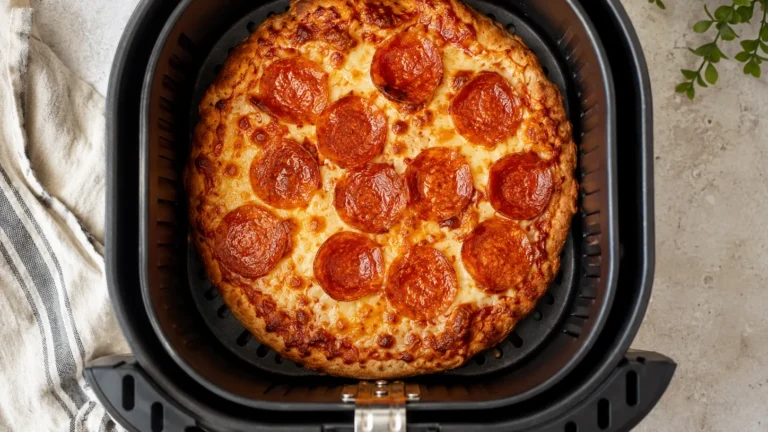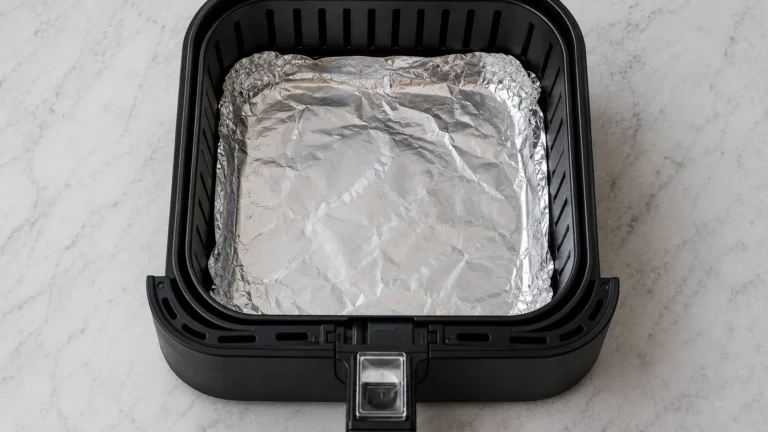
Can you put tin foil in an air fryer? Yes, in most models, as long as the foil is weighted down by food, kept clear of the heating element, and never allowed to block the airflow. Tin foil, which has been aluminum foil since consumer tin foil disappeared in the 1940s and 1950s, behaves nothing like the metal that sparks in a microwave. An air fryer heats by moving hot air with a fan, the same way a convection oven does, so there is no radiation to arc against metal. The catch sits in the mechanics of the machine, not the chemistry of the foil, and that is where most people get it wrong.
The confusion is worth clearing up because the phrasing shifts by country. Search from the United States and you get food-media publishers; search from the United Kingdom and appliance brands like Haier and Midea dominate. Underneath both, the answer is the same physics.
Quick answer: You can put tin foil in an air fryer, and it is safe when three conditions hold. First, food must weigh the foil down so the fan cannot lift it into the heating coil. Second, leave the edges clear so hot air still circulates and never cover an intake or outlet vent. Third, skip acidic foods like tomatoes and citrus, which pull more aluminum into the food, and reach for parchment there instead. Basket models and oven-style units follow slightly different rules, and your manual is the final word.
Why Foil Is Safe in Convection Heat but Not in a Microwave
Foil is safe in an air fryer for the same reason it is safe in a conventional oven: the appliance cooks by circulating hot air, not by firing electromagnetic radiation at your food. The Food Safety and Inspection Service describes air fryers as essentially countertop convection ovens that release hot air through a heating mechanism and crisp food through rapid circulation. A microwave, by contrast, generates alternating electromagnetic fields that induce currents in metal edges, and those currents arc. No such field exists inside an air fryer, so there is no sparking mechanism for foil to trigger.
That single distinction resolves most of the fear behind the question. Aluminum melts far above any temperature these machines reach.
What foil cannot do is heat evenly if you smother the basket. The perforations in an air fryer basket exist so air reaches every surface. Line the whole floor and you have built a solid tray inside a machine designed around holes.
- Microwave: electromagnetic fields induce currents in metal, causing arcing.
- Air fryer: a fan pushes hot air; no field, no arc, no spark.
- Trade-off: foil blocks perforations and dulls crisping if overused.
If you want the deeper mechanics of how the fan and element work together, the science behind air fryer convection cooking breaks down where the heat actually comes from.
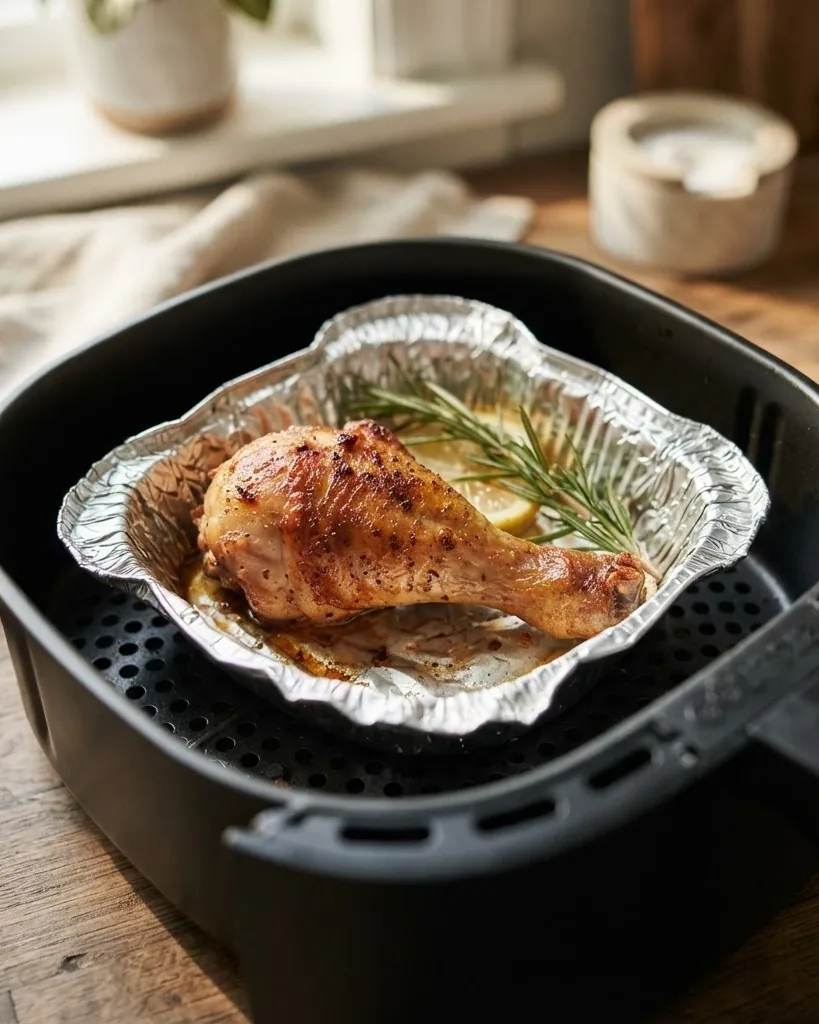
The Fan-Strike Rule: The One Mistake That Starts Trouble
The fan-strike rule is the single most important thing to understand about foil in an air fryer, and it explains nearly every scary story you have heard. In a basket-style unit, the fan sits directly behind the heating element, roughly 5 to 10 centimeters above the food. Loose foil is light. When the fan spins up, moving air can lift an unweighted sheet off the basket floor and pin it against the glowing coil. That contact scorches the foil, can trip the appliance thermal cutout, and in the worst case ignites grease already coating the element.
The fix is simple and non-negotiable: foil must be held down by the weight of the food resting on it, or secured to an oven-safe vessel. Never run foil in an empty basket.
This is why the most common real-world failure happens during preheating. A cook drops a bare sheet of foil into the basket, presses preheat, and walks away with nothing weighting it down. The fan runs, the sheet flies, and the coil catches it.
- Add the food first, then let its weight anchor the foil.
- Do not preheat with loose, unweighted foil inside.
- Fold foil edges inward so no flap can catch the airstream.
- Leave a clear border so the intake and outlet vents stay open.
Serious Eats, which has tested a wide range of air fryers, notes that the machines with fans mounted in the ceiling browned the top layer of food before the bottom cooked. That same top-mounted power is exactly what lifts loose foil, so respect the airflow.
Basket Air Fryers vs Oven-Style Units: Different Machines, Different Rules
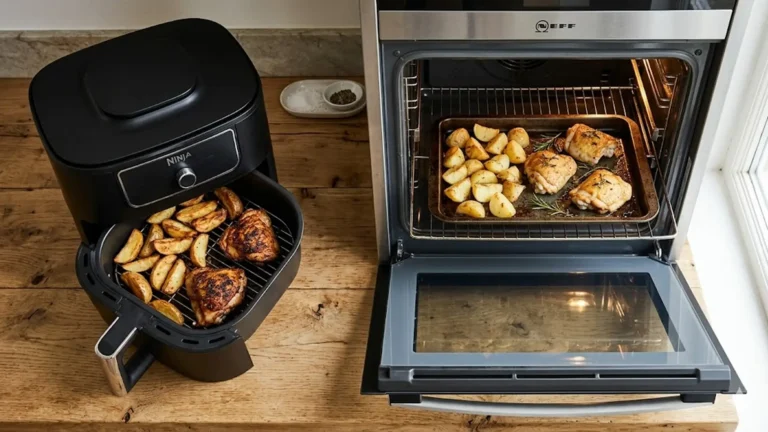
Basket air fryers and oven-style air fryers are mechanically different appliances, and treating them the same is the flat mistake most guides make. A basket or drawer model puts the fan and element close overhead, so foil goes inside the basket under the food and nowhere else. An oven-style or toaster-oven unit has a sheet pan, a wire rack, and a separate crumb tray, which changes what foil can safely touch. Serious Eats groups the market into three types: basket, dual-basket, and air fryer toaster ovens, and each one asks something different of your foil.
On oven-style machines, the best use is lining the sheet pan or drip tray to catch grease, which makes cleanup faster without choking airflow.
| Unit type | Where foil goes | Never |
|---|---|---|
| Basket / drawer | Inside basket, under food | Empty basket, over vents |
| Oven-style | Sheet pan or drip tray | Crumb tray, touching top element |
| Dual-basket | Under food in each basket | Blocking perforations |
The Ninja Foodi oven manual permits foil on the sheet pan or rack but explicitly forbids it on the crumb tray and near the top elements. That is the model-specific detail a generic yes-or-no answer erases.
What Brands Actually Say: Warranty and Manufacturer Positions
Manufacturers openly disagree on foil, and that disagreement is the real answer to the question because it decides your warranty. Philips does not recommend foil in its air fryers at all. Frigidaire permits lining the basket but not lining the bottom of the unit itself. Ninja allows foil on the sheet pan or rack of its Foodi ovens while prohibiting it on the crumb tray. When brands split this sharply, the correct instruction is not a universal rule but a direction: read your own manual before you line anything, because using foil against guidance can void coverage.
Coverage matters more than people expect. Among tested basket models, warranty lengths vary by manufacturer.
A scorched element or a fan seized by melted foil is exactly the kind of damage a manufacturer will decline to repair if the manual told you not to line that surface. Checking first costs you very little time and protects your purchase.
For a surface-by-surface walkthrough of where lining is allowed inside the drawer, the companion guide on whether you can put foil inside your air fryer basket covers the placement details this section only summarizes.
Aluminum Leaching: What the Numbers Actually Say
Aluminum leaching is the health worry that sends readers to the question, and the real data is more reassuring and more specific than the vague warnings floating around. Cooking on foil does transfer a small amount of aluminum into food, and the amount rises with heat, cooking time, and acidity. The Joint FAO/WHO Expert Committee on Food Additives set a provisional tolerable weekly intake of 2 milligrams of aluminum per kilogram of body weight, derived from a no-observed-adverse-effect level of 30 milligrams per kilogram and a safety factor of 100. That threshold is where the acidic-food exception comes from.
Acidic foods drive the transfer hardest. Research quantifying aluminum baked in foil found tomato products can reach roughly 80 to 130 milligrams of aluminum per kilogram, far above what neutral foods pick up.
For a 70-kilogram adult, the weekly tolerable intake works out to 140 milligrams (2 milligrams times 70 kilograms), which puts the small transfer from occasional foil cooking in perspective. The Food and Drug Administration treats aluminum used in food contact as generally recognized as safe within these limits, and the practical takeaway is the same one the brands give: keep tomatoes, citrus, vinegar, and other acidic dishes off bare foil, and use parchment as a barrier there.
Aluminum leaching from cookware is a genuine, studied phenomenon rather than internet myth, but the measured amounts from normal use stay well under regulatory ceilings. If a particular recipe is highly acidic and slow-cooked, the barrier approach is the sensible one. This is general food-safety information, not medical advice.
Foil vs Parchment vs Silicone: Choosing the Right Liner
Choosing between foil, parchment, and silicone comes down to what you are cooking and which failure you most want to avoid. Foil holds shape, wraps food, and catches grease, but it dulls crisping and reacts with acid. Parchment resists sticking and handles acidic foods without transfer, but it is more prone to lifting in the airstream. Silicone liners are reusable and washable, sit heavier so they resist the fan, and skip the leaching question entirely. Homes and Gardens liner testing warns that most paper liners are rated only to about 425 degrees Fahrenheit, which is 218 degrees Celsius, and that liners should never go in during preheat.
The preheat warning applies to every liner, not just foil. Anything light and unweighted can fly.
- Foil: best for wrapping food and lining oven-style drip trays; avoid with acidic dishes.
- Parchment: best for sticky, acidic, or delicate foods; weight it down.
- Silicone: best for repeat use and heavy items; heaviest and safest against the fan.
If parchment is your lean, the dedicated guide on whether you can put parchment paper in an air fryer covers the temperature ratings and hole-punch tricks in full.
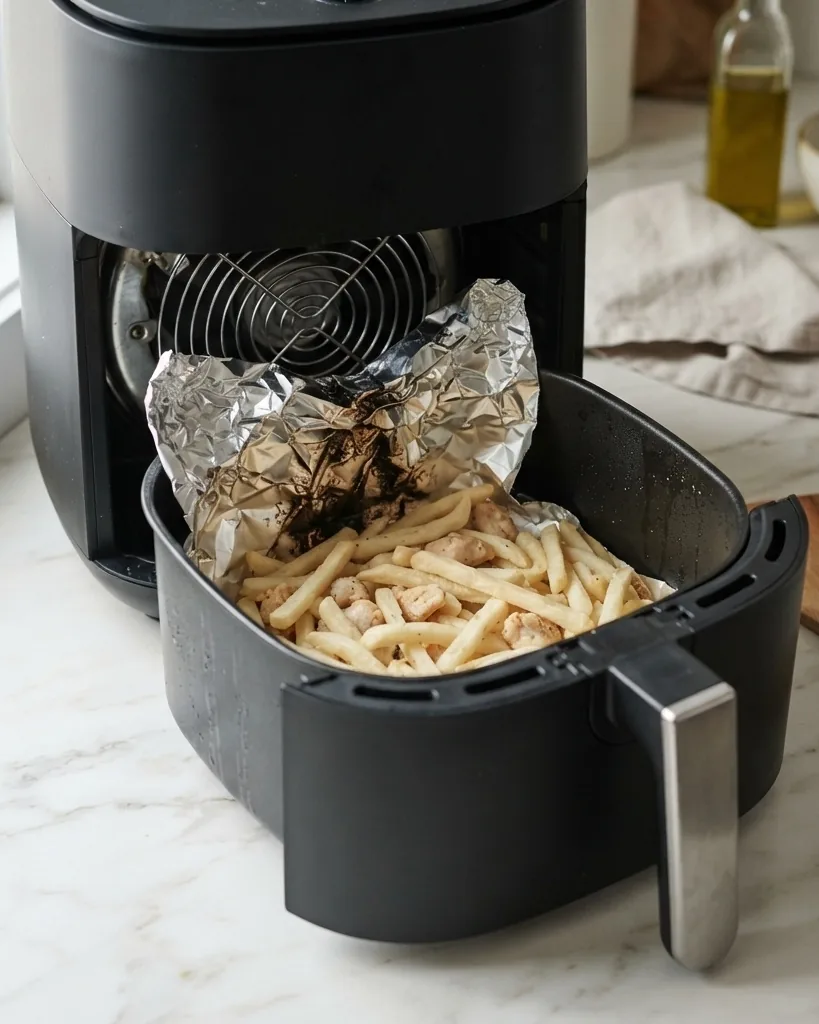
Practical Uses Where Foil Genuinely Earns Its Place
Foil earns its keep in an air fryer for a handful of specific jobs, and knowing them keeps you from lining out of habit. Wrapping a baked potato or a piece of fish traps moisture and steam. Making a foil sling lets you lift a whole small casserole out cleanly. Lining the drip tray on an oven-style unit catches rendered fat so you scrub less. What foil should not do is sit under everything by default, because the perforations in the basket exist to let hot air reach the food from below, and covering them turns crisp into steamed.
The Food Safety and Inspection Service reminds cooks not to overcrowd the basket, since crowding prevents proper air circulation. Foil that blankets the floor compounds that same problem.
Delicate and saucy dishes are where a small foil boat shines. An air fryer version of a rich, cheesy dip like this air fryer hot crab dip holds together far better in a foil-lined ramekin than loose in the basket, and a sticky, high-flavor recipe such as air fryer chili crisp shrimp keeps its glaze on a small foil bed instead of dripping through the holes. The trick in both cases is weight: the food holds the foil, not the other way around.
When you are chasing maximum crunch, though, skip the foil under the food entirely. The method behind homemade fries in an air fryer depends on open perforations so air hits every surface, and a foil floor would defeat it.
How to Use Tin Foil Safely, Step by Step
Using tin foil safely in an air fryer is a short, repeatable routine once you know the failure modes. The Food Safety and Inspection Service notes air fryers typically cook in a short amount of time at high heat, so the foil only needs to survive a short, hot, high-airflow window. Follow the sequence below and you avoid the fan strike, the vent blockage, and the acid reaction in one pass. None of this changes the cooking temperature; it only changes how you place the liner.
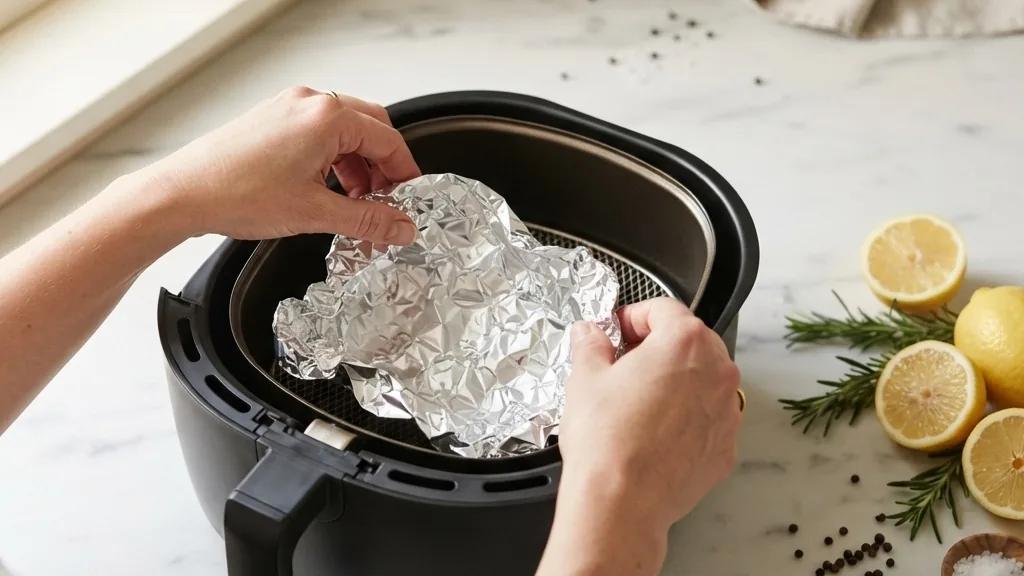
- Tear a piece smaller than the basket floor so edges never reach the vents.
- Place food on the foil first, letting its weight anchor the sheet.
- Fold sharp edges inward so no flap can lift into the airstream.
- Skip foil for tomatoes, citrus, and vinegar-heavy dishes; use parchment.
- Never run foil during an empty preheat cycle.
Watch the coating too. Dragging foil against a nonstick basket can scratch it, so lift rather than slide.
Cleanup is where foil pays you back, but it is not a substitute for real washing. The routine in how to clean an air fryer the right way still matters, because grease that slips past a liner bakes onto the element over time. High-protein cooks who run the basket daily, the kind chasing recipes across a high-protein recipe rotation or a proper batch of crispy air fryer fried chicken, will find a foil-lined drip tray cuts scrubbing time noticeably.
Temperature, Timing, and Food Safety Around Foil
Foil changes cleanup, not doneness, so the food-safety rules stay exactly the same whether or not you line the basket. The Food Safety and Inspection Service sets safe minimum internal temperatures for different foods that foil does nothing to alter. Wrapping food in foil can slow browning and trap steam, so check with a thermometer rather than trusting the clock or the color.
The agency also flags the danger zone where bacteria multiply, and says leftovers should be refrigerated promptly.
Handwashing bookends all of it: scrub with soap and water before and after handling food. Foil can tempt cooks to skip a step because the basket looks clean underneath, but a liner is not a substitute for the four core steps of clean, separate, cook, and chill.
Reheating leans on the same numbers. A guide like reheating fried chicken in an air fryer works because it drives the interior back to a safe temperature, and a loose foil tent can keep the crust from burning while the center catches up. Even coffee people who obsess over precise heat, the crowd reading up on coffee science, understand the principle: measure the temperature that matters, not the surface.
Frequently Asked Questions
Can you put tin foil in an air fryer during preheat?
No, this is the most common real-world failure. During preheat there is no food weighting the foil down, so the fan can lift a loose sheet into the heating element and scorch it. Add your food first so its weight anchors the foil, then start the cycle. If your model preheats automatically, place food before pressing start.
Does foil ruin the crispiness in an air fryer?
It can, if it covers the perforated basket floor. Air fryers crisp food by circulating hot air through the holes from below, and a full foil lining blocks that path, leaving food steamed rather than crunchy. Use foil to wrap food or line an oven-style drip tray instead, and leave the basket perforations open when you want maximum crunch.
Is aluminum from foil dangerous to eat?
For most cooking, no. The Joint FAO/WHO Expert Committee on Food Additives set a provisional tolerable weekly intake of 2 milligrams per kilogram of body weight, and normal foil use stays well under it. Acidic foods pull far more aluminum, with tomato products reaching roughly 80 to 130 milligrams per kilogram, so use parchment for those. This is general information, not medical advice.
Can you put foil in every brand of air fryer?
No, brands disagree, so check your manual first. Philips does not recommend foil at all, Frigidaire permits basket lining but not lining the unit bottom, and Ninja allows foil on the sheet pan but not the crumb tray. Using foil against your manufacturer guidance can void the warranty.
What should I do if foil touches the heating element?
Turn the air fryer off immediately and unplug it, then let it cool completely before touching anything. Remove the foil once the coil is cool, and inspect the element for scorching or stuck residue. If foil melted onto the element or the machine tripped its thermal cutout, stop using it and contact the manufacturer rather than risking a repeat.
The Bottom Line
Tin foil belongs in most air fryers, provided you respect the machine more than the metal. Weight it with food, keep it clear of the element and the vents, skip it for acidic dishes, and read your manual before you line a surface the brand warned against. The Food Safety and Inspection Service temperatures decide doneness, not the foil, and the studied aluminum transfer from ordinary use stays comfortably below the 2 milligrams per kilogram weekly ceiling. Get those few things right and foil is a genuine convenience, not a hazard.