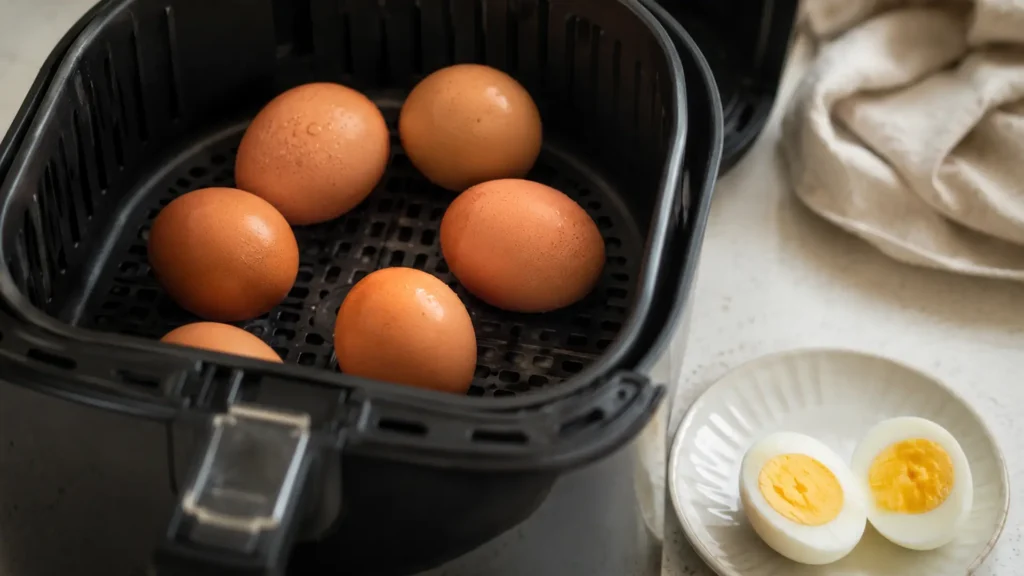
Hard boiled eggs in air fryer form skip the pot of watched water entirely, and once you learn your machine they come out consistent batch after batch. “Boiled” belongs in air quotes, because nothing actually boils. The air fryer cooks the eggs with dry circulating heat, which behaves a little differently than a rolling pot of water, so the timing chart you used on the stove will not transfer directly. This guide walks through the real temps and times, why your first batch might come out with a green ring or a stuck shell, and the small adjustments that fix each problem.
The reason people switch is simple. You can load a dozen eggs in the basket, set a timer, and walk away. No waiting for water to boil, no eggs cracking against each other as the pot rumbles, no guessing whether the water is hot enough. The trade off is that every air fryer runs slightly different, so your first batch is a calibration batch. Once you find your unit’s sweet spot, you can repeat it forever.
How Cooking Eggs in Dry Heat Actually Works
In a pot, water tops out at 212 F at sea level and transfers heat to the shell fast and evenly. In an air fryer, the air can run at 250 to 300 F but it is far less efficient at moving heat into a round shell than water is, so the cook is gentler than the higher number suggests. The egg white sets around 180 F and the yolk firms up around 158 to 170 F, so your job is to hold the egg in that zone long enough for the center to reach a full set without overshooting and turning the yolk chalky.
This is also why the air fryer cannot match a pot for raw speed on a single egg. Water wraps the whole shell and pours heat in, while air only touches the exposed surface and has to work harder. The upside of that slower, gentler transfer is a wider margin for error. A pot can swing from perfect to overcooked in ninety seconds, while the air fryer gives you a more relaxed window because it is not driving heat in as aggressively. That forgiveness is the real reason the method is worth learning, especially if you have ever pulled rubbery eggs off the stove.
Because the heat is dry and indirect, air fryer eggs are more forgiving on the white but easier to overcook on the yolk if you leave them in too long. That overcook is what produces the gray green ring around the yolk. It is harmless, just a reaction between sulfur in the white and iron in the yolk that speeds up with heat and time. The fix is to pull the eggs a touch early and dunk them in ice water, which stops the cooking cold. If you want the food chemistry background on what a boiled egg is doing as it sets, the boiled egg reference on Wikipedia covers the protein stages in plain terms.
The Core Time and Temperature Chart
This is the chart worth keeping on the fridge. It assumes you are starting with cold eggs straight from the refrigerator and that you drop them into ice water the second they come out. Set your air fryer to 270 F as a baseline. Hotter than that and the shells are more likely to brown in spots or develop tiny cracks, cooler and you are waiting forever.
| Doneness | Temp | Time | Yolk result |
|---|---|---|---|
| Soft, runny center | 270 F | 9 to 10 min | Liquid gold yolk |
| Jammy, medium | 270 F | 11 to 12 min | Fudgy, bright center |
| Classic hard boiled | 270 F | 14 to 15 min | Fully set, still tender |
| Firm hard boiled | 270 F | 16 to 17 min | Dense, fully cooked |
If your unit runs hot, which many do, knock 2 minutes off and check. The first batch is the test. Cook one egg to 14 minutes, cut it open, and see where you land. If the center is still translucent, add time in your notes. If there is a green ring, subtract. Write the winning number on a sticky note and you never have to think about it again. For more on dialing in your specific machine, the walkthrough on how to cook in an air fryer explains why two units at the same setting can finish minutes apart.
A few factors shift the timing beyond the machine itself. Egg size matters, since a jumbo egg has a bigger center that needs an extra minute over a large egg, and a small egg needs a minute less. Starting temperature matters too. The chart assumes cold eggs straight from the fridge, so if your eggs sat on the counter and came to room temperature, they cook a little faster and you should check a minute early. Altitude has a smaller effect here than it does with boiling water, because there is no water to boil off, but at high elevation the gentler heat transfer can mean adding a minute or two. The point is that the chart is a starting line, not a finish line, and the calibration egg tells you the truth for your kitchen.
The Ice Bath Is Not Optional
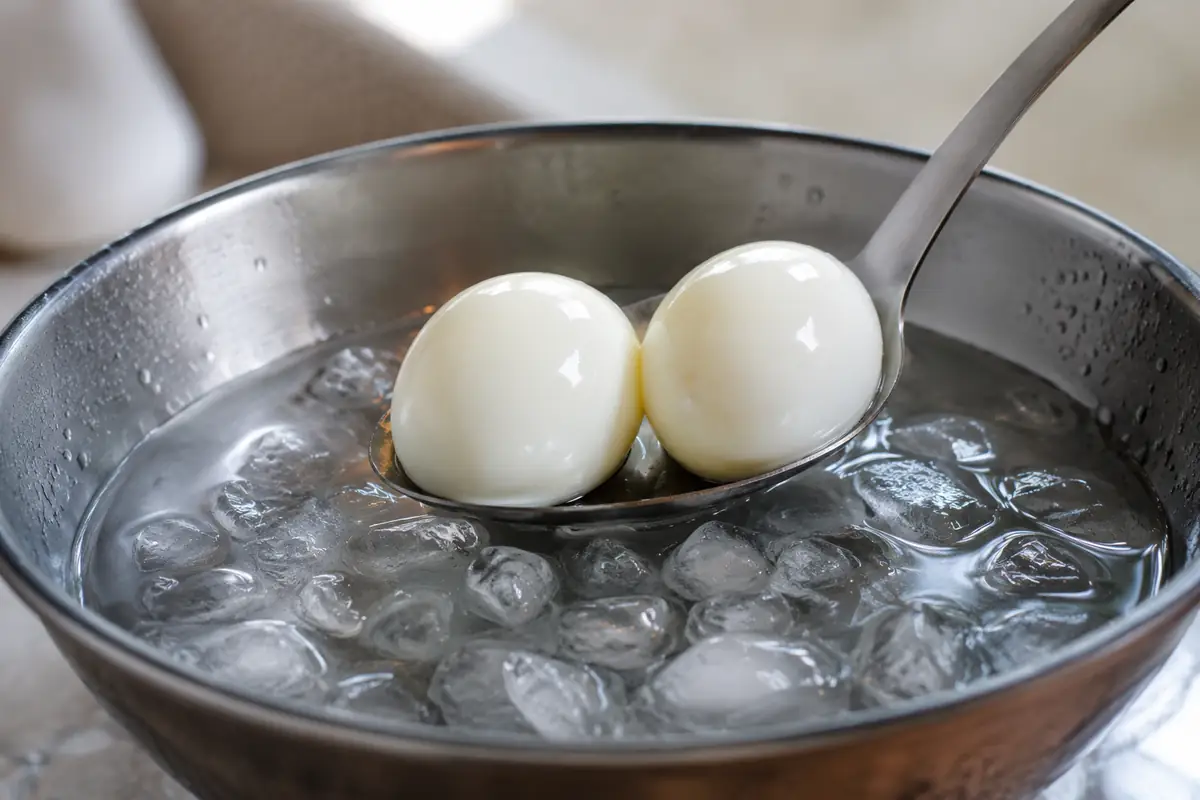
Skipping the ice bath is the most common mistake, and it sabotages two things at once. First, carryover heat keeps cooking the yolk after the eggs leave the basket, so a perfectly timed egg overcooks while it sits on the counter. The ice bath halts that in seconds. Second, the rapid cooling contracts the egg slightly inside the shell and helps separate the membrane from the white, which is half the battle for clean peeling.
Fill a bowl with cold water and a generous handful of ice before the eggs are done, so it is waiting. The instant the timer ends, move the eggs in with a spoon or tongs and leave them for at least 5 minutes, ideally 10. If you are cooking a big batch, add more ice partway through since a dozen warm eggs will melt it fast. Cold eggs also peel better than warm ones, so do not rush this step even if you are hungry.
Why Your Eggs Will Not Peel and How to Fix It
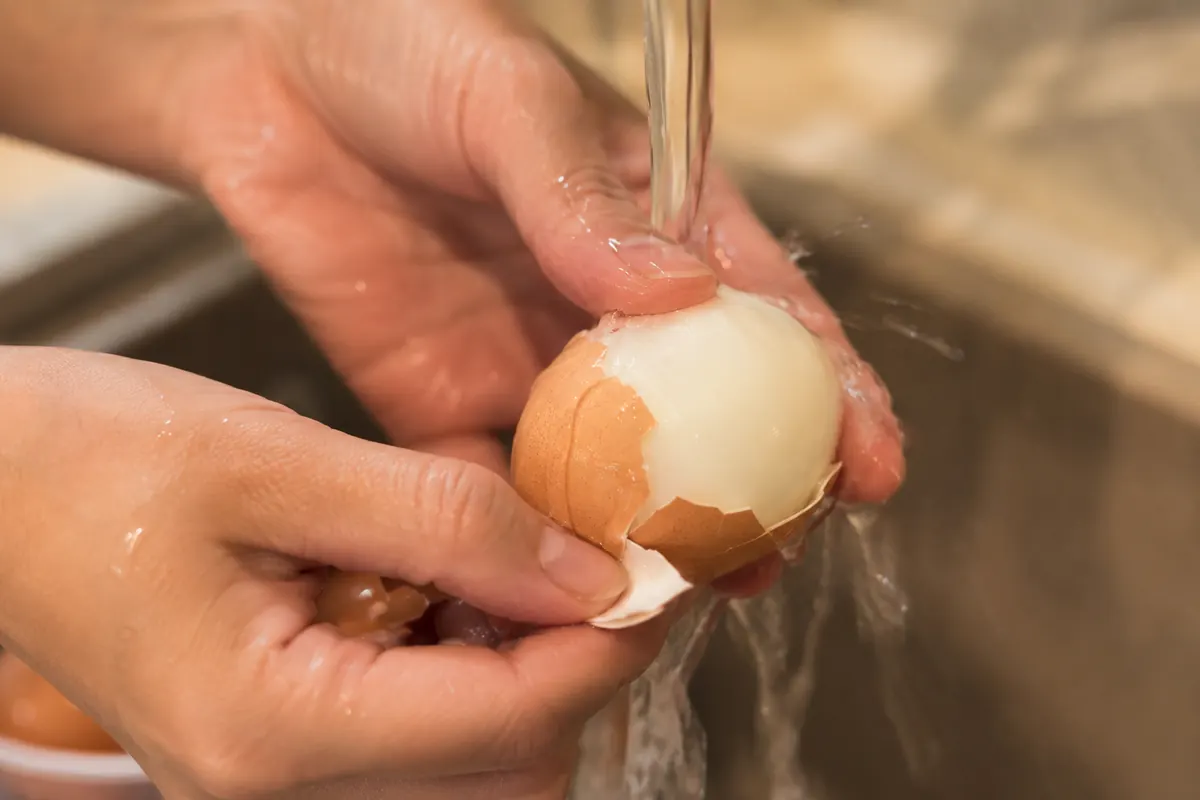
Peeling is where most people get frustrated, and it usually has nothing to do with the air fryer. The biggest factor is egg age. Very fresh eggs, the ones a week or less from the farm, have a lower internal pH that makes the white cling stubbornly to the membrane. Eggs that are 7 to 14 days old peel far more cleanly. If you buy eggs specifically to hard cook, let them sit in the fridge for a week first. It sounds backward but old eggs are the goal here.
Beyond age, the technique helps. After the ice bath, crack the egg all over by rolling it gently on the counter, then start peeling from the fat end where there is usually an air pocket. Peeling under a thin stream of running water floats the shell bits away and slides the membrane off. If a batch fights you anyway, it is almost always too fresh, so note the purchase date next time. The other peeling killer is undercooking, since a not quite set white tears as you pull the shell, so make sure you are hitting a full set on the chart above.
There is a steam trick worth knowing if peeling is a constant battle. Some cooks add a small oven safe ramekin of water to the basket during the cook, which raises the humidity around the eggs and seems to loosen the membrane. It is not strictly necessary if your eggs are the right age, but it costs nothing and can rescue a carton of stubbornly fresh eggs. Avoid the temptation to crank the temperature to speed peeling, since hotter air does not help the shell release and only raises the odds of a green ring. The reliable levers are egg age, a real ice bath, and a full set, in that order. Master those three and peeling stops being a gamble.
Batch Sizes, Spacing, and Doing a Dozen
One advantage here is that the basket does not crowd the way a pot does. Eggs cook from the air, not from touching each other, so you can fill the basket as long as they sit in a single layer with a little space for air to move. A standard basket holds 6 to 8 comfortably, and a larger oven style unit will do a full dozen across the trays. Do not stack eggs two deep, because the top ones shield the bottom ones from airflow and you get uneven doneness.
For a true dozen in a smaller basket, cook in two rounds rather than piling them in. The second round goes faster since the unit is already hot, so shave a minute. If your air fryer came with a metal rack or a silicone egg holder, use it to keep the eggs from rolling into a clump in one corner. Rolling eggs end up with one flat brown spot where they rested against the basket, which is cosmetic but avoidable. A quick rotation of the basket at the halfway point evens that out.
Meal preppers often want to cook a week of eggs at once, and the air fryer handles that well as long as you respect the single layer. Two batches of eight beat one crammed batch of sixteen every time, because crammed eggs shield each other and finish unevenly. If you are running back to back batches, the unit holds heat between them, so let it idle for thirty seconds with the basket out before reloading rather than stacking warm eggs onto a screaming hot surface. Consistent layout from batch to batch also keeps your timing honest, since the same number of eggs in the same arrangement reproduces the same result. Once you find the count and time that works, photograph the layout on your phone so you can repeat it without guessing.
| Batch | Unit type | Layout | Time at 270 F |
|---|---|---|---|
| 4 to 6 eggs | Basket | Single layer | 14 to 15 min |
| 7 to 8 eggs | Large basket | Single layer, rotate once | 15 min |
| 12 eggs | Oven style trays | Spread across racks | 15 to 16 min |
| 12 eggs | Small basket | Two rounds of 6 | 14 min, then 13 min |
Storage, Food Safety, and Making Them Ahead
Hard cooked eggs are a meal prep staple, but they have real safety limits. Cooked eggs should not sit at room temperature for more than 2 hours, and the standard guidance keeps cooked eggs safe in the fridge for up to one week. Keep them in their shells until you eat them if you can, since the shell protects against odors and drying out. Peeled eggs go quicker, so store those in a covered container with a damp paper towel and eat within a few days. For the broader rules on handling and storing eggs safely, the CDC’s guidance on preventing Salmonella is the authority worth bookmarking, since eggs are a known source if mishandled.
Never leave a cooked egg in warm water to hold it, since the temperature zone between 40 F and 140 F is exactly where bacteria multiply fastest. Cook, ice bath, then refrigerate, with no warm holding in between. If you are batch cooking for the week, label the container with the date so you are not guessing on day six. General food safety habits like these carry across your whole kitchen, and MedlinePlus keeps a clear food safety overview that is worth a read if you prep ahead often.
A practical tip for the fridge is to keep an egg or two whole and unpeeled as your buffer, peeling them only when you actually want one. Peeled eggs dry out and pick up fridge odors faster, so they are best eaten within a couple of days, while unpeeled eggs comfortably last the full week. If you cooked a soft or jammy batch and want to firm them up later, a 6 minute return to a 270 F air fryer will set the yolk further, though the texture is never quite as clean as cooking to that doneness the first time. When in doubt about an older egg, the smell test is decisive, since a cooked egg that has gone off announces itself immediately. Trust your nose over the calendar if the two disagree. With a labeled container and a steady routine, a Sunday batch of eggs covers breakfasts and quick lunches straight through the work week.
Going Beyond Hard Boiled in the Air Fryer
Once eggs are in your air fryer rotation, the appliance starts replacing a lot of stovetop breakfast work. The same dry heat that hard cooks eggs in the shell also handles a quick breakfast spread, and pairing eggs with other basket jobs lets you build a whole plate from one machine. My guide to making toast in the air fryer rounds out a breakfast where the eggs are already cooking, and the air fryer bacon method runs at a different temp but slots right alongside.
If you are building meals around protein and want ideas from across the network, the vegan breakfast hub at Veganstove has egg free morning options for mixed households, and the gluten-free breakfast collection at Recipesbend pairs nicely with hard cooked eggs for anyone avoiding gluten. Eggs are naturally gluten free and a solid base to build a safe plate around, so those hubs slot in without any conflict.
Frequently Asked Questions
What temperature and time do I use for hard boiled eggs in air fryer?
Set the air fryer to 270 F and cook cold eggs for 14 to 15 minutes for a classic fully set yolk, then move them straight to an ice bath. If your unit runs hot, start at 12 to 13 minutes for the first test batch and adjust from there. Every machine is slightly different, so the first batch is a calibration run and the winning time is worth writing down.
Why do my air fryer eggs have brown spots on the shell?
Brown spots come from the eggshell resting directly against the hot basket or from running the temperature too high. They are purely cosmetic and do not affect the egg inside. To avoid them, keep the eggs in a single layer with space around each one, rotate the basket once at the halfway point, and stay at 270 F rather than pushing the temperature higher to save time.
Why are my hard cooked eggs so hard to peel?
The most common cause is eggs that are too fresh, since a low internal pH makes the white cling to the membrane. Eggs that are 7 to 14 days old peel far more cleanly, so buy them a week ahead if you can. A proper ice bath also helps by contracting the egg and loosening the membrane, and peeling under running water from the fat end slides the shell off in larger pieces.
How long do air fryer hard boiled eggs last in the fridge?
Hard cooked eggs keep in the refrigerator for up to one week when stored properly. Leave them in the shell until you are ready to eat for the longest life, and never let cooked eggs sit at room temperature for more than 2 hours. If you peel them ahead, store in a covered container with a damp paper towel and eat within a few days for the best texture.